
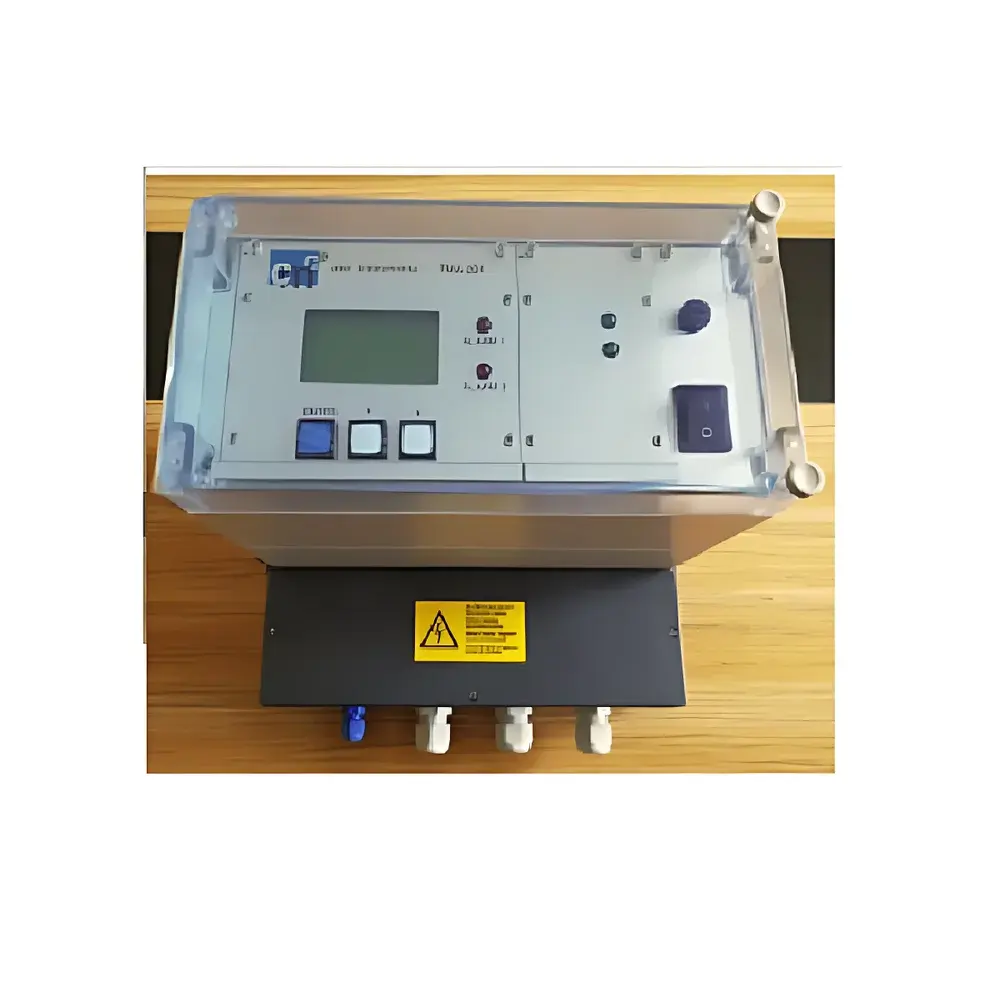
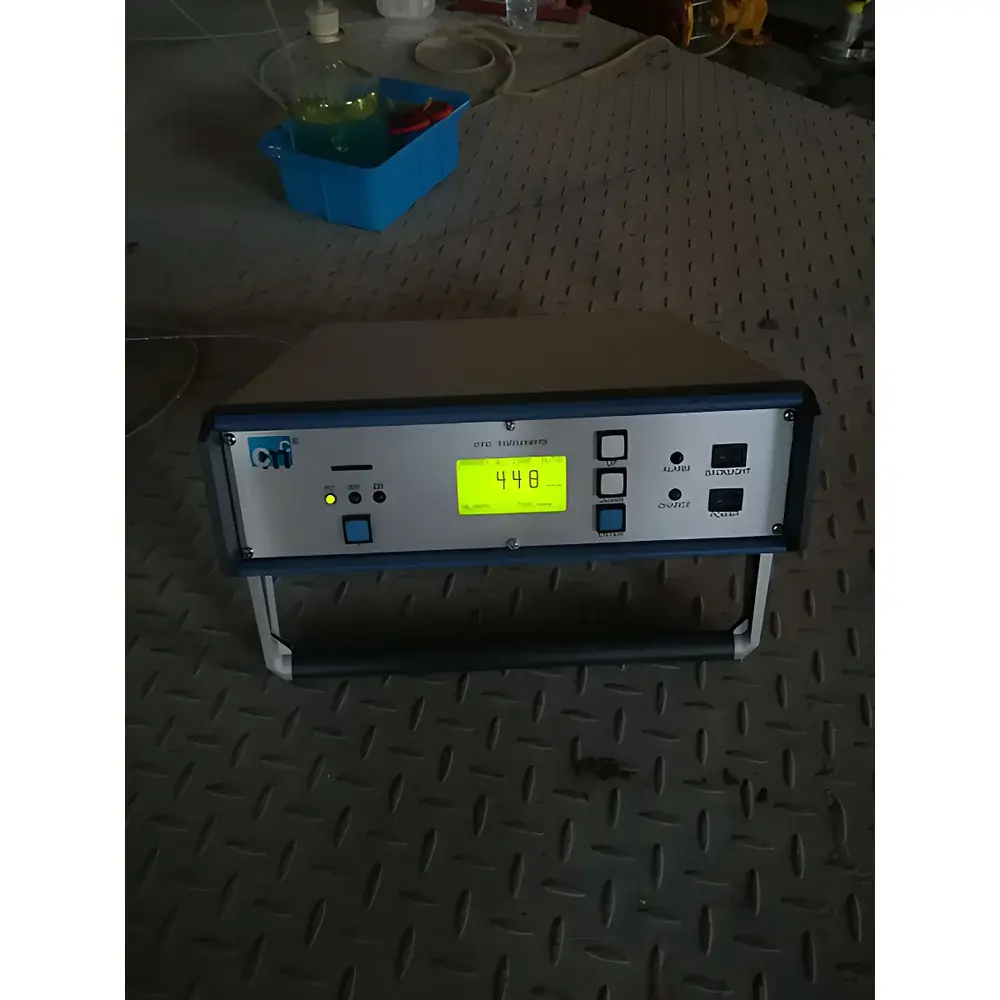
CMC TMS-SS-P-20 Electrolytic Trace Moisture Sensor Probe
| Origin | Germany |
|---|---|
| Manufacturer Type | Authorized Distributor |
| Origin Category | Imported |
| Model | TMS-SS-P-20 |
| Product Type | In-line Dew Point Analyzer |
| Measurement Principle | Electrolytic (P2O5 Sensor) |
| Operating Temperature | -20 to +50 °C |
| Accuracy | ±1 ppmv |
| Repeatability | ±1 ppmv |
Overview
The CMC TMS-SS-P-20 is a high-stability, electrolytic trace moisture sensor probe engineered for continuous in-line monitoring of water vapor concentration in industrial gas streams. Based on the well-established phosphorus pentoxide (P2O5) coulometric principle, this probe quantifies moisture by electrochemically splitting H2O molecules at a platinum anode within a hermetically sealed stainless steel measurement cell. The resulting current is directly proportional to the mass flow of water vapor—enabling linear, drift-free measurement across ultra-low concentration ranges. Designed for integration into CMC’s TMA-202, TMA-204, and TMA-210 analyzer platforms, the TMS-SS-P-20 serves critical applications where moisture control below 10 ppmv is essential: semiconductor process gases (N2, Ar, He, H2), SF6 insulation gas in high-voltage switchgear, dry air for pharmaceutical lyophilization, and hydrogen fuel purity verification per ISO 8573-8 and SAE J2719.
Key Features
- Stainless steel (SS316L) measurement cell with integrated platinum electrodes—optimized for chemical inertness, thermal stability, and long-term baseline integrity in aggressive or high-purity gas environments.
- Coulometric detection with inherent zero-drift compensation; no calibration gas required under stable operating conditions.
- Fast response dynamics: T50 ≤ 8 seconds, full response < 1 second for step changes—enabling real-time feedback for closed-loop drying system control.
- Operating range compatible with sample gas temperatures from 5 to 150 °C and pressures between 0.1–0.5 barg, minimizing condensation risk and ensuring representative sampling.
- Robust mechanical design compliant with IP65 enclosure rating when mounted in standard CMC analyzer housings; probe body rated for continuous exposure to trace-level corrosive gases (e.g., HCl, Cl2) when paired with appropriate material variants.
- Standard 3-meter shielded cable (extendable up to 300 m with signal conditioning) supports flexible installation in distributed process skids or central analyzer shelters.
Sample Compatibility & Compliance
The TMS-SS-P-20 is validated for use with non-condensing, non-reactive carrier gases including nitrogen, argon, helium, hydrogen, oxygen, and synthetic air. It is not recommended for direct measurement in hydrocarbon-rich streams, high-CO2 biogas, or strongly oxidizing mixtures containing ozone or NOx without prior filtration and conditioning. The probe meets electromagnetic compatibility requirements per EN 61326-1 and safety standards per EN 61010-1. When deployed in analyzers configured with audit-trail-enabled firmware (e.g., TMA-204-ZB series), it supports data integrity workflows aligned with FDA 21 CFR Part 11 and EU Annex 11 for regulated pharmaceutical and biotech manufacturing. Calibration traceability follows ISO/IEC 17025-accredited procedures using NIST-traceable dew point generators.
Software & Data Management
When interfaced with CMC’s TMA-series analyzers, the TMS-SS-P-20 delivers analog outputs (4–20 mA or 0–10 V DC) fully scalable to user-defined ppmv ranges (0–10, 0–100, 0–1000, or 0–2500 ppmv). Digital communication via RS-485 Modbus RTU enables remote configuration of alarm thresholds, zero/span verification cycles, and diagnostic status polling. Firmware versions ≥V3.2 support GLP-compliant logging—including timestamped sensor health metrics (electrode impedance, cell voltage, background current), automatic zero-check events, and operator-initiated calibrations—with exportable CSV reports for QA review. All analyzer units include dual programmable relay outputs for high/low moisture alarms with configurable hysteresis and latch modes.
Applications
- Monitoring moisture in bulk nitrogen supply lines for semiconductor photolithography tools (ASTM D7447 compliance).
- Real-time verification of SF6 dryness in GIS (Gas-Insulated Switchgear) per IEC 60480 and IEEE C37.122.1.
- In-line verification of compressed air quality in ISO Class 1–2 cleanrooms (ISO 8573-1:2010, Class 1.1.1).
- Hydrogen fuel stream certification for PEM fuel cells (SAE J2719 Grade D, max 5 ppmv H2O).
- Moisture surveillance in ethylene oxide sterilization chambers and vacuum drying ovens used in medical device manufacturing.
- Quality assurance of instrument air in petrochemical analyzer shelters where dew point excursions compromise GC/FID performance.
FAQ
What materials are available for the measurement cell besides stainless steel?
CMC offers parallel probe variants with Monel, Hastelloy C-276, borosilicate glass, and PFA-lined cells—each selected to resist specific chemical attack (e.g., HCl, HF, or amine vapors) while maintaining electrolytic sensitivity.
Is periodic recalibration required?
Yes—annual verification against a certified dew point standard is recommended for GMP/GLP environments; semi-annual checks suffice for general industrial use. Zero checks can be performed in situ using dry nitrogen purge.
Can the probe operate under vacuum conditions?
No—the TMS-SS-P-20 requires positive sample pressure (0.1–0.5 barg) to ensure laminar flow through the P2O5 film; vacuum operation causes measurement instability and accelerated electrode degradation.
How does temperature affect accuracy?
The probe itself operates from −20 to +50 °C ambient, but sample gas must be conditioned to 5–150 °C and thermally stabilized upstream; uncontrolled temperature gradients induce condensation errors and alter diffusion kinetics across the sensing membrane.
Is the TMS-SS-P-20 compatible with hazardous area installations?
When installed inside CMC’s ATEX-certified TMA-204-Ex housing (II 2G Ex db IIB T4 Gb), the probe meets Zone 1 requirements; intrinsic safety barriers must be applied to all field wiring per IEC 60079-11.





