
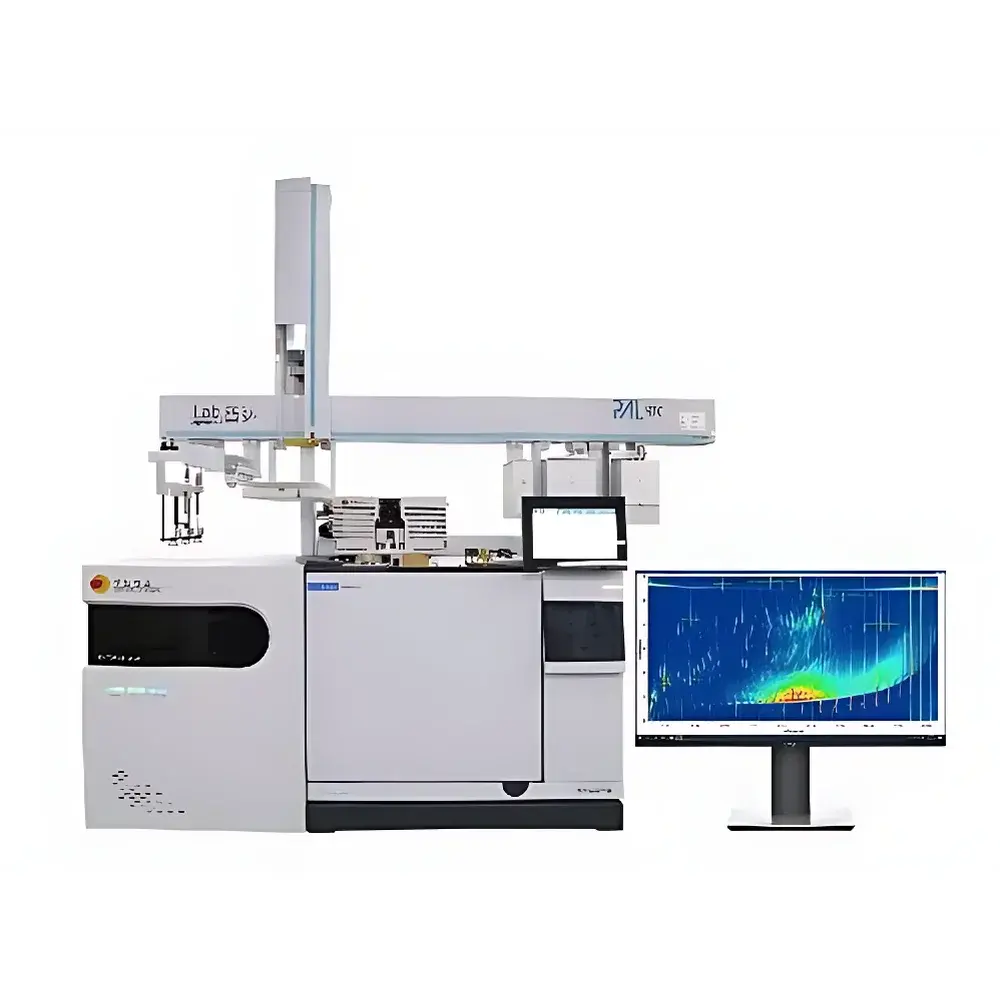
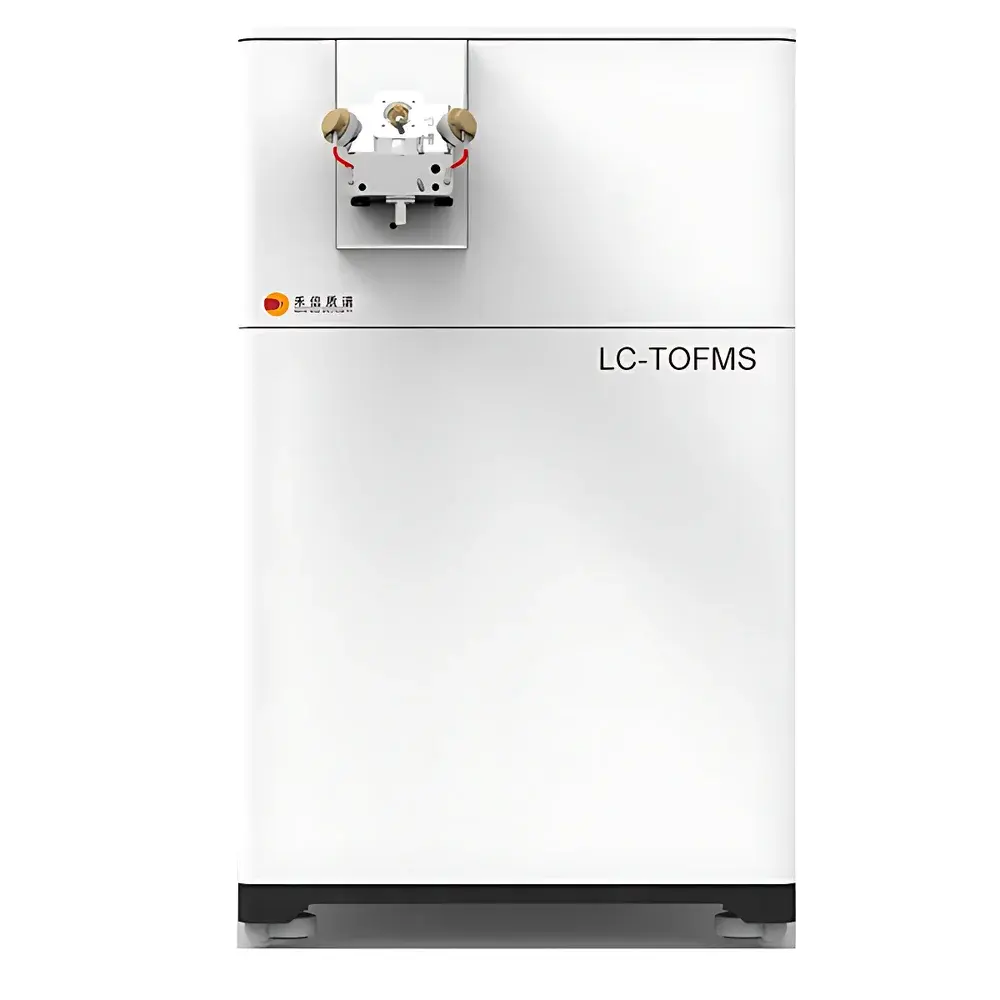
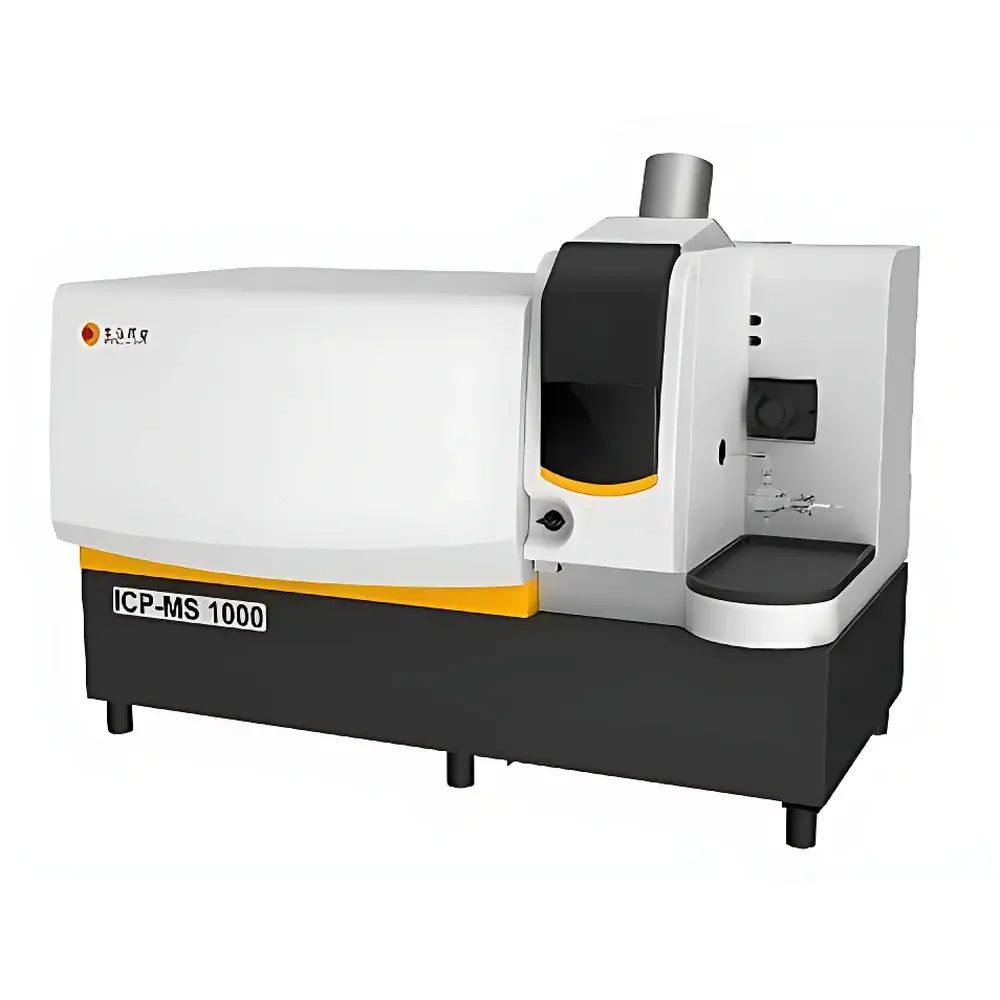
HEXIN GGT-0620 Integrated High-Precision Water Contaminant Source Apportionment System with GC×GC-TOFMS, LC-TOFMS and ICP-MS Platforms
| Brand | HEXIN Mass Spectrometry |
|---|---|
| Origin | Guangdong, China |
| Manufacturer Type | Authorized Distributor |
| Product Origin | Domestic (China) |
| Model | GGT-0620 / GC×GC-TOFMS / LC-TOFMS / ICP-MS |
| Instrument Type | Time-of-Flight Mass Spectrometer (TOFMS) |
| Chromatography Configuration | Comprehensive Two-Dimensional Gas Chromatography (GC×GC) |
| Mass Range | Available upon technical consultation |
| Resolution | Available upon technical consultation |
| Sensitivity | Available upon technical consultation |
| Scan Speed | Available upon technical consultation |
| Mass Accuracy | Available upon technical consultation |
| Oven Ramp Rate | Available upon technical consultation |
| Detector Type | TOF-based electron multiplier array |
| Pressure Control Precision | Available upon technical consultation |
Overview
The HEXIN GGT-0620 Integrated High-Precision Water Contaminant Source Apportionment System is an advanced analytical platform engineered for environmental forensic investigation of complex aqueous matrices. It integrates three orthogonal mass spectrometry modalities—comprehensive two-dimensional gas chromatography coupled to time-of-flight mass spectrometry (GC×GC-TOFMS), liquid chromatography time-of-flight mass spectrometry (LC-TOFMS), and inductively coupled plasma time-of-flight mass spectrometry (ICP-TOFMS)—within a unified data acquisition and computational framework. This multi-technique architecture enables simultaneous detection and quantification of volatile/semi-volatile organic compounds, polar non-volatiles (e.g., pharmaceuticals, pesticides, PFAS), and elemental/isotopic species (including metals, metalloids, and speciated elements) at trace to ultra-trace levels. The system operates on the principle of high-mass-resolution, high-mass-accuracy TOF detection, delivering full-spectrum acquisition without pre-selection bias—essential for untargeted screening and retrospective data reanalysis. Designed specifically for watershed-scale environmental monitoring programs, it supports regulatory compliance workflows under ISO 17025-accredited laboratories and aligns with U.S. EPA Method 8270/8321/6020B requirements for organic and inorganic contaminant profiling.
Key Features
- Multi-modal hyphenated instrumentation: GC×GC-TOFMS for enhanced peak capacity (>1,000 peaks per run) and compound separation; LC-TOFMS for polar, thermally labile, and high-molecular-weight analytes; ICP-TOFMS for isotopically resolved elemental quantification with sub-ppt detection limits.
- Non-targeted, full-spectrum acquisition mode enabling retrospective analysis without re-injection—critical for emergent contaminant discovery and historical data mining.
- Integrated source apportionment engine incorporating receptor modeling (PMF), chemical mass balance (CMB), and Bayesian mixing models, calibrated against regional emission inventories and hydrological transport parameters.
- Automated spectral deconvolution and library matching using NIST MS Search, Wiley Registry, and custom-built environmental contaminant libraries containing >12,000 reference spectra.
- Ruggedized front-end sample preparation interface compatible with solid-phase extraction (SPE), gel permeation chromatography (GPC), and online derivatization modules for automated workflow execution.
Sample Compatibility & Compliance
The GGT-0620 system accepts raw or pre-treated water samples—including surface water, groundwater, wastewater effluent, drinking water, and pore water—with minimal matrix interference due to its dual-stage ion source design and collision cell-enabled background suppression. All hardware and software components comply with ISO/IEC 17025:2017 general requirements for competence of testing and calibration laboratories. Data integrity safeguards include audit trails meeting FDA 21 CFR Part 11 requirements, electronic signature support, and role-based access control. Instrument operation adheres to ASTM D7984–22 (standard guide for comprehensive two-dimensional gas chromatography) and ISO 15514–2 (water quality—determination of organic compounds by GC-MS). Routine performance verification follows internal SOPs aligned with EU Water Framework Directive (WFD) monitoring protocols.
Software & Data Management
HEXIN SourceTrak™ v4.2 serves as the central analytical and informatics hub, integrating instrument control, real-time spectral processing, multivariate statistical analysis, and geospatial visualization. The software features embedded GLP-compliant reporting templates for QA/QC metrics (e.g., retention time stability, mass accuracy drift, signal-to-noise ratios), automatic calibration curve generation with quadratic weighting, and batch processing of up to 200 samples per sequence. Raw data files (.CDF/.RAW) are stored in vendor-neutral formats compliant with mzML 1.1 specification. Cloud-enabled collaboration tools allow secure sharing of processed datasets with regulatory agencies or third-party modeling teams while preserving chain-of-custody metadata.
Applications
- Source identification at river cross-sections exhibiting sudden COD, NH₄⁺, or DO anomalies through temporal-spectral correlation and backward trajectory modeling.
- Causal diagnosis of eutrophication-driven lake degradation (e.g., algal toxin profiles, nutrient speciation, anthropogenic steroid biomarkers).
- Rapid-response deployment during chemical spills or wastewater bypass events, delivering actionable compound-level attribution within 8 hours post-sample receipt.
- Delineation of plume migration pathways in industrial zone aquifers via isotopic fingerprinting (e.g., δ¹⁵N-NO₃⁻, ⁸⁷Sr/⁸⁶Sr ratios) combined with organic co-contaminant patterns.
- Root-cause analysis of sewer network overflows by correlating odorant profiles (e.g., skatole, indole, reduced sulfur species) with infrastructure telemetry and land-use GIS layers.
FAQ
Does the GGT-0620 system support regulatory reporting for national water quality standards?
Yes—it generates audit-ready reports compliant with China’s Environmental Monitoring Technical Specifications (HJ 91.1–2019) and supports export to formats required by U.S. EPA STORET and EU WISE databases.
Can the platform differentiate between natural and anthropogenic sources of nitrogen or heavy metals?
Yes—through integrated isotopic ratio analysis (ICP-TOFMS) and compound-specific stable isotope analysis (CSIA) enabled by optional pyrolysis interfaces.
Is method validation documentation provided for each analytical module?
Yes—each configuration ships with validated SOPs covering LOD/LOQ determination, recovery studies, matrix spike precision, and inter-laboratory reproducibility data per ISO 5725.
What level of technical support is available for model parameterization and interpretation?
HEXIN provides application scientist-led workshops on source apportionment model selection, uncertainty propagation, and integration with hydrodynamic modeling outputs (e.g., MIKE SHE, MODFLOW).




