
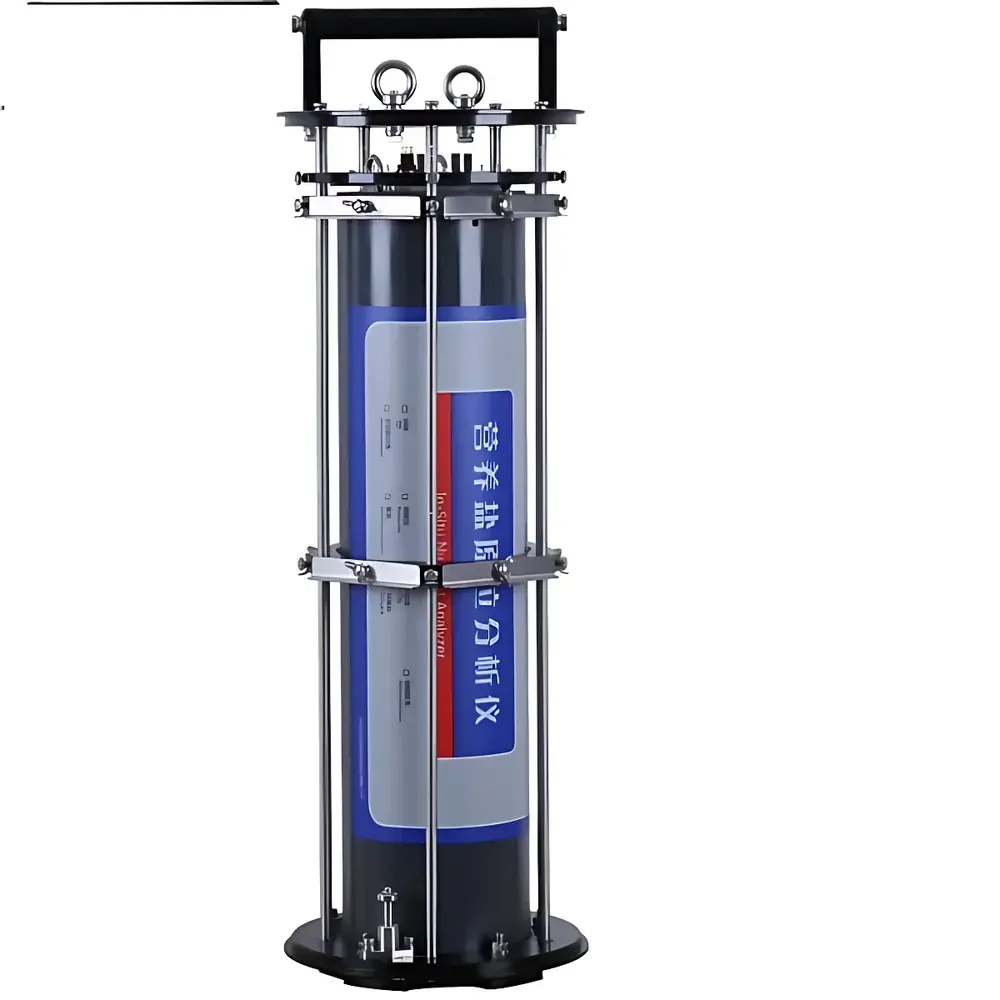
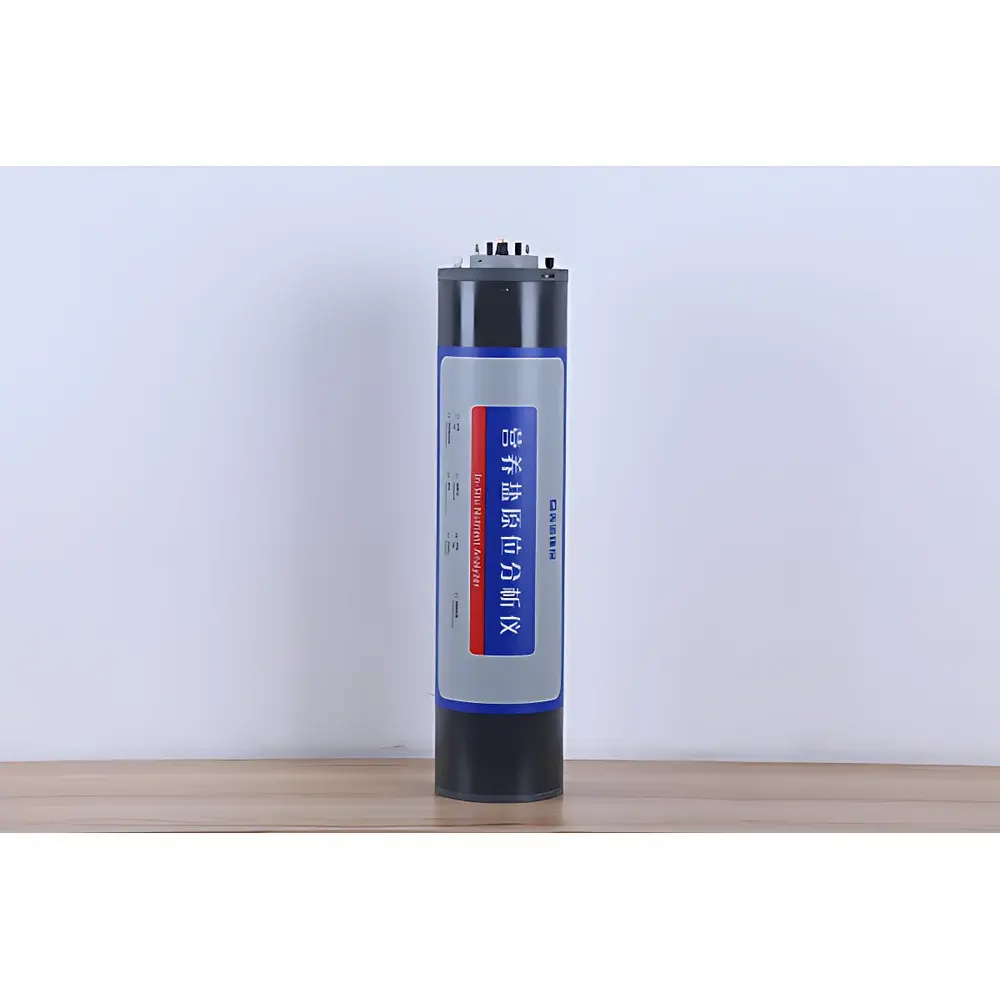
SAIL HERO In-Situ Water Quality Analyzer
| Brand | SAIL HERO |
|---|---|
| Origin | Hebei, China |
| Manufacturer Type | Manufacturer |
| Product Category | Domestic |
| Instrument Type | Online Water Quality Analyzer |
| Detection Parameters | Total Phosphorus (TP), Orthophosphate (PO₄³⁻), Total Nitrogen (TN), Ammonia-N (NH₃-N), Nitrate-N (NO₃⁻), Nitrite-N (NO₂⁻), Hexavalent Chromium (Cr⁶⁺) |
| Detection Methodology | Sequential Injection Analysis (SIA) with Standardized Spectrophotometric and UV-Absorption Protocols |
| Reagent Consumption | 400–600 µL per measurement cycle |
| Standby Power | 0.25 W |
| Operational Duration per Reagent Fill | 180–200 analyses (at 4–6 cycles/day ≈ 40 days) |
| Compliance Basis | Chinese National Standards (e.g., GB 11893-89, GB 11894-89, HJ 636-2012, HJ 535-2009, HJ 537-2009, HJ 546-2015, HJ 547-2015) |
Overview
The SAIL HERO In-Situ Water Quality Analyzer is an autonomous, submersible online monitoring system engineered for continuous, real-time analysis of key nutrient and toxic analytes in natural and engineered water bodies. It operates on the principle of sequential injection analysis (SIA), a precise microfluidic technique that delivers discrete, metered volumes of sample and reagents into a thermally controlled digestion and reaction manifold. Following standardized chemical reactions—including alkaline persulfate digestion for TP and TN, salicylate-based colorimetry for NH₃-N, molybdate blue spectrophotometry for PO₄³⁻, UV absorption for NO₃⁻, N-(1-naphthyl)-ethylenediamine dihydrochloride (NED) colorimetry for NO₂⁻, and 1,5-diphenylcarbazide spectrophotometry for Cr⁶⁺—the system quantifies analyte concentrations via high-stability photometric detection. Signal intensity at defined wavelengths is linearly proportional to analyte concentration, enabling trace-level quantification with high reproducibility. Designed for deployment directly in situ—without sample extraction or transport—the analyzer eliminates errors associated with temporal degradation, adsorption losses, and contamination during manual sampling, thereby ensuring data integrity aligned with long-term environmental trend analysis and regulatory compliance reporting.
Key Features
- Sequential Injection Architecture: Enables precise, low-volume fluid handling (400–600 µL total reagent consumption per full multi-parameter cycle), minimizing waste and operational cost.
- Submersible In-Situ Operation: Fully encapsulated housing rated for continuous underwater deployment; zero-distance measurement avoids sampling bias and preserves speciation integrity.
- Multi-Parameter Simultaneous Monitoring: Integrated assay modules support concurrent analysis of TP, PO₄³⁻, TN, NH₃-N, NO₃⁻, NO₂⁻, and Cr⁶⁺ using nationally validated methods (GB and HJ series standards).
- Low-Power Embedded Design: Standby power draw of only 0.25 W; optimized for solar-battery hybrid power systems in remote or off-grid monitoring stations.
- Intelligent Maintenance Framework: Onboard diagnostics monitor reagent levels, flow integrity, optical path cleanliness, and thermal stability; triggers automated alerts for low reagent, leakage, or abnormal sensor response.
- Remote Operational Control: Supports over-the-air calibration initiation, cleaning sequence execution, and method parameter updates—reducing field intervention frequency by >70% compared to conventional grab-sampling workflows.
Sample Compatibility & Compliance
The analyzer accommodates raw surface water, reservoir effluent, riverine, and estuarine matrices without pre-filtration, thanks to its integrated miniature pre-treatment module featuring coarse particulate screening and anti-biofouling surface treatment. The alloy-reinforced mounting bracket resists mechanical impact and biofilm accumulation under dynamic hydraulic conditions. All analytical protocols conform to China’s national environmental monitoring standards (e.g., GB 11893-89 for TP, HJ 636-2012 for TN, HJ 535-2009 for NH₃-N), ensuring traceability and inter-laboratory comparability. While not certified to ISO/IEC 17025 or EPA Methods by default, the platform’s method transparency, audit-ready event logging, and configurable calibration verification intervals support adaptation to GLP-aligned quality assurance frameworks in multi-site monitoring networks.
Software & Data Management
The embedded firmware supports dual-mode data output: Modbus RTU over RS-485 for SCADA integration and MQTT over cellular/LTE for cloud telemetry. Local storage retains ≥30 days of high-resolution time-series data (including raw absorbance values, temperature logs, and diagnostic flags). Remote software interface provides role-based access control, method versioning, electronic signature-enabled calibration records, and configurable alarm thresholds—all compliant with basic ALCOA+ principles (Attributable, Legible, Contemporaneous, Original, Accurate). Audit trails record all user-initiated actions, including reagent replacement timestamps and cleaning cycle execution, supporting internal QA reviews and regulatory readiness assessments.
Applications
- River and lake eutrophication surveillance programs targeting phosphorus and nitrogen load tracking
- Drinking water source protection zones requiring early warning of Cr⁶⁺ or nitrite contamination
- Wastewater treatment plant influent/effluent compliance monitoring under discharge permit regimes
- Ecological research stations conducting long-term biogeochemical cycling studies
- Smart city infrastructure integrating real-time water quality feeds into municipal decision dashboards
FAQ
What is the typical maintenance interval for reagent replacement?
Reagent cartridges support 180–200 complete multi-parameter analyses; at a standard schedule of 4–6 cycles per day, this equates to approximately 40 days of unattended operation.
Does the system require external power conditioning or UPS backup?
No—its ultra-low standby power (0.25 W) and wide-input DC voltage range (10–30 VDC) allow direct integration with solar-charged battery banks commonly deployed in remote environmental stations.
Can the analyzer be recalibrated remotely without physical access?
Yes—remote calibration initiation, zero/span verification, and standard addition sequences can be triggered via secure web interface or SCADA command, with full audit trail generation.
Is raw spectral data accessible for method validation or third-party algorithm development?
Yes—raw photodiode voltage outputs, lamp intensity references, and temperature-compensated absorbance values are available via Modbus register mapping or CSV export from the local SD card.
How does the system handle turbid or algae-rich water samples?
The pre-treatment module includes sediment settling geometry and a copper-alloy anti-fouling coating on wetted surfaces; optional inline 10-µm filtration can be added upstream for highly suspended solids scenarios.







