
High Temperature Forced-Air Aging Test Chamber OK-HQ Series
| Key | Brand: Other Brands |
|---|---|
| Origin | Imported |
| Manufacturer Type | Authorized Distributor |
| Temperature Range | RT+10°C to 200°C / 300°C |
| Uniformity | ±2°C |
| Temperature Fluctuation | ±0.5°C |
| Air Exchange Rate | 2–100 cycles/h |
| Adjustable Exchange Time | 1 min – 99 h |
| Chamber Volume Options | 100 L to 800 L |
| Power Consumption | 4.0–9.0 kW |
| Compliance | ASTM D5423-09 (Type II), ASTM D5374-93 (2005), UL 1581, GB/T 2423.2, IEC 60068-2-2, JIS C 0068, VDE 0470-1 |
Overview
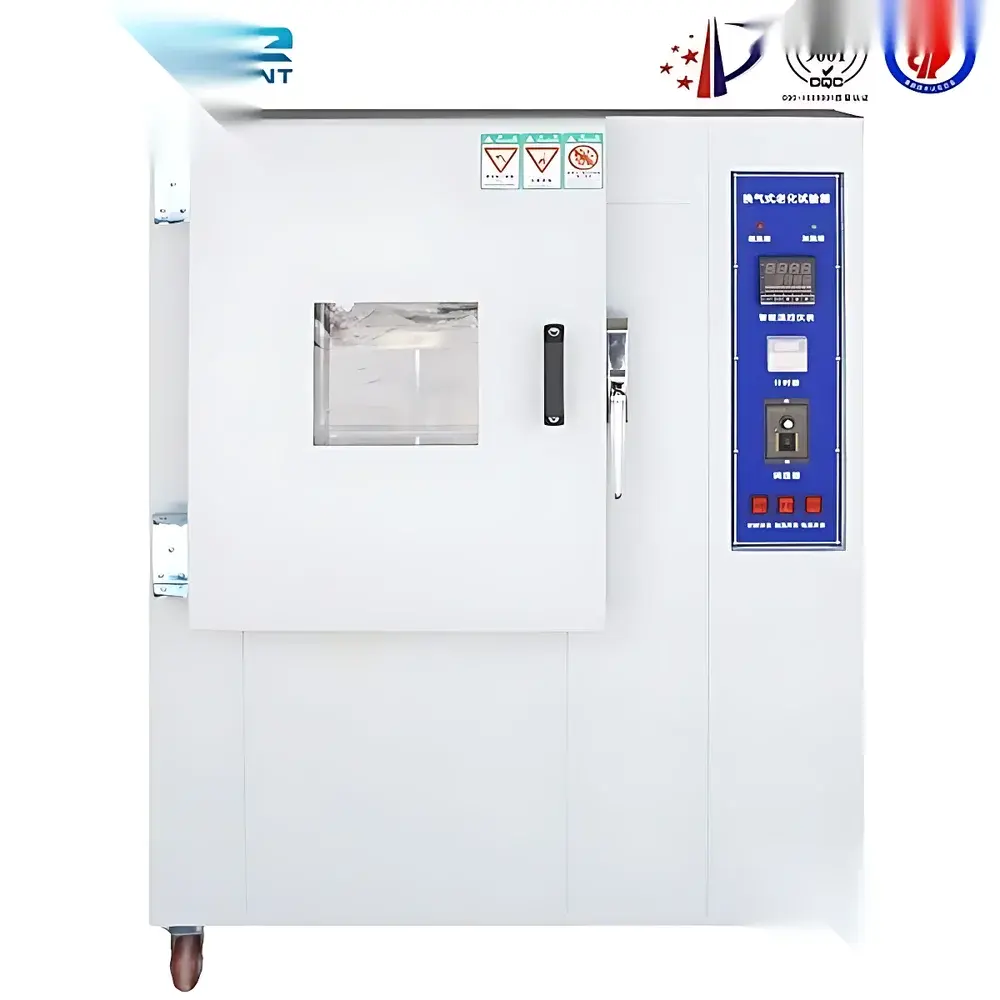
The OK-HQ Series High Temperature Forced-Air Aging Test Chamber is an engineered environmental test system designed for accelerated thermal aging evaluation of polymeric and insulating materials under controlled air exchange conditions. Based on the principle of forced convection with programmable ventilation, it simulates long-term exposure to elevated temperatures while maintaining a defined rate of fresh air replacement—critical for replicating real-world oxidative degradation mechanisms in electrical insulation, wire & cable sheathing, elastomers, textiles, and plastic components. Unlike static ovens, this chamber integrates calibrated airflow management to ensure consistent oxygen partial pressure throughout the test duration, enabling reproducible assessment of material embrittlement, discoloration, tensile loss, and dielectric property decay per internationally recognized aging protocols.
Key Features
- Precision-engineered air exchange regulation system with digital flow control, supporting adjustable exchange rates from 2 to 100 cycles per hour and timing resolution down to 1 minute.
- Microprocessor-based PID temperature controller with LED display, offering ±0.1°C setpoint and indication accuracy, 1–9999-minute timer, and auto-tuning capability for stable thermal response.
- Horizontal forced-air circulation architecture featuring high-temperature-resistant centrifugal blower and optimized baffle design, achieving ±2°C temperature uniformity across working chambers (per ASTM D5423 Annex A3).
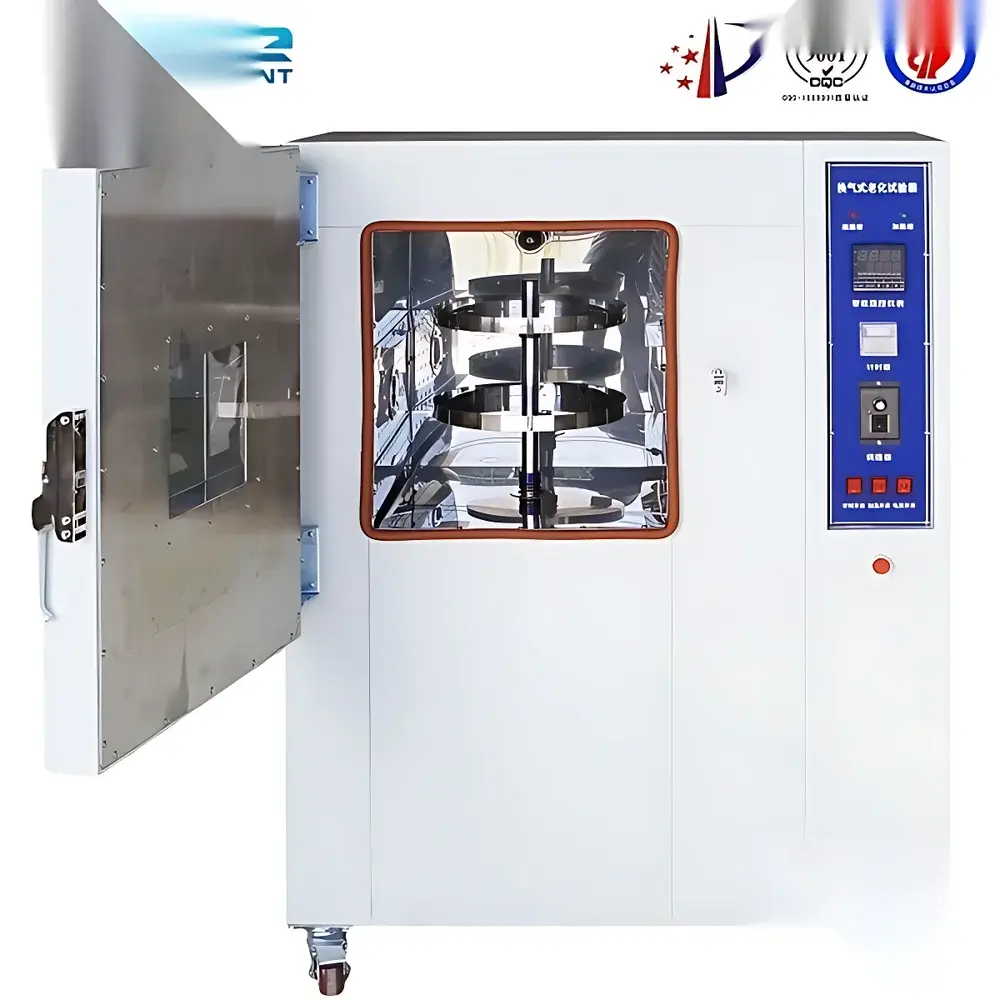
- Robust dual-wall construction: interior chamber lined with polished SUS304 stainless steel (electropolished finish); exterior shell fabricated from A3 cold-rolled steel with epoxy-polyester powder coating for corrosion resistance and cleanroom-compatible surface integrity.
- Integrated low-speed rotating turntable (Φ250–Φ700 mm, model-dependent) to promote uniform thermal exposure of vertically oriented specimens such as insulated wires or cable reels.
- Energy-efficient thermal insulation using 100 mm thick ultra-fine glass fiber cotton, minimizing heat loss and stabilizing chamber wall temperature gradients.
- Standard 50 mm diameter test port on left side wall, fitted with silicone gasket and brass compression collar for secure feedthrough of power/signal lines without compromising seal integrity.
- Comprehensive safety architecture including over-temperature cutoff, motor overheat protection, leakage current detection, short-circuit interruption, and phase-loss monitoring per IEC 61000-4-5.
Sample Compatibility & Compliance
The OK-HQ chamber accommodates a broad spectrum of specimen geometries—including flat sheets, extruded profiles, twisted pairs, braided harnesses, and molded parts—within standardized working volumes (100 L to 800 L). Its airflow dynamics and thermal stability meet the stringent spatial and temporal requirements of ASTM D5423-09 (Type II forced-ventilation laboratory oven), ASTM D5374-93 (2005) for electrical insulation testing, UL 1581 Section 1060, and harmonized national standards including GB/T 2423.2 (China), JIS C 0068 (Japan), VDE 0470-1 (Germany), and IEC 60068-2-2 (Ed. 5.0). All models are configured to support GLP-compliant test documentation when paired with optional data logging modules and audit-trail-enabled software interfaces.
Software & Data Management
While the base configuration employs a standalone LED/PID controller, optional RS485/Modbus RTU or Ethernet TCP/IP interface enables integration into centralized lab management systems (LIMS) or SCADA platforms. Third-party compliant software packages support real-time temperature logging, alarm event timestamping, air exchange cycle verification reports, and export of CSV-formatted datasets traceable to NIST-calibrated reference sensors. For regulated environments, optional 21 CFR Part 11-compliant firmware add-ons provide electronic signature enforcement, user role-based access control, and immutable audit trails for all parameter changes and runtime events.
Applications
This chamber serves critical roles in quality assurance laboratories, R&D centers, and certification bodies performing: thermal endurance evaluation of PVC, XLPE, EPR, and silicone rubber insulation; aging validation of automotive wiring harnesses per ISO 6722; shelf-life prediction of medical device polymer housings; comparative oxidation resistance screening of flame-retardant additives; and compliance verification for RoHS-restricted substance stability under thermal stress. It is routinely deployed in conjunction with mechanical testers (tensile, elongation), dielectric analyzers, and FTIR spectrometers to establish multi-parameter aging correlations.
FAQ
What standards does the OK-HQ chamber specifically comply with?
It meets ASTM D5423-09 (Type II), ASTM D5374-93 (2005), UL 1581, GB/T 2423.2, IEC 60068-2-2, JIS C 0068, and VDE 0470-1 for thermal aging of electrical insulation and polymeric materials.
Can the air exchange rate be validated independently?
Yes—the chamber includes provisions for installing calibrated anemometers and CO₂/O₂ sensors at designated ports; its airflow geometry allows direct measurement of volumetric exchange rate per ASTM D5423 Annex B.
Is the turntable speed adjustable?
No—the turntable operates at fixed low RPM (typically < 6 rpm) to ensure mechanical stability at elevated temperatures; speed variation is not supported to maintain thermal equilibrium integrity.
Does the chamber support ramp-soak profiles?
The standard controller supports single-stage soak only; multi-step thermal profiles require optional programmable controller upgrade with up to 32 segment capability.
What maintenance intervals are recommended?
Blower motor lubrication every 12 months, filter inspection quarterly, and annual calibration of temperature sensors and airflow actuators using accredited traceable standards.



