
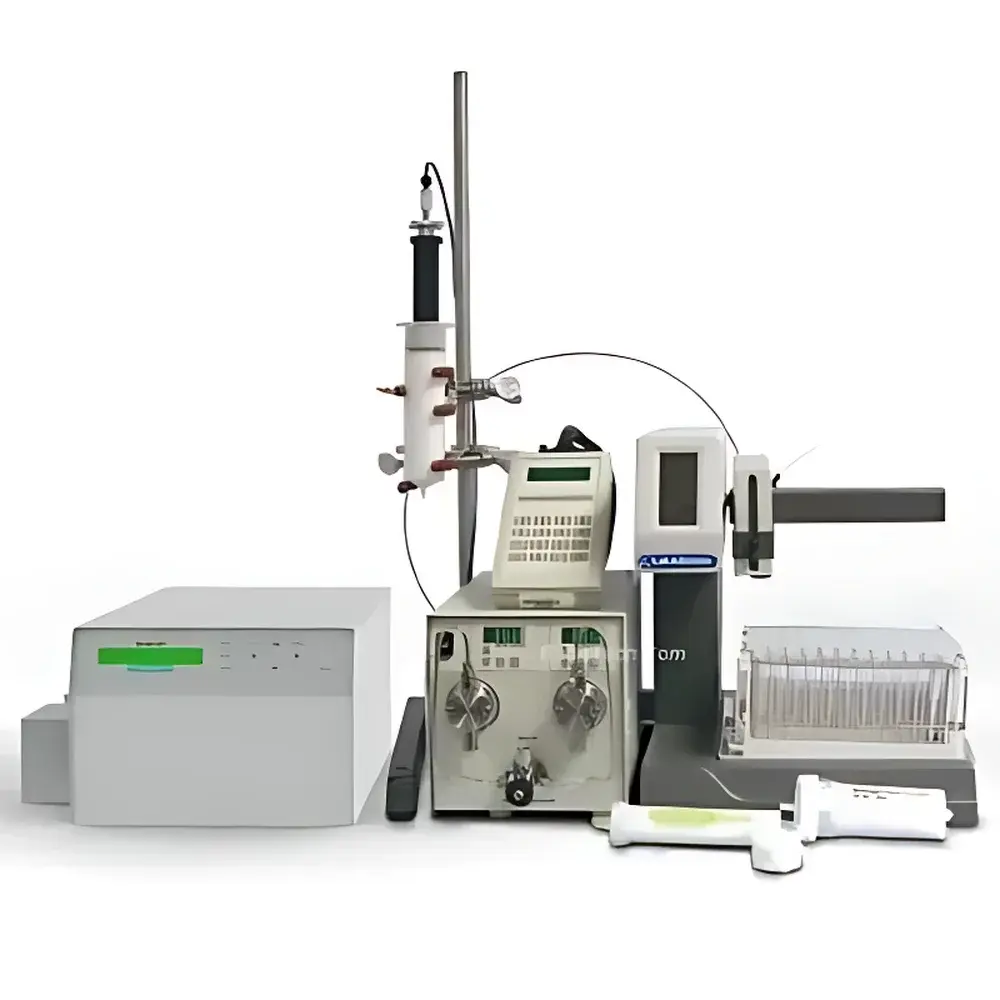
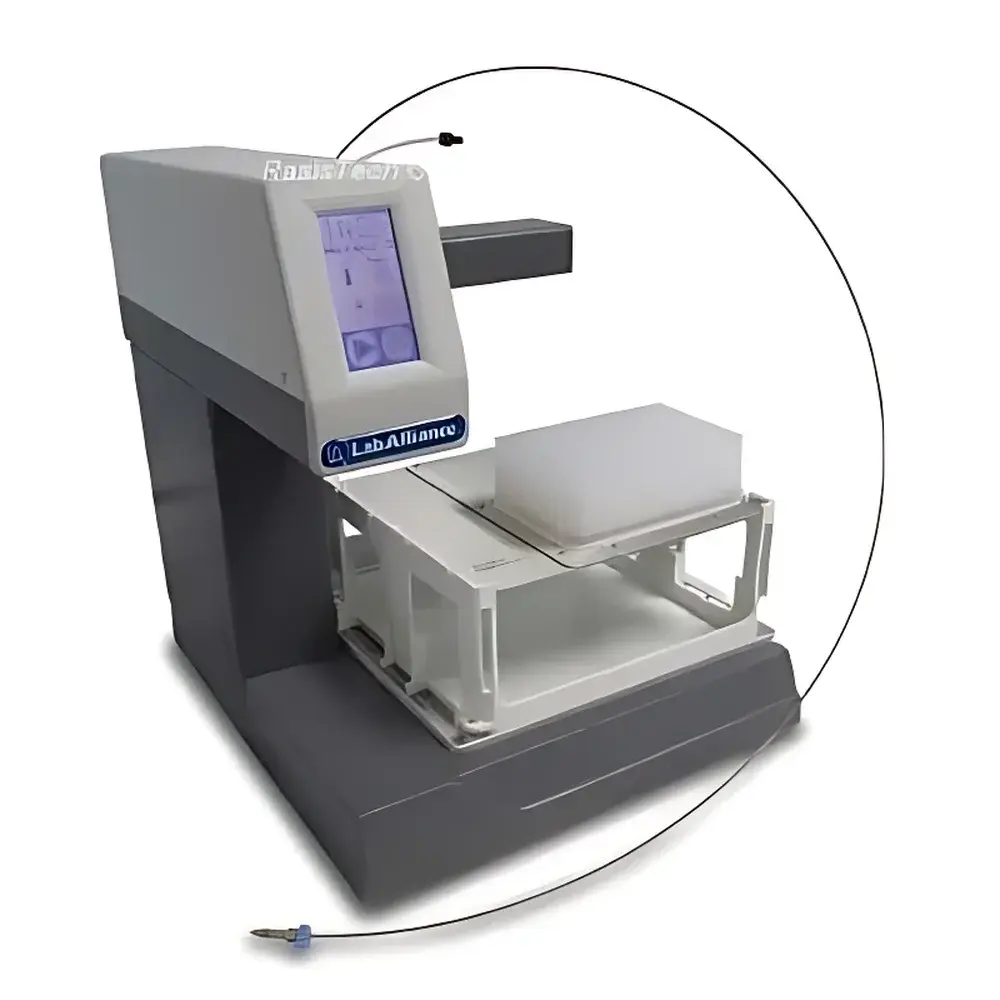
Laballiance Flash 150 Binary Gradient Prep System
| Brand | Laballiance |
|---|---|
| Origin | USA |
| Model | Flash 150 |
| Maximum Flow Rate | 150 mL/min |
| Maximum Pressure | 200 psi |
| Detector | VUV14 Fixed-Wavelength UV Detector (254 nm) |
| Method Storage Capacity | 10 Predefined Gradient Methods + User-Programmable Gradients |
| Fluidic Path Material | 316 Stainless Steel |
| Fraction Collection | Integrated, Trigger-Based |
| Control Unit | Dedicated Embedded System with Touchscreen Interface |
| Compliance | Designed for GLP/GMP-adjacent laboratory environments |
| Software | Standalone instrument control with real-time data logging and method export capability |
Overview
The Laballiance Flash 150 Binary Gradient Prep System is a robust, benchtop-scale preparative liquid chromatography platform engineered for reliable fractionation of organic and pharmaceutical compounds at the milligram-to-gram scale. Built upon classical low-pressure liquid chromatography (LPLC) principles, the system employs binary gradient elution—precisely mixing two solvents via high-accuracy dual-piston pumps—to achieve reproducible separation profiles across silica, reversed-phase C18, and other common stationary phases. Its 150 mL/min maximum flow rate and 200 psi pressure rating position it between analytical HPLC and large-scale flash systems, making it ideal for method development scaling, natural product isolation, synthetic intermediate purification, and early-stage API purification where throughput and solvent economy are critical. The system operates without external PC dependency, leveraging an embedded control unit with intuitive touchscreen navigation—minimizing software overhead while ensuring operational continuity in regulated or resource-constrained lab settings.
Key Features
- Binary gradient pump with dual independent piston assemblies delivering precise solvent mixing from 0–100% in 1% increments; flow accuracy ±2% across 5–150 mL/min range
- VUV14 fixed-wavelength UV detector operating at 254 nm with analog output and real-time absorbance monitoring; optimized for broad-spectrum compound detection in organic solvents (e.g., hexane, ethyl acetate, methanol)
- Stainless steel (316 SS) fluidic path throughout pump head, injector manifold, detector flow cell, and collection valve—ensuring chemical compatibility with aggressive solvents and minimizing metal-catalyzed degradation
- Dedicated control module storing up to 10 preloaded gradient methods; supports user-defined time-based gradients with up to 8 linear or stepwise segments per method
- Integrated fraction collector with programmable trigger logic (UV threshold, time window, or volume-based), compatible with standard rack formats (e.g., 13 × 100 mm, 16 × 150 mm tubes)
- Front-panel USB port for method import/export and raw data backup; no proprietary drivers required for file transfer
Sample Compatibility & Compliance
The Flash 150 accommodates sample loads ranging from 10 mg to >5 g depending on column dimensions (typically 25–100 mm ID × 150–500 mm length) and matrix complexity. It supports standard flash cartridges, packed glass columns, and custom stainless-steel columns. All wetted components comply with USP Class VI biocompatibility requirements for extractables testing. While not certified for FDA 21 CFR Part 11 compliance out-of-the-box, the system’s deterministic method execution, non-volatile method storage, and timestamped event logging align with core ALCOA+ data integrity principles. It is routinely deployed in laboratories adhering to ISO/IEC 17025, ASTM D7251 (for hydrocarbon separations), and USP chromatographic system suitability guidelines.
Software & Data Management
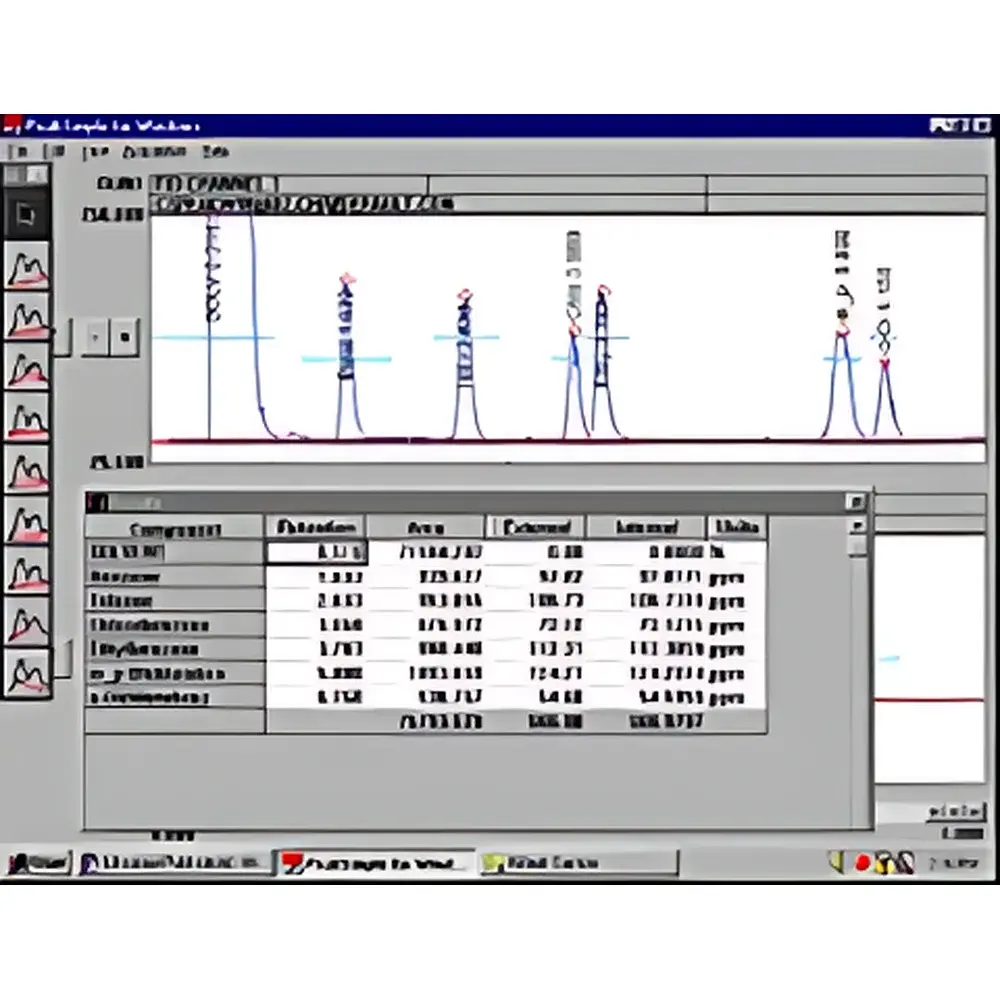
Control and acquisition are managed through the onboard firmware interface—no third-party software installation required. Real-time chromatograms display on the 7-inch resistive touchscreen with adjustable scaling, peak marking, and baseline correction. All method parameters, run logs, and detector output are saved as CSV files for post-run analysis in Excel, Origin, or Chromatography Data Systems (CDS). Method files (.flm) include full gradient tables, flow setpoints, UV thresholds, and collection rules—enabling seamless replication across instruments. Audit trails are maintained internally for method edits and run initiation events, supporting internal QA review and GLP documentation workflows.
Applications
- Purification of reaction mixtures in medicinal chemistry and process R&D
- Isolation of bioactive constituents from plant extracts and fermentation broths
- Desalting and buffer exchange of peptides and oligonucleotides
- Removal of catalysts (e.g., Pd, Ru) and ligands from transition-metal-catalyzed reactions
- Scale-up of analytical HPLC methods to preparative conditions using retention time correlation and linear velocity matching
- Quality control fractionation of polymer additives and specialty monomers
FAQ
What column formats are compatible with the Flash 150 system?
Standard flash columns (e.g., GraceResolv, ISCO RediSep) with 1/4″ or 1/8″ inlet/outlet fittings; custom stainless-steel columns with Swagelok or Valco-style end fittings.
Can the VUV14 detector be upgraded to a variable-wavelength model?
No—the VUV14 is a fixed-wavelength detector optimized for cost-effective, maintenance-free operation; variable-wavelength detection requires a separate instrument platform.
Is remote monitoring or network connectivity supported?
The system does not support Ethernet or Wi-Fi; however, USB-based data export enables integration into centralized lab informatics systems via scheduled scripts or manual transfer.
What maintenance intervals are recommended for the pump seals and detector lamp?
Pump seals: inspect every 500 hours of operation or after 200 runs involving chlorinated solvents; UV lamp: replace every 2,000 hours or when baseline noise exceeds 5 mAU RMS.
Does the system meet regulatory requirements for GMP manufacturing?
It is suitable for GMP R&D and pilot-scale purification but requires supplementary validation documentation (IQ/OQ/PQ) and procedural controls to satisfy full GMP production compliance.





