
AMS Dioxin Sampling System for Stack Emissions
| Brand | AMS |
|---|---|
| Origin | Italy |
| Model | AMS Dioxin |
| Instrument Type | Flue Gas Dioxin Sampling System |
| Flow Accuracy | ±2% |
| Compliance | UNI-EN 1948:2006 |
| Sampling Methods | Filter-Condensation, Dilution, Cooled Probe |
| Primary Adsorbent | XAD-2 Resin or PUF Foam |
| Heating Zone Temperature | <125 °C (maintained above gas dew point) |
| Condenser Outlet Temperature | <20 °C |
| Main Flow Rate | 3–5 m³/h |
| Side Stream Flow Rate | 0.5–0.7 m³/h |
| Side-to-Main Flow Ratio Tolerance | ±10% |
| Linear Velocity in XAD-2 Tube | ≤34 cm/s |
Overview
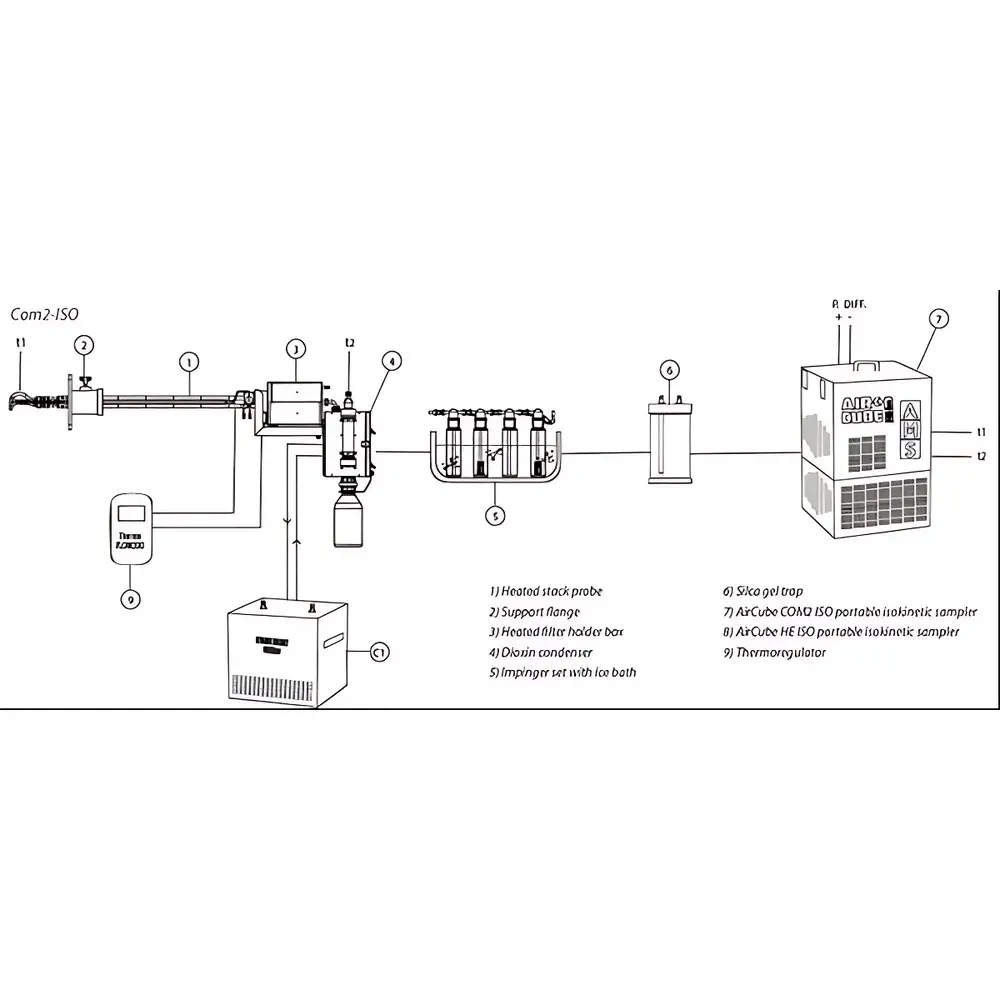
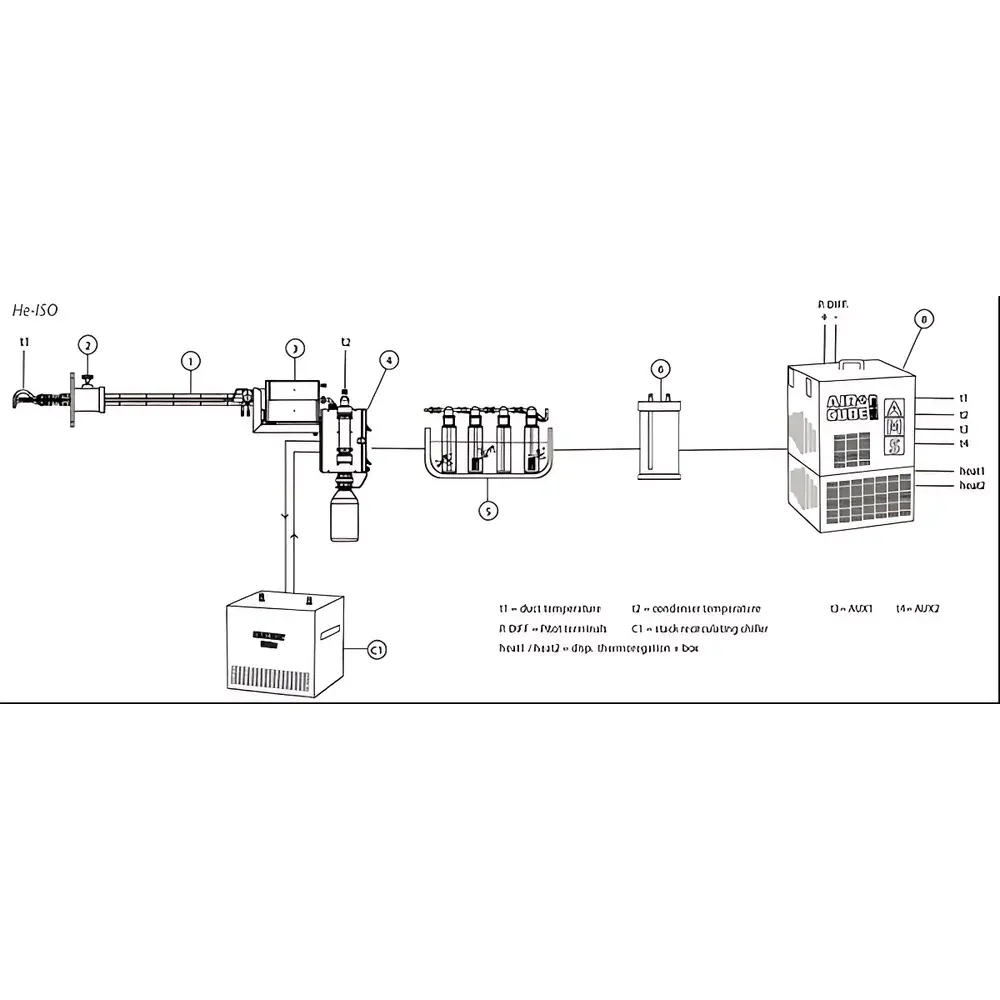
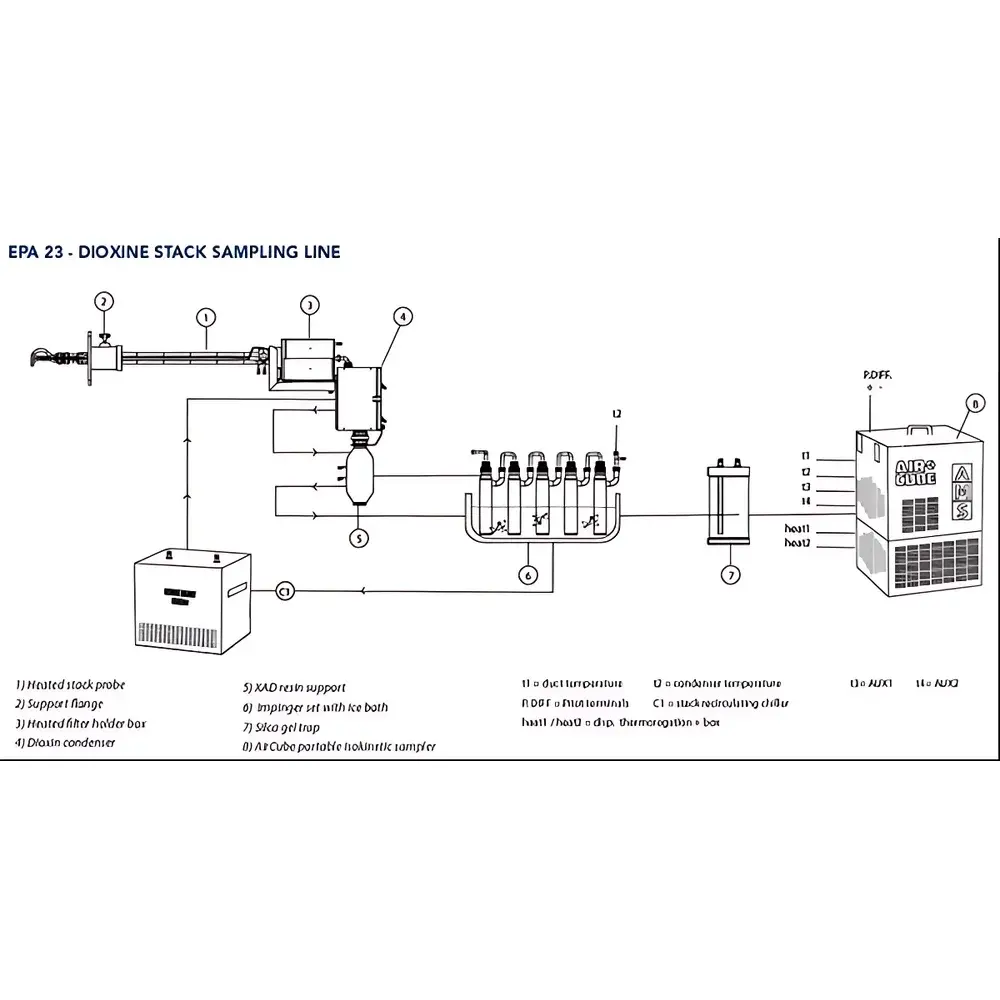
The AMS Dioxin Sampling System for Stack Emissions is a precision-engineered, field-deployable flue gas sampling platform designed specifically for the quantitative collection of polychlorinated dibenzo-p-dioxins (PCDDs) and dibenzofurans (PCDFs) from industrial combustion sources. It operates in strict accordance with the European standard UNI-EN 1948:2006 — “Stationary source emissions — Determination of the mass concentration of dioxins and furans” — which defines the performance criteria, sampling geometry, thermal management, and adsorption protocols required for regulatory-grade data acquisition. The system employs a validated filter-condensation methodology as its primary configuration: hot filtration followed by controlled condensation to separate gaseous-phase congeners onto solid sorbents (XAD-2 resin or polyurethane foam, PUF), while simultaneously capturing particulate-bound dioxins on a quartz fiber filter. This dual-phase capture mechanism ensures comprehensive congener recovery across both vapor and particulate fractions, meeting the stringent mass balance requirements mandated for stack testing under EU Directive 2010/75/EU (IED) and U.S. EPA Method 23.
Key Features
- Triple-method flexibility: Supports filter-condensation (default), dilution, and cooled-probe configurations to accommodate varying stack conditions (e.g., high moisture, low temperature, or high particulate load).
- Thermally regulated sampling train: Heated filter housing maintained below 125 °C yet consistently above the flue gas dew point to prevent condensation upstream of the filter—minimizing artifact formation and ensuring particulate integrity.
- Stainless-steel condenser with precise temperature control: Cools main stream to <20 °C to maximize adsorption efficiency of semi-volatile dioxin congeners onto XAD-2 or PUF media.
- Dual-flow architecture: Independently metered main flow (3–5 m³/h) and side stream (0.5–0.7 m³/h), with real-time ratio monitoring to maintain ≤±10% deviation—critical for isokinetic compliance per EN 13284-1.
- Linear velocity control: Integrated flow restriction and calibration ensure XAD-2 tube inlet velocity remains ≤34 cm/s, preventing channeling and breakthrough during extended 6–8 hour sampling campaigns.
- Optional upstream condensate collector: Enables gravimetric water content measurement and removal of bulk condensate prior to sorbent exposure—reducing competitive adsorption and improving analytical recoveries.
Sample Compatibility & Compliance
The AMS Dioxin Sampling System is validated for use across coal-fired boilers, waste incinerators (MSW, hazardous, medical), cement kilns, and metallurgical furnaces. Its construction adheres to ISO 9001-certified manufacturing practices, and all wetted components are electropolished stainless steel (AISI 316L) or fluoropolymer-lined to eliminate metallic catalysis and adsorptive losses. The system satisfies the material compatibility, blank control, and leak-tightness requirements outlined in UNI-EN 1948-1:2006, including mandatory pre- and post-sampling blank verification, field spike recovery assessment (>70% for all 17 toxic congeners), and documented chain-of-custody procedures. It is routinely deployed in audits supporting ISO/IEC 17025-accredited laboratories and meets the sample integrity prerequisites for GLP-compliant reporting to environmental authorities such as ARPA (Italy), LAWA (Germany), and the UK Environment Agency.
Software & Data Management
While the core sampling hardware operates without embedded firmware, the AMS system integrates seamlessly with third-party data loggers (e.g., Campbell Scientific CR1000X or Testo 570) for time-synchronized recording of temperature profiles (filter housing, condenser inlet/outlet), differential pressure across filters, and volumetric flow rates. All logged parameters are timestamped and stored in CSV or binary formats compatible with LIMS platforms. For full traceability, the system supports manual entry into electronic lab notebooks (ELNs) compliant with FDA 21 CFR Part 11 when paired with qualified digital signature workflows. Calibration certificates for flow meters and thermocouples are provided with NIST-traceable documentation, and all field logs include operator ID, sampling start/end times, and ambient barometric pressure—essential metadata for subsequent isokinetic correction and congener quantification in GC-HRMS analysis.
Applications
- Regulatory stack testing for PCDD/F emissions under IED Article 62 and national transposition laws.
- Performance evaluation of activated carbon injection (ACI) and catalytic filter systems in waste-to-energy plants.
- Benchmarking of thermal desorption efficiency in rotary kiln off-gas treatment trains.
- Source apportionment studies requiring congener pattern analysis across multiple emission points.
- Pre-commissioning verification and periodic compliance monitoring for new combustion installations.
FAQ
Is the AMS Dioxin Sampling System certified for use in U.S. EPA Method 23 compliance testing?
Yes — while not EPA-listed as a “certified system,” its design, materials, and operational protocol fully satisfy the method’s requirements for sampling train configuration, temperature control, flow validation, and sorbent handling. Users must perform method-specific validation (e.g., surrogate spiking, breakthrough checks) per Section 8.2 of EPA Method 23.
Can the system be used for sampling other semi-volatile organic compounds (SVOCs) beyond dioxins?
The filter-condensation train is broadly applicable to SVOCs with similar vapor pressures and polarity (e.g., PCBs, PBDEs, certain PAHs), provided adsorbent selection and thermal management are re-validated per compound class and matrix.
What maintenance intervals are recommended for long-term field deployment?
Quartz filters and XAD-2/PUF cartridges are single-use. Stainless-steel components require quarterly inspection for corrosion or thermal insulation degradation; flow meters must be recalibrated annually against a primary standard.







