
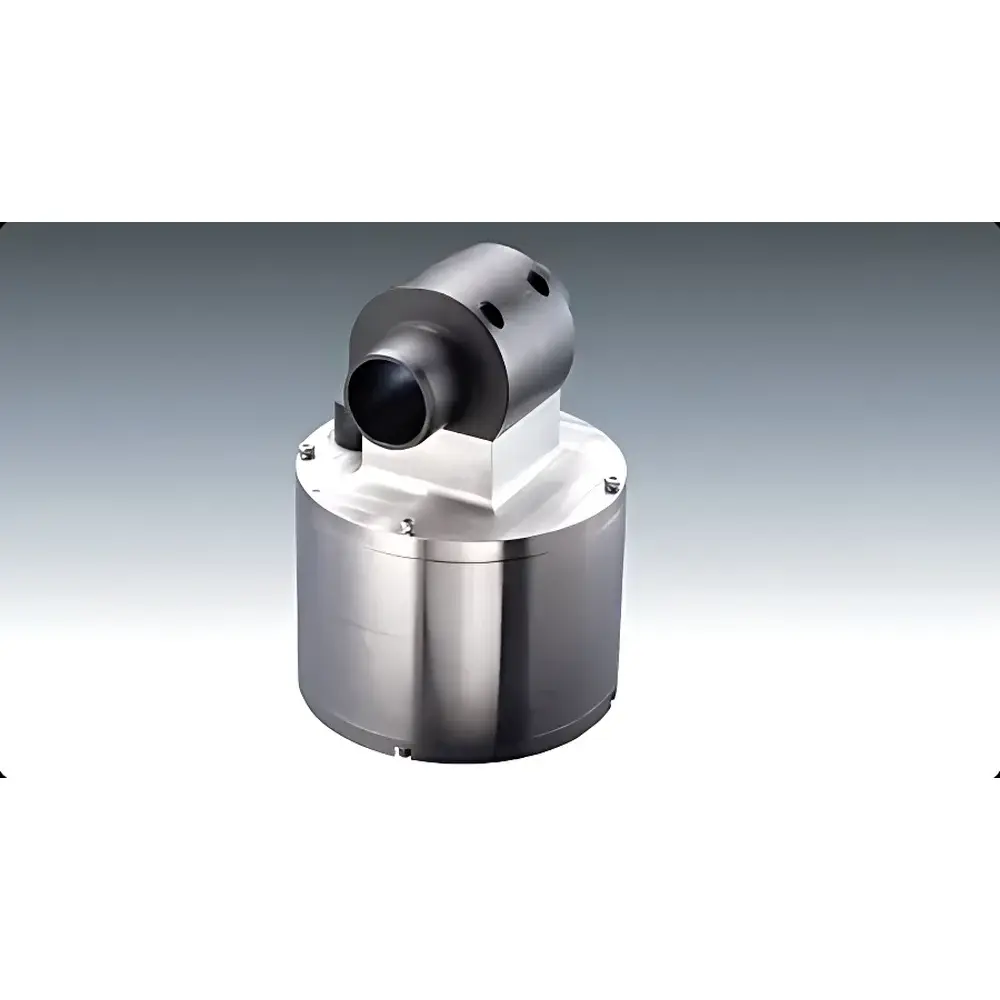
Chelsea GlowTracka Underwater Bioluminescence Sensor
| Brand | Chelsea |
|---|---|
| Origin | United Kingdom |
| Manufacturer Type | Authorized Distributor |
| Origin Category | Imported |
| Model | GlowTracka |
| Price | Upon Request |
Overview
The Chelsea GlowTracka is a submersible, flow-through bioluminescence sensor engineered for quantitative detection of mechanically stimulated luminescence from marine dinoflagellates and other planktonic bioluminescent organisms. Operating on the principle of controlled hydrodynamic stimulation—where seawater is drawn through a calibrated flow cell to induce flash responses in shear-sensitive microorganisms—the GlowTracka captures transient light emissions (typically 0.1–1 s duration) using a high-sensitivity photodiode detector. Unlike passive optical sensors, the GlowTracka actively interrogates the bioluminescent potential of a water sample, enabling correlation between flash frequency/intensity and physiological status, species composition, and ecological stress indicators. Its design supports deployment across multiple operational modalities: fixed-point moorings, vertical profiling systems (e.g., pump-driven CTD rosettes), and towed platforms including AQUAShuttle, NuShuttle, and SeaSoar. Rated to 1000 m depth, it delivers robust performance in high-pressure, low-light marine environments where traditional fluorescence or chlorophyll-a proxies may lack specificity for toxic bloom events.
Key Features
- Flow-through measurement cell with 28 mm internal bore diameter, optimized for laminar flow and reproducible mechanical stimulation of dinoflagellates
- High-sensitivity silicon photodiode (10 mm² active area) with spectral responsivity calibrated across 400–700 nm (peak at ~560 nm), enabling discrimination of taxon-specific emission profiles
- Detection threshold of 10 pW at 560 nm under ZF-50 Hz bandwidth (−3 dB), supporting quantification of single-flash events and population-level burst activity
- Integrated flow sensor interface accepting zero-crossing signals from ±5 mV to ±100 V, compatible with standard turbine and electromagnetic flow meters (full-scale range up to 500 Hz)
- Low-power architecture: nominal 40 mA draw at 12 V DC, operable across 6.0–25 V input range, suitable for long-term autonomous deployments
- Pressure-rated titanium-alloy housing (112.5 mm diameter × 152 mm length; ~2.4 kg in air) with IP68 sealing and Impuls LPMIL-4-PS wet-mateable connector for reliable deep-ocean connectivity
Sample Compatibility & Compliance
The GlowTracka is validated for use with natural seawater matrices across salinities of 25–40 PSU and temperatures from −2 °C to +35 °C. It maintains measurement integrity in turbid coastal waters and oligotrophic open-ocean settings due to its time-gated detection logic and rejection of ambient photon noise via ZF-50 Hz filtering. The sensor complies with ISO 17025 traceability requirements for environmental monitoring instrumentation when operated within certified calibration protocols. Data acquisition workflows support GLP-compliant logging—including timestamped event records, flow rate synchronization, and raw pulse amplitude histograms—for integration into regulatory reporting frameworks aligned with OSPAR, ICES, and EU Marine Strategy Framework Directive (MSFD) Annex V monitoring guidelines.
Software & Data Management
The GlowTracka outputs analog voltage signals (0–1 V full scale, 0.5 Ω source impedance, >10 kΩ load requirement) synchronized with external flow meter pulses. These signals are digitized via user-supplied data loggers (e.g., Sea-Bird Electronics SBE 37, RBRconcerto, or custom LabVIEW/Python-based acquisition systems). Chelsea provides open-format calibration certificates and spectral response curves (NIST-traceable), enabling post-processing correction for wavelength-dependent quantum efficiency. Firmware updates and configuration tools are distributed via secure FTP; all firmware revisions maintain backward compatibility and include audit-trail metadata compliant with FDA 21 CFR Part 11 for GxP-aligned research applications.
Applications
- Early detection and spatial mapping of toxic dinoflagellate blooms (e.g., Lingulodinium polyedra, Noctiluca scintillans) via flash-rate anomaly thresholds
- Quantitative assessment of in situ primary production potential, independent of chlorophyll concentration or photosynthetic efficiency
- Time-series monitoring of bioluminescent community structure in response to nutrient loading, thermal stress, or hypoxia
- Integration into autonomous observatories (e.g., Ocean Networks Canada, EMSO) and shipboard underway systems for real-time water mass classification
- Validation of satellite-derived ocean color products by anchoring remote sensing algorithms to in situ bioluminescent activity metrics
FAQ
What biological mechanisms does the GlowTracka measure?
It detects mechanically stimulated bioluminescence—primarily from dinoflagellates—triggered by shear stress in the flow cell, not spontaneous or chemically induced luminescence.
Can the GlowTracka distinguish between different bioluminescent species?
While not a taxonomic identifier, its spectral responsivity profile and flash kinetics (rise time, decay half-life, peak intensity) enable empirical differentiation of dominant functional groups when combined with concurrent microscopy or genetic sampling.
Is calibration required before each deployment?
A factory calibration certificate is supplied with each unit; field recalibration is recommended annually or after exposure to extreme pressure cycling, using Chelsea’s traceable LED reference source (Part No. CAL-GT-LED-560).
Does the GlowTracka meet requirements for regulatory environmental monitoring?
Yes—it supports auditable data capture and integrates with certified data acquisition systems used in EU Water Framework Directive and US EPA National Coastal Assessment programs.
How is biofouling mitigated during long-term deployments?
The flow cell geometry minimizes stagnation zones; optional copper-alloy inserts or periodic low-flow chlorine rinse protocols (per Chelsea Technical Note TN-GT-07) reduce fouling without compromising bioluminescent response fidelity.
Related Products







