
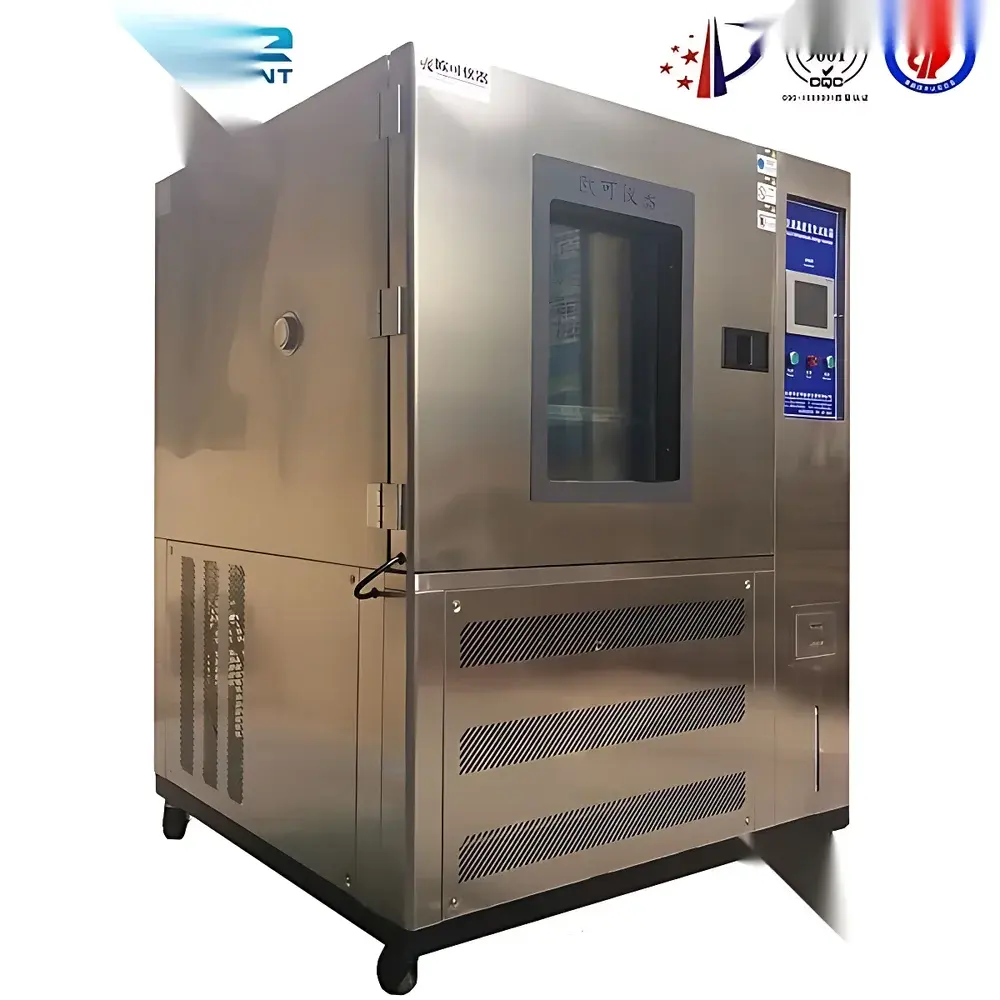
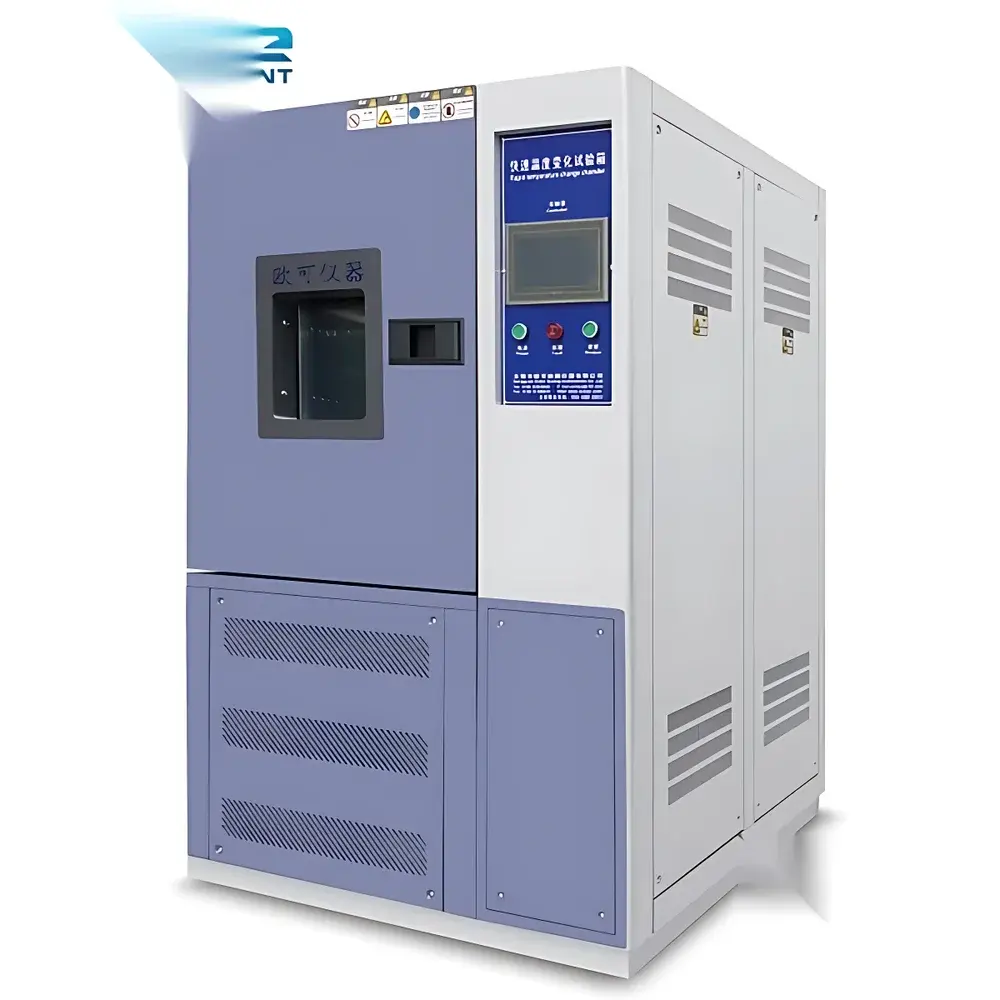
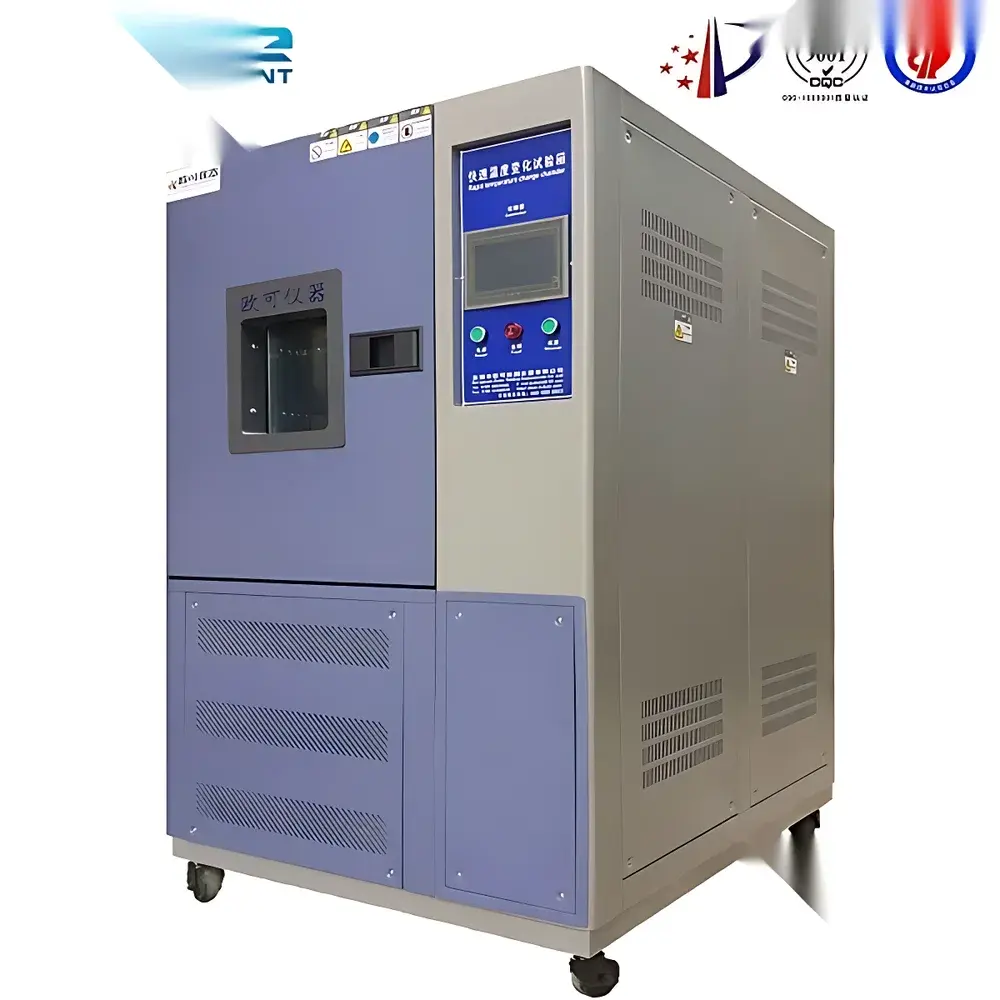
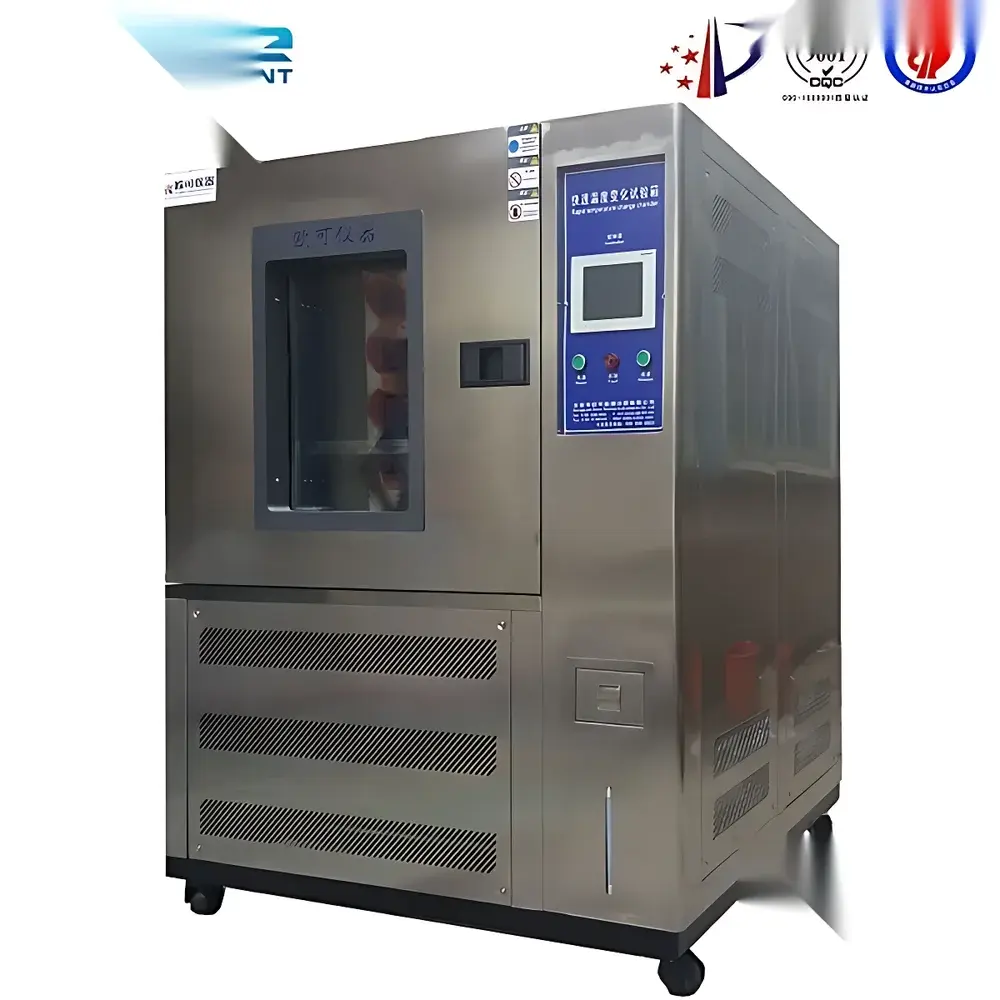
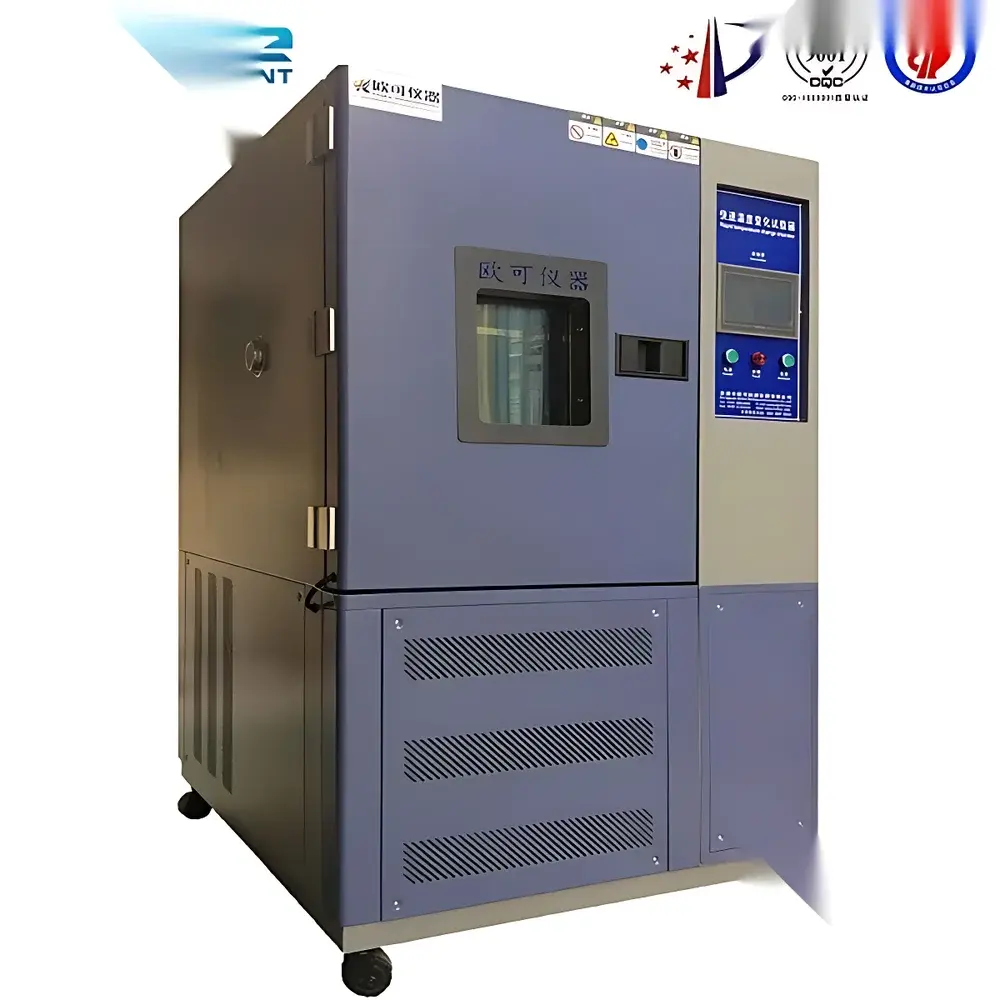
Generic Model Rapid Temperature Change Test Chamber
| Brand | Other Brands |
|---|---|
| Origin | Imported |
| Manufacturer Type | Authorized Distributor |
| Price | USD 14,000 (FOB) |
| Temperature Transition Time (Hot-to-Cold / Cold-to-Hot) | ≤10 s |
| Temperature Recovery Time in Test Zone | ≤5 s |
| Control Interface | 302×240-dot Color Touch LCD with Bilingual (EN/CN) Microprocessor Controller |
| Program Storage Capacity | 100 Programs, up to 9999 Cycles, Max Segment Duration: 999 h 59 min |
| Communication Interfaces | RS-232C, RS-485 (optional), Ethernet (optional) |
| Refrigeration System | Dual-stage HFC-based Cryogenic System |
| Compliance Standards | MIL-STD-810H, IEC 60068-2-14, JIS Z 8702 |
Overview
The Generic Model Rapid Temperature Change Test Chamber is an engineered environmental stress screening (ESS) system designed for high-fidelity thermal shock testing of electronic components, aerospace hardware, automotive modules, and precision mechanical assemblies. It operates on a three-zone architecture—separate high-temperature, low-temperature, and test zones—utilizing thermally isolated chambers and rapid air-mixing via pneumatically actuated damper systems. Unlike single-chamber thermal cycling units, this design eliminates specimen movement during transition, ensuring mechanical stability and eliminating positional artifacts in thermal response data. The chamber employs a dual-stage refrigeration circuit with HFC-404A or HFC-507A refrigerants (fully compliant with current EU F-Gas Regulation Annex I thresholds), enabling controlled cooling rates exceeding 60°C/min from +150°C to −70°C and heating rates up to 40°C/min from −70°C to +150°C. Its thermal inertia management leverages optimized heat mass storage and calibrated airflow velocity control (±0.5 m/s uniformity across test zone), achieving temperature stabilization within ±0.3°C tolerance under dynamic load conditions.
Key Features
- Three-zone static-test architecture: Specimens remain stationary while conditioned air is dynamically routed via high-speed pneumatic dampers—ensuring zero mechanical disturbance during thermal transitions.
- Color touch LCD controller (302 × 240 dots) with bilingual (English/Chinese) interface, real-time curve plotting, and embedded non-volatile memory for up to 100 test programs and 9999 cycles.
- Dual-stage cryogenic system with cascade evaporator design and oil-separation circuitry—optimized for rapid cooldown below −65°C without compressor overload or ice formation in expansion valves.
- Integrated PLC-based safety logic: Monitors phase imbalance, refrigerant pressure anomalies, door interlock status, and overtemperature events; triggers automatic shutdown and latched fault logging per IEC 61508 SIL1 requirements.
- Standard RS-232C port with optional RS-485/Ethernet expansion for SCADA integration; supports Modbus RTU/TCP protocol for centralized lab monitoring under ISO/IEC 17025-compliant calibration workflows.
- Zero-paper data acquisition: Internal 16-bit ADC records temperature at 1 Hz resolution; exports CSV-formatted logs with UTC timestamps and cycle-index metadata for traceable QA documentation.
Sample Compatibility & Compliance
The chamber accommodates specimens up to 500 mm × 500 mm × 500 mm (W×D×H) within its stainless-steel 316L test zone. Internal airflow distribution meets ISO 16750-4 Annex A requirements for uniformity (±2°C across volume at steady state). It satisfies thermal shock test protocols defined in MIL-STD-810H Method 503.5 (Temperature Shock), IEC 60068-2-14 (Change of Temperature), and JIS Z 8702:2019 (Environmental Testing—Thermal Shock). All firmware and controller logic are architected to support GLP/GMP audit trails: event logs include operator ID, timestamp, parameter set hash, and digital signature verification. Optional LN₂ assist retrofit enables sub-zero ramp rates down to −196°C with <3 s transition time—validated per ASTM E2251-22 Annex A1 for cryogenic shock qualification.
Software & Data Management
The included Windows-compatible software suite (v4.2+) provides full remote configuration, real-time multi-channel visualization, and automated report generation in PDF/XLSX formats compliant with FDA 21 CFR Part 11 (electronic signatures, audit trail, role-based access control). Raw data files embed CRC-32 checksums and SHA-256 file hashes for integrity verification. Exported datasets include calibrated sensor IDs, NIST-traceable reference calibrations (certified annually per ISO/IEC 17025), and metadata tags for LIMS integration (e.g., LabWare, Thermo Fisher SampleManager). Historical program versions are version-controlled with Git-style branching—enabling reproducible test method validation per ISO 10012:2020.
Applications
This chamber serves critical reliability assessment functions across regulated industries: solder joint fatigue analysis in PCBAs (IPC-9701), hermetic seal validation for MEMS sensors (MIL-PRF-38534), thermal expansion coefficient mismatch testing of ceramic-metal composites (ASTM C554), and qualification of battery module enclosures under EV thermal abuse scenarios (UN GTR 20). Its static-test methodology is particularly suited for optical assemblies (lenses, laser diodes), where vibration-induced misalignment would compromise measurement validity. In R&D labs, it supports accelerated life modeling using Coffin-Manson and Norris-Landzberg equations—feeding Weibull analysis in Minitab or JMP for failure mode prediction.
FAQ
What standards does this chamber validate against?
It is factory-verified to meet MIL-STD-810H Method 503.5, IEC 60068-2-14 Ed. 4.0, and JIS Z 8702:2019—including full documentation of temperature overshoot, recovery time, and spatial uniformity per clause 6.2.
Can the system be integrated into an existing MES or LIMS?
Yes—via RS-485 Modbus TCP or OPC UA (optional license), supporting bi-directional parameter sync, alarm forwarding, and automated certificate-of-conformance (CoC) generation.
Is NIST-traceable calibration included?
A baseline calibration certificate (per ISO/IEC 17025) is supplied with shipment; annual recalibration services are available through authorized metrology partners with accredited dry-well and PRT reference standards.
What maintenance intervals are recommended?
Compressor oil change every 8,000 operating hours; refrigerant purity analysis annually; damper actuator lubrication and position sensor verification semiannually per maintenance logbook (included).



