
English Product Name
| Brand | OEM / Private Label |
|---|---|
| Origin | China |
| Manufacturer Type | Authorized Distributor |
| Import Status | Imported Components |
| Price | USD 3,100 (FOB Shanghai) |
| Temperature Range | −65 °C to +150 °C |
| Humidity Range | 20–95 % RH |
| Temp. Uniformity | ±2.0 °C |
| Temp. Stability | ±0.5 °C |
| Humidity Uniformity | ±3.0 % RH |
| Humidity Stability | ±1.5 % RH |
| Heating Rate | ≥2.5 °C/min (from 20 °C to 85 °C in ≤60 min, no load) |
| Cooling Rate | ≥1.0 °C/min (from 20 °C to −40 °C in ≤70 min, no load, air/water-cooled) |
| Refrigerant | R404A/R23 |
| Compressor | Hermetic Scroll (Embraco or Copeland) |
| Insulation | 100 mm High-Density Glass Wool + Polyurethane Foam |
| Inner Chamber Material | SUS304 Mirror-Finish Stainless Steel |
| Outer Casing | Powder-Coated Cold-Rolled Steel or SUS304 Brushed Stainless Steel |
| Control System | 7″ TFT LCD Touch Panel with Dual PID Algorithm, Data Logging, Real-Time Curve Display, Alarm History & Audit Trail |
Overview
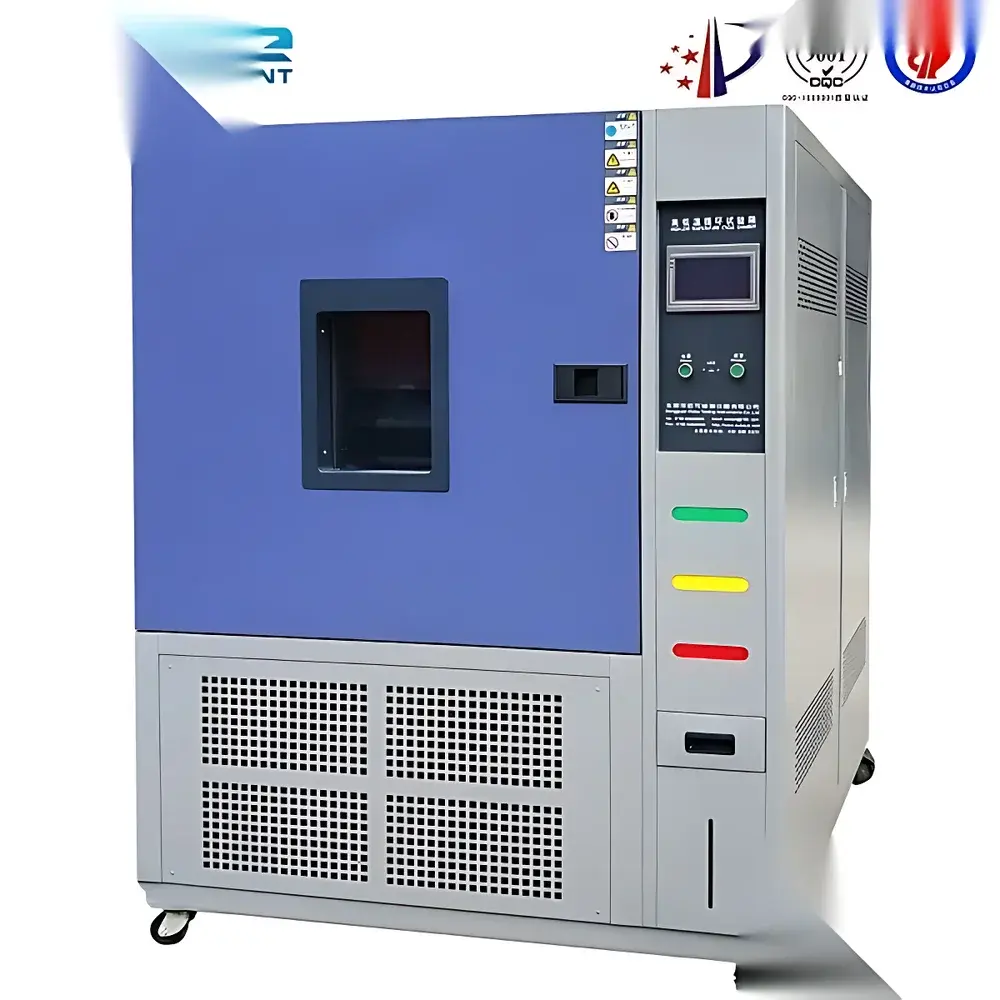
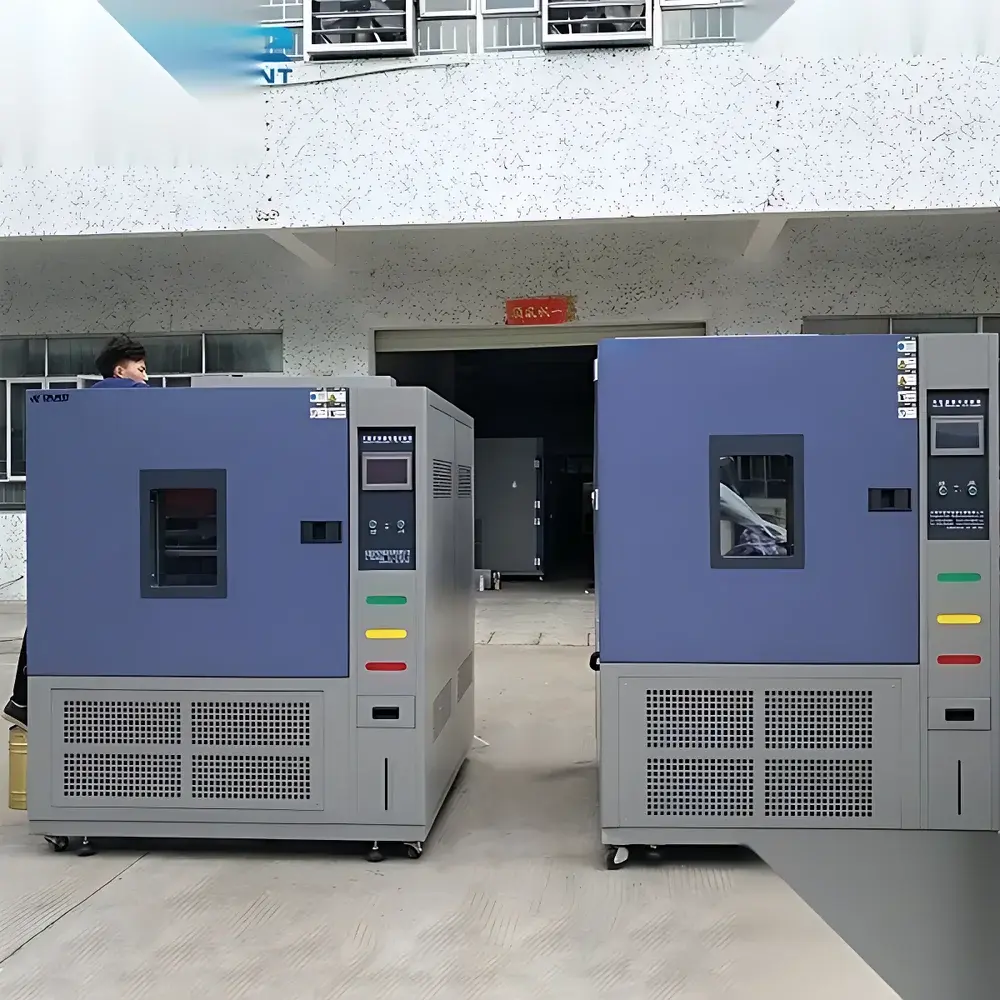
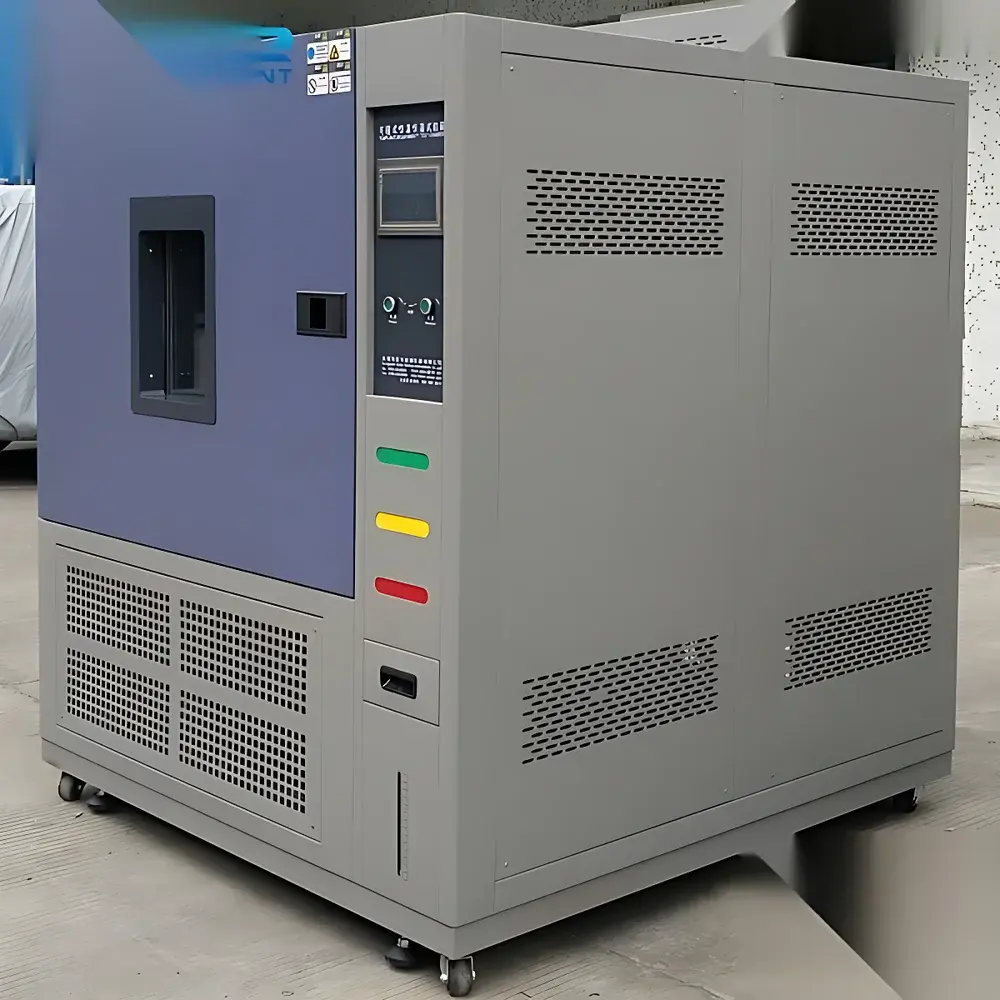
The Generic Temperature and Humidity Controlled Environmental Test Chamber is an industrial-grade climatic simulation system engineered for precision environmental stress testing of electronic components, automotive parts, aerospace materials, and packaging systems. It operates on a dual-refrigeration cycle architecture—mechanical compression refrigeration with cascade staging for sub-zero performance—combined with resistive heating and steam-based humidification. The chamber maintains traceable thermal and hygric conditions across wide operational ranges (−65 °C to +150 °C; 20–95 % RH), enabling compliance-driven validation per IEC 60068-2 series, MIL-STD-810H, and ISO 16750-4 protocols. Its sealed, low-vibration mechanical design—including reinforced structural framing, acoustic-dampened compressor mounts, and balanced centrifugal air circulation—ensures long-term stability and minimal thermal gradient deviation during extended test cycles (e.g., 1,000-hour HALT or accelerated aging).
Key Features
- Robust dual-layer chamber construction: mirror-finish SUS304 stainless steel interior (electropolished for corrosion resistance) and powder-coated cold-rolled steel or brushed SUS304 exterior with 100 mm composite insulation (glass wool + polyurethane)
- High-efficiency air distribution system with forward-curved centrifugal blower and adjustable multi-directional vents for uniform airflow and minimized stratification
- Multi-point temperature and humidity monitoring using calibrated Pt100 sensors (traceable to NIST standards) with real-time compensation algorithms
- Double-sealed observation window featuring triple-pane tempered glass, conductive ITO film for anti-fogging, and Philips LED lighting (6500 K color temperature)
- Integrated load-power interface (up to 3 kW, 380 V AC 3-phase 5-wire) supporting powered-in situ testing under environmental stress
- Comprehensive safety architecture: over-temperature/over-humidity cut-off, refrigerant pressure monitoring, door interlock, phase failure protection, and ground fault detection
Sample Compatibility & Compliance
The chamber accommodates standard test specimens up to 500 L internal volume (custom sizes available), including PCB assemblies, battery modules, optical sensors, and medical device enclosures. All models comply with GB/T 2423.1–2423.4 (equivalent to IEC 60068-2-1, -2, -3, -30), GB 5170.2–5170.6 (calibration verification methods), and support GLP/GMP audit readiness through configurable data integrity features. Optional validation packages include IQ/OQ documentation templates aligned with FDA 21 CFR Part 11 requirements for electronic records and signatures.
Software & Data Management
The embedded controller runs firmware v3.2+ with a 7-inch capacitive touch interface supporting bilingual (English/Chinese) operation, multi-segment programmable profiles (up to 99 steps), and real-time graphical overlay of setpoint vs. measured values. Logged data (temperature, humidity, alarms, system status) is stored internally (≥30 days at 1-min intervals) and exportable via USB or Ethernet to CSV or XML formats. Remote monitoring is enabled via Modbus TCP or optional OPC UA gateway for integration into LabVantage, TrackWise, or MES platforms. Audit trail functionality records all parameter changes, user logins, and alarm acknowledgments with timestamp and operator ID.
Applications
- Reliability qualification of consumer electronics per JEDEC JESD22-A104 (temperature cycling) and JESD22-A110 (highly accelerated stress test)
- Automotive component validation against ISO 16750-4 (climate resistance) and LV-124 (BMW environmental specification)
- Pharmaceutical packaging integrity testing under ICH Q1A(R2) stability conditions (25 °C/60 % RH, 30 °C/65 % RH, 40 °C/75 % RH)
- Material coefficient of thermal expansion (CTE) characterization via controlled ramp-and-soak thermal profiling
- Accelerated corrosion testing of coated metals using cyclic damp heat (IEC 60068-2-30, Test Db)
FAQ
What is the standard calibration interval for this chamber?
Annual calibration is recommended per ISO/IEC 17025 guidelines; factory-certified calibration certificates (with uncertainty budgets) are provided at shipment.
Can the chamber be configured for rapid thermal cycling (RTC)?
Yes—optional high-capacity refrigeration upgrade and enhanced airflow tuning enable ramp rates up to 15 °C/min (±5 °C tolerance) within −40 °C to +85 °C range.
Is remote firmware update supported?
Firmware updates require local USB upload; however, diagnostic logs and configuration backups can be retrieved remotely via secure FTP.
Does the controller support 21 CFR Part 11-compliant electronic signatures?
The base controller supports role-based access control and audit trail logging; full Part 11 compliance requires optional software license and external identity provider integration.
What maintenance is required for the humidification system?
Stainless steel steam generator requires quarterly descaling with citric acid solution; distilled water feed is mandatory to prevent mineral buildup and sensor drift.
Related Products



