
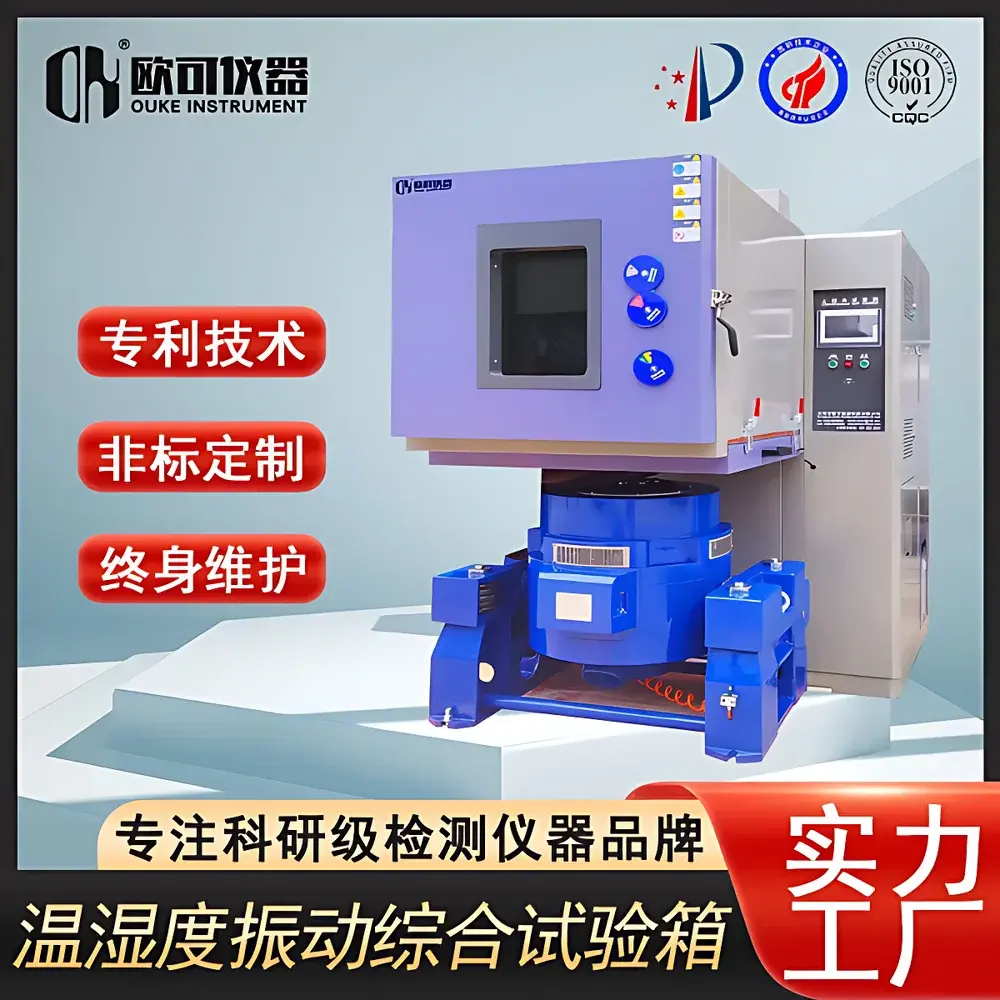
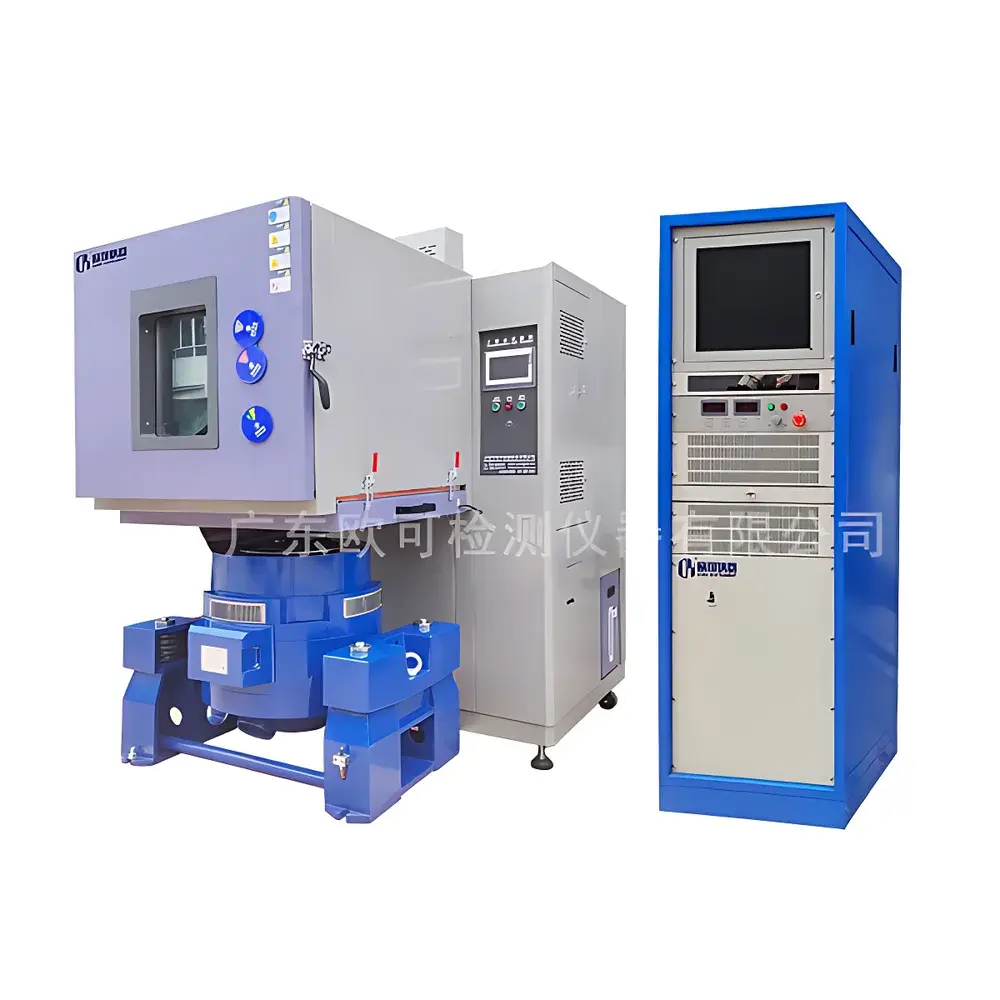
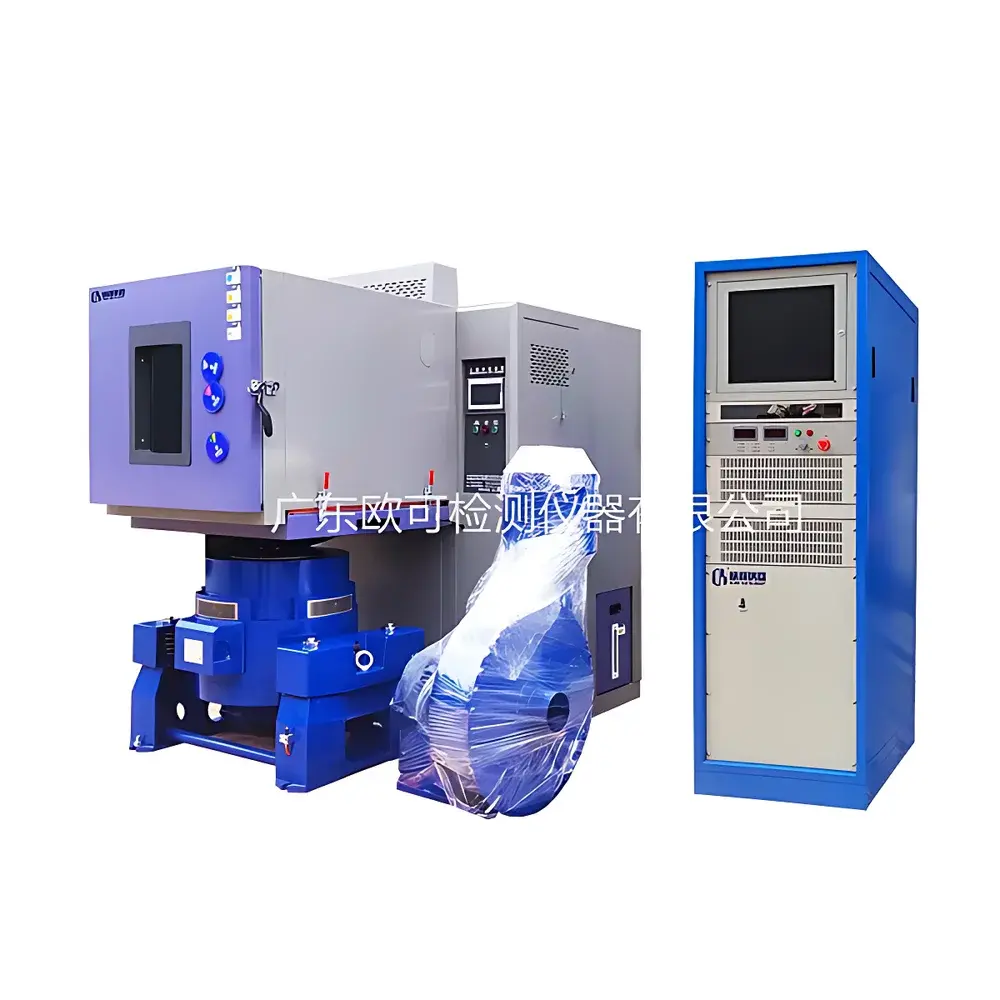
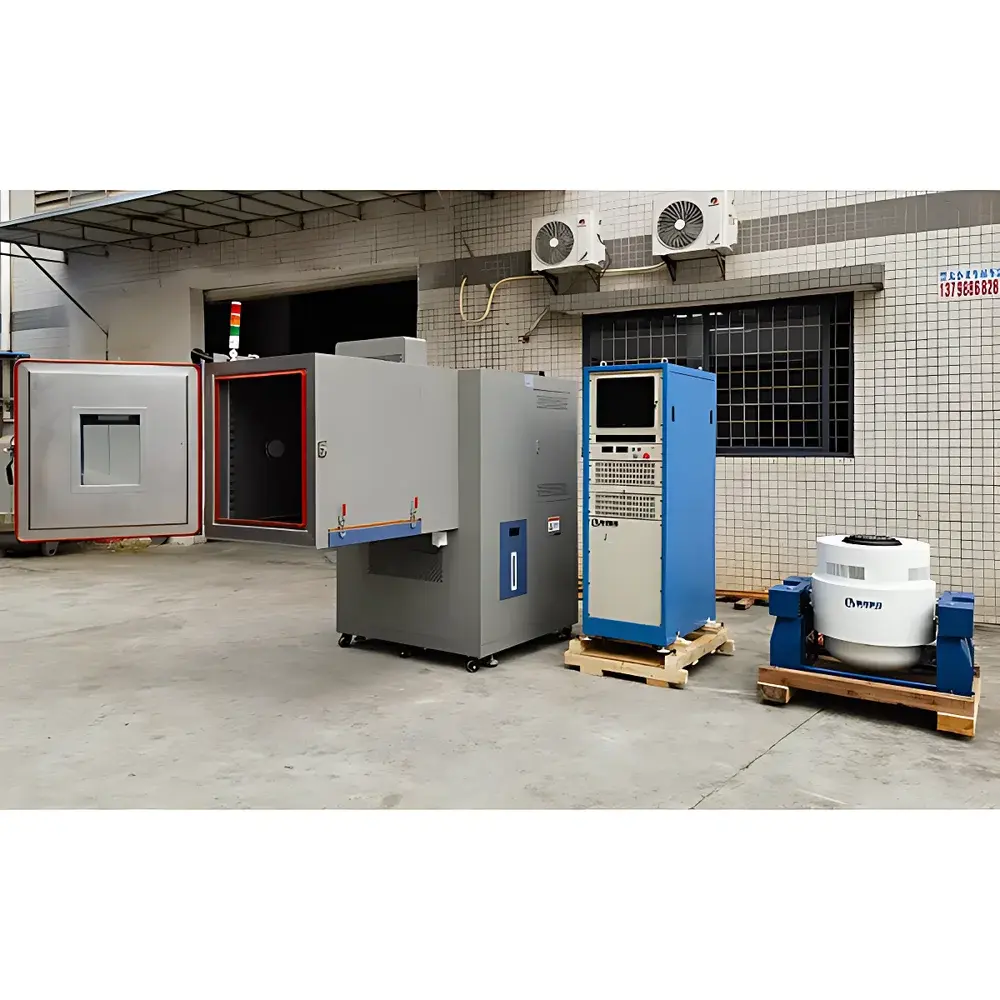
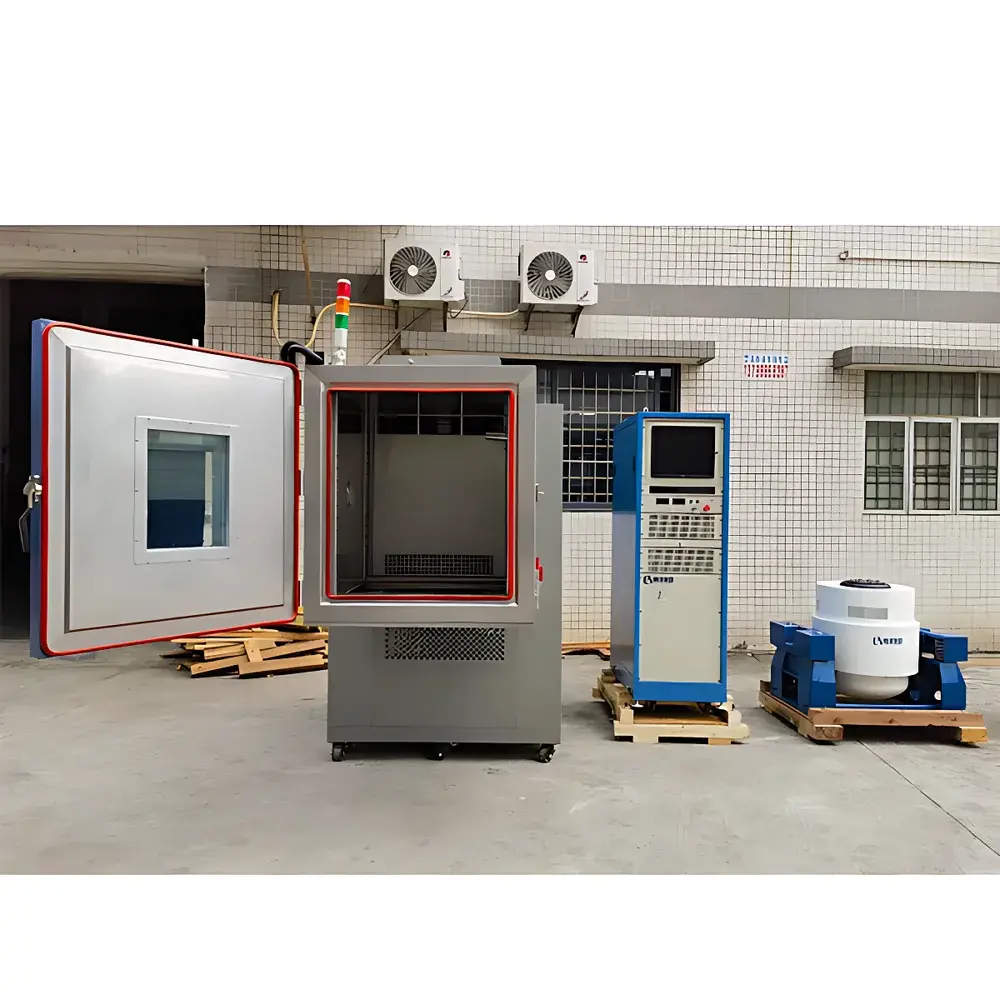
OK Instruments OK-ZTH-528 Combined Temperature-Humidity-Vibration Environmental Test Chamber
| Brand | OK Instruments |
|---|---|
| Origin | Guangdong, China |
| Manufacturer Type | Direct Manufacturer |
| Country of Origin | China |
| Model | OK-ZTH-528 |
| Temperature Range | −70 °C to +150 °C |
| Humidity Range | 20–98 %RH (at 20–85 °C) |
| Temperature Ramp Rate | 5 / 10 / 15 °C/min |
| Temperature Uniformity | ≤ ±0.5 °C |
| Standard Load Capacity | 15 kg aluminum mass, 350 W internal heat dissipation |
Overview
The OK Instruments OK-ZTH-528 Combined Temperature-Humidity-Vibration Environmental Test Chamber is an integrated reliability testing system engineered for simultaneous application of thermal, hygric, and mechanical (vibrational) stress profiles. It operates on the principle of multi-stress coupling—where temperature cycling, controlled humidity exposure, and broadband or profile-driven vibration are precisely synchronized in real time—to replicate field-relevant environmental conditions that cannot be adequately simulated using sequential single-stress tests. This chamber is purpose-built for environmental stress screening (ESS), accelerated life testing (ALT), and qualification per MIL-STD-810, IEC 60068, and ISO 16750 standards. Its core function lies not in isolated parameter control, but in maintaining metrological traceability and temporal coherence across all three domains: thermal gradients are stabilized within ±0.5 °C while humidity is maintained at defined %RH setpoints across the full operational temperature span; concurrently, electrodynamic shakers deliver programmable sine, random, or transient vibration spectra without compromising chamber integrity or climatic stability.
Key Features
- Triple-domain synchronization engine enabling concurrent control of temperature, humidity, and vibration with sub-second timestamp alignment for test profile fidelity
- Structurally reinforced chamber body with vibration-damped mounting interface and dynamic sealing at door gaskets and cable feedthroughs to maintain environmental integrity under sustained 5–2000 Hz vibration
- Down-mounted electrodynamic shaker configuration with extended table penetration through thermally insulated floor plate—minimizing thermal crosstalk and mechanical resonance transmission
- High-efficiency refrigeration system with cascade compressor design supporting rapid ramp rates up to 15 °C/min across the full −70 °C to +150 °C range
- Humidity generation via steam injection and condensation-based dehumidification, calibrated to NIST-traceable hygrometers for 20–98 %RH accuracy within ±2 %RH uncertainty
- Integrated load capacity verification: validated for continuous operation with 15 kg aluminum thermal mass and 350 W internal power dissipation without deviation from setpoint stability
Sample Compatibility & Compliance
The OK-ZTH-528 accommodates test specimens up to 528 L internal volume (chamber dimensions: W×D×H = 800 × 800 × 830 mm) with customizable fixture interfaces for automotive ECUs, avionics modules, PCB assemblies, and packaged consumer electronics. All internal materials—including chamber liner, sample supports, and wiring conduits—are selected for compatibility with extended exposure to high-humidity, low-temperature, and vibratory environments (e.g., stainless steel 316, anodized aluminum, fluoropolymer-insulated cabling). The system complies with electromagnetic compatibility (EMC) requirements per EN 61326-1, safety standards per IEC 61010-1, and supports audit-ready documentation for GLP and GMP-regulated environments. Optional configurations include data logging with 21 CFR Part 11-compliant electronic signatures and audit trail functionality.
Software & Data Management
Control and monitoring are executed via OK-TestSuite™ v4.2—a Windows-based platform supporting hierarchical test profile definition, real-time waveform visualization, and multi-channel synchronized acquisition (up to 32 analog/digital inputs). Users define complex sequences combining dwell, ramp, and vibration-on/off events with conditional branching (e.g., “initiate random vibration upon reaching 85 °C and 85 %RH”). All raw sensor data—including chamber thermocouple readings, RH transducer outputs, accelerometer signals, and user-defined DUT telemetry—are time-stamped with microsecond resolution and stored in HDF5 format for post-processing in MATLAB, Python, or commercial FEA tools. Export options include CSV, PDF reports, and encrypted archives compliant with ISO/IEC 17025 record retention policies.
Applications
- Automotive: Validation of ADAS sensors under combined desert heat (+85 °C), monsoon humidity (95 %RH), and road-induced vibration (0.2–2 grms)
- Aerospace: Full-mission simulation for UAV flight controllers—from ground-level thermal soak to −55 °C cruise altitude with turbulent gust excitation
- Medical Devices: Accelerated aging of implantable electronics per ISO 14971 risk management protocols under cyclic thermal-hygric stress and handling vibration
- Energy Storage: Cycle-life evaluation of Li-ion battery packs subjected to thermal shock (−40 ↔ +60 °C), humid storage (75 %RH), and sinusoidal shake (5–50 Hz)
- Industrial IoT: Reliability assessment of edge computing nodes deployed in uncontrolled outdoor enclosures exposed to diurnal temperature swings, condensation, and structural resonance
FAQ
What standards does the OK-ZTH-528 support for qualification testing?
It is configured to execute test methods from MIL-STD-810H Method 509.6 (combined temperature/humidity/vibration), IEC 60068-2-64 (random vibration), and ISO 16750-4 (road vehicle environmental conditions), with optional firmware updates for customer-specific test specifications.
Can the chamber operate vibration-only or temperature-only modes?
Yes—each stress domain is independently controllable. The system supports standalone thermal cycling, humidity soak, or vibration testing, as well as any two-domain combination (e.g., temp + vib, hum + vib), in addition to full three-domain synchronization.
How is calibration traceability maintained across all subsystems?
Temperature and humidity sensors are calibrated annually against NIST-traceable references; vibration transducers are verified per ISO 16063-21 using laser interferometry. Calibration certificates and uncertainty budgets are provided with each unit and stored digitally within the OK-TestSuite™ audit log.
Is remote monitoring and control supported?
Yes—via secure TLS 1.3-enabled web interface and OPC UA server integration, allowing real-time status viewing, emergency stop activation, and profile modification from authorized network endpoints without local workstation access.



