
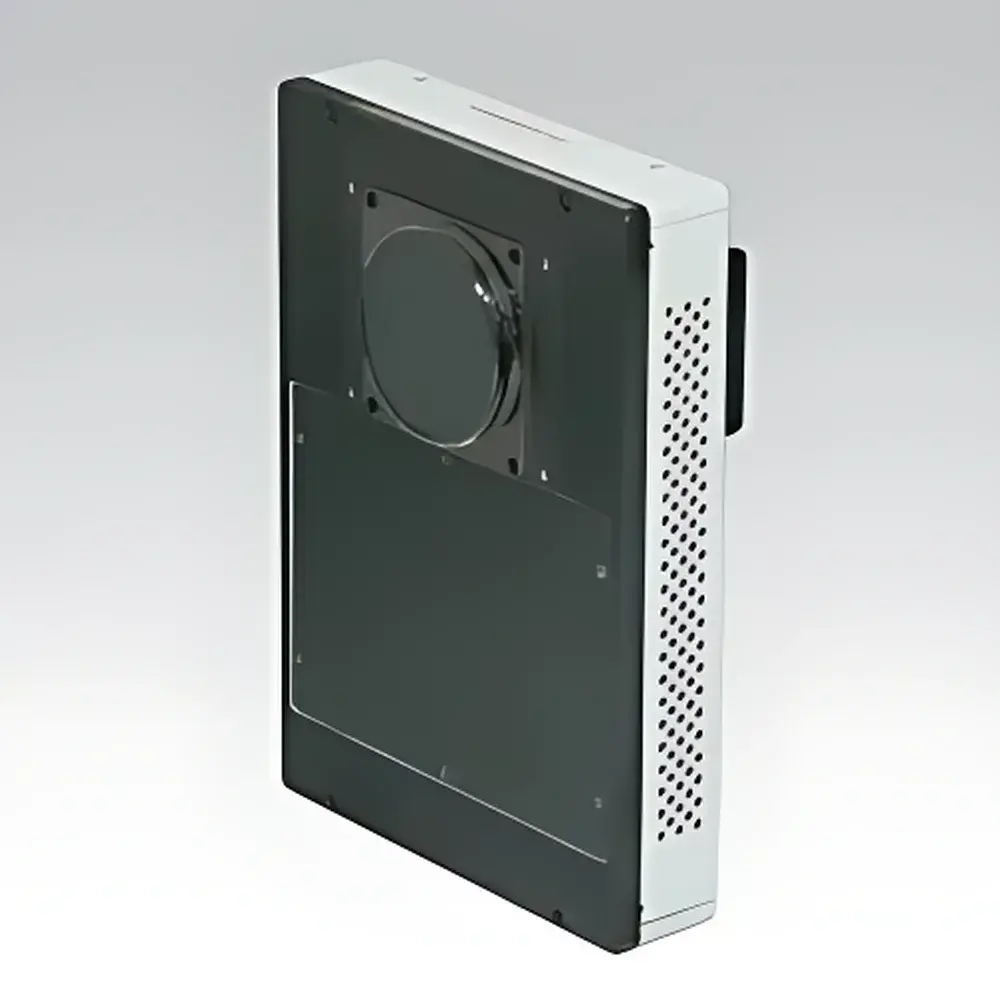
Hamamatsu C10000-701A TDI CCD Camera
| Brand | Hamamatsu |
|---|---|
| Origin | Japan |
| Manufacturer Type | Original Equipment Manufacturer (OEM) |
| Product Category | Imported Optical Imaging Instrument |
| Model | C10000-701A |
| Pricing | Available Upon Request |
Overview
The Hamamatsu C10000-701A is a high-performance time-delay integration (TDI) CCD camera engineered for demanding industrial and scientific imaging applications requiring simultaneous high sensitivity, high line rate, and exceptional signal-to-noise ratio under low-light conditions. Unlike conventional line-scan or area-scan sensors, the C10000-701A employs a back-illuminated TDI architecture—where 128 parallel TDI stages integrate photocharge synchronously with object motion along the scan direction. This enables effective photon accumulation across multiple rows while maintaining spatial fidelity, resulting in up to 100× improvement in effective quantum efficiency compared to standard line-scan CCDs at equivalent exposure times. Designed for integration into precision inspection systems, the camera operates across a broad spectral range—from 200 nm (deep UV) to 1100 nm (near-infrared)—with peak quantum efficiency exceeding 90% in the visible band. Its robust mechanical design, dual-directional TDI scanning capability, and integrated real-time defect correction ensure stable operation in automated production environments compliant with ISO 9001 and IEC 61340-5-1 electrostatic discharge control standards.
Key Features
- Back-illuminated 4096 × 128 pixel TDI CCD sensor with 12 µm square pixels and 49.16 mm × 1.536 mm active area
- Configurable TDI readout mode (bidirectional transfer) or frame-readout mode for optical alignment and focus verification
- 16-tap parallel output architecture supporting maximum line rates from 0.45 kHz to 100 kHz, programmable via serial command or external trigger
- Side-spill overflow drain providing 100× anti-blooming protection for high-dynamic-range scenes
- On-chip real-time hot pixel correction and background subtraction, eliminating post-acquisition calibration overhead
- Low-noise readout (100 e⁻ rms at 20 °C) and high full-well capacity (80,000 e⁻ typical), enabling wide dynamic range (256:1) without gain switching artifacts
- 8-bit A/D conversion with 16-step analog gain (1×–5×) and optional 2×2 binning for enhanced SNR in photon-limited scenarios
- Camera Link interface (Mini-Camera Link SDR ×2) with 8-tap output configuration, 60 MHz pixel clock, and M72×0.75 lens mount
Sample Compatibility & Compliance
The C10000-701A is optimized for continuous-motion imaging of elongated or high-aspect-ratio samples—including flat-panel displays (FPD), silicon wafers, printed circuit boards (PCBs), and biological tissue sections on motorized translation stages. Its TDI synchronization logic supports precise registration with encoder-based stage motion, satisfying traceability requirements for ASTM E2714-20 (standard practice for machine vision system performance evaluation) and SEMI E10-13 (specification for definition and measurement of equipment reliability). The camera’s DC+12 V power input, 36 W thermal profile, and operating temperature range (0–40 °C, non-condensing humidity ≤70%) align with CE/EN 61326-1 (EMC for laboratory equipment) and RoHS 2011/65/EU directives. No proprietary firmware updates or vendor-locked drivers are required; it operates natively with GenICam-compliant host software.
Software & Data Management
The camera interfaces seamlessly with third-party machine vision platforms—including HALCON, OpenCV, and NI Vision—via standard Camera Link protocol and GenICam XML descriptor files. All acquisition parameters (TDI line rate, gain, offset, binning, and black-level correction thresholds) are accessible through ASCII-based serial commands over RS-232 or embedded GPIO triggers. Internal real-time processing eliminates dependency on host CPU resources for pixel defect masking or dark-frame subtraction. Audit trails for parameter changes can be logged externally to support GLP/GMP workflows where FDA 21 CFR Part 11 electronic record integrity is mandated. Raw image data is delivered as uncompressed 8-bit linear arrays, preserving metrological traceability for quantitative intensity analysis per ISO/IEC 17025 calibration guidelines.
Applications
- High-speed, low-light fluorescence imaging in life science instrumentation (e.g., microplate scanners, capillary electrophoresis detectors)
- Automated optical inspection (AOI) of semiconductor photomasks, wafer edge defects, and thin-film transistor (TFT) array uniformity
- In-line quality control of OLED and LCD panels during manufacturing, including mura detection and pixel defect mapping
- UV-curable inkjet printing registration and droplet trajectory analysis
- Remote sensing and spectroscopic line-scanning in environmental monitoring systems (e.g., airborne hyperspectral push-broom configurations)
- Particle tracking velocimetry (PTV) in microfluidic channels where temporal resolution exceeds 10⁴ fps equivalent
FAQ
What is the difference between TDI mode and frame-readout mode?
TDI mode enables synchronized charge transfer across 128 rows for motion-compensated integration, ideal for quantitative inspection. Frame-readout mode freezes all rows simultaneously for static focusing and alignment—but does not support motion-based imaging or metrology.
Can the C10000-701A operate in vacuum or controlled-atmosphere enclosures?
No—the camera is rated for ambient air operation only. For vacuum-compatible alternatives, consult Hamamatsu’s C12741 series with hermetically sealed ceramic packages.
Is external triggering supported for precise TDI line-rate synchronization?
Yes: external TTL triggers (rising-edge sensitive) can initiate or gate TDI integration cycles with jitter <10 ns, meeting timing requirements for encoder-linked motion control systems.
Does the camera support radiometric calibration out of the box?
No—radiometric linearity and absolute responsivity require separate NIST-traceable calibration using calibrated light sources and neutral density filters, per ISO 15739:2013 imaging system noise and dynamic range standards.
What is the maximum cable length for Mini-Camera Link transmission?
With standard SDR signaling, reliable operation is guaranteed up to 10 meters using certified shielded cables; longer runs require CLHS or fiber-optic repeater solutions.





