
Hamamatsu Light Source Devices Portfolio
| Brand | Hamamatsu |
|---|---|
| Origin | Japan |
| Manufacturer Type | Original Equipment Manufacturer (OEM) |
| Origin Category | Imported |
| Model Series | LS |
| Price Range | USD 700 – 1,400 |
| Light Source Type | Multi-Technology Platform (Xenon, Deuterium, Hollow-Cathode, LED, CW/Pulsed LD, SLD, QCL, Fiber-Coupled Diode, DDL) |
| Illumination Mode | External Illumination |
Overview
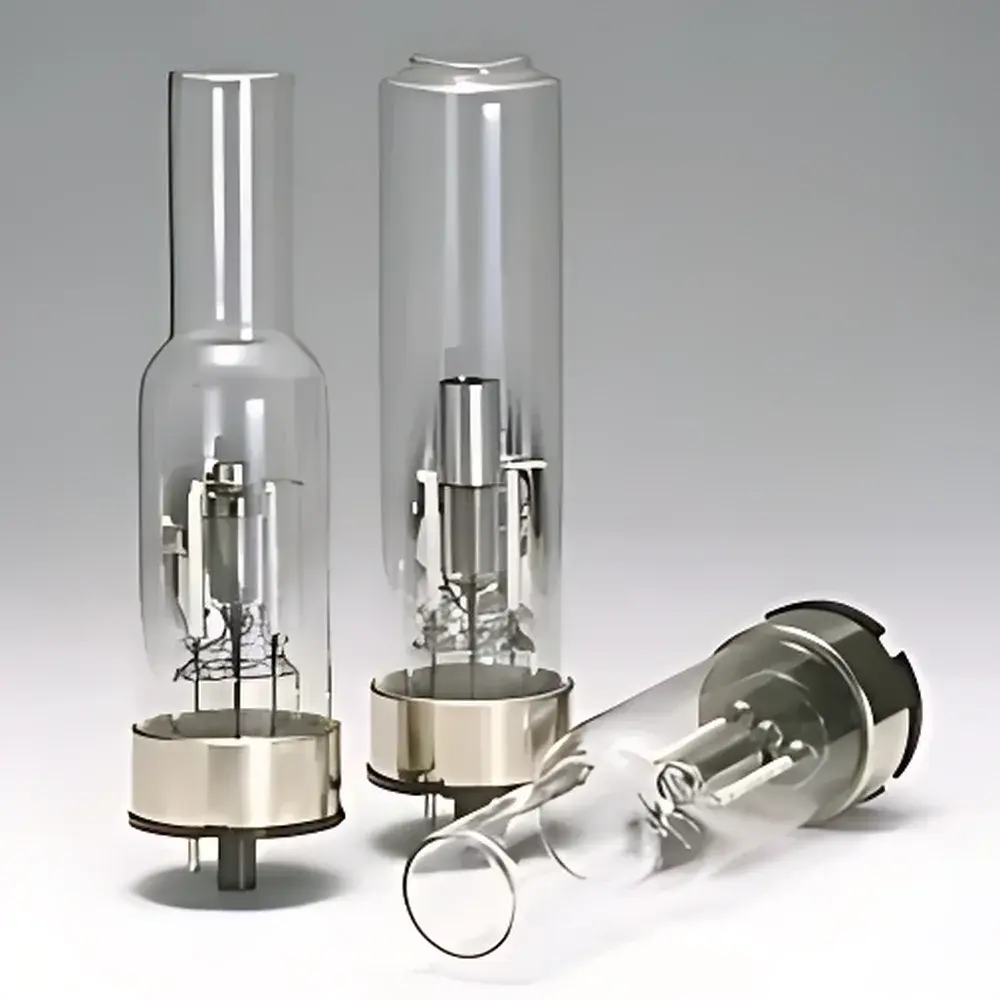
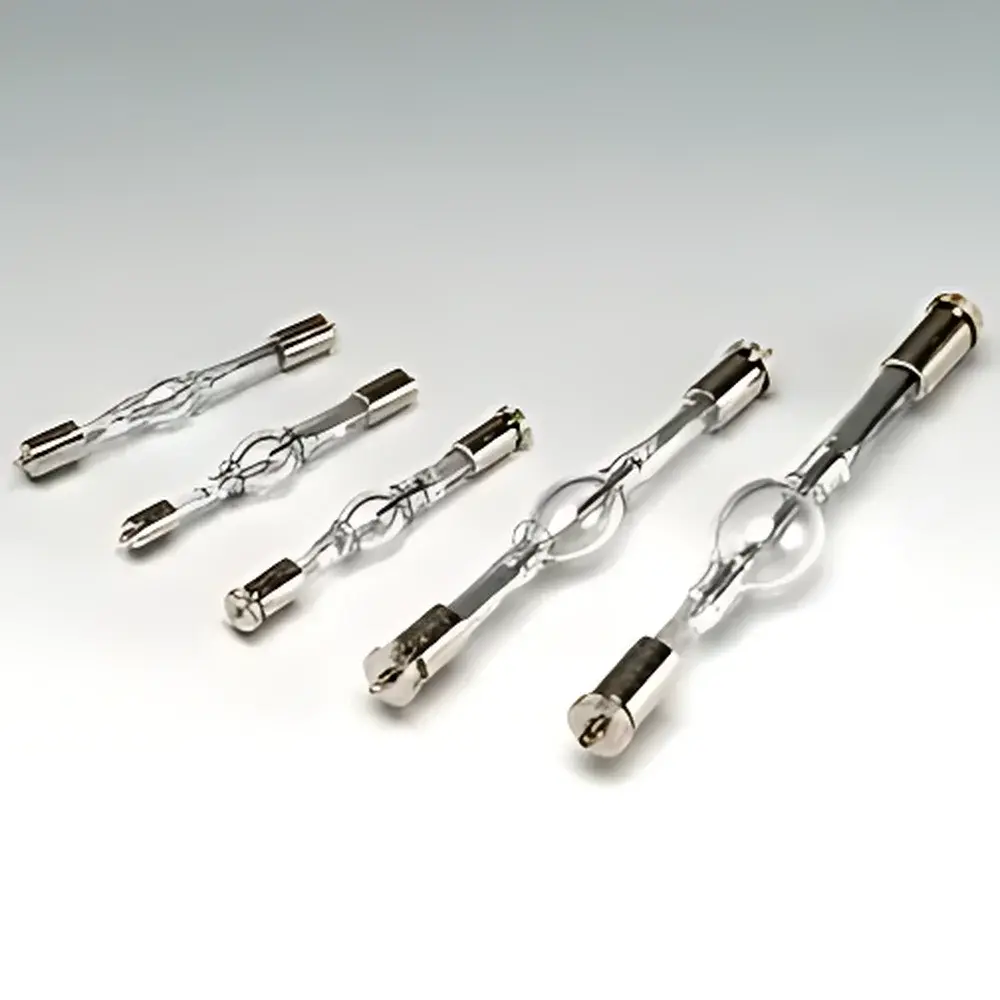
Hamamatsu Light Source Devices Portfolio represents a comprehensive, application-optimized suite of optoelectronic emitters engineered for precision optical instrumentation and laboratory-grade analytical systems. This portfolio is not a single product but a rigorously characterized family of light sources—each designed to meet distinct radiometric, spectral, temporal, and stability requirements across spectroscopy, photometry, atomic absorption, biomedical imaging, industrial sensing, and laser-based material processing. Core technologies include continuous-wave and pulsed arc lamps (Xe, Hg-Xe, D2), narrow-line hollow-cathode lamps (HCLs), high-brightness semiconductor emitters (LEDs, CW/Pulsed Laser Diodes), low-coherence superluminescent diodes (SLDs), mid-infrared quantum cascade lasers (QCLs), thermally managed diode laser arrays, direct-diode lasers (DDLs), and fiber-coupled laser diodes (FOLDs). All devices adhere to Hamamatsu’s proprietary cathode engineering, hermetic sealing protocols, and lifetime-validated drive circuitry—ensuring reproducible spectral output, arc stability >95% over rated lifetime, and compliance with ISO/IEC 17025 traceable calibration frameworks.
Key Features
- Multi-Spectral Coverage: Seamless operation from deep UV (190 nm, D2 lamps) to near-IR (1100 nm, InGaAs LEDs) and mid-IR (4–10 µm, QCLs), enabling cross-platform compatibility with monochromators, spectrometers, and FTIR systems.
- Stability & Lifetime Engineering: Xenon lamps feature high-purity tungsten cathodes and optimized gas fill pressure, delivering >2,000 h operational life with 10× extended lifetime vs. standard arc tubes due to reduced electrode sputtering.
- Atomic Absorption Ready: 66 single-element and 7 multi-element hollow-cathode lamps (Ag, Al, As, Na-K, Ca-Mg) conform to ASTM D4294 and ISO 8288 specifications for AAS line width (99.9% target element emission).
- Thermal & Electrical Robustness: All laser diode modules integrate active thermal management—Peltier-based open-heat-sink (OHS), water-cooled, or Hamamatsu’s proprietary forced-air + microchannel heat exchanger architecture—maintaining junction temperature stability within ±0.1°C under continuous 24/7 operation.
- Modular Integration Interface: Standardized mechanical footprints (C-mount, TO-3, butterfly packages), TTL/analog modulation inputs (up to 100 MHz for pulsed LDs), and fiber coupling options (105 µm, 200 µm, 400 µm core diameters, NA 0.22) support OEM integration into automated platforms and GLP-compliant analytical workflows.
Sample Compatibility & Compliance
This portfolio supports diverse sample interaction geometries—including transmission, reflection, fluorescence excitation, and photoacoustic detection—via external illumination configuration. Devices are certified to IEC 61000-6-3 (EMC emissions), IEC 62471 (photobiological safety), and RoHS 2015/863/EU. Hollow-cathode lamps comply with USP and EP 2.2.27 for elemental analysis validation. QCL modules meet FDA 21 CFR Part 11 requirements for audit-trail-capable control firmware when deployed in regulated gas sensing applications. All lamp-based sources are supplied with NIST-traceable spectral irradiance calibration reports (optional), and laser products carry CE/UKCA marking with Class 3B or Class 4 laser safety labeling per IEC 60825-1:2014.
Software & Data Management
Hamamatsu provides the LightMaster™ Control Suite—a Windows-based, FDA 21 CFR Part 11–compliant software platform supporting remote parameter configuration, real-time intensity monitoring, pulse-width/duty-cycle programming (for pulsed LDs), and automated lifetime logging. The suite generates electronic records with user authentication, timestamping, and immutable audit trails. Device drivers (LabVIEW VIs, Python SDK, .NET API) enable seamless integration into custom LIMS or MES environments. Spectral data export conforms to JCAMP-DX v6.00 and HDF5 formats for interoperability with Origin, MATLAB, and Thermo Fisher OMNIC software.
Applications
- UV-Vis-NIR Spectroscopy: High-stability Xe and D2 lamps for absorbance, reflectance, and transmittance measurements in pharmaceutical QC and environmental water analysis (EPA Method 365.3).
- Atomic Absorption Spectrometry (AAS): Single- and multi-element HCLs for trace metal quantification in clinical serum, soil extracts, and battery electrolyte testing (ISO 11885).
- Time-Resolved Fluorescence & Life-Time Imaging: Nanosecond-pulsed Xe and LD sources synchronized with gated ICCD or SPAD detectors for FLIM and FRET assays.
- Mid-IR Gas Sensing: Tunable QCLs targeting fundamental vibrational bands of CO, NOx, CH4, and VOCs—deployed in stack emission monitoring and breath analysis systems meeting EN 15267-3.
- Industrial Laser Processing: DDL and FOLD modules integrated into robotic welding cells and selective laser annealing tools—certified per ISO 13849-1 PLd functional safety requirements.
FAQ
Are Hamamatsu light sources compatible with third-party spectrometers?
Yes—mechanical, electrical, and optical interfaces follow industry-standard dimensions (e.g., SMA905, C-mount) and voltage/current specifications (e.g., 0–5 V analog modulation, 5 V TTL trigger). Detailed interface manuals and pinout schematics are provided upon request.
Do you offer spectral calibration certificates with each lamp?
NIST-traceable spectral irradiance calibration (200–1100 nm) is available as an optional add-on for all arc lamps and deuterium sources, delivered with uncertainty budgets per ISO/IEC 17025:2017.
What is the typical lead time for custom-configured QCL modules?
Standard QCLs ship within 4–6 weeks; custom wavelength tuning or packaging configurations require 10–14 weeks, subject to final design review and thermal validation testing.
Can Hamamatsu light sources be operated in vacuum or inert-gas environments?
Most lamp-based sources (Xe, D2, HCL) are sealed quartz envelopes and are not rated for external vacuum. However, selected LED and laser diode modules (e.g., fiber-coupled FOLDs) are qualified for operation in nitrogen-purged enclosures per MIL-STD-810G Method 507.6.






