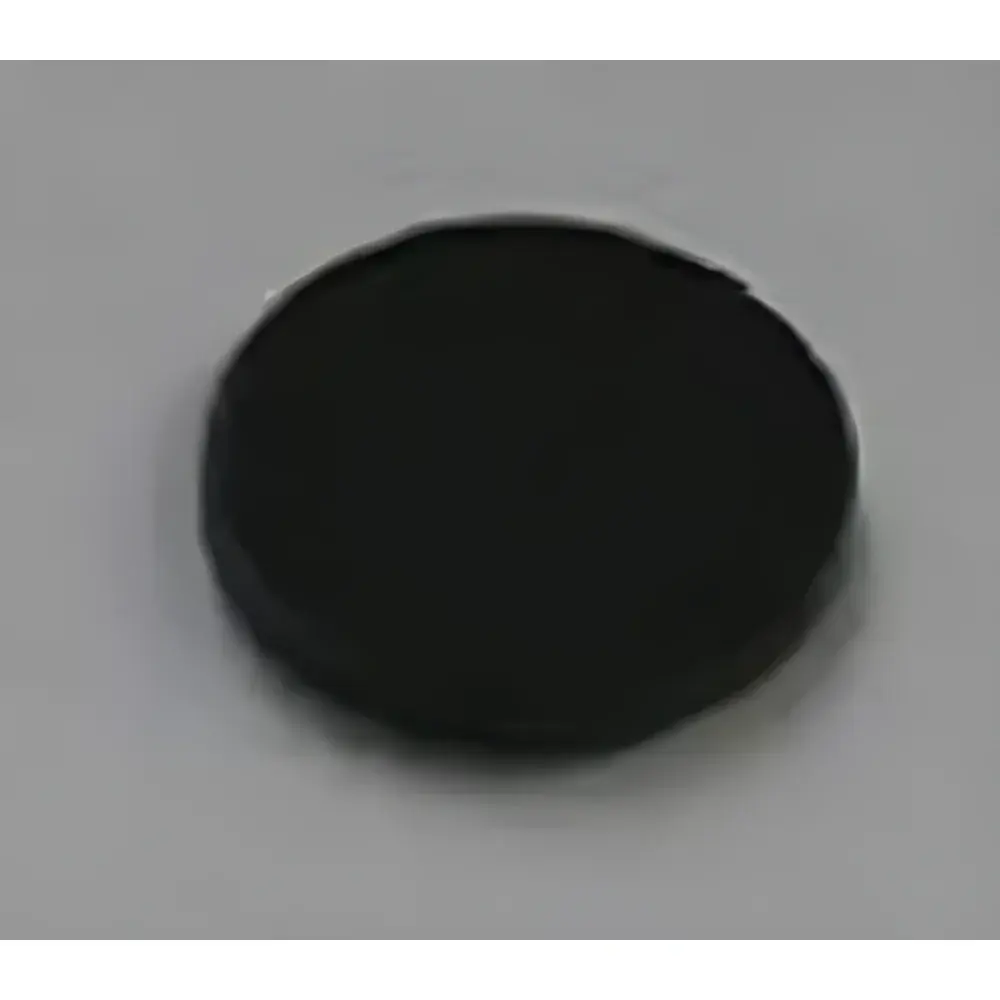
GaN Sputtering Target by Hefei Kejing
| Brand | Hefei Kejing |
|---|---|
| Origin | Anhui, China |
| Model | GaN Target |
| Dimensions | Ø15 × 3.0 mm |
| Purity | >99.99% (4N) |
| Packaging | Class 1000 cleanroom assembled, sealed in Class 100 clean bags |
| Manufacturer Type | Authorized Distributor |
| Origin Category | Domestic (PRC) |
Overview
The GaN Sputtering Target by Hefei Kejing is a high-purity ceramic thin-film deposition material engineered for physical vapor deposition (PVD), specifically magnetron sputtering processes. Gallium nitride (GaN) is a wide-bandgap III–V semiconductor with exceptional thermal conductivity, high breakdown electric field strength, and outstanding radiation resistance—making it indispensable for fabricating high-electron-mobility transistors (HEMTs), UV optoelectronic devices, RF power amplifiers, and next-generation micro-LED substrates. This target is fabricated via hot pressing or spark plasma sintering (SPS) of stoichiometric GaN powder under controlled nitrogen atmosphere to minimize oxygen contamination and preserve crystallinity. Its dense microstructure ensures stable arc-free sputtering performance, uniform film stoichiometry, and low particle generation during extended runs.
Key Features
- High purity (>99.99%, 4N) with trace metal impurities rigorously controlled per ASTM F2651–21 specifications for compound semiconductor targets
- Dense, low-porosity microstructure (relative density ≥98%) achieved through optimized sintering parameters, minimizing arcing and macro-particle ejection
- Dimensional tolerance maintained within ±0.05 mm for diameter and ±0.1 mm for thickness, ensuring repeatable mounting in standard 2-inch or 3-inch sputter cathodes
- Surface finish polished to Ra ≤0.2 µm on the sputtering face to reduce localized heating and enhance plasma stability
- Batch-certified with full traceability: lot number, sintering date, density measurement (Archimedes method), XRD phase verification, and GDMS (glow discharge mass spectrometry) impurity report available upon request
Sample Compatibility & Compliance
This GaN target is compatible with DC, RF, and pulsed DC magnetron sputtering systems operating in Ar/N₂ or Ar/NH₃ reactive atmospheres. It supports deposition of both polycrystalline and epitaxial GaN films on Si, sapphire (Al₂O₃), SiC, and AlN substrates—provided appropriate substrate heating (500–750 °C) and interlayer engineering (e.g., AlN nucleation layers) are employed. The target meets ISO 14644-1 Class 7 (10,000) cleanroom handling requirements during manufacturing and is packaged per SEMI F39–17 standards for sputtering materials. Documentation includes RoHS Directive 2011/65/EU compliance declaration and REACH SVHC screening report.
Software & Data Management
While the GaN target itself is a passive consumable, its integration into production workflows aligns with industry-standard process control frameworks. Users deploying this target in GMP-regulated environments (e.g., semiconductor foundries supplying automotive or medical electronics) may link batch-specific certificates of conformance (CoC) to their MES (Manufacturing Execution System) via QR-coded packaging labels. Traceability data—including sintering temperature profile logs, density test records, and GDMS spectra—are archived for ≥10 years in accordance with IATF 16949 clause 8.5.2 and FDA 21 CFR Part 11 compliant electronic record systems when supplied through qualified distribution channels.
Applications
- Deposition of buffer and channel layers in AlGaN/GaN HEMT heterostructures for 5G base station power amplifiers
- Fabrication of deep-UV photodetectors (200–365 nm) requiring low-defect-density GaN films
- Research-scale growth of GaN-on-Si templates for cost-effective micro-LED display backplanes
- Synthesis of GaN nanowires via catalyst-assisted sputter deposition followed by annealing
- Co-sputtering with Al or In targets to tune bandgap for tunable UV–visible emitters
FAQ
What is the typical target utilization rate for this GaN sputtering target?
Under optimized conditions (balanced magnetic confinement, moderate power density <8 W/cm²), average erosion uniformity exceeds 75%, enabling ≥65% geometric utilization before replacement.
Is pre-sputtering conditioning required before deposition?
Yes. A 15–30 minute argon-only pre-sputter at 100–150 W is recommended to remove surface oxides and stabilize plasma impedance prior to reactive N₂ introduction.
Can this target be used in ultra-high vacuum (UHV) systems?
Yes—provided the mounting hardware is UHV-compatible (e.g., oxygen-free copper backing plates, indium or silver solder bonds) and outgassing is verified below 1×10⁻⁹ mbar/s·cm² after 24 h bakeout at 150 °C.
Does Hefei Kejing provide custom geometries or doping profiles?
Custom diameters (up to Ø150 mm), thicknesses (1–10 mm), and dopant variants (e.g., Si-doped n-type, Mg-doped p-type) are available under NDA with minimum order quantities and extended lead times.