
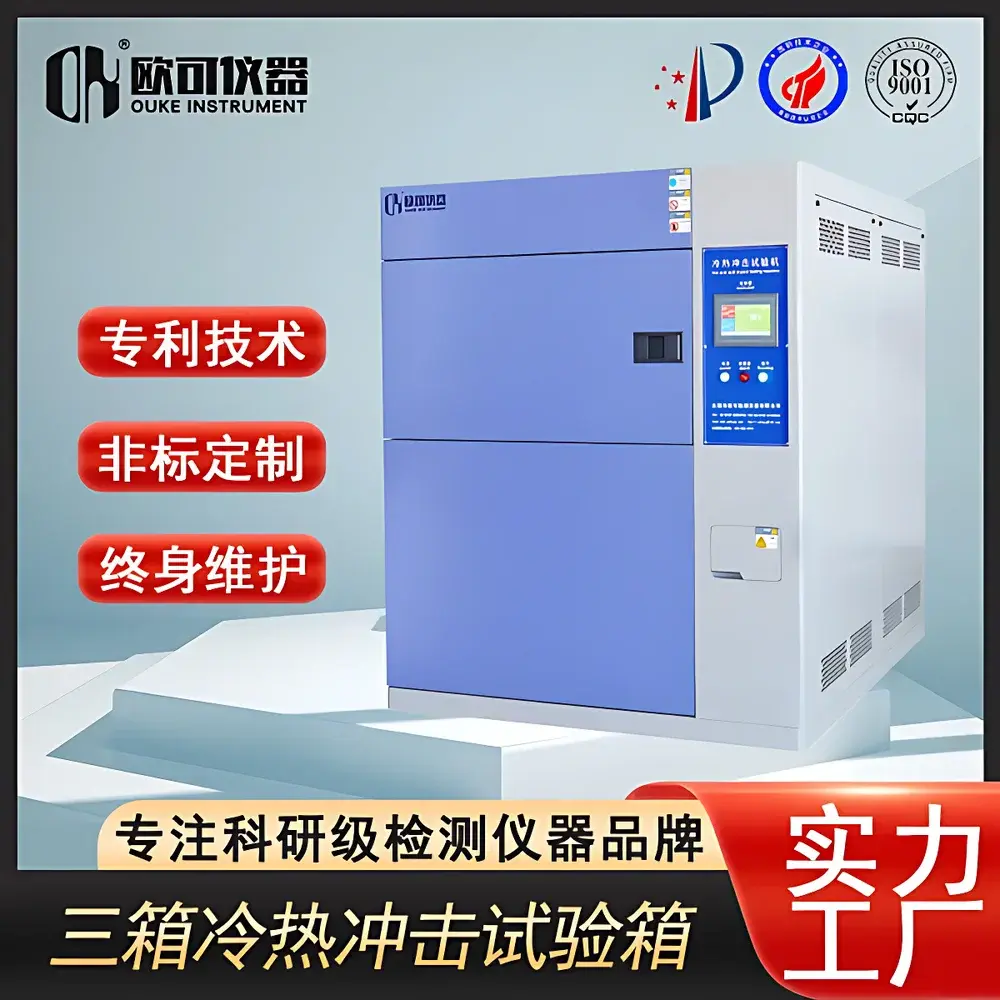
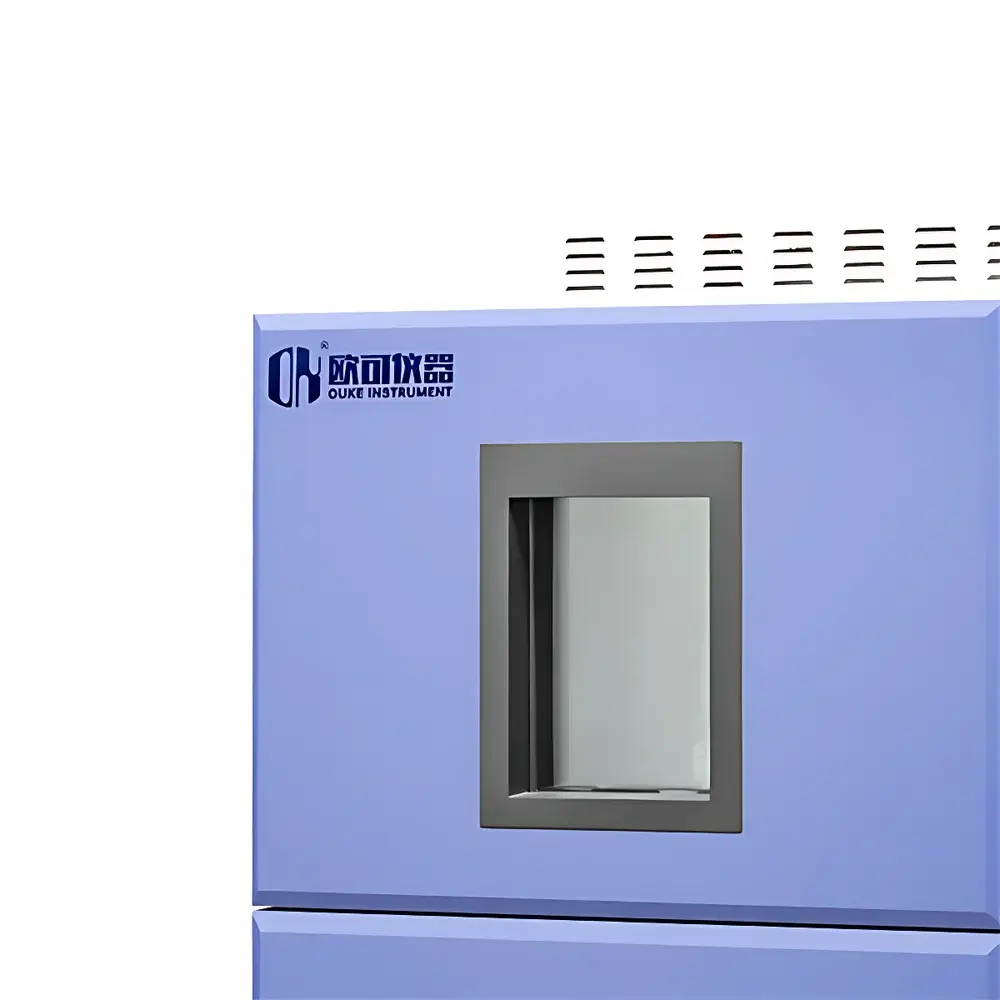
OK 0K-TS-49.5555 Dual-Zone Thermal Shock Test Chamber
| Brand | OK |
|---|---|
| Origin | Guangdong, China |
| Manufacturer Type | Direct Manufacturer |
| Model | 0K-TS-49.5555 |
| High Temperature Range | +150 °C |
| Low Temperature Range | −60 °C |
| Thermal Shock Range | −60 °C to +150 °C |
| Temperature Stability | ±2 °C |
| Transition Time (Hot ↔ Cold) | ≤10 s |
| Configuration | Dual-Zone (Basket Transfer Type) |
Overview
The OK 0K-TS-49.5555 Dual-Zone Thermal Shock Test Chamber is an engineered environmental test system designed to perform accelerated thermal shock testing in strict compliance with international qualification standards including IEC 60068-2-14, MIL-STD-883 Method 1010.8, and JESD22-A104. Unlike temperature cycling or rapid thermal transition chambers—which impose gradual, linear thermal profiles—this chamber delivers true *step-change thermal stress* by physically transferring test specimens between two independently controlled, thermally isolated zones: a high-temperature chamber (+150 °C) and a low-temperature chamber (−60 °C). The specimen, mounted on a pneumatically actuated transfer basket, moves fully within ≤10 seconds between zones, subjecting materials and assemblies to instantaneous thermal gradients exceeding 200 °C. This mechanical transfer mechanism replicates real-world failure triggers such as interfacial delamination, solder joint fracture, hermetic seal rupture, and coefficient-of-thermal-expansion (CTE) mismatch-induced cracking—phenomena that cannot be induced by ramp-based thermal profiles.
Key Features
- Dual-zone architecture with independent PID-controlled heating and cryogenic cooling systems, enabling stable, simultaneous maintenance of +150 °C and −60 °C
- Pneumatic basket transfer mechanism achieving ≤10-second hot-to-cold and cold-to-hot transitions—verified per IEC 60068-2-14 requirement for “time to temperature”
- Temperature stability maintained at ±2 °C across both zones during dwell phases, ensuring repeatability and test validity
- Stainless steel interior construction with reinforced insulation and leak-tested chamber seals for long-term reliability and minimal thermal drift
- Integrated safety interlocks including over-temperature cutoff, door position sensing, and nitrogen purge readiness for optional cryogenic enhancement
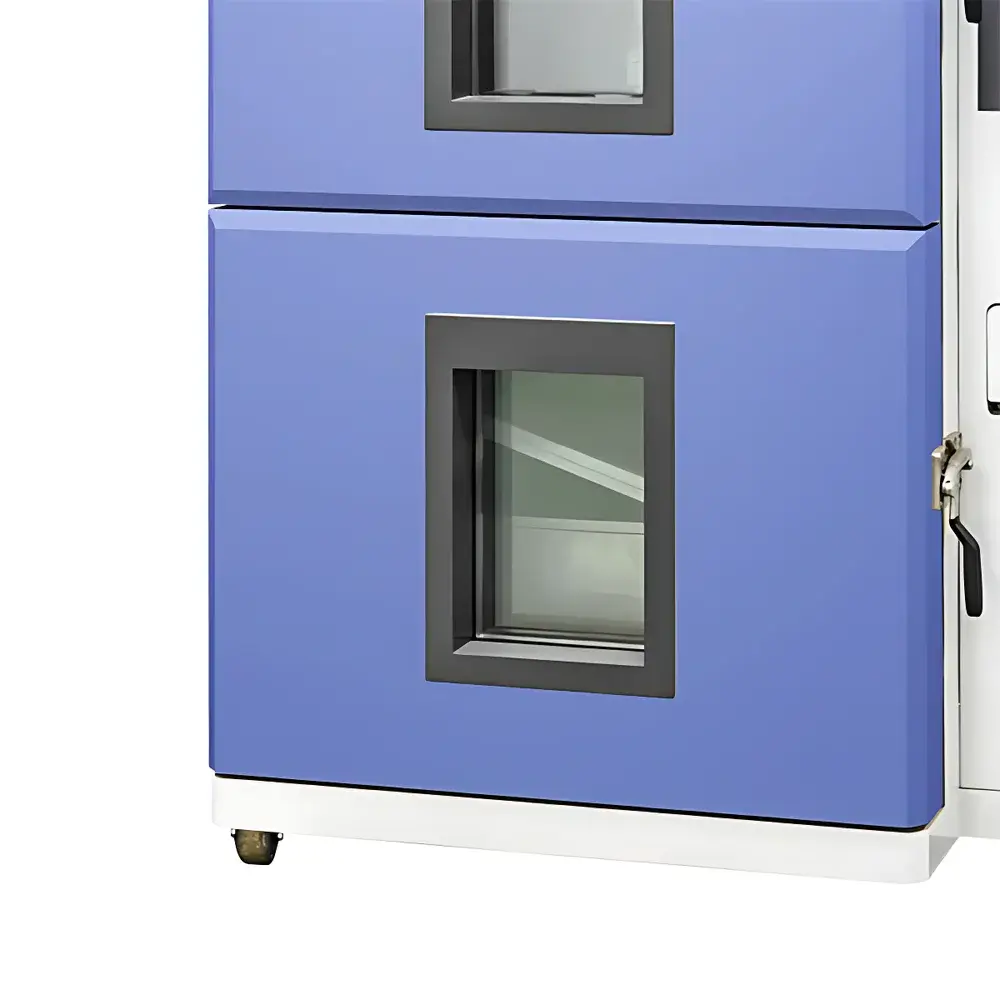
- Front-access design with observation window and internal LED lighting for real-time visual monitoring without compromising thermal integrity
Sample Compatibility & Compliance
The 0K-TS-49.5555 accommodates specimens up to standard mid-volume dimensions (customizable upon request) and supports static electrical biasing via feedthrough ports—enabling functional testing during thermal transitions. It is suitable for PCBAs, automotive ECUs, power modules, MEMS devices, optical housings, and aerospace avionics enclosures. All operational parameters—including dwell time, cycle count, transition sequence, and alarm thresholds—are programmable and auditable to support GLP/GMP-aligned validation protocols. The system complies with CE marking requirements and meets electromagnetic compatibility (EMC) standards per EN 61326-1. While not inherently 21 CFR Part 11 compliant, its data logging architecture supports third-party validation for regulated industries when integrated with qualified software platforms.
Software & Data Management
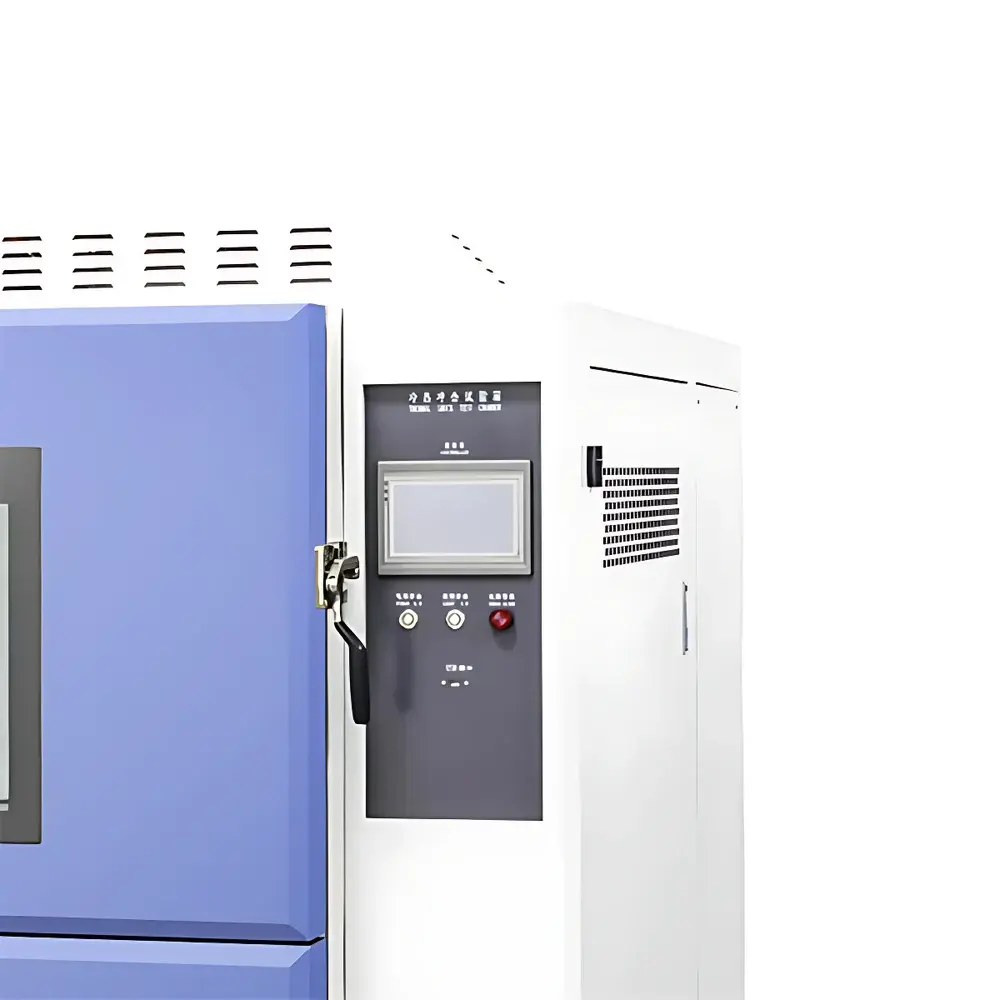
Equipped with OK’s proprietary TC-Manager™ control interface running on an embedded industrial PC, the chamber provides intuitive touchscreen operation, multi-step profile programming, and real-time graphical display of zone temperatures, basket position status, and elapsed cycle time. All temperature readings are sampled at 1 Hz and stored with UTC timestamps. Raw data exports to CSV or Excel-compatible formats; optional Ethernet/IP or Modbus TCP interfaces enable integration into centralized MES or LIMS environments. Audit trails—including user login history, parameter modifications, and alarm events—are retained for ≥18 months and exportable for regulatory review. Calibration records for integrated PT100 sensors are traceable to NIST-certified references.
Applications
- Qualification testing of electronic components under JEDEC JESD22-A104 (Temperature Cycling) and A106 (Thermal Shock)
- Reliability screening of solder joints, wire bonds, and molded plastic packages per IPC-9701 and IPC-J-STD-020
- Validation of automotive electronics per AEC-Q200 and ISO 16750-4 (Environmental Conditions and Testing for Electrical and Electronic Equipment)
- Failure analysis root cause identification in packaging and interconnect structures
- Material compatibility assessment for adhesives, conformal coatings, and thermal interface materials under extreme ΔT conditions
- Pre-production lot acceptance testing where thermal shock resistance is a critical go/no-go criterion
FAQ
What distinguishes thermal shock testing from temperature cycling or rapid thermal transition?
Thermal shock relies on discrete, near-instantaneous transfers between two stable temperature extremes—inducing mechanical stress via differential expansion. Temperature cycling applies controlled linear ramps (e.g., 10–15 °C/min), primarily inducing fatigue-driven degradation over hundreds or thousands of cycles.
Is this chamber compatible with live electrical monitoring during transitions?
Yes—optional feedthrough connectors (BNC or banana-type) allow signal routing into the test chamber while maintaining thermal isolation and EMI shielding.
Can liquid nitrogen be integrated for faster cooling or extended low-temperature capability?
The base configuration uses mechanical refrigeration only; however, the system includes standardized LN₂ injection ports and pressure regulation hardware for field-upgradable cryogenic assist.
How is temperature uniformity verified across the test space?
Uniformity is validated per IEC 60068-3-5 using a 9-point sensor array during qualification; typical deviation remains ≤±1.5 °C at steady state.
Does the controller support automated reporting for audit purposes?
Yes—test reports include chamber ID, operator ID, calibration status, environmental conditions, pass/fail flags per cycle, and digital signatures for electronic record retention.



