
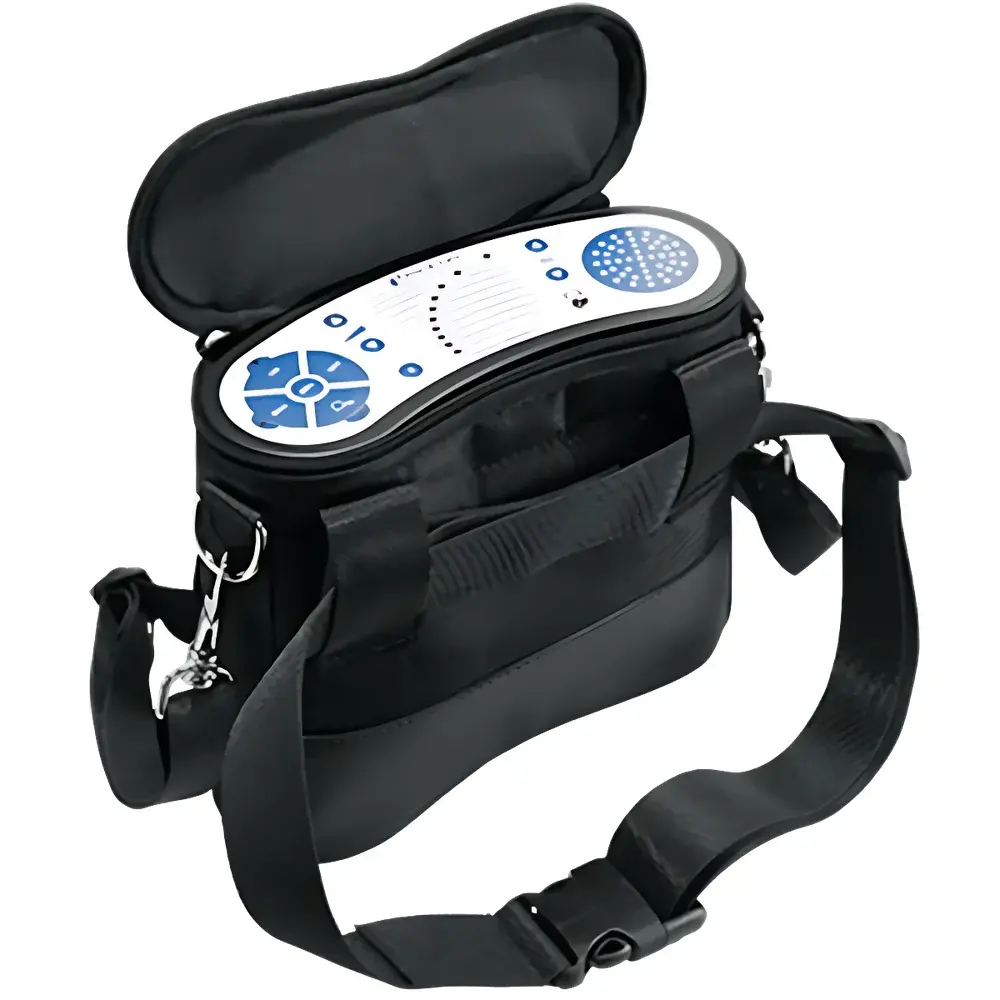
INFICON Sensistor XRS9012 Hydrogen Leak Detector
| Brand | INFICON |
|---|---|
| Origin | Sweden |
| Model | XRS9012 |
| Tracer Gas | 5% H₂ / 95% N₂ |
| Sensitivity | < 5 × 10⁻⁷ mbar·L/s (H₂) |
| Response Time | < 1 s |
| Battery Life | Up to 13 h (Li-ion) |
| IP Rating | IP65 |
| Operating Temperature | −10 °C to +50 °C |
| Weight | 1.1 kg |
| Housing | Anodized aluminum with reinforced nylon casing |
| Zeroing Time | < 2 s |
| Audio/Visual Alarm | Adjustable threshold, integrated headset included |
| Accessories | Flexible probe, shoulder/waist belt, padded carry case |
Overview
The INFICON Sensistor XRS9012 Hydrogen Leak Detector is a field-deployable, quantitative tracer-gas leak detection instrument engineered for high-reliability operation in utility infrastructure, industrial plant maintenance, and energy system integrity verification. It operates on the principle of catalytic combustion and thermal conductivity–enhanced electrochemical sensing, specifically optimized for hydrogen (H₂) as a safe, non-toxic, non-radioactive, and highly diffusive tracer gas. Unlike helium-based systems requiring vacuum or pressurized chambers, the XRS9012 enables rapid, ambient-pressure, point-source localization using a 5% H₂ / 95% N₂ binary mixture—compliant with ISO 10170:2022 for tracer gas selection and ASTM E2654–21 for field leak survey methodology. Its measurement architecture eliminates mechanical pumps or valves; instead, it relies on a solid-state, platinum-catalyzed micro-sensor array with intrinsic selectivity for molecular hydrogen, rejecting cross-interference from methane, CO, VOCs, and ambient humidity up to 95% RH.
Key Features
- Ultra-fast response and recovery: Sub-second detection onset (<1 s) and automatic zeroing in under 2 seconds—critical for high-throughput pipeline surveys and sequential joint inspections.
- True selectivity: Sensor element calibrated exclusively for H₂; validated per IEC 60079-29-1 for hazardous area use (Zone 1/21 certified), with no false positives from natural gas (CH₄) or refrigerants.
- Ruggedized field design: IP65-rated enclosure with anodized aluminum chassis and impact-resistant nylon overmold; tested to MIL-STD-810G for shock, vibration, and thermal cycling.
- Extended operational autonomy: 13-hour continuous runtime on a single rechargeable Li-ion battery; no external power supply required during full-shift deployment.
- Ergonomic portability: Weighing only 1.1 kg with balanced center-of-gravity distribution, integrated shoulder strap and waist belt enable hands-free maneuvering in confined spaces or elevated trenches.
- Adaptive sensitivity control: Three-step manual gain adjustment (Low/Med/High) allows optimization across leak rates spanning 10⁻⁷ to 10⁻⁴ mbar·L/s—supporting both gross leak screening and fine pinhole localization.
Sample Compatibility & Compliance
The XRS9012 is validated for use with pressurized systems containing air, nitrogen, argon, or inert carrier gases. It is not intended for direct sampling of flammable atmospheres exceeding 10% LEL without zone-rated accessories. The instrument complies with EN 61000-6-2 (immunity) and EN 61000-6-3 (emissions), carries CE marking under the EU Electromagnetic Compatibility Directive, and meets ATEX/IECEx requirements for Group II, Category 2G (gas) and 2D (dust). For regulated utilities and nuclear support facilities, its audit-ready firmware supports GLP-compliant data logging (timestamped event records, alarm thresholds, operator ID tagging), and optional USB export satisfies FDA 21 CFR Part 11 electronic record requirements when paired with INFICON’s TraceLog software.
Software & Data Management
While the XRS9012 operates autonomously without PC dependency, its embedded memory stores up to 1,000 timestamped leak events—including date/time, sensitivity setting, alarm level, and GPS-tagged location (when used with optional Bluetooth GNSS module). Data export is performed via USB-C to INFICON TraceLog Desktop v3.2, which generates PDF-certified inspection reports compliant with ISO 5667-14 (water quality sampling) and DVGW GW 361 (German gas network leak testing protocols). All calibration history, sensor life tracking, and firmware revision logs are retained and exportable for internal QA audits or third-party certification reviews.
Applications
- Underground telecom cable sheath integrity verification (pressurized air/N₂-filled ducts)
- Municipal water distribution networks—especially PVC, HDPE, and ductile iron pipelines with sleeve joints or valve boxes
- District heating systems: detection of leaks at insulated pre-fab pipe sections, expansion joints, and heat exchanger manifolds
- Hydrogen-cooled turbo-generators: real-time monitoring of stator cooling circuits and seal oil systems per IEEE Std 115–2019
- Fuel station vapor recovery lines and underground storage tank interstitial monitoring
- Fiber-optic conduit pressurization validation prior to splicing and commissioning
- High-voltage gas-insulated switchgear (GIS) auxiliary piping and SF₆ buffer lines
FAQ
Is the XRS9012 suitable for detecting leaks in natural gas pipelines?
No—it detects only hydrogen. However, when 5% H₂ is blended into natural gas (within EN 16796 limits), the XRS9012 can locate leaks without disrupting service or requiring system depressurization.
Does the sensor require periodic recalibration?
Yes—annual calibration is recommended per ISO/IEC 17025; INFICON-certified labs provide traceable NIST-adjusted calibration certificates with each service.
Can the instrument be used indoors near electrical panels or control rooms?
Yes—its intrinsic safety rating (ATEX II 2G Ex ib IIB T4 Gb) permits use within 0.5 m of live low-voltage equipment without ignition risk.
What is the minimum detectable leak rate in practical field conditions?
Under typical ambient wind speeds (<2 m/s) and 10 cm probe distance, the reliable lower limit is 1 × 10⁻⁶ mbar·L/s—validated per ASTM E2654 Annex A2 field sensitivity protocol.
Is firmware upgrade supported in the field?
Yes—via USB-C connection and INFICON’s signed firmware package; updates preserve all stored calibration and configuration parameters.





