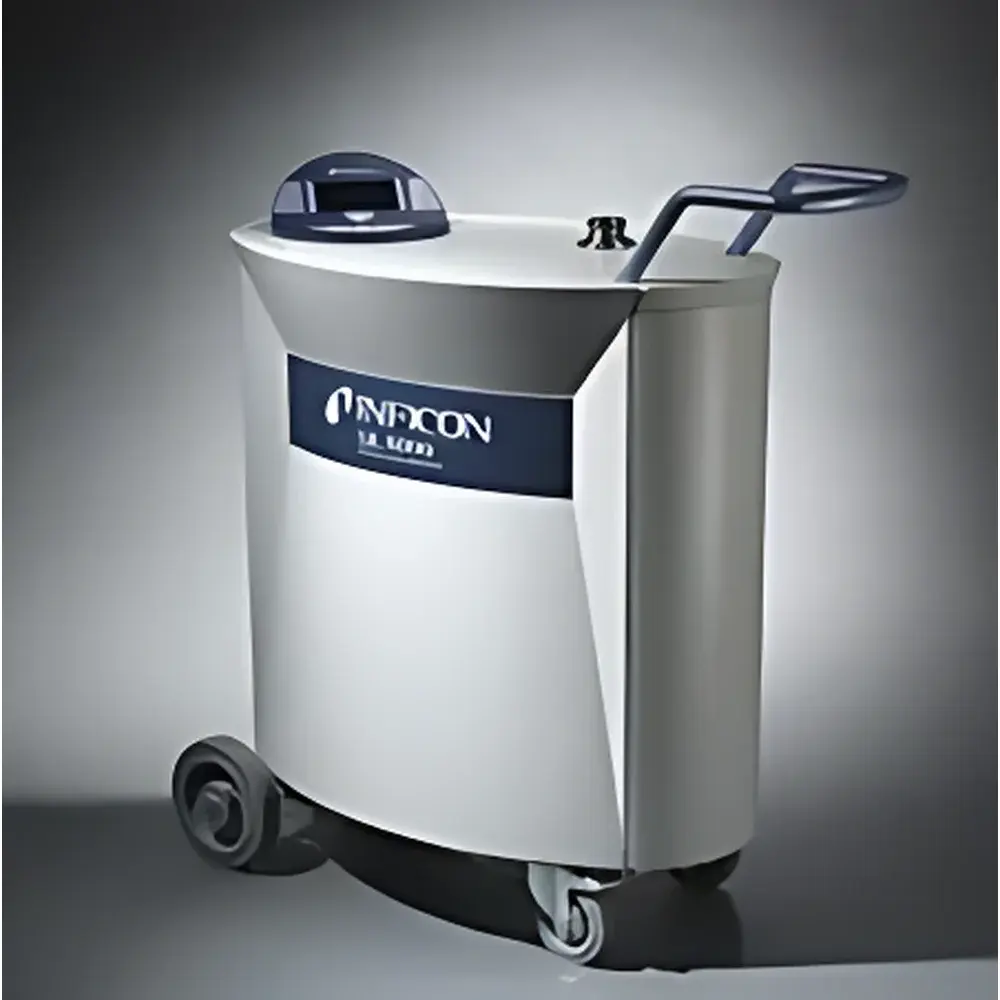
Inficon UL5000 Helium Mass Spectrometer Leak Detector
| Origin | Germany |
|---|---|
| Manufacturer Type | Authorized Distributor |
| Origin Category | Imported |
| Model | UL5000 |
| Pricing | Upon Request |
Overview
The Inficon UL5000 Helium Mass Spectrometer Leak Detector is a high-performance, vacuum-based residual gas analyzer engineered for quantitative helium leak detection in demanding industrial and scientific environments. Operating on the principle of magnetic sector mass spectrometry, the UL5000 ionizes helium atoms (mass-to-charge ratio m/z = 4) within a precisely controlled ion source, separates them using a high-resolution扇形磁场 (sector field) mass filter, and detects them with a Faraday cup or secondary electron multiplier—enabling sub-1×10⁻¹² mbar·L/s sensitivity under optimized conditions. Designed for integration into automated production lines, R&D cleanrooms, and qualification test benches, the UL5000 delivers trace-level helium quantification with high reproducibility, low background drift, and robust immunity to hydrocarbon interference—critical for applications requiring compliance with ISO 10893-8, ASTM E499, and SEMI F27 standards.
Key Features
- Magnetic sector mass spectrometer architecture with proven long-term stability and <3% relative standard deviation (RSD) over 1,000-hour continuous operation
- I-CAL (Intelligent Calibration Algorithm): dynamically adjusts gain and integration time across the full leak rate range (1×10⁻¹² to 1×10⁻⁵ mbar·L/s), eliminating manual range switching and reducing measurement uncertainty
- HYDRO-S (Hydrogen Suppression System): actively discriminates against H2+ and H3+ interferences via optimized ion optics and energy filtering—essential for reliable testing in hydrogen-rich environments (e.g., fuel cell component validation)
- Dual-stage vacuum system featuring a specially designed multi-inlet turbomolecular pump (TMP) with >300 L/s nominal helium pumping speed and compression ratio >108 across 1×10⁻⁷–1×10⁻² mbar, enabling rapid response (<500 ms 10–90% rise time) and fast recovery after large helium bursts
- Integrated self-protection protocol: automatic helium purge cycles triggered by elevated partial pressure thresholds; particulate filtration at all gas inlets per ISO 8573-1 Class 2
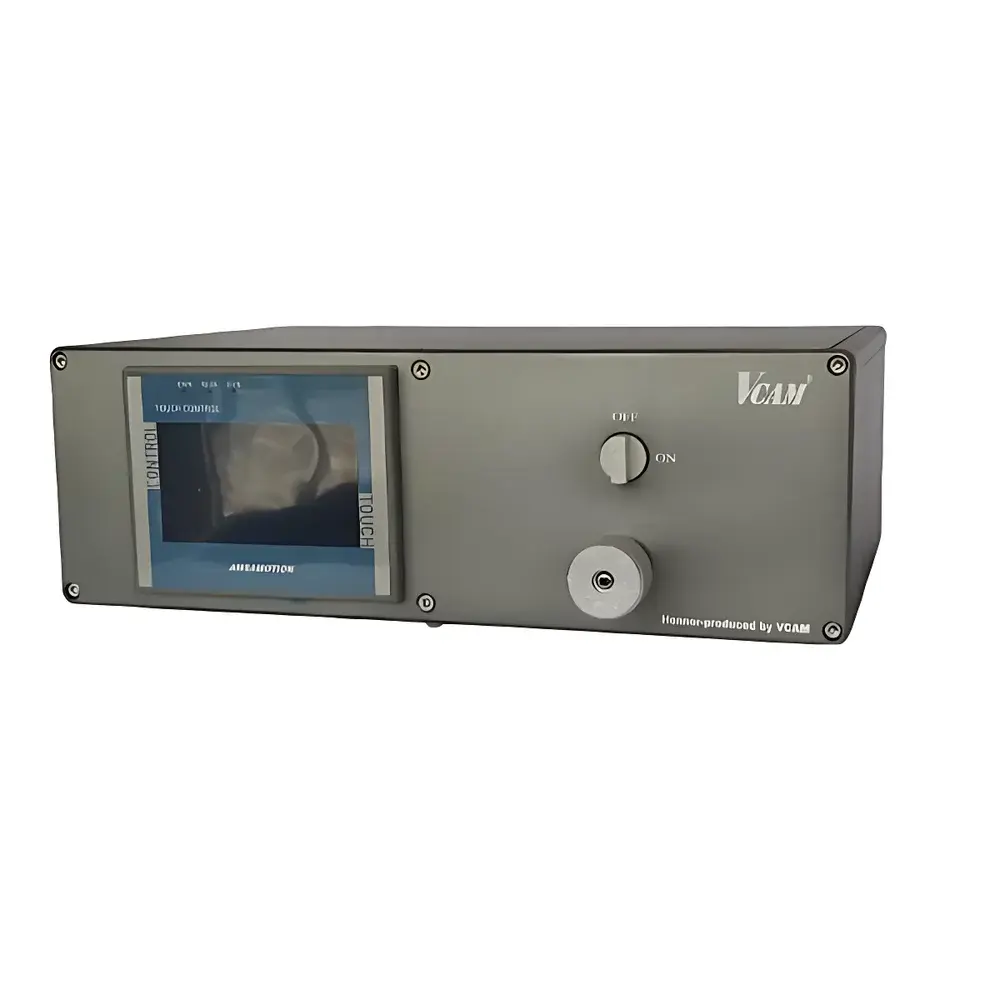
- 3.5-inch full-color capacitive touchscreen with glove-compatible UI, configurable soft keys, and real-time graphical display of leak rate trend, background level, and pump status
- Remote operation support: RC1000WL wireless controller (up to 100 m line-of-sight, 8+ h battery life) and RC1000C wired variant for synchronized multi-unit control in cluster configurations
- Secure access management: role-based software permissions (Operator/Engineer/Admin), audit-trail logging per FDA 21 CFR Part 11 requirements, and encrypted firmware update delivery via SMTP email
Sample Compatibility & Compliance
The UL5000 accommodates diverse test geometries—from microelectronic packages (10 m³)—via flexible connection interfaces including KF-40, CF-63, and ISO-K flanges. Its helium-specific detection eliminates cross-sensitivity to common process gases (N2, O2, Ar, CO2) and maintains accuracy in presence of oil vapor or water vapor up to 10−3 mbar partial pressure. The system conforms to IEC 61000-6-2 (immunity) and IEC 61000-6-4 (emissions), carries CE marking per Machinery Directive 2006/42/EC, and supports GLP/GMP documentation workflows through optional CSV export with timestamped metadata (leak rate, date/time, operator ID, calibration status).
Software & Data Management
UL5000 firmware v4.2+ includes embedded Ethernet (10/100BASE-T), RS-232, and USB 2.0 interfaces for bidirectional communication with host SCADA or MES systems. The included LeakTest Manager PC software enables automated sequence programming (e.g., pre-evacuation → sniffing → pressure hold → integrated leak rate calculation), statistical process control (SPC) charting (X-bar/R charts), and PDF report generation compliant with ISO/IEC 17025 clause 7.8. All measurement data are stored internally with cyclic overwrite protection; external storage via USB flash drive supports FAT32 formatting and retains raw spectral scans for forensic analysis.
Applications
- Semiconductor fabrication: leak verification of vacuum load locks, etch/deposition chambers, and EUV lithography subsystems
- Flat-panel display manufacturing: integrity testing of OLED encapsulation layers, TFT array backplanes, and laser annealing tool chambers
- Aerospace: certification of turbine blade cooling passages, satellite propulsion tanks, and avionics hermetic housings per MIL-STD-883 Method 1014
- Medical device manufacturing: validation of implantable electronics (pacemakers, neurostimulators), sterile barrier packaging (ISO 11607), MRI cryostat integrity, and radiographic tube envelopes
- Energy: quality assurance of fusion reactor first-wall components, hydrogen electrolyzer stacks, and nuclear fuel cladding
FAQ
What is the minimum detectable leak rate under standard operating conditions?
The UL5000 achieves a base sensitivity of ≤5×10⁻¹³ mbar·L/s when connected to a test object via a calibrated leak standard and operated with optimal TMP backing pressure and ion source emission current.
Does the UL5000 require routine filament replacement?
No—the ion source uses a thoriated iridium filament with ≥3-year rated lifetime under typical duty cycles; Inficon provides extended warranty coverage for this component.
Can the UL5000 be integrated into a PLC-controlled test cell?
Yes—digital I/O signals (leak alarm, ready, error) and Modbus TCP protocol support enable seamless integration with Allen-Bradley, Siemens, and Beckhoff controllers.
Is helium recovery supported?
The UL5000 does not include built-in helium recovery; however, its low helium consumption (<0.5 sccm during sniffer mode) and compatibility with external helium recirculation modules (e.g., Inficon GC-1000) make it suitable for closed-loop systems.
How often must the system be calibrated?
Factory calibration is valid for 12 months; users may perform verification checks using NIST-traceable calibrated leaks at any time—the I-CAL algorithm compensates for minor drift between formal calibrations.