
Ruixin SPb-XS2 Potassium Bromate Rapid Detection Analyzer
| Brand | Ruixin |
|---|---|
| Origin | Shanghai, China |
| Manufacturer Type | Authorized Distributor |
| Country of Manufacture | China |
| Model | SPb-XS2 |
| Price | USD 920 (FOB Shanghai) |
| Functionality | Single-Analyte Detection |
| Sample Format | Single-Sample Dedicated Use |
| Optical Wavelength | 630 nm |
| Assay Time | ≤ 180 s |
| Photometric Repeatability | ≤ 0.2% |
| Detection Channels | 1 |
Overview
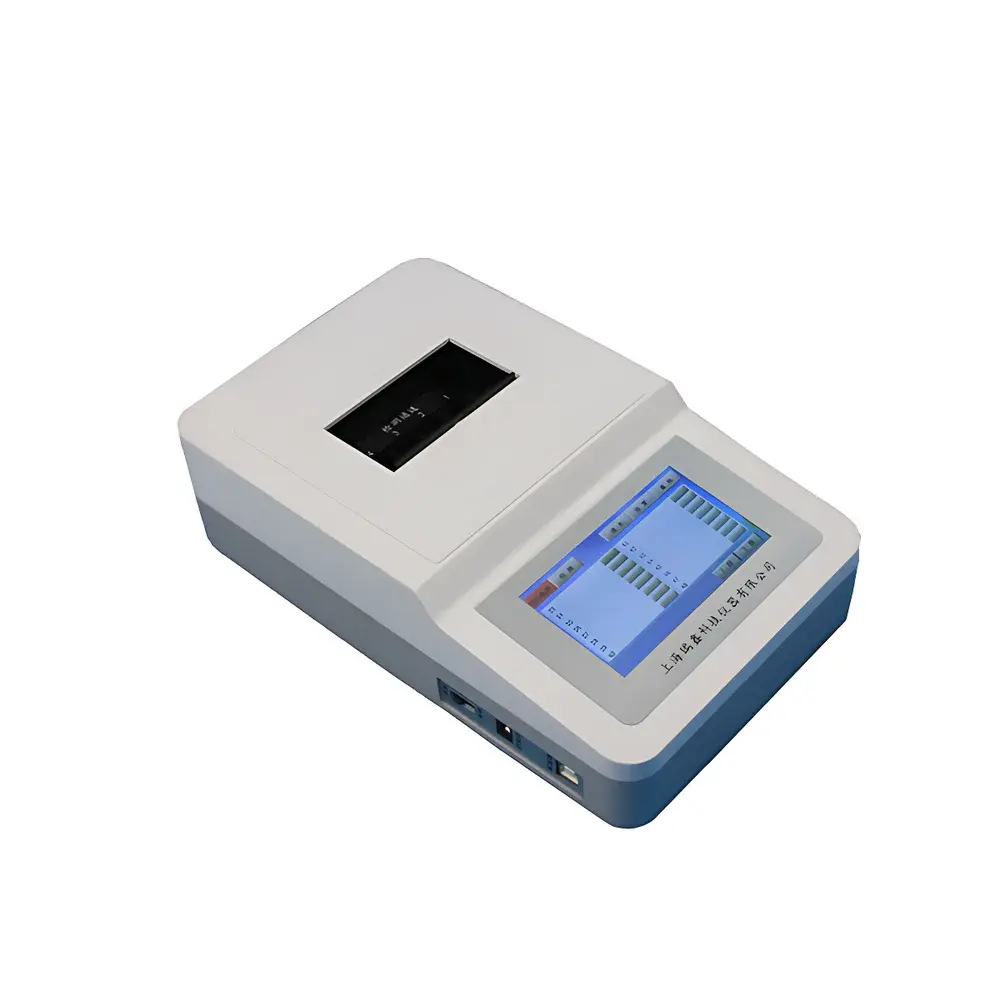
The Ruixin SPb-XS2 Potassium Bromate Rapid Detection Analyzer is a dedicated, portable photometric instrument engineered for quantitative determination of potassium bromate (KBrO₃) in flour, wheat-based products, and related food matrices. It operates on the principle of visible-light absorption spectrophotometry at a fixed wavelength of 630 nm, where bromate—after derivatization via a standardized colorimetric reaction—forms a stable chromophore whose absorbance is linearly proportional to concentration within the 0–200 mg/kg range. Designed for regulatory compliance workflows, the SPb-XS2 supports field-deployable screening as well as laboratory-based verification, fulfilling preliminary testing requirements under national food safety standards including GB 5009.271–2016 (China National Standard for Potassium Bromate Determination in Foods). Its optical architecture integrates an auto-calibrating light path system, eliminating manual zero/100% transmittance adjustments and ensuring measurement consistency across environmental fluctuations.
Key Features
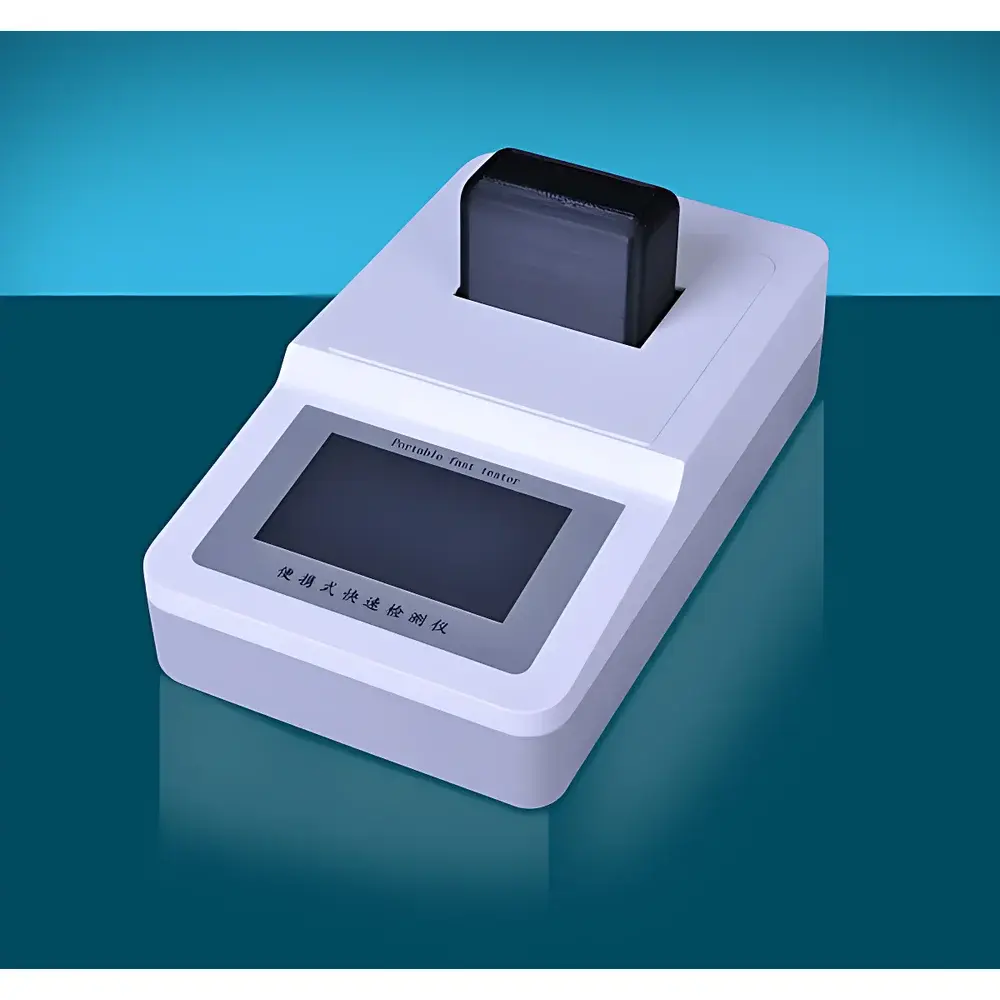
- Portable form factor with integrated rechargeable lithium battery (up to 8 hours continuous operation), enabling use in mobile food inspection vehicles, field checkpoints, and decentralized labs.
- 4.3-inch high-resolution color TFT touchscreen with full Chinese GUI; supports stylus- and keyboard-based Chinese character input for sample labeling, operator ID, and institutional metadata.
- Embedded thermal printer delivers compliant test reports per channel, including analyte concentration (mg/kg), sample name (Chinese/English), date/time stamp, analyst ID, and testing unit—formatted for audit-ready documentation.
- Dual photometric display mode: simultaneous readout of absorbance (0.000–4.000, resolution 0.001) and transmittance (0.00–100.00%, resolution 0.01%), facilitating method development and cross-platform validation.
- Optical self-calibration on power-up ensures traceable baseline stability; photometric repeatability ≤ 0.2% (CV) and short-term drift ≤ 0.3% over 3 minutes meet ISO 7027-1:2016 performance expectations for routine screening instruments.
- Onboard data storage retains ≥ 1,000 test records with timestamped retrieval; supports GLP-compliant audit trails through chronological sorting and export-capable query functions.
Sample Compatibility & Compliance
The SPb-XS2 is validated for use with homogenized, centrifuged, and filtered extracts prepared from flour, bread, noodles, and premixes according to standardized extraction protocols (e.g., AOAC 2012.01–derived workflows). It is not intended for raw grain, liquid dairy, or high-fat matrices without prior matrix-specific validation. The instrument complies with electromagnetic compatibility (EMC) requirements per GB/T 18268.1–2010 and meets safety specifications outlined in GB 4793.1–2007. While not certified to ISO/IEC 17025, its performance parameters align with the intermediate precision criteria defined in ISO 5725-2 for rapid screening tools used in food regulatory surveillance.
Software & Data Management
Data export is supported via RS-232 serial interface and USB 2.0 port, enabling direct integration with LIMS platforms or centralized food safety monitoring networks (e.g., provincial-level Food Safety Information Systems in China). Firmware includes configurable communication protocols for TCP/IP-enabled gateways, allowing real-time result transmission to cloud-based dashboards. All stored records include immutable timestamps and operator identifiers, satisfying minimum traceability requirements under China’s Food Safety Law Article 42 and supporting internal QA reviews. No proprietary software installation is required—raw CSV exports are human-readable and compatible with Excel, R, or Python-based analytics pipelines.
Applications
- Routine surveillance of bromate residues in bakery product supply chains by municipal market regulation bureaus.
- On-site verification during import/export inspections at border control laboratories.
- Pre-screening in QC labs prior to confirmatory analysis by HPLC-IC or ICP-MS.
- Training and capacity-building in regional food safety centers where cost-effective, low-infrastructure tools are prioritized.
- Compliance monitoring against maximum residue limits (MRLs) set by GB 2760–2024 (Permitted Food Additives) and Codex Alimentarius Standard CXS 192–1995.
FAQ
What is the detection limit for potassium bromate using the SPb-XS2?
The instrument achieves a practical detection limit of 5.0 mg/kg in flour matrix when following the recommended sample preparation protocol.
Can the SPb-XS2 be used for other analytes besides potassium bromate?
No—it is a single-analyte platform optimized exclusively for bromate detection via its 630 nm-specific assay chemistry. Method adaptation for other compounds is not supported.
Is the device compliant with FDA or EU regulatory frameworks?
The SPb-XS2 is designed to meet Chinese national food safety standards (GB series); it has not undergone FDA 510(k) clearance or EU CE marking for in vitro diagnostic use.
How often does the optical system require recalibration?
The built-in self-calibration routine executes automatically at startup; no user-performed optical recalibration is needed under normal operating conditions.
Does the instrument support multi-language firmware beyond Chinese?
Firmware is localized exclusively in Simplified Chinese; English menu navigation or report generation is not available in current hardware revision.





