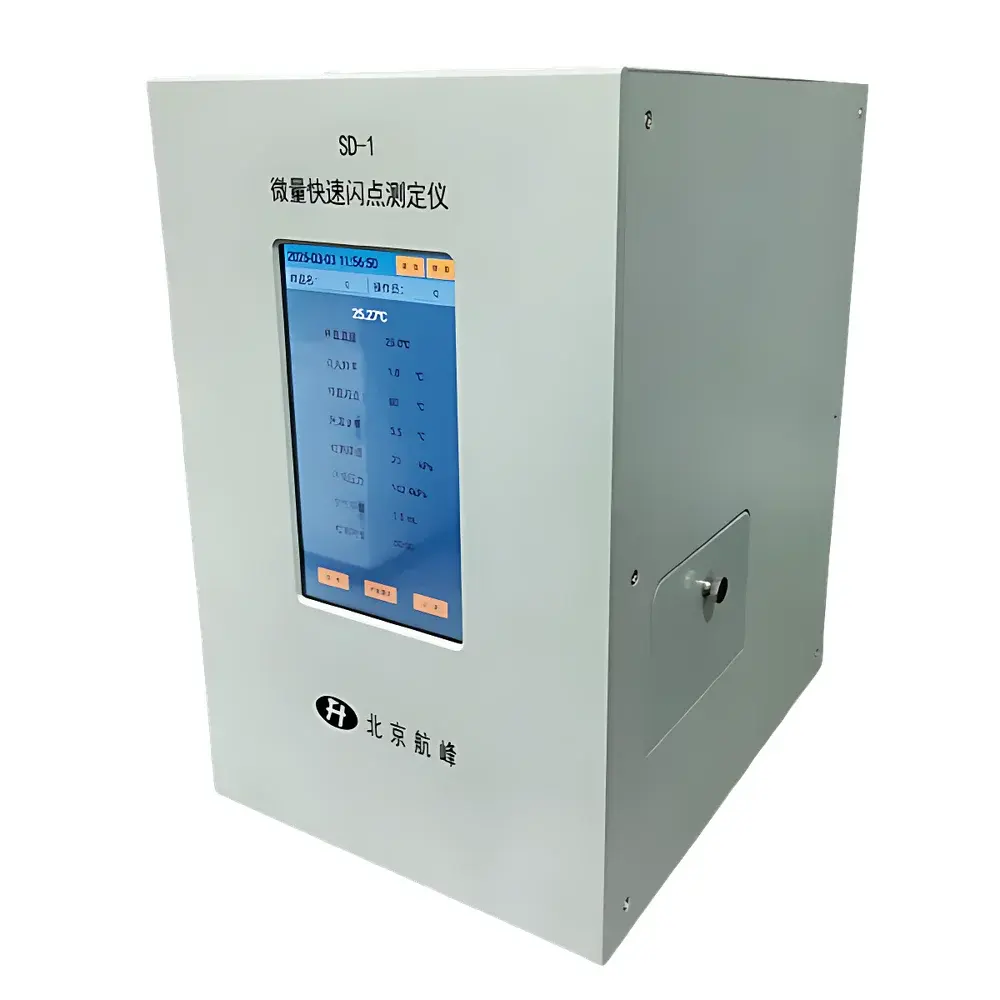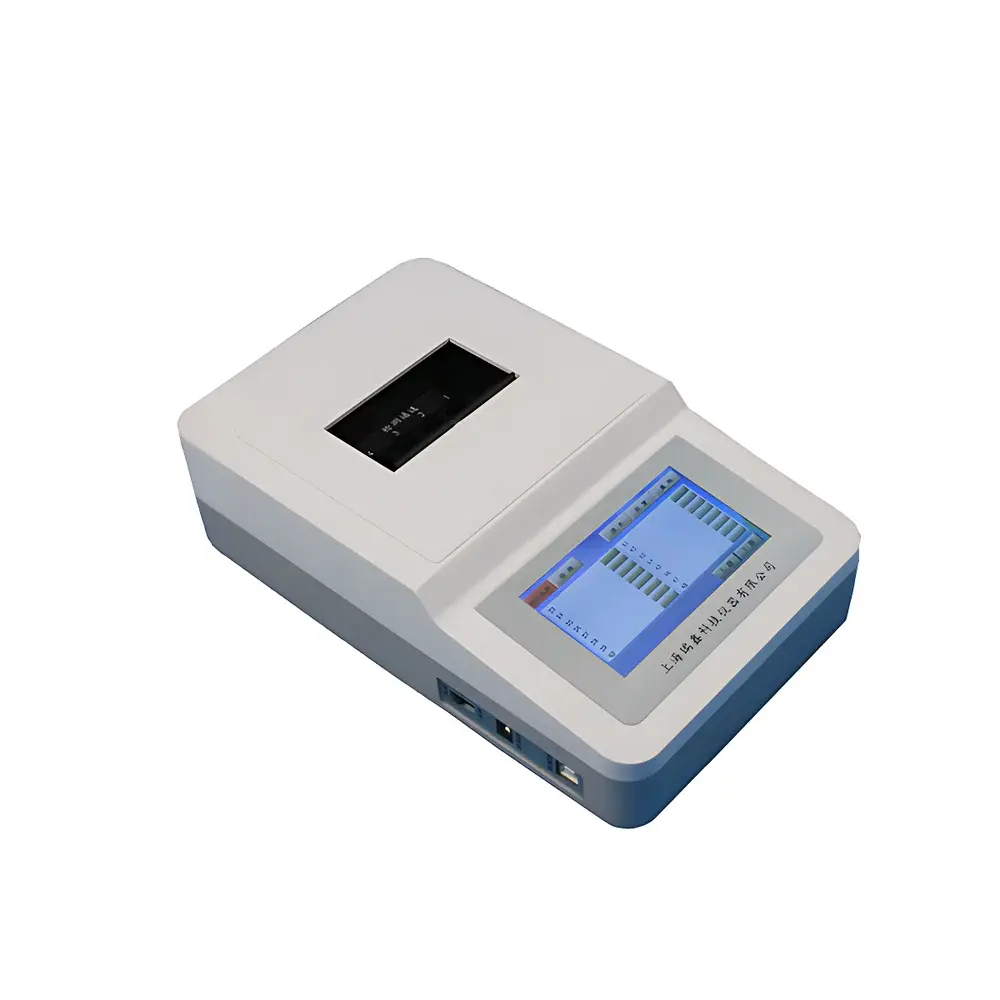
Ruixin SPb-JAS2 Arsenic Heavy Metal Analyzer
| Brand | Ruixin |
|---|---|
| Origin | Shanghai, China |
| Manufacturer Type | Authorized Distributor |
| Origin Category | Domestic (China) |
| Model | SPb-JAS2 |
| Price Range | USD 2,800 – 4,200 |
| Function Type | Single-Analyte Detection System |
| Sample Format | Single-Sample Dedicated Platform |
| Wavelength | 540 nm |
| Detection Time | ≤ 3 minutes |
| Repeatability | ≤ 0.2% |
| Detection Channels | 1 |
Overview
The Ruixin SPb-JAS2 Arsenic Heavy Metal Analyzer is a portable, single-wavelength photometric analyzer engineered for rapid, field-deployable quantification of inorganic arsenic (As) in food matrices. It operates on the principle of colorimetric detection via the silver diethyldithiocarbamate (Ag-DDC) method — a standardized spectrophotometric assay widely referenced in national food safety protocols (e.g., GB 5009.11–2014). At 540 nm, the instrument measures absorbance of the red-colored As–DDC complex formed after acid digestion and hydride generation pretreatment. Designed for regulatory compliance workflows, the SPb-JAS2 delivers trace-level sensitivity with a detection limit of 0.5 mg/kg and a linear dynamic range of 0–2 mg/kg — fully aligned with maximum residue limits (MRLs) stipulated by Codex Alimentarius and China’s GB 2762–2022 for rice, edible oils, seafood, and processed cereals.
Key Features
- Portable architecture with integrated rechargeable lithium-ion battery (operational autonomy ≥ 8 hours), enabling uninterrupted use in mobile food inspection units, roadside checkpoints, or remote sampling sites.
- 4.3-inch high-resolution TFT color touchscreen with full Chinese GUI — supports direct stylus- or keyboard-based Chinese character input for sample labeling, operator ID, and institutional metadata entry.
- Self-calibrating optical path system: automatic zero and 100% transmittance calibration at power-on eliminates manual adjustment and reduces operator-induced variability.
- Dual-mode display: simultaneous real-time readout of absorbance (0.000–4.000, resolution 0.001) and transmittance (0.00–100.00%, resolution 0.01%), supporting both routine arsenic testing and auxiliary photometric applications (e.g., nitrite, formaldehyde).
- Built-in thermal printer outputs compliant test reports containing analyte concentration (mg/kg), Chinese sample name, detection date/time, analyst ID, and issuing institution — all formatted to meet GLP documentation requirements.
- Optical stability ≤ 0.3% over 3 minutes (drift test per ISO 7027-1), ensuring reproducibility across sequential field measurements without recalibration.
Sample Compatibility & Compliance
The SPb-JAS2 is validated for solid and semi-solid food samples requiring standardized pretreatment: rice, wheat flour, dried seaweed, edible fungi, and animal-derived products. Sample preparation follows AOAC Official Method 993.14 (hydride generation–atomic absorption) adapted for colorimetric endpoint detection. The system complies with domestic regulatory frameworks including GB/T 5009.11 and SN/T 2215–2008. While not certified to ISO/IEC 17025 for accredited testing laboratories, its performance parameters satisfy internal quality control benchmarks for screening-level surveillance under China’s Food Safety Law (Article 112) and EU Regulation (EC) No 882/2004 for official controls.
Software & Data Management
Data handling is managed via embedded firmware with non-volatile memory storage for ≥ 1,000 test records. Each entry includes timestamped absorbance values, calculated concentration, user-defined sample identifiers, and instrument operational logs. RS232 and USB 2.0 interfaces support bidirectional data exchange with LIMS platforms or centralized food safety monitoring networks (e.g., China’s National Food Safety Risk Monitoring Information System). Audit trail functionality records user login events, calibration actions, and report generation — supporting basic 21 CFR Part 11 readiness when deployed with external authentication servers.
Applications
- Routine screening of arsenic contamination in grain supply chains by municipal market supervision bureaus.
- On-site verification during foodborne illness investigations conducted by CDC-affiliated hygiene inspection teams.
- Quality assurance checks in food processing facilities prior to batch release — particularly for rice-based infant formula and dietary supplements.
- Training and capacity-building in regional food safety laboratories where access to ICP-MS or HG-AFS instrumentation is limited.
- Integration into multi-parameter food safety rapid test kits (e.g., combined with pesticide, sulfite, or melamine modules) within standardized field deployment cases.
FAQ
What pretreatment steps are required before analysis?
Solid samples must undergo acid digestion (HNO₃–HClO₄) followed by reduction with potassium iodide and ascorbic acid, then hydride generation using sodium borohydride. Full protocol adherence is mandatory to achieve stated LOD and linearity.
Can the instrument be used for water samples?
No — the SPb-JAS2 is calibrated and validated exclusively for food matrices. Water analysis requires EPA Method 200.9-compliant instrumentation (e.g., ICP-OES or HG-AFS).
Is third-party validation data available?
Yes — method validation reports (including spike recovery, matrix interference, and inter-laboratory reproducibility) are provided upon request for regulatory submission support.
Does the device support firmware updates?
Firmware upgrades are delivered via USB flash drive and require authorized service technician initiation; no over-the-air updates are supported.
What is the expected lifetime of the optical source?
The 540 nm LED light source is rated for ≥ 10,000 hours of continuous operation under standard ambient conditions (25°C, 60% RH).