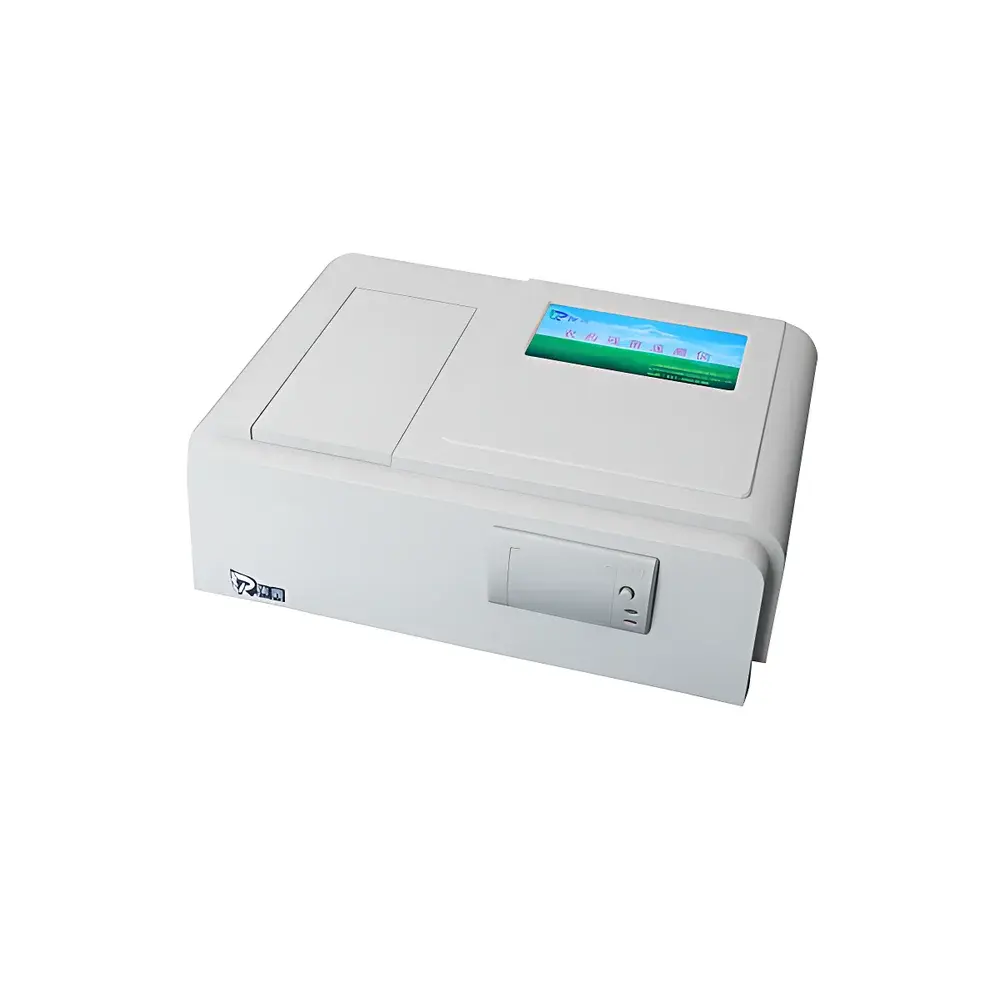
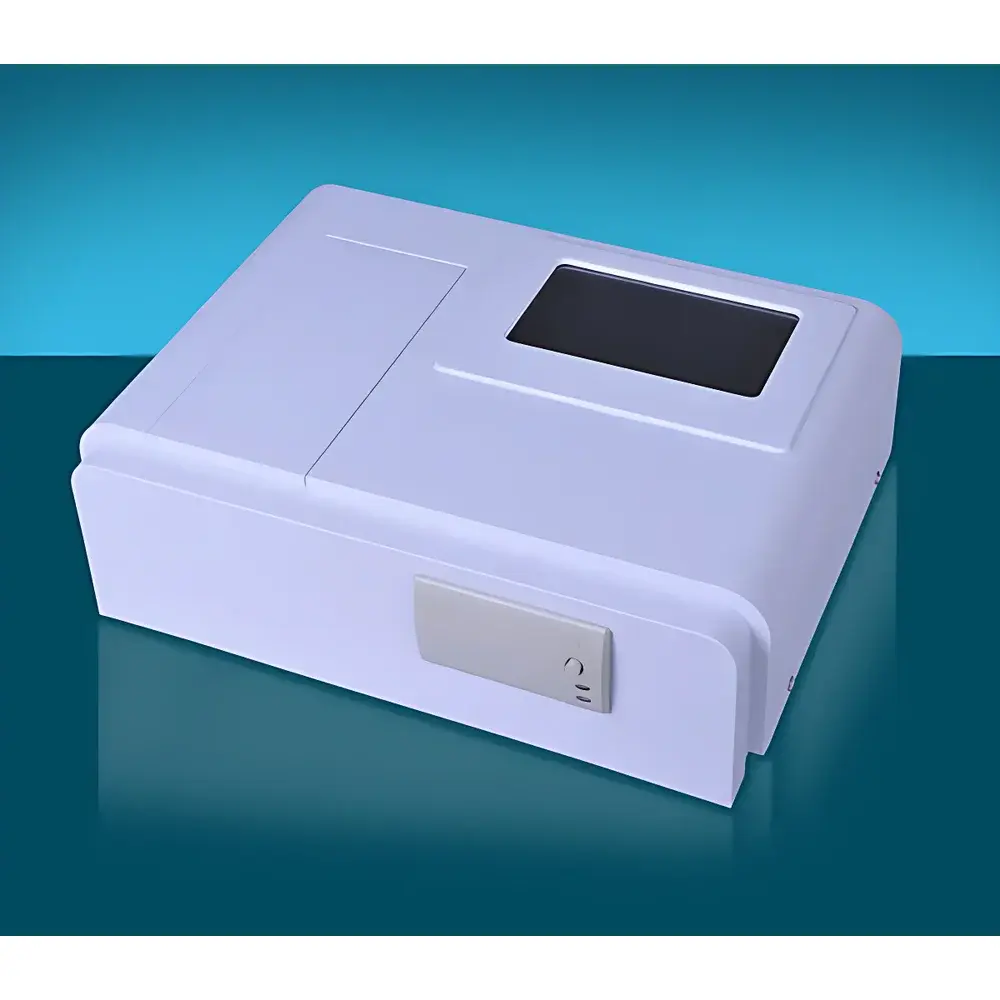
Ruixin SP-801B Multi-Parameter Food Safety Analyzer
| Brand | Ruixin |
|---|---|
| Origin | Shanghai, China |
| Manufacturer Type | Authorized Distributor |
| Origin Category | Domestic (China) |
| Model | SP-801B |
| Function Type | Multi-parameter (60+ configurable assays) |
| Sample Compatibility | Universal for liquid, extract, and homogenized food matrices |
| Wavelengths | 410 nm, 510 nm, 630 nm |
| Detection Time per Channel | ≤ 180 s |
| Photometric Repeatability (Transmittance) | ≤ 0.2% |
| Absorbance Resolution | 0.001 AU |
| Transmittance Resolution | 0.01% |
| Optical Accuracy (Transmittance) | ±2.0% |
| Baseline Stability (3 min) | ≤0.2% |
| Detection Channels | 24 simultaneous cuvette-based optical paths |
| Display | 7.0-inch capacitive touch TFT-LCD (800×480) with full Chinese UI |
| Data Output | Embedded thermal printer, RS232, USB 2.0 |
| Power Supply | AC 220 V ±10%, 50 Hz |
Overview
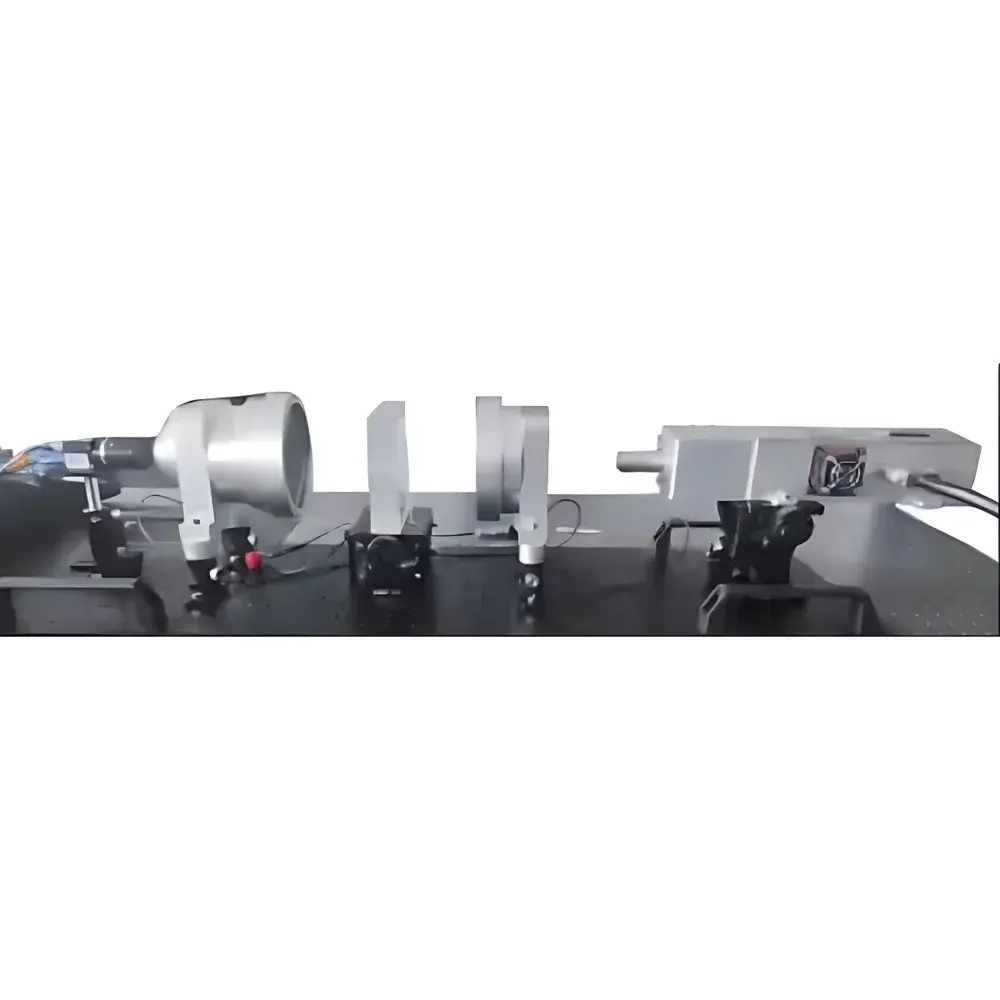
The Ruixin SP-801B Multi-Parameter Food Safety Analyzer is a benchtop photometric analyzer engineered for high-throughput, regulatory-grade screening of chemical contaminants and quality indicators in food and agricultural commodities. It operates on the principle of fixed-wavelength visible spectrophotometry—utilizing three precisely calibrated LED light sources (410 nm, 510 nm, and 630 nm) to quantify analyte-specific colorimetric reactions via Beer–Lambert law-based absorbance measurement. Designed for compliance-driven environments—including municipal food safety supervision bureaus, provincial CDC laboratories, agricultural product inspection centers, and mobile testing units—the SP-801B delivers quantitative results within ≤3 minutes per channel without requiring external calibration standards prior to each run, thanks to its integrated optical self-alignment system. Its 24-channel parallel detection architecture enables batch processing of up to 24 samples simultaneously under identical instrumental conditions, ensuring inter-sample comparability and minimizing operator-induced variability.
Key Features
- 24 independent optical detection channels with synchronized timing and auto-zero referencing
- 7.0-inch high-resolution capacitive touchscreen with intuitive Chinese-language GUI and on-screen keyboard support for direct sample annotation
- Triple-wavelength LED photometry (410 nm, 510 nm, 630 nm) optimized for common food assay chemistries including diazotization, molybdenum blue, and chromotropic acid reactions
- Integrated thermal printer delivering compliant test reports containing channel ID, analyte concentration, sample name (in Chinese), date/time stamp, operator ID, and institutional header
- Onboard data management: automatic storage of ≥10,000 test records with searchable metadata (date, assay type, operator, sample ID)
- Self-calibrating optical path: eliminates manual “zero” and “100%T” adjustments at startup; maintains photometric integrity across ambient temperature fluctuations (15–35 °C operating range)
- Dual-mode display: real-time switching between absorbance (0.000–4.000 AU, resolution 0.001 AU) and transmittance (0.00–100.00%, resolution 0.01%) readings
- Expandable assay library: pre-validated protocols for >60 food safety parameters; firmware-upgradable to accommodate newly adopted national or industry-standard methods
Sample Compatibility & Compliance
The SP-801B accepts standard 10 mm pathlength cuvettes and supports aqueous extracts, enzyme-digested homogenates, and clarified filtrates derived from diverse matrices—including fresh produce, meat products, dairy, edible oils, condiments, grains, and processed snacks. All default assay protocols align with China’s GB standards (e.g., GB 5009 series for food additives and contaminants) and are adaptable to internationally recognized methodologies such as AOAC Official Methods℠ and ISO 750:2022 (for nitrite/nitrate). While not certified to FDA 21 CFR Part 11 out-of-the-box, the instrument’s audit-trail-capable software architecture—featuring timestamped operator logins, immutable result logs, and exportable CSV/Excel datasets—supports GLP-compliant documentation workflows required by third-party accreditation bodies (e.g., CNAS, CMA).
Software & Data Management
The embedded Ruixin Analytical Suite provides local data capture, trend visualization, statistical summary (mean, SD, CV%), and customizable report generation. Raw absorbance values, calculated concentrations, and pass/fail flags against user-defined thresholds are stored with full traceability. USB and RS232 interfaces enable secure transfer to LIMS or enterprise QA platforms; optional SDK documentation facilitates integration with laboratory middleware (e.g., LabVantage, STARLIMS). Data exports comply with ISO/IEC 17025:2017 Annex A.3 requirements for electronic record integrity, including digital signature readiness upon customer-requested configuration.
Applications
- Routine surveillance of pesticide residues (organophosphates, carbamates) in fruits and vegetables using cholinesterase inhibition assays
- Quantification of preservatives (sodium benzoate, potassium sorbate), bleaching agents (benzoyl peroxide), and adulterants (melamine, Sudan dyes) in processed foods
- Detection of illegal additives: formaldehyde in aquatic products, borax in rice noodles, rhodamine B in chili powder
- Quality parameter assessment: amino acid nitrogen in soy sauce, peroxide value in edible oils, total volatile basic nitrogen (TVB-N) in chilled meat
- Hygiene monitoring: residual chlorine in food contact surfaces, hexavalent chromium in packaging materials
- Field-deployable verification during market inspections, border control checks, and cold-chain audits
FAQ
Does the SP-801B require daily recalibration with standard solutions?
No—its built-in optical self-alignment system performs automatic baseline correction at power-on; however, periodic verification using NIST-traceable neutral density filters is recommended every 30 days for metrological assurance.
Can assay protocols be customized for non-standard analytes?
Yes—users may define new calibration curves (linear, quadratic, or polynomial) via the setup menu; method validation documentation templates are included for internal QA review.
Is remote software update supported over network connection?
Firmware updates are delivered via USB drive only; network connectivity is limited to data export to prevent unauthorized access to instrument control logic.
What is the expected lifetime of the LED light sources?
The 410/510/630 nm LEDs are rated for ≥50,000 hours of operation under normal duty cycles, with no user-serviceable replacement required during standard 5-year service intervals.
How does the instrument handle matrix interference in complex food extracts?
Each assay includes optional blank subtraction and background correction steps; users may also configure multi-point dilution series to mitigate high-absorbance interference within the linear dynamic range (0.1–2.5 AU).