
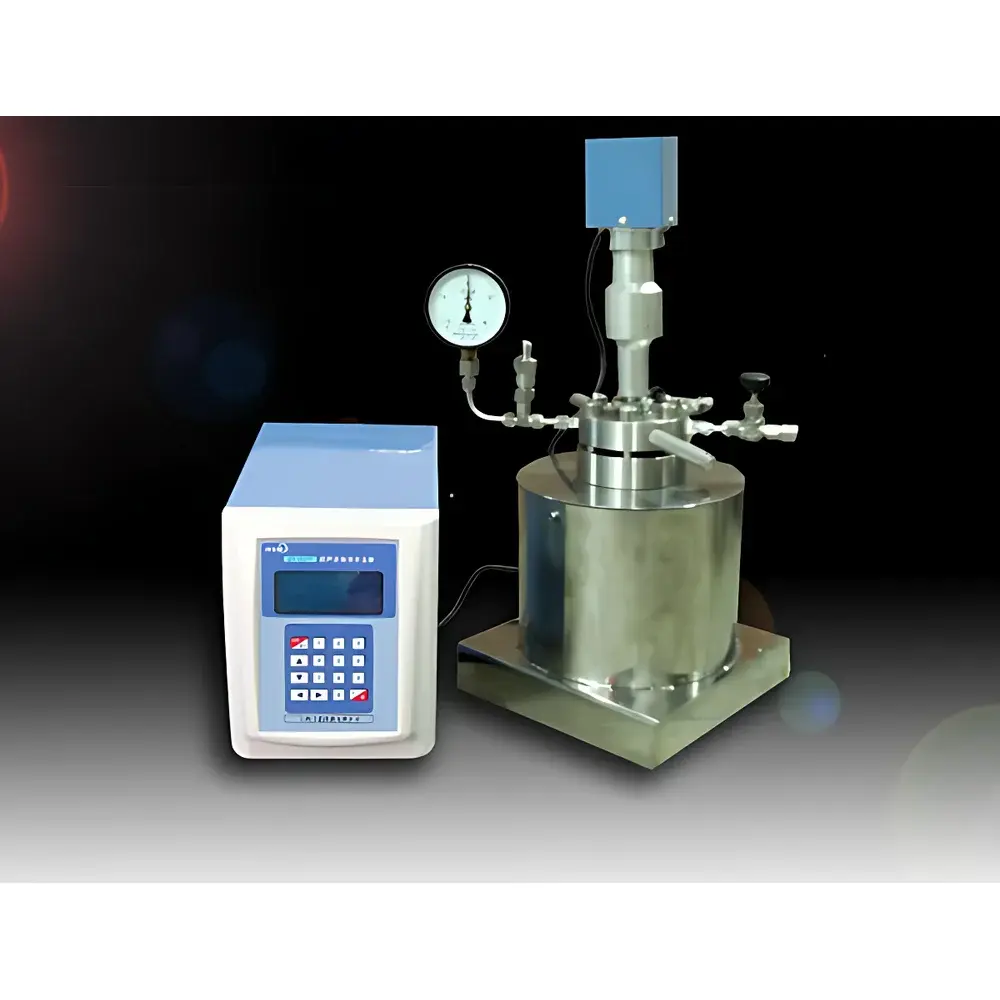
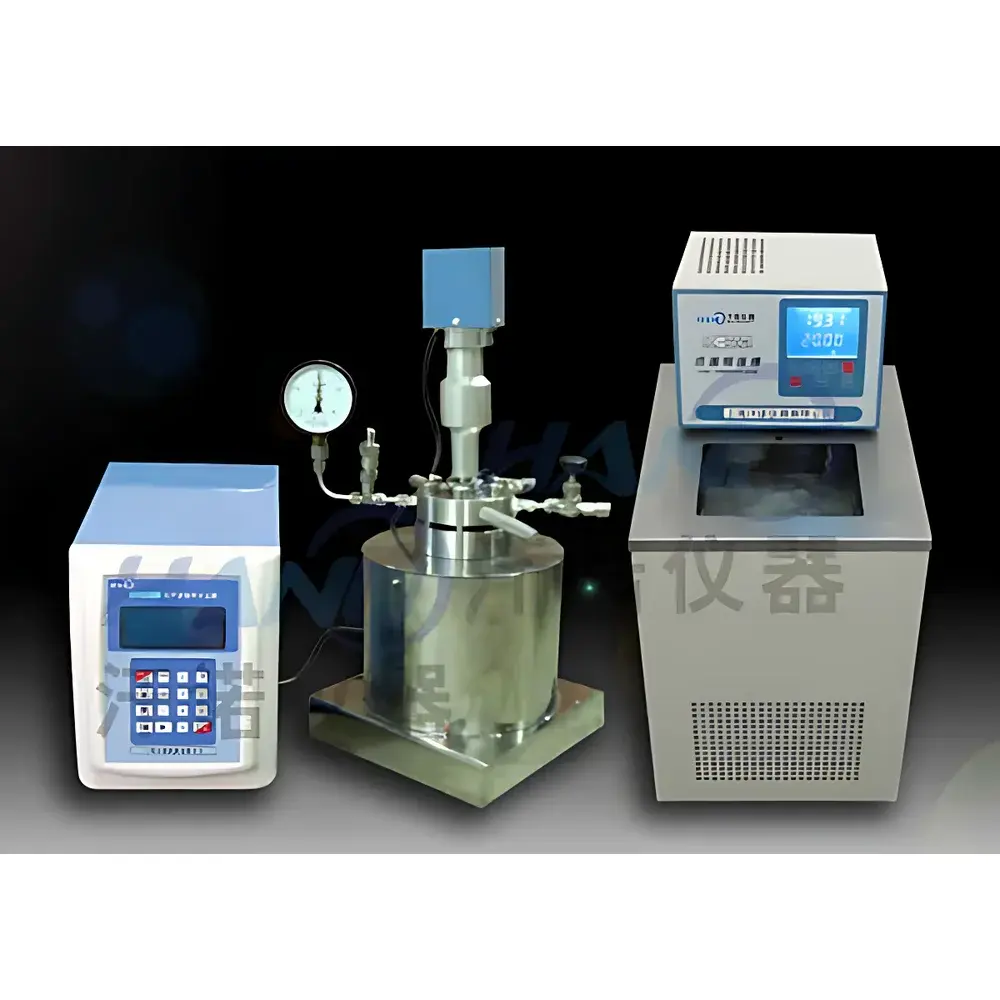
Hanuo HNGYF-150G High-Temperature High-Pressure Ultrasonic Reactor
| Brand | Hanuo |
|---|---|
| Origin | Shanghai, China |
| Model | HNGYF-150G |
| Working Volume | 150 mL |
| Maximum Pressure | 12.5 MPa |
| Temperature Range | Ambient to 300 °C |
| Vacuum Range | 0.1–12.5 kPa (absolute) |
| Construction Material | Stainless Steel (316L typical) |
| Ultrasonic Power Output | 10–500 W (continuously adjustable) |
| Transducer Type | Focused (probe-type) piezoelectric ultrasonic transducer with titanium alloy horn |
| Sealing Method | Dual-seal flange interface with high-temperature elastomer gasket |
Overview
The Hanuo HNGYF-150G High-Temperature High-Pressure Ultrasonic Reactor is an integrated laboratory-scale reaction system engineered for controlled sonochemical synthesis, extraction, and catalytic studies under elevated thermal and pressure conditions. It operates on the principle of direct immersion focused ultrasound—where a titanium alloy ultrasonic probe (horn) is inserted into the reaction medium inside a sealed stainless steel pressure vessel. This configuration enables efficient transfer of acoustic energy (>20 kHz) directly into the liquid phase, generating transient cavitation bubbles whose collapse produces localized hotspots (up to ~5000 K), extreme pressures (~1000 atm), and intense micro-mixing effects. Unlike bath-type ultrasonicators, this probe-based design ensures reproducible energy delivery independent of vessel geometry or sample volume—critical for kinetic studies, nanomaterial synthesis, and heterogeneous catalysis under non-ambient conditions.
Key Features
- Robust 316L stainless steel pressure vessel rated for continuous operation up to 12.5 MPa and 300 °C, with dual-layer jacketed design supporting external heating/cooling circulation
- Focused ultrasonic transducer with titanium alloy sonotrode (diameter: 10 mm standard), mounted via hermetic flange seal to prevent leakage under pressure
- Adjustable ultrasonic power output (10–500 W) with real-time amplitude control (0–100%), enabling precise modulation of cavitation intensity
- Integrated digital temperature and pressure monitoring with Pt100 sensor and calibrated pressure transducer; data logging capability via RS485 interface
- Optional magnetic coupling agitator (top-entry, speed range: 0–800 rpm) for combined mechanical stirring and ultrasonication—configurable for sequential or simultaneous operation
- Modular reactor head with standardized ports (¼” NPT or M12) for optional accessories: gas inlet/outlet valves, reflux condenser, sampling port, pH/DO probes, and automated dosing lines
Sample Compatibility & Compliance
The HNGYF-150G accommodates a broad range of chemically aggressive media—including strong acids (e.g., HNO₃, H₂SO₄), organic solvents (DMF, THF, ethanol), ionic liquids, and aqueous suspensions—without compromising structural integrity or sealing performance. Its pressure containment system complies with ISO 9001-manufactured quality protocols and meets ASME BPVC Section VIII Division 1 design guidelines for Class I pressure vessels. All wetted components are electropolished to Ra < 0.4 µm for corrosion resistance and ease of cleaning. The system supports GLP-compliant workflows through traceable calibration records (pressure, temperature, ultrasonic power) and optional audit-trail-enabled software integration.
Software & Data Management
The reactor interfaces with Hanuo’s proprietary LabControl Suite v3.2 (Windows-based), offering synchronized acquisition of ultrasonic power, temperature, pressure, and stirring speed. Data is recorded at user-defined intervals (100 ms minimum resolution) and exported in CSV or HDF5 format for post-processing in MATLAB, Python (Pandas), or OriginLab. Optional FDA 21 CFR Part 11 compliance package includes electronic signatures, role-based access control, and immutable audit trails for regulated environments (e.g., pharmaceutical process development). Remote monitoring via Ethernet or Wi-Fi is supported with TLS 1.2 encryption.
Applications
- Sono-hydrothermal synthesis of metal oxides (TiO₂, ZnO), perovskites, and MOFs under controlled p–T–f conditions
- Accelerated enzymatic hydrolysis and lipid transesterification in biodiesel research
- High-pressure ultrasound-assisted extraction (HPUE) of bioactive compounds from plant matrices
- Kinetic investigation of solid-liquid heterogeneous reactions (e.g., Fischer–Tropsch model systems)
- Development of stable nanoemulsions and Pickering emulsions under inert atmosphere (N₂/Ar purge capability)
- In situ Raman or FTIR spectroscopy compatibility via quartz viewport option (available as accessory)
FAQ
What safety certifications does the HNGYF-150G hold?
The reactor conforms to CE marking requirements (2014/30/EU EMC Directive and 2014/68/EU PED) and carries TÜV-certified pressure vessel documentation for EU and North American markets.
Can the ultrasonic probe be replaced with other frequencies or diameters?
Yes—standard configurations include 20 kHz / 10 mm and 25 kHz / 6 mm horns; custom frequencies (15–40 kHz) and geometries are available upon request with recalibration.
Is vacuum operation compatible with ultrasonic activation?
Vacuum down to 0.1 kPa absolute is supported during non-sonic phases; ultrasonication is disabled below 5 kPa to prevent probe erosion and arcing—automatically interlocked via pressure sensor feedback.
How is temperature uniformity maintained across the 150 mL volume?
Jacketed circulation with ±0.5 °C stability (at 200 °C) is achieved using silicone oil or molten salt heat transfer fluids; internal PT100 placement near probe tip enables closed-loop PID control.
Does the system support automated reaction sequencing?
With optional LabControl Automation Module, users can program multi-step protocols including ramp/soak temperature profiles, staged ultrasonic power modulation, timed reagent injection, and pressure hold/release cycles.



