
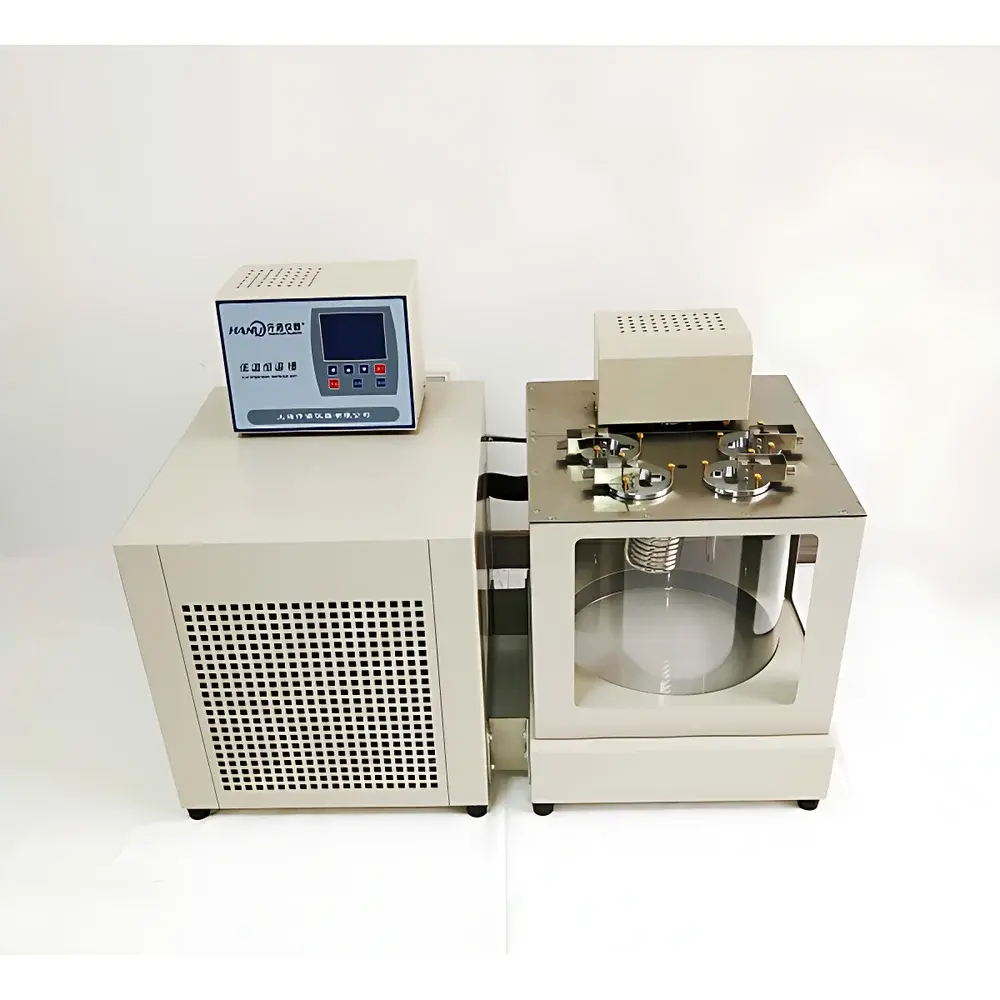
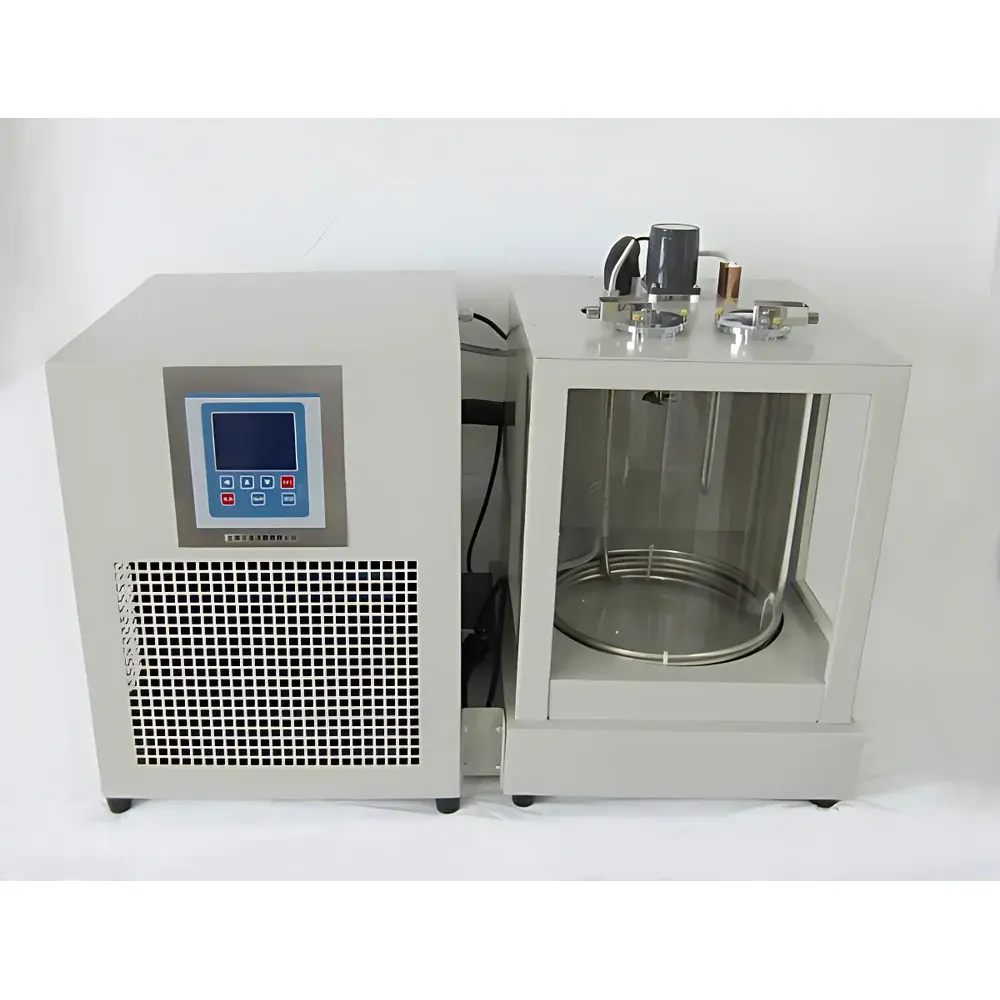
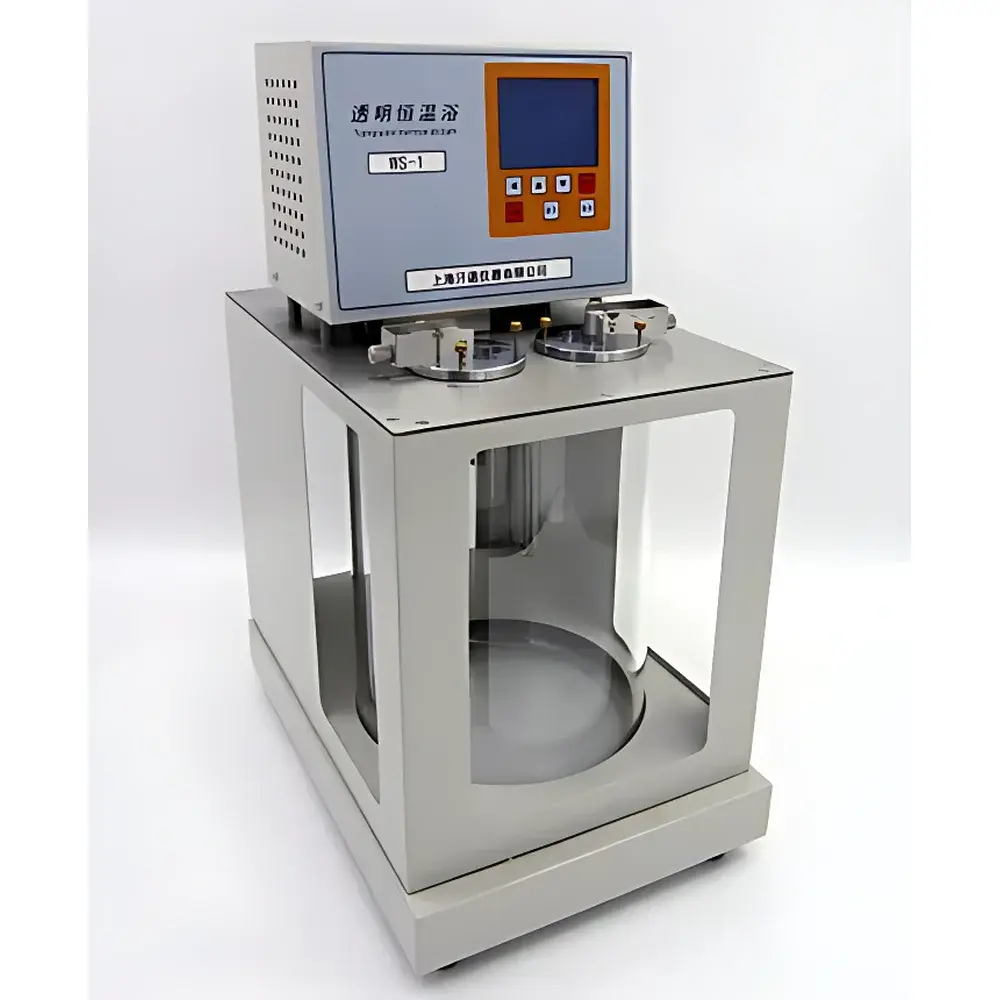
Hanuo WS-6 Ubbelohde Viscometer Constant Temperature Bath
| Brand | Hanuo |
|---|---|
| Origin | Shanghai, China |
| Model | WS-6 |
| Instrument Type | Constant-Temperature Circulating Bath |
| Circulation Mode | Internal Circulation |
| Temperature Control | Refrigeration & Heating |
| Bath Volume | 28 L |
| Temperature Range | 0–80 °C |
| Temperature Stability | ±0.05 °C |
| Bath Dimensions (Ø × H) | 300 × 400 mm |
| Opening Configuration | 4 × Ø65 mm |
| Depth | 400 mm |
| Display Resolution | 0.01 °C |
| Control Algorithm | PID with Auto-Tuning & Manual Adjustment |
| Safety Features | Dual Independent Temperature Protection, Compressor Overheat/Overcurrent Protection |
| Communication Interface | Optional RS-232 or RS-485 |
| Programmable Ramp Control | Optional |
Overview
The Hanuo WS-6 Ubbelohde Viscometer Constant Temperature Bath is an engineered thermal platform designed specifically to meet the stringent temperature uniformity and stability requirements of capillary viscometry—particularly for Ubbelohde-type suspended-level viscometers used in polymer solution characterization, pharmaceutical excipient analysis, and petrochemical fluid evaluation. Operating on a dual-mode refrigeration/heating principle with a fully enclosed compressor system and precision PID temperature regulation, the WS-6 maintains a stable thermal environment across its 28-liter stainless-steel bath volume. Its design conforms to ASTM D445, ISO 3104, and USP guidelines for kinematic viscosity measurement, where bath temperature deviation must remain within ±0.05 °C over extended equilibration periods (≥30 min). The bath’s internal circulation architecture ensures laminar, low-turbulence flow around vertically mounted viscometers—minimizing convective interference and enabling high reproducibility (<0.2% RSD) in efflux time measurements.
Key Features
- Precision temperature control with ±0.05 °C stability over 0–80 °C range, validated per ISO/IEC 17025 calibration protocols
- Large backlit LCD interface with intuitive touch-key operation and parameter lock function to prevent unauthorized modification during GLP-compliant testing
- Dual independent thermal protection circuitry: primary sensor-based cutoff and secondary mechanical thermostat—both triggering audible alarm and automatic load disconnection
- Hermetically sealed refrigeration unit with overheat and overcurrent safeguards, compliant with IEC 61000-6-2 electromagnetic immunity standards
- Internal recirculation pump optimized for low pulsation and minimal vibration transfer—critical for capillary timing accuracy in Ubbelohde and Cannon-Fenske configurations
- Configurable temperature ramp profiling (optional) supporting controlled heating/cooling rates from 0.1 to 2.0 °C/min for method development in temperature-dependent viscosity studies
- RS-232 and RS-485 digital interfaces (optional) enable integration into LIMS environments and support ASTM E1382-compliant data logging
Sample Compatibility & Compliance
The WS-6 accommodates standard Ubbelohde viscometers (e.g., Cannon, Schott, Ubbelohde DIN 51562), as well as Ostwald and micro-Ubbelohde variants, via its four Ø65 mm apertures arranged radially in the bath lid. Its 400 mm depth allows full submersion of viscometer bulbs and calibrated capillaries while maintaining proper meniscus positioning relative to timing marks. Bath fluid compatibility includes water, ethylene glycol/water mixtures, silicone oils, and mineral oils—validated for continuous operation at 80 °C without degradation. The unit meets CE marking requirements under the EU Machinery Directive 2006/42/EC and Low Voltage Directive 2014/35/EU. It supports audit-ready documentation for FDA 21 CFR Part 11 compliance when paired with validated third-party data acquisition software featuring electronic signatures and audit trails.
Software & Data Management
While the WS-6 operates as a standalone analog-controlled bath, its optional serial communication modules permit bidirectional interfacing with external PCs running laboratory automation platforms such as LabVIEW, MATLAB, or custom Python-based instrument controllers. Temperature setpoints, real-time bath readings, and alarm status can be polled at user-defined intervals (1–60 s). When integrated with time-stamped viscometer timers (e.g., Cannon Auto-Timer series), the system enables synchronized data capture for automated kinematic viscosity calculation per ASTM D445 Annex A1. All communication adheres to Modbus RTU protocol over RS-485, ensuring deterministic latency and noise immunity in shared lab networks.
Applications
- Kinematic viscosity determination of crude oil fractions, lubricants, and biofuels per ASTM D445 and ISO 3104
- Intrinsic viscosity and molecular weight estimation of synthetic polymers (e.g., PET, nylon, polycarbonate) using Huggins and Kraemer plots
- Quality control of pharmaceutical polymer solutions (e.g., hydroxypropyl methylcellulose, polyvinylpyrrolidone) per USP
- Stability assessment of resin formulations in coatings and adhesives through temperature-swept efflux time analysis
- Educational use in polymer physics laboratories for teaching Mark–Houwink relationships and solvent–polymer interaction parameters
FAQ
What is the minimum immersion depth required for a standard Ubbelohde viscometer in the WS-6 bath?
The 400 mm bath depth permits full immersion of viscometers up to 350 mm in length, satisfying ASTM D445’s requirement that the entire timing bulb and capillary section reside below the bath fluid surface.
Can the WS-6 maintain 0 °C using only its built-in refrigeration system?
Yes—the integrated compressor system achieves and holds 0 °C in aqueous baths without auxiliary chillers, provided ambient room temperature remains ≤25 °C and humidity is <60% RH.
Is the temperature display traceable to NIST standards?
The factory-calibrated PT100 sensor is supplied with a certificate of calibration showing as-found/as-left data against NIST-traceable reference standards; annual recalibration is recommended per ISO/IEC 17025.
Does the bath support external temperature probes for independent verification?
No dedicated probe port is included, but users may insert certified secondary probes through unused bath openings—provided physical clearance and thermal shielding are maintained to avoid measurement interference.
What maintenance intervals are recommended for the refrigeration system?
Compressor oil and filter replacement is advised every 24 months under continuous operation; condenser coil cleaning should occur quarterly in dust-prone environments.



