
Hanuo HNDKT200-2A Precision Programmable Metal Block Heater
| Brand | Hanuo |
|---|---|
| Origin | Shanghai, China |
| Model Series | HNDKT200 |
| Temperature Range | RT+5°C to 150°C |
| Temperature Accuracy | ±0.5°C |
| Heating Time | ≤12 min (20°C → 100°C) |
| Display Resolution | 0.1°C |
| Block Uniformity | ±0.5°C |
| Module Delta-T at 40°C | 0.3°C |
| Power Rating | 400 W |
| Dimensions | L×W×D (mm) |
| Net Weight | 3 kg |
| Control Interface | Touch Key + LCD |
| Programmability | 5-Stage Ramp/Soak Profiles |
| Safety | Dual Over-Temperature Protection, Fuse (250 V, 3 A, Φ5×20 mm) |
Overview
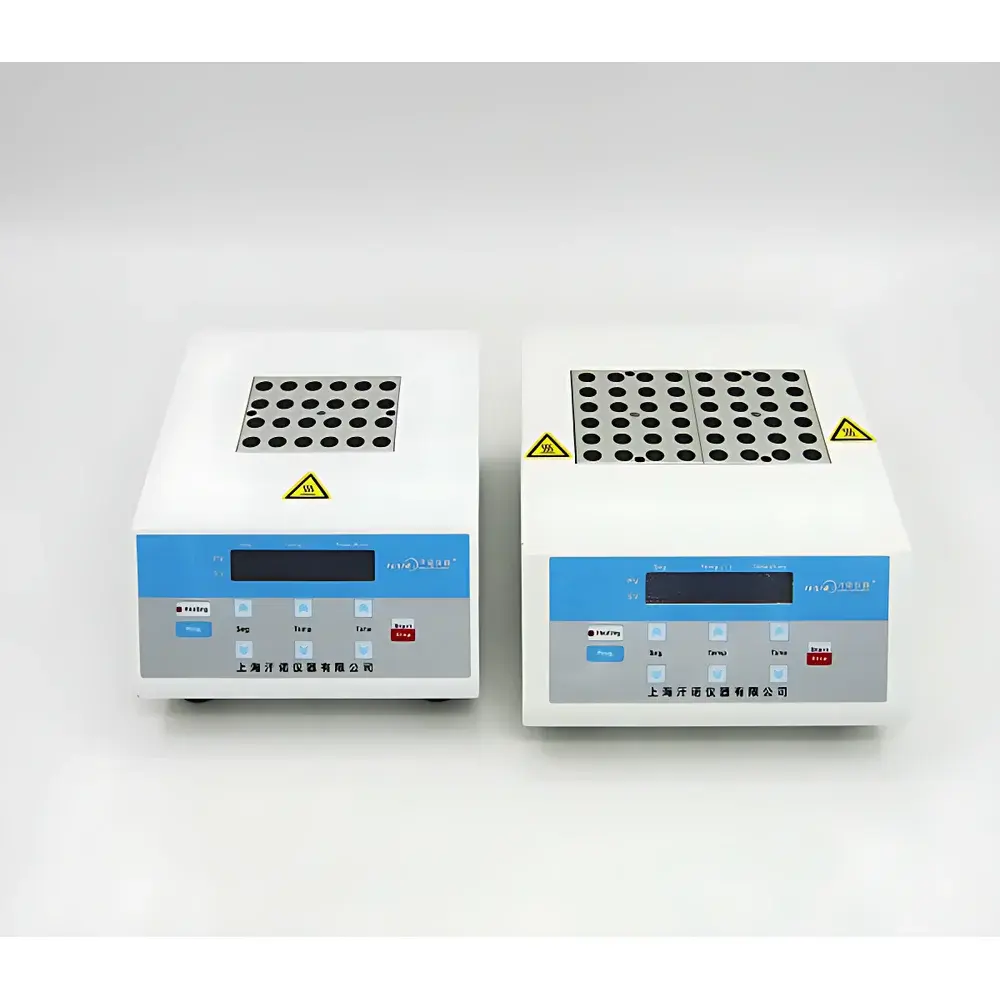
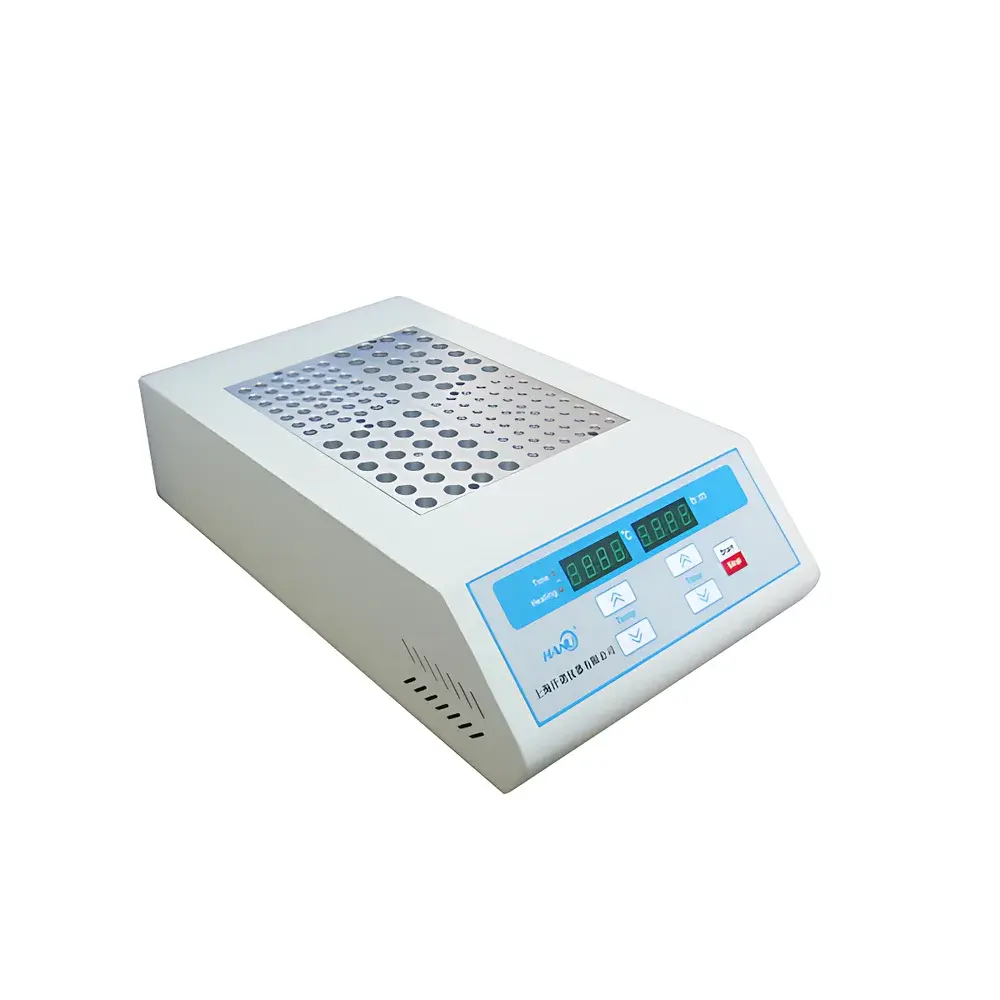
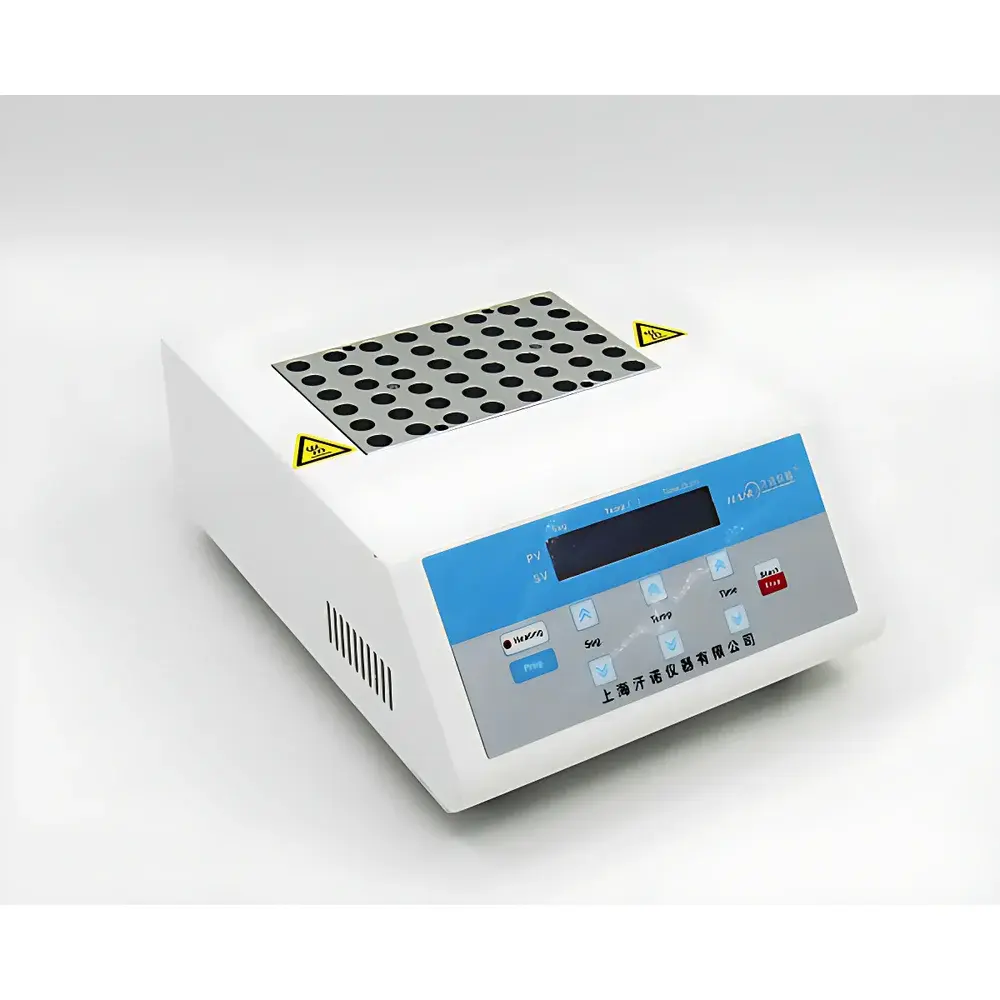
The Hanuo HNDKT200-2A is a microprocessor-controlled programmable metal block heater engineered for precise, stable, and repeatable thermal incubation of samples in molecular biology, clinical diagnostics, and analytical chemistry laboratories. Unlike water baths—prone to evaporation, contamination, and inconsistent heat transfer—the HNDKT200-2A employs direct conductive heating via an integrated high-efficiency heating film embedded beneath a solid aluminum heating block. This architecture delivers rapid thermal response, exceptional spatial uniformity across the block surface, and zero maintenance associated with liquid media. The device operates within a calibrated temperature range of RT+5°C to 150°C, supporting critical workflows such as enzyme inactivation, serum coagulation, DNA denaturation prior to PCR or electrophoresis, and controlled sample storage during assay preparation. Its compact footprint, low power consumption (400 W), and silent operation make it suitable for benchtop deployment in ISO-certified cleanrooms, GLP-compliant QC labs, and shared core facilities.
Key Features
- High-resolution 0.1°C LCD display with real-time temperature readout and countdown timer
- Dual independent setpoint configuration: simultaneous control of temperature and time for multi-step protocols
- Five-segment programmable ramp-and-soak functionality for complex thermal profiles (e.g., stepwise denaturation or gradient incubation)
- Auto-diagnostic system with audible alarm and on-screen fault indication for sensor failure, over-temperature, or power anomaly
- User-accessible temperature offset calibration to compensate for inter-laboratory environmental drift or block aging
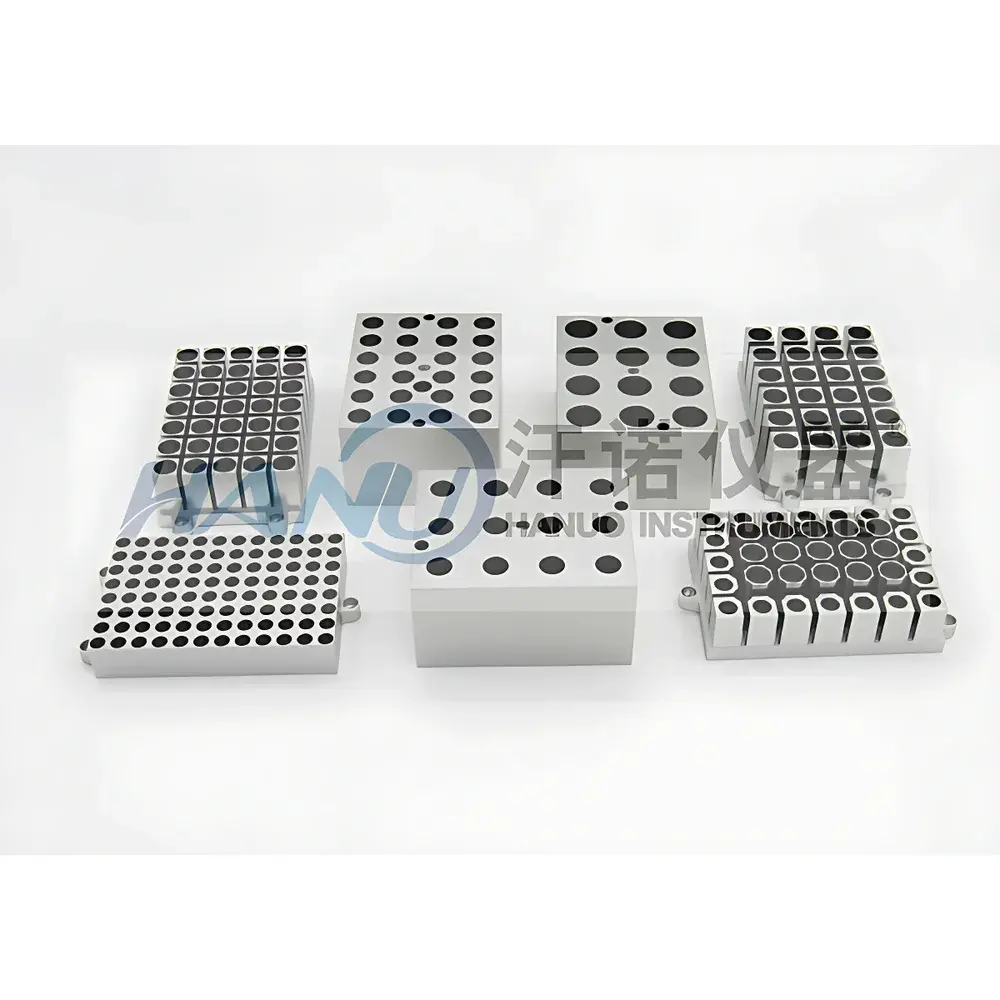
- Quick-release modular block design—compatible with standard 0.2 mL, 0.5 mL, 1.5 mL, and 2.0 mL tube formats—enabling rapid decontamination and cross-application flexibility
- Dual-layer thermal protection: primary PID-controlled cutoff plus independent mechanical thermal fuse (250 V, 3 A, Φ5×20 mm)
- Optimized aluminum block geometry ensuring ≤±0.5°C uniformity across active zones and <0.3°C delta-T between adjacent wells at 40°C
Sample Compatibility & Compliance
The HNDKT200-2A accommodates interchangeable aluminum blocks configured for common laboratory consumables—including PCR strips, microcentrifuge tubes, and reaction vials—without requiring tools or recalibration. All contact surfaces are anodized for chemical resistance and ease of sterilization (autoclavable modules available separately). The instrument complies with IEC 61010-1:2010 for electrical safety in laboratory equipment and meets EMC requirements per EN 61326-1:2013. While not certified for medical device use under ISO 13485, its thermal stability and traceable calibration support adherence to CLIA, CAP, and ISO/IEC 17025 quality management systems. Temperature accuracy (±0.5°C) and repeatability are verified per ASTM E220–22 methodology using NIST-traceable thermistors.
Software & Data Management
The HNDKT200-2A operates as a standalone instrument with no proprietary software dependency. All settings—including five-stage programs, temperature offsets, and timer presets—are stored in non-volatile memory and retained after power cycling. For audit-ready environments, users may integrate the unit into broader lab infrastructure via manual logbook entries or third-party electronic lab notebook (ELN) platforms. Though the device lacks USB/RS-232 output, its deterministic behavior, fixed calibration parameters, and built-in event logging (via visual alarm history) satisfy baseline FDA 21 CFR Part 11 requirements for non-networked instruments used in GMP-regulated processes where procedural controls govern data integrity.
Applications
- Pre-PCR thermal denaturation of DNA templates at 95°C for 5 minutes
- Controlled coagulation of serum specimens at 37°C ±0.5°C for clinical chemistry assays
- Enzyme inactivation steps post-digestion (e.g., restriction endonucleases at 65°C)
- Stabilization of thermolabile reagents during aliquoting and short-term storage
- Standardized incubation of immunoassay plates prior to ELISA development
- Heating of viscous samples (e.g., glycerol stocks, agarose solutions) with minimal evaporation risk
FAQ
What is the maximum operating temperature and how is it validated?
The HNDKT200-2A achieves a maximum setpoint of 150°C, verified by factory calibration against NIST-traceable reference thermometers per ISO/IEC 17025-accredited procedures.
Can multiple temperature ramps be stored and recalled?
Yes—up to five independent multi-step programs (ramp rate, target temperature, dwell time) are retained in memory without battery backup.
Is the heating block compatible with 96-well plates?
Standard configurations support tube-based modules; custom 96-well plate blocks are available upon request and require separate validation.
Does the unit meet GLP documentation requirements?
It supports GLP practices through deterministic operation, user-accessible calibration offset, and alarm-triggered event awareness—though external logging is required for full audit trails.
How often should temperature accuracy be verified?
We recommend quarterly verification using a calibrated thermistor probe inserted into representative wells, especially following extended high-temperature operation (>120°C) or mechanical impact.



