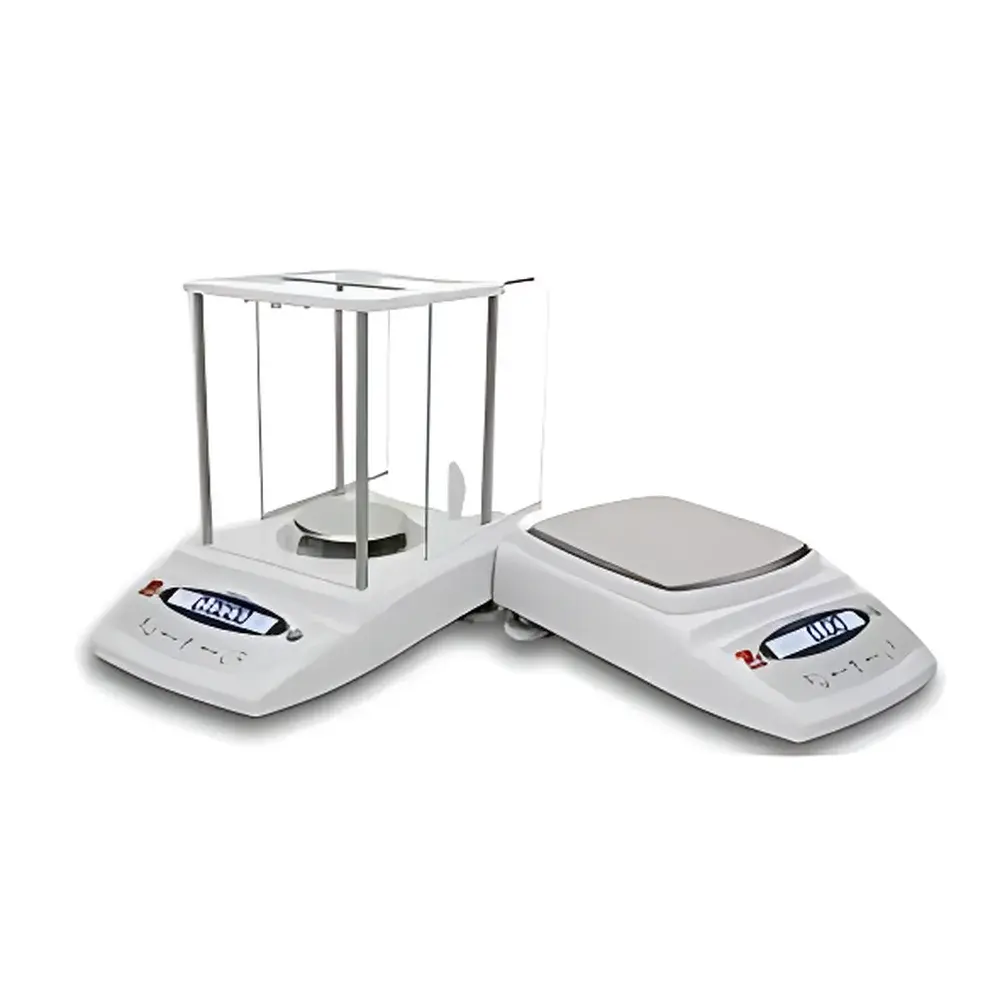
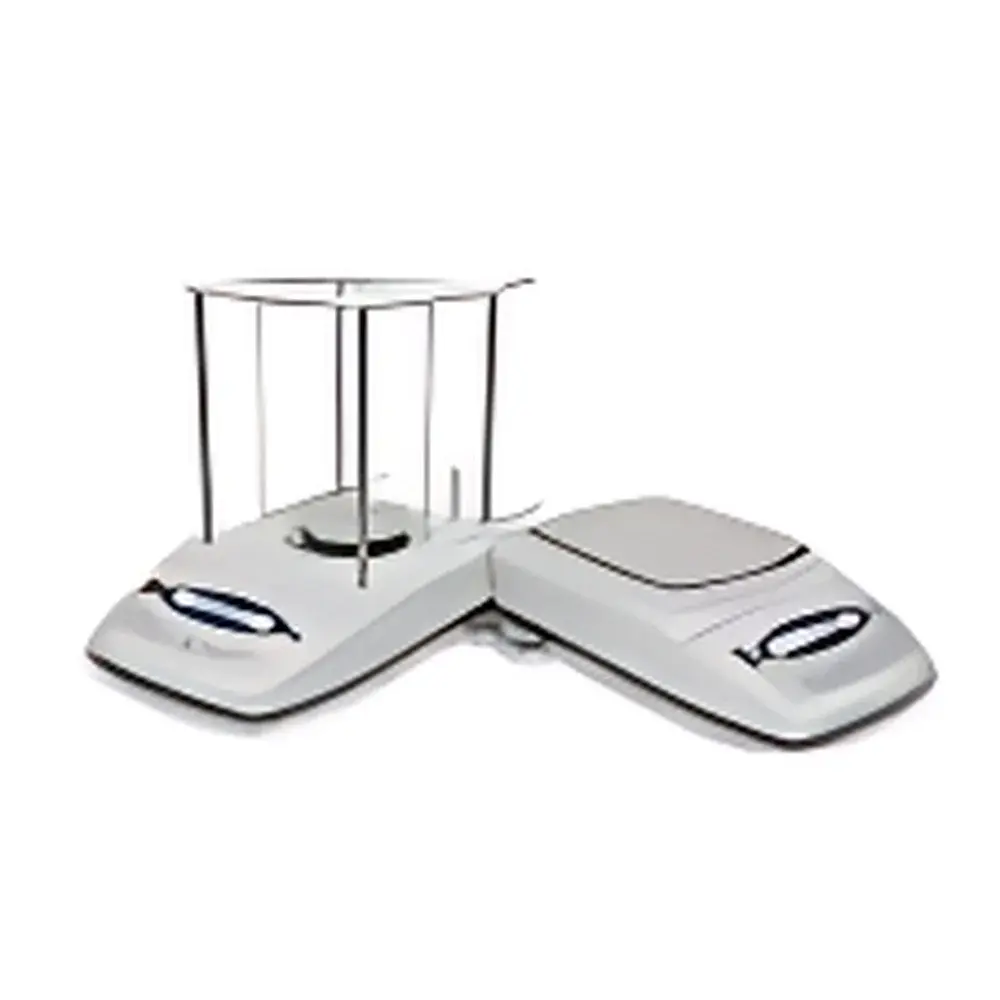
OHAUS CPJ603 Jewelry Precision Balance
| Origin | USA |
|---|---|
| Manufacturer Type | Authorized Distributor |
| Product Origin | Imported |
| Model | CPJ603 |
| Instrument Type | Analytical Balance |
| Capacity | 120 g |
| Readability | 0.0001 g |
| Calibration | Internal (AutoCal™) |
| Repeatability | ≤ ±0.0001 g (at full capacity) |
| Linearity | ≤ ±0.0002 g |
| Stabilization Time | ≤ 2 s |
| Pan Size | 90 mm diameter stainless steel |
| Interface | RS232, USB Device |
| Compliance | ISO/IEC 17025, ASTM E898, USP <41>, GLP/GMP-ready |
Overview
The OHAUS CPJ603 Jewelry Precision Balance is an analytical-grade weighing instrument engineered for high-accuracy mass determination in gemological laboratories, precious metal refineries, and fine jewelry manufacturing environments. Based on electromagnetic force compensation (EMFC) technology, the CPJ603 delivers stable, drift-free measurements by dynamically balancing the gravitational load on the weighing pan with a precisely regulated electromagnetic field. Its 120 g capacity and 0.1 mg readability meet the stringent requirements of diamond grading, gold alloy verification, and certified stone weighing—where regulatory traceability and measurement reproducibility are non-negotiable. The balance features a compact, draft-shield-integrated design with a front-accessible weighing chamber, minimizing air turbulence while enabling rapid sample handling without compromising metrological integrity.
Key Features
- Electromagnetic force compensation (EMFC) sensor architecture ensuring long-term stability and minimal thermal drift
- Internal automatic calibration (AutoCal™) triggered by time, temperature change (>1.5 °C), or user command—fully compliant with ISO 9001 and GLP audit requirements
- Stainless steel weighing pan (90 mm Ø) with corrosion-resistant coating suitable for repeated exposure to gold dust, polishing compounds, and organic solvents
- Dual-interface connectivity: RS232 port for legacy lab printers and LIMS integration; USB Device port for direct data export to Windows-based PCs without driver installation
- GLP/GMP-compliant data logging: stores up to 1,000 weighing records with timestamp, operator ID (via optional keypad), and calibration history
- Four configurable weighing modes: Standard, Percent, Piece Counting (with reference sample), and Density Determination (when used with OHAUS density kit)
Sample Compatibility & Compliance
The CPJ603 is routinely deployed in applications requiring conformance with international metrological standards including ISO/IEC 17025:2017 (general requirements for competence of testing and calibration laboratories), ASTM E898–18 (standard guide for selection and use of analytical balances), and United States Pharmacopeia (USP) Chapter <41> “Balances” for pharmaceutical-grade weighing protocols. Its 0.1 mg readability satisfies USP <41> minimum weight criteria for Class I and II substances when used within validated operating ranges (≥ 20 mg net sample). For jewelry certification, the balance supports traceable calibration via NIST-traceable weights (e.g., OHAUS Class E2 100 g and 1 g sets), with documented uncertainty budgets available upon request. The unit operates within ambient conditions of 10–30 °C and ≤ 80 % RH (non-condensing), and includes built-in level indicator and adjustable feet for optimal mechanical alignment on granite or vibration-damped workbenches.
Software & Data Management
Data acquisition and reporting are supported through OHAUS Acuity Software (v3.2+), a Windows-based application that enables real-time graphing, statistical analysis (mean, SD, RSD, min/max), and customizable report generation in PDF or CSV format. All data transfers comply with FDA 21 CFR Part 11 requirements when configured with electronic signatures, audit trail activation, and role-based user access control. The balance’s internal memory retains calibration logs—including date/time stamps, technician ID, and deviation values—ensuring full traceability during regulatory inspections. Optional barcode scanning (via USB HID-compatible scanner) allows automatic sample ID entry, eliminating manual transcription errors in high-throughput gemstone inventory workflows.
Applications
- Precise valuation and certification of diamonds, colored gemstones, and cultured pearls per GIA, AGS, or IGI reporting standards
- Alloy composition verification of gold, platinum, and palladium jewelry using specific gravity determination methods
- Batch reconciliation and loss-on-ignition (LOI) calculations in precious metal refining operations
- Weighing of micro-components in watchmaking and micro-jewelry assembly (e.g., clasps, settings, filigree elements)
- Quality assurance sampling in ISO 9001-certified jewelry manufacturing lines
- Calibration reference mass verification in metrology labs supporting jewelry trade compliance (e.g., FTC Jewelry Guides, EU Directive 2014/52/EU)
FAQ
What is the minimum weight requirement for reliable measurement on the CPJ603 according to USP <41>?
Per USP <41> guidelines, the minimum weight is calculated as 2000 × readability = 200 mg. This threshold ensures measurement uncertainty remains below 0.1 % at the lower limit of quantification.
Does the CPJ603 support external calibration with user-provided weights?
Yes—external calibration is supported using Class E2 or better weights traceable to NIST or equivalent national metrology institutes. The procedure is accessible via the service menu and requires administrator-level access.
Can the balance be integrated into a LIMS environment?
Yes—RS232 output supports ASCII protocol (OHAUS standard format) compatible with major LIMS platforms including LabWare, Thermo Fisher SampleManager, and Agilent OpenLab.
Is the CPJ603 compliant with FDA 21 CFR Part 11 for electronic records?
When used with OHAUS Acuity Software v3.2+ and configured with enabled audit trail, electronic signatures, and user authentication, the system meets Part 11 requirements for electronic record retention and integrity.
How often should internal calibration be performed?
OHAUS recommends AutoCal™ activation at startup, after significant ambient temperature shifts (>1.5 °C), and at least once per shift in continuous-use environments—consistent with ISO/IEC 17025 clause 5.5.2 on calibration frequency justification.