
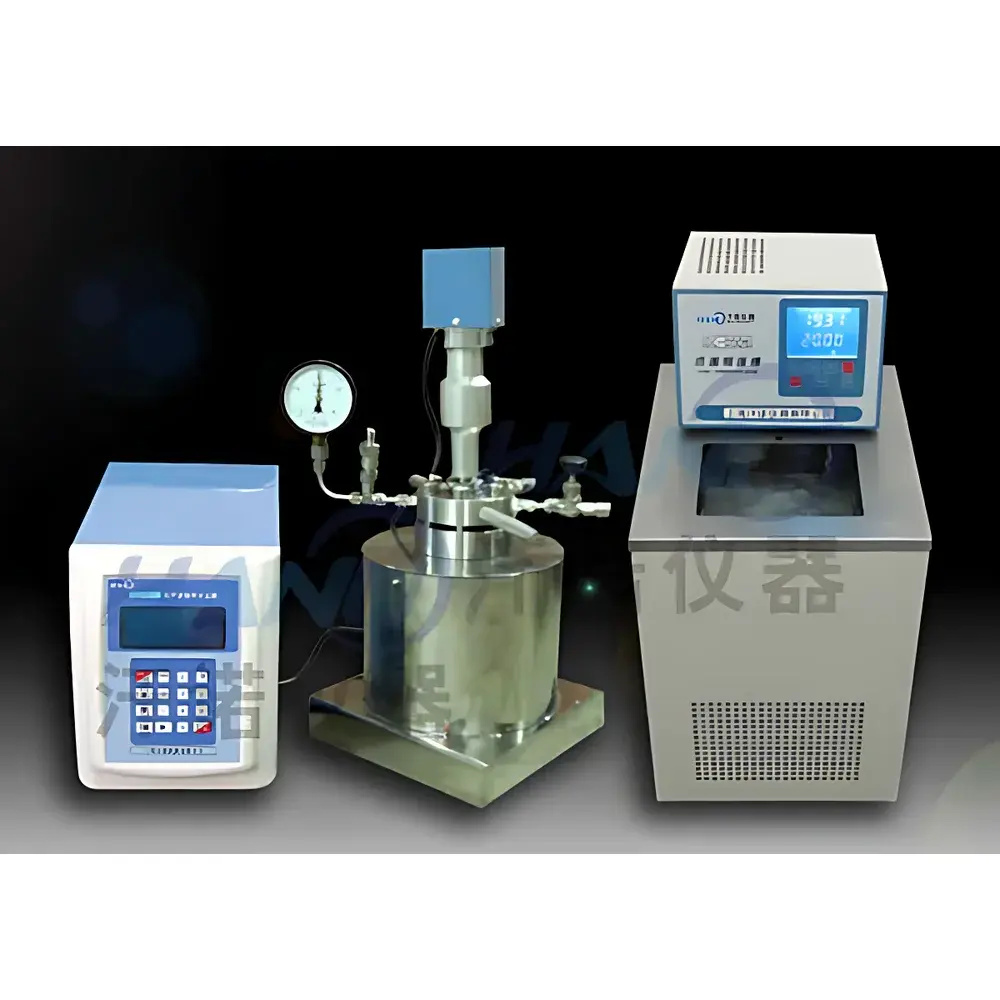
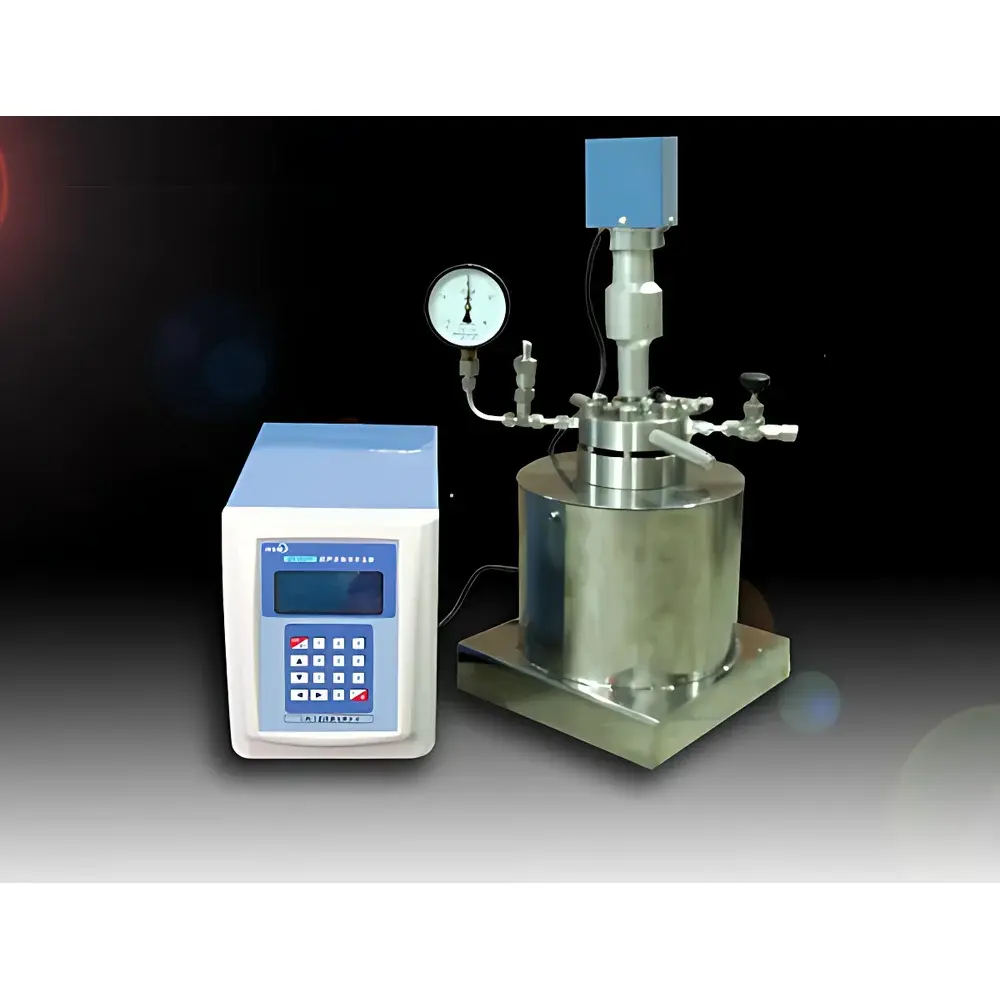
Hanuo HNGYF-150D Low-Temperature High-Pressure Ultrasonic Reactor
| Brand | Hanuo |
|---|---|
| Origin | Zhejiang, China |
| Model | HNGYF-150D |
| Working Volume | 150 mL |
| Vessel Material | Stainless Steel (316L typical) |
| Operating Pressure Range | 0.1–12.5 MPa |
| Temperature Range | −10 °C to +100 °C |
| Ultrasonic Power Output | 10–500 W (continuously adjustable) |
| Vacuum Capability | 0.1–12.5 kPa (absolute) |
| Configuration | Jacketed dual-layer vessel with integrated ultrasonic transducer and titanium alloy sonotrode |
Overview
The Hanuo HNGYF-150D Low-Temperature High-Pressure Ultrasonic Reactor is an engineered platform for controlled synthesis, extraction, and catalytic reaction studies under combined thermodynamic and acoustic stress conditions. It integrates high-integrity pressure containment (up to 12.5 MPa), precise low-temperature regulation (down to −10 °C), and focused ultrasonic energy delivery via a submerged titanium alloy sonotrode. Unlike bath-type or indirect ultrasonic systems, this reactor employs direct-coupled, high-intensity ultrasonication—where mechanical energy is transferred directly into the reaction medium through a piezoelectric transducer mounted via hermetic flange interface. This design enables cavitation-driven processes—including particle size reduction, enhanced mass transfer, accelerated hydrolysis, and sonochemical bond activation—within a fully sealed, inertizable environment compliant with ISO 10487 and ASME BPVC Section VIII Div. 1 design principles for small-scale pressure vessels.
Key Features
- Stainless steel (316L-grade) pressure-rated reactor body with dual-layer jacketed construction for simultaneous heating/cooling via external circulator
- Hermetically sealed ultrasonic coupling: titanium alloy sonotrode (Grade 5) directly immersed in reaction medium; transducer mounted via ISO-KF or CF flange with metal gasket seal
- Continuous ultrasonic power control (10–500 W) with real-time amplitude modulation (0–100% duty cycle), enabling reproducible cavitation intensity tuning
- Integrated magnetic coupling drive option for simultaneous mechanical agitation—compatible with PTFE- or Hastelloy-coated impellers for corrosion resistance
- Modular top-plate configuration supporting optional ports for gas inlet/outlet, sampling valve, reflux condenser, temperature probe (Pt100), and pressure transducer (0.1% FS accuracy)
- Optional motorized lid lift mechanism (electro-mechanical actuator) for safe, repeatable opening/closing under pressure-decay protocols
Sample Compatibility & Compliance
The HNGYF-150D accommodates heterogeneous, viscous, and particulate-laden reaction mixtures—including organometallic suspensions, nanoparticle dispersions, biomass slurries, and supercritical fluid precursors. Its chemically resistant wetted surfaces (316L SS, titanium, FKM elastomers) ensure compatibility with organic solvents (e.g., DMF, THF, ethanol), acidic media (pH ≥ 2), and mild oxidizers. The system supports GLP-aligned operation: pressure and temperature data logging meets ASTM E2554 requirements for thermal process validation; ultrasonic duty-cycle timestamps are exportable for audit trails. While not certified to PED 2014/68/EU or ASME U-1 stamp out-of-the-box, the vessel design conforms to dimensional and material specifications referenced in EN 13445-3 Annex C for Class 1 pressure equipment. Users performing GMP-regulated development must implement supplementary calibration and maintenance records per ISO/IEC 17025.
Software & Data Management
The reactor operates with standalone digital controller firmware (v3.2+) featuring dual-channel PID loops for temperature and pressure regulation, synchronized with ultrasonic generator output. All operational parameters—including setpoints, actual readings, power %, and event timestamps—are logged at user-defined intervals (1 s to 10 min) to internal non-volatile memory (16 GB). Data export is supported via USB-C or RS-485 Modbus RTU to third-party SCADA or LIMS platforms. Optional PC software (Hanuo ReactorSuite™) provides real-time graphing, alarm thresholds (e.g., overpressure >13 MPa, temp deviation >±2 °C), and CSV/PDF report generation compliant with FDA 21 CFR Part 11 (electronic signatures enabled upon license activation).
Applications
- Sono-hydrothermal synthesis of metal–organic frameworks (MOFs) and perovskite nanocrystals under subcritical water conditions
- Low-temperature enzymatic transesterification in biodiesel production, where ultrasound enhances lipase accessibility without thermal denaturation
- Accelerated solid–liquid extraction of polyphenols from plant matrices under CO₂-assisted pressurized liquid extraction (PLE)
- Catalyst activation studies involving Pd/C or Ni nanoparticles under H₂ atmosphere (≤10 MPa), with real-time monitoring of gas uptake kinetics
- Development of continuous-flow hybrid reactors—where the HNGYF-150D serves as a batch optimization module prior to microchannel scale-up
FAQ
What safety certifications does the HNGYF-150D hold?
It complies with CE marking requirements for laboratory equipment (2014/30/EU EMC Directive and 2014/35/EU LVD Directive); pressure vessel components meet ISO 9001:2015 manufacturing controls but require end-user risk assessment per local jurisdiction.
Can the reactor be operated under inert gas (e.g., N₂ or Ar)?
Yes—standard configuration includes dual gas inlet valves with precision needle valves and stainless steel diaphragm seals; recommended purge protocol: 3× vacuum/N₂ cycles to <100 Pa residual O₂.
Is remote monitoring supported?
Basic telemetry (temperature, pressure, power) is accessible via Modbus TCP on optional Ethernet module; full SCADA integration requires Hanuo ReactorSuite™ with OPC UA server license.
What maintenance is required for the ultrasonic transducer?
Annual inspection of sonotrode tip erosion (via profilometry) and transducer impedance drift (>±15% from baseline indicates replacement); no routine lubrication needed due to hermetic ceramic encapsulation.
Does the system support automated reaction termination on parameter violation?
Yes—configurable safety interlocks can trigger immediate ultrasonic shutdown, cooling loop activation, and vent-valve release if pressure exceeds 12.8 MPa or temperature exceeds 105 °C.



