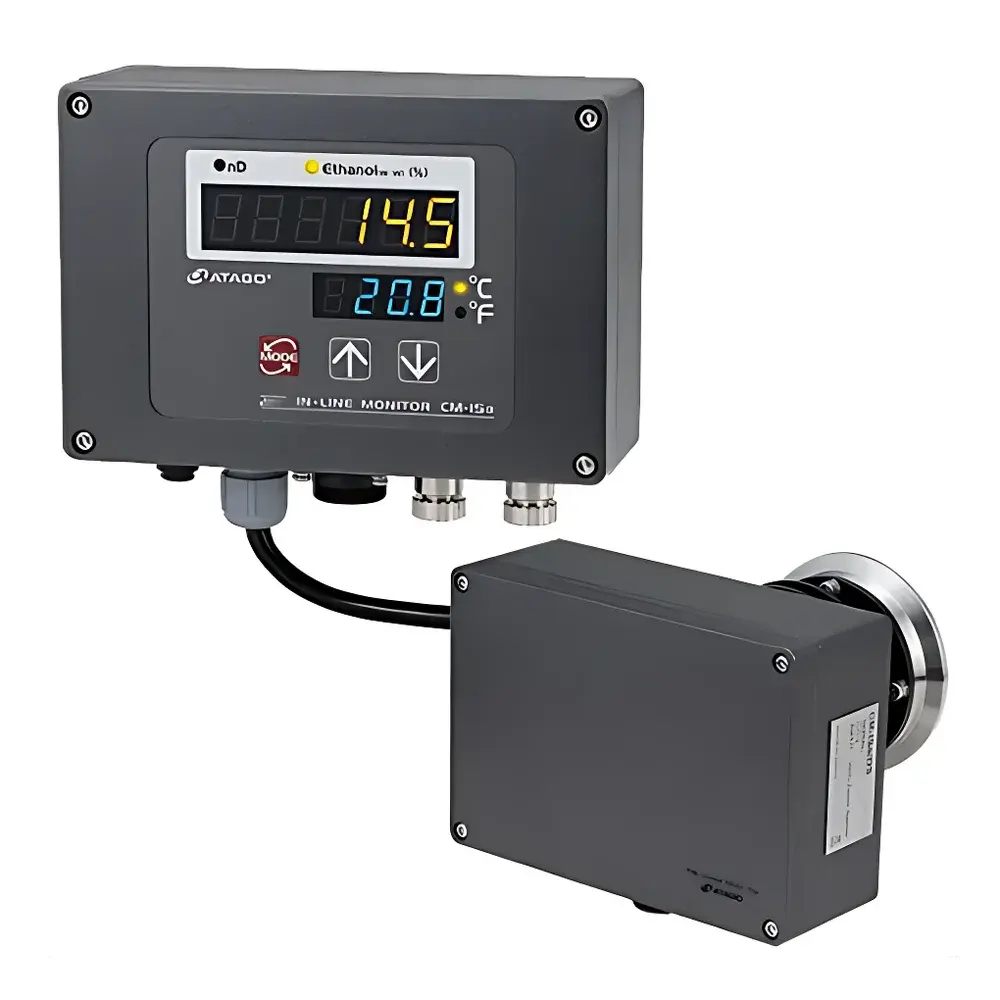
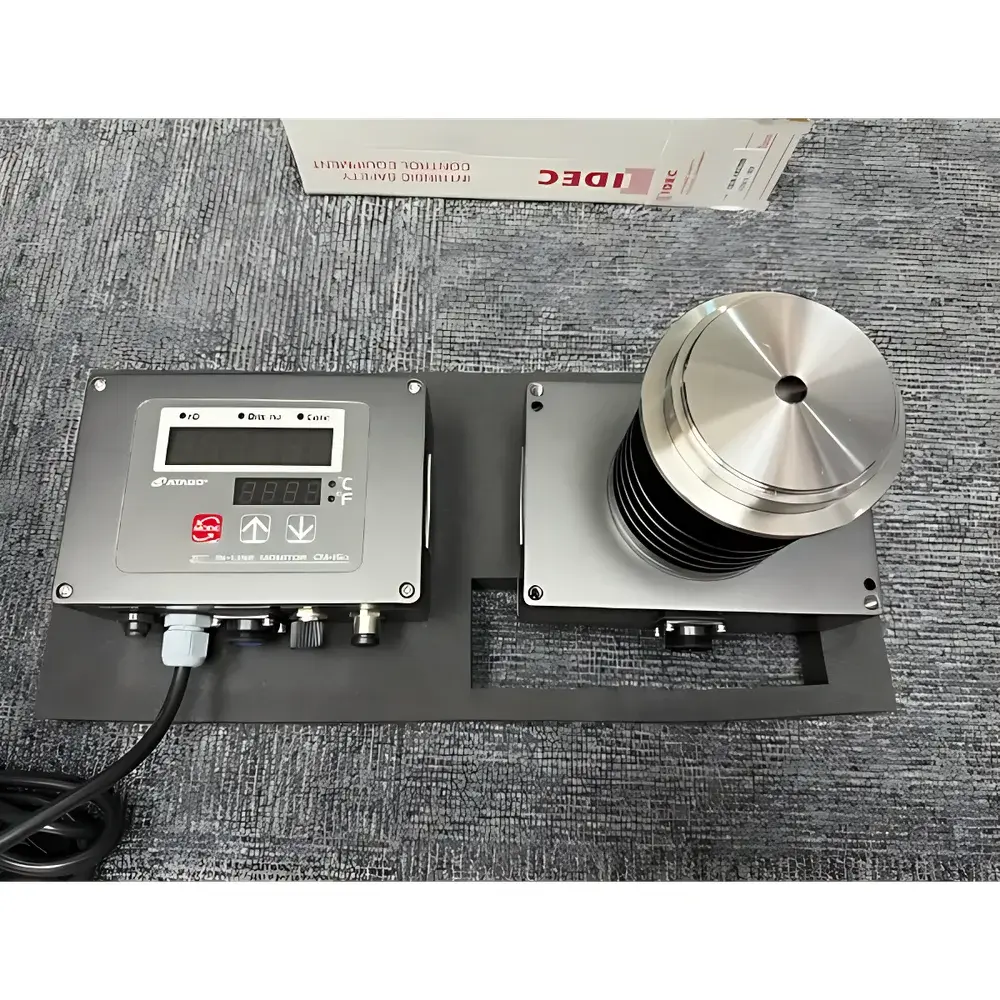
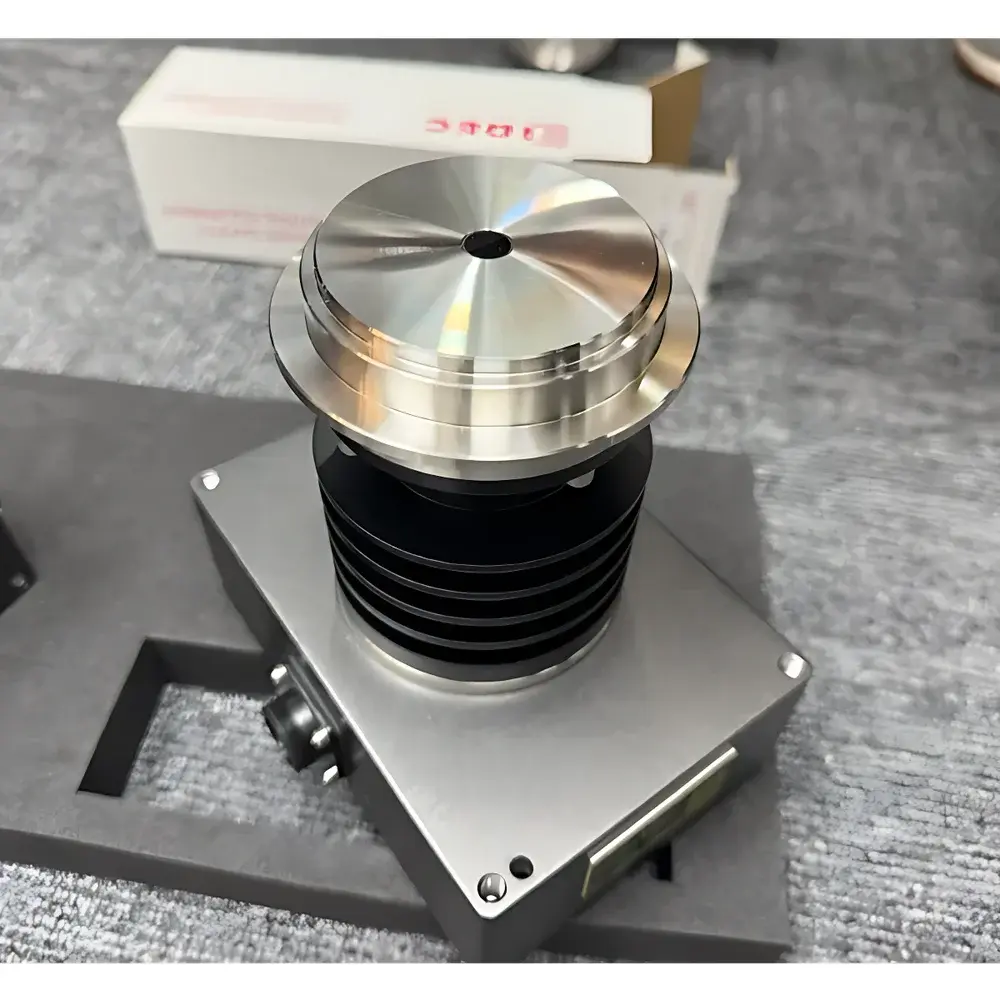
ATAGO CM-Isα-Ethanol (W/W) Intrinsically Safe Online Refractometer
| Brand | ATAGO |
|---|---|
| Origin | Japan |
| Model | CM-Isα-Ethanol (W/W) |
| Explosion Protection Rating | Ex ia IIB T3 Ga TA |
| Measurement Principle | Refractive Index → Ethanol Mass Concentration (w/w%) |
| Compliance | ATEX, IECEx, UL 60079-0/-11 |
Overview
The ATAGO CM-Isα-Ethanol (W/W) Intrinsically Safe Online Refractometer is an industrial-grade process analyzer engineered for continuous, real-time measurement of ethanol mass concentration (expressed as weight/weight percent, w/w%) in liquid streams. It operates on the fundamental optical principle of refractive index (RI) measurement: as ethanol concentration changes in aqueous or mixed-solvent solutions, the RI shifts predictably and linearly within defined compositional ranges. The instrument employs a high-stability LED light source and precision sapphire prism sensor mounted directly in the process line (via sanitary or flanged flow cell), enabling non-invasive, no-moving-parts detection with zero reagent consumption. Designed specifically for hazardous environments, its intrinsic safety certification (Ex ia IIB T3 Ga TA) ensures safe operation in Zone 0/1 classified areas where flammable ethanol vapors may be present—eliminating the need for costly purge systems or explosion-proof enclosures.
Key Features
- Intrinsically safe design certified to Ex ia IIB T3 Ga TA per IEC 60079-0 and IEC 60079-11, suitable for continuous operation in Zone 0 (highest-risk) hazardous locations
- Dedicated ethanol calibration curve pre-loaded in firmware, optimized for w/w% quantification across 0–100% ethanol range with traceable NIST-traceable reference standards
- Sapphire prism sensor with IP68-rated wetted parts (316L stainless steel body, sapphire optical window) resistant to corrosion, abrasion, and thermal shock
- Real-time analog output (4–20 mA) and digital communication via RS-485 Modbus RTU for seamless integration into DCS, SCADA, or PLC-based control architectures
- Temperature-compensated measurement algorithm using integrated Pt100 RTD (±0.1 °C accuracy) to correct for thermal drift in process streams
- Zero maintenance optical path—no consumables, no recalibration required under stable operating conditions; verification possible via manual refractometer cross-check
Sample Compatibility & Compliance
The CM-Isα-Ethanol is validated for use with ethanol–water mixtures and common ethanol-containing process streams including fermentation broths, distillation side draws, fuel-grade ethanol blends (E10–E85), pharmaceutical solvent recovery lines, and cosmetic alcohol bases. It is not intended for highly turbid, viscous (>500 cP), or suspended-solid-laden media without inline filtration. Regulatory compliance includes full alignment with ATEX Directive 2014/34/EU, IECEx Scheme requirements, and UL 60079-0/-11 for North American Class I, Division 1, Groups B, C, D installations. The device supports audit-ready data integrity when integrated with systems compliant with FDA 21 CFR Part 11 (electronic records/signatures) and GMP/GLP documentation workflows.
Software & Data Management
While the CM-Isα-Ethanol operates as a stand-alone field instrument, its Modbus RTU interface enables bidirectional data exchange with supervisory software platforms such as Siemens Desigo, Honeywell Experion PKS, or custom LabVIEW/Python-based monitoring dashboards. Configuration—including damping time (0.1–60 s), output scaling, alarm thresholds (high/low, latching/non-latching), and unit selection (w/w%, v/v%, g/L)—is performed via handheld configurator or PC utility (ATAGO ConfigTool). All parameter changes are logged with timestamp and user ID when connected to a system supporting audit trail functionality. No embedded storage is provided on-device; persistent data logging must be handled at the SCADA or historian level (e.g., OSIsoft PI, Ignition).
Applications
- Fermentation process control: Monitoring ethanol accumulation during yeast-based bioethanol production to trigger harvest or feed adjustments
- Distillation column optimization: Real-time analysis of side-stream ethanol concentration for reflux ratio control and energy efficiency improvement
- Fuel blending operations: Verification of ethanol content in gasoline-ethanol blends prior to tank loading, ensuring ASTM D4806 and EN 15376 compliance
- Pharmaceutical solvent recovery: Closed-loop feedback for ethanol recycle streams in API purification, supporting ICH Q7 material balance requirements
- Alcohol-free beverage verification: Detection of residual ethanol in “non-alcoholic” beer or wine products per regulatory thresholds (e.g., <0.5% v/v)
FAQ
What is the measurement uncertainty for ethanol concentration under typical process conditions?
Typical expanded uncertainty (k=2) is ±0.2 w/w% for ethanol–water solutions at 20–40 °C, based on factory calibration against gravimetric reference standards.
Can the sensor be installed in vertical or horizontal pipe runs?
Yes—flow cell orientation is unrestricted; however, minimum flow velocity of 0.3 m/s is recommended to ensure representative sampling and prevent air pocket formation.
Does the instrument require periodic factory recalibration?
No scheduled recalibration is required; verification against a portable ATAGO PR-101α or RX-5000i refractometer is recommended annually or after mechanical impact.
Is cleaning-in-place (CIP) compatible?
Yes—the sapphire prism and 316L wetted surfaces withstand standard CIP cycles using 1–2% NaOH at ≤80 °C and 1–3% nitric acid at ≤60 °C.
How is temperature compensation implemented?
A built-in Pt100 RTD measures process fluid temperature at the prism surface; compensation uses a second-order polynomial algorithm derived from empirical ethanol–water RI–T–concentration datasets.
Related Products