
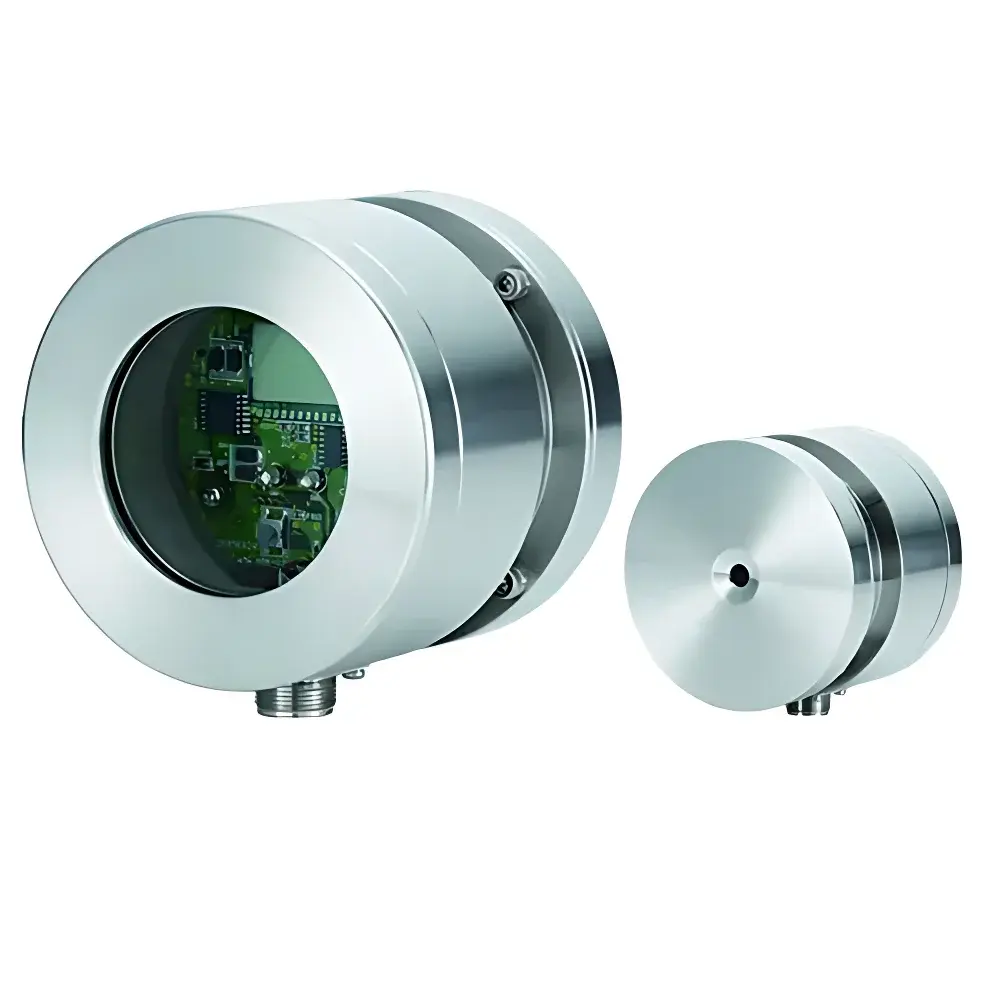
ATAGO CM-INTANK(A) Submersible In-Line Refractometer
| Brand | ATAGO |
|---|---|
| Origin | Japan |
| Model | CM-INTANK(A) |
| Product Type | In-line Refractometer |
| Brix Range | 0.0–33.0% |
| Resolution | 0.1% Brix |
| Accuracy | ±0.5% Brix |
| Temperature Compensation | ATC (10–40°C) |
| Output | DC 4–20 mA |
| Measurement Time | ~2 s |
| Light Source | LED (D-line equivalent) |
| Prism Material | Synthetic Sapphire |
| Sample Cell Material | SUS316L |
| Prism Pressure Rating | 0.98 MPa (10 kgf/cm²) |
| IP Rating | IP68 |
| Dimensions | Ø10 × 8.56 cm |
| Weight | 2.5 kg (host unit only) |
| Operating Depth | Up to 5 m submersion |
Overview
The ATAGO CM-INTANK(A) is a purpose-engineered submersible in-line refractometer designed for continuous, real-time Brix concentration monitoring in liquid process streams under demanding environmental conditions. Unlike conventional benchtop or flow-cell refractometers, the CM-INTANK(A) integrates a fully sealed, pressure-rated optical sensing head that operates directly immersed in process media—eliminating the need for bypass loops, sample conditioning, or external wetted housings. Its measurement principle relies on critical-angle refraction of monochromatic LED light (spectrally aligned to the sodium D-line at ~589 nm) through a synthetic sapphire prism in direct contact with the sample. The resulting refractive index is converted to Brix (% w/w sucrose equivalent) using ATAGO’s proprietary calibration algorithm with Automatic Temperature Compensation (ATC), ensuring stable readings across a 10–40°C process temperature range without external thermostatic control.
Key Features
- IP68-rated hermetic enclosure enabling continuous operation at depths up to 5 meters in water or aqueous solutions
- Pressure-resistant optical assembly certified to 0.98 MPa (10 kgf/cm²) on the prism surface, with optional mounting hardware supporting static loads up to 0.3 MPa (equivalent to 30 m water column)
- Synthetic sapphire prism offering exceptional chemical inertness, scratch resistance, and long-term stability in aggressive industrial environments
- 316L stainless steel sample contact surface compliant with FDA 21 CFR 178.3570 and ISO 8502-3 for food-grade and pharmaceutical process compatibility
- DC 4–20 mA analog output with galvanic isolation, compatible with PLCs, DCS systems, and SCADA architectures for integration into automated process control loops
- Two-second measurement cycle time ensures responsive feedback for dynamic concentration adjustments in blending, dilution, or evaporation stages
- No moving parts or consumables—designed for maintenance-free operation over extended service intervals in unattended installations
Sample Compatibility & Compliance
The CM-INTANK(A) is validated for use with clear to mildly turbid aqueous solutions including sugar syrups, fruit juices, dairy concentrates, brines, and cleaning-in-place (CIP) rinse waters. It is not suitable for opaque suspensions, highly viscous non-Newtonian fluids (>1000 mPa·s), or media containing abrasive particulates exceeding 50 µm. The device complies with IEC 60529 (IP68), EN 61000-6-2 (EMC immunity), and EN 61000-6-4 (EMC emission) standards. Its materials meet EU Regulation (EC) No. 1935/2004 for food contact, and its electrical safety conforms to UL 61010-1 and IEC 61010-1. While not intrinsically safe, it may be deployed in Zone 2 hazardous areas when installed per IEC 60079-14 guidelines with appropriate barrier certification.
Software & Data Management
The CM-INTANK(A) operates as a standalone sensor node without embedded firmware configuration or local data storage. Calibration and verification are performed manually using certified sucrose standard solutions traceable to NIST SRM 84d. Output signals are inherently linear within the 0.0–33.0% Brix range and require no digital signal processing at the sensor level. For auditability, users integrate the 4–20 mA output into third-party historian systems (e.g., OSIsoft PI, Emerson DeltaV, or Siemens Desigo CC) that support 21 CFR Part 11-compliant electronic records, including timestamped calibration logs, alarm events, and trended Brix profiles. Optional analog-to-digital converters with HART or Modbus RTU interfaces enable remote diagnostics and multi-point network deployment.
Applications
- Real-time Brix control in juice concentration plants during multi-effect evaporation
- In-tank monitoring of syrup density in beverage pre-mix tanks prior to carbonation
- Concentration verification during CIP return-loop validation in dairy processing lines
- Salinity tracking in aquaculture recirculation systems and seawater desalination brine streams
- Batch endpoint detection in pharmaceutical excipient dissolution processes involving dextrose or maltodextrin solutions
- Continuous quality assurance in starch hydrolysis reactors where DE (dextrose equivalent) correlates closely with refractive index
FAQ
Can the CM-INTANK(A) be used in pressurized pipelines?
No—it is rated for static submersion pressure only. Dynamic line pressure must be isolated via a dedicated stilling well or immersion sleeve; direct insertion into pressurized flow lines exceeds its mechanical design envelope.
Is temperature calibration required for each installation?
No. The built-in ATC system automatically compensates for sample temperature between 10°C and 40°C using an integrated Pt1000 RTD sensor adjacent to the prism. No user calibration is needed beyond initial Brix zero/span verification.
Does the device support digital communication protocols such as Modbus or Profibus?
Not natively. It provides only isolated 4–20 mA analog output. Digital connectivity requires an external signal conditioner or gateway module certified for your control system architecture.
What maintenance is recommended for long-term accuracy?
Quarterly visual inspection of the sapphire prism for fouling or etching, followed by gentle cleaning with deionized water and lint-free lens tissue. Annual verification against NIST-traceable sucrose standards is advised for GMP-regulated environments.
Can it measure ethanol-water mixtures?
No. The ATC algorithm and factory calibration are optimized exclusively for sucrose-in-water solutions. Ethanol, glycols, or organic solvents produce non-linear refractive index deviations outside the specified Brix accuracy tolerance.





