
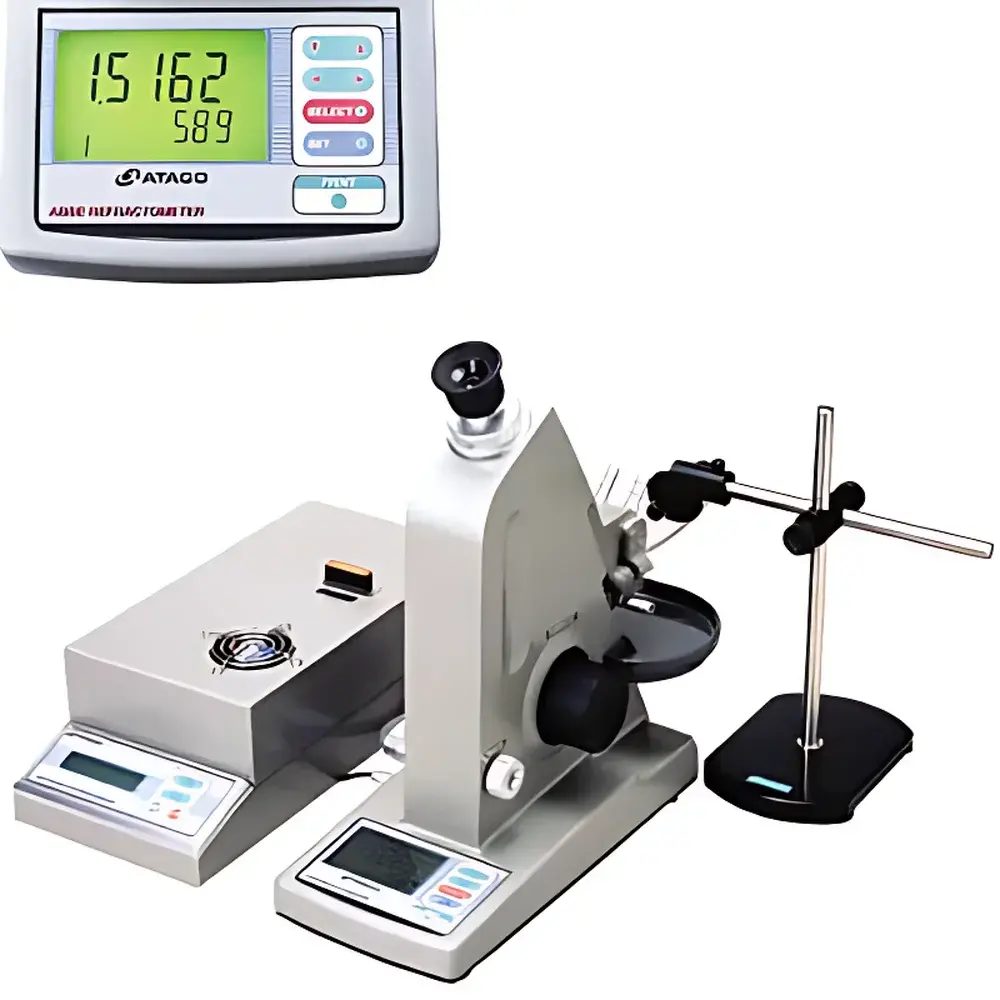
ATAGO DR-M2 Multi-Wavelength Abbe Refractometer
| Brand | ATAGO |
|---|---|
| Origin | Japan |
| Model | DR-M2 (1100 nm) |
| Type | Benchtop Refractometer |
| Temperature Control | Yes |
| Digital Display | Yes |
| Measurement Range | nD = 1.3278–1.7379 @ 450 nm |
| Accuracy | ±0.0002 nD |
| Wavelength Range | 450–1100 nm (interference filters) |
| Resolution | 0.0001 nD / 0.1 Abbe number |
| Operating Temperature | 5–50 °C |
| Light Source | Halogen lamp |
| Power Supply | AC 100–240 V, 50/60 Hz |
| Dimensions (main unit) | 13 × 29 × 31 cm |
| Weight (main unit) | 6.0 kg |
Overview
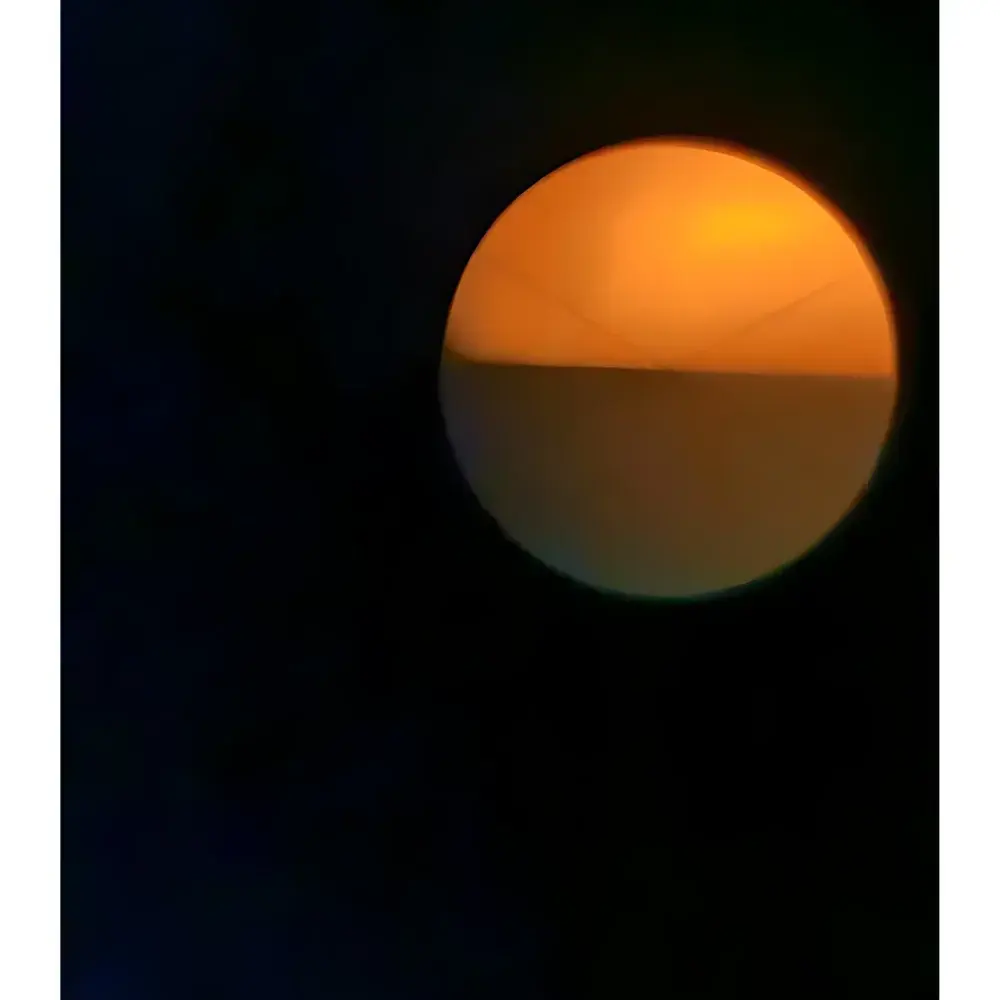
The ATAGO DR-M2 Multi-Wavelength Abbe Refractometer is a precision benchtop optical instrument engineered for high-accuracy measurement of refractive index (nD) and Abbe number across a broad spectral range—from 450 nm to 1100 nm. Based on the classical Abbe principle, it employs collimated light incidence at the critical angle onto a prism-sample interface, where the resulting shadow-line position relative to a calibrated crosshair determines the refractive index with traceable optical geometry. Unlike single-wavelength instruments, the DR-M2 integrates interchangeable interference filters to enable wavelength-specific measurements—critical for characterizing dispersion behavior in optical polymers, liquid crystals, and advanced lens materials. Its dual-prism design ensures stable thermal coupling and minimal drift during extended measurement cycles, while the integrated Peltier-assisted temperature control (5–50 °C) maintains sample thermal equilibrium within ±0.1 °C—essential for ISO 17025-compliant refractive index metrology.
Key Features
- Multi-wavelength capability: Selectable wavelengths from 450 nm to 1100 nm via certified interference filters; near-infrared measurements (681–1100 nm) supported with optional NIR viewing eyepiece
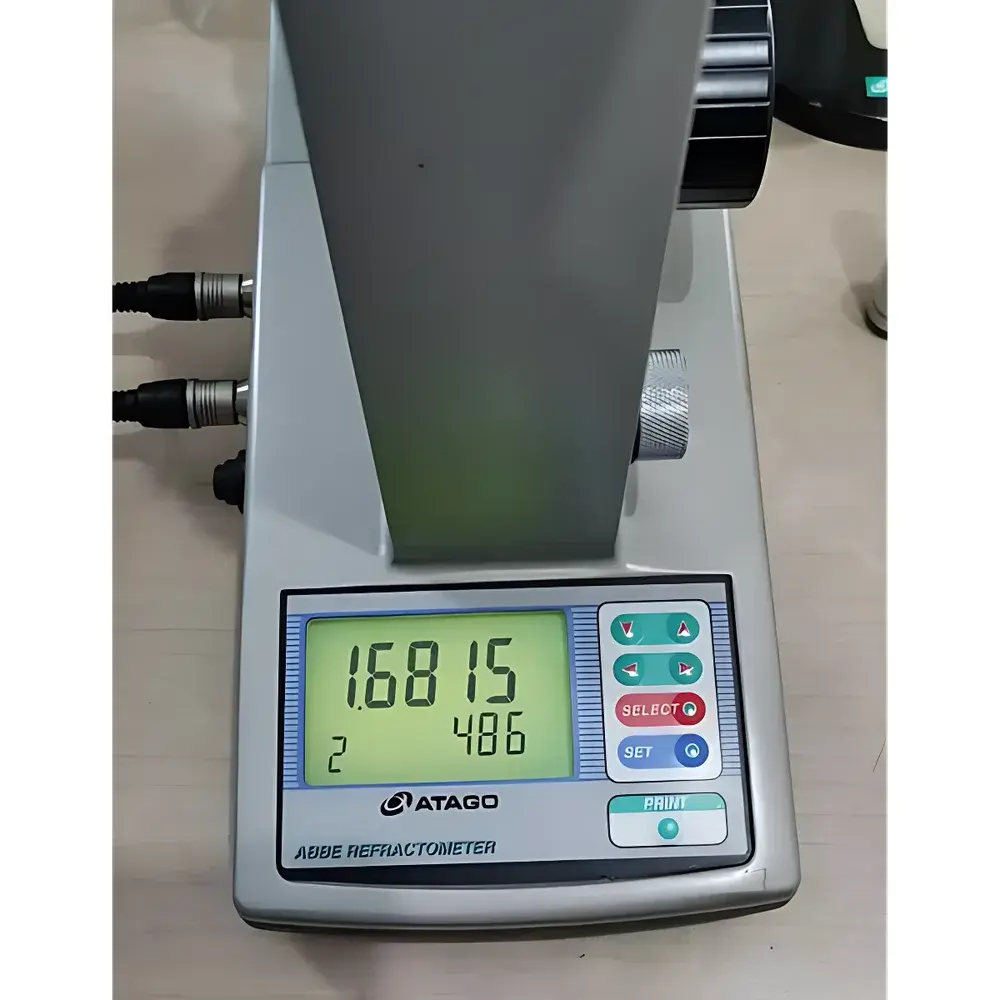
- High-resolution digital readout: LCD display showing nD to 0.0001 resolution and Abbe number to 0.1 resolution, eliminating parallax error inherent in analog Abbe instruments
- Thermally stabilized optical path: Integrated temperature-controlled prism stage with real-time monitoring and active regulation—ensuring repeatability < ±0.0002 nD when calibrated per ASTM D1218 and ISO 10477
- Benchtop ergonomics: Compact footprint (13 × 29 × 31 cm), low-vibration mechanical architecture, and modular power supply (3.2 kg separate unit) for laboratory integration
- Halogen broadband illumination: Stable, low-noise source optimized for consistent intensity across visible and NIR bands, supporting both visual alignment and photodetector-based validation modes
Sample Compatibility & Compliance
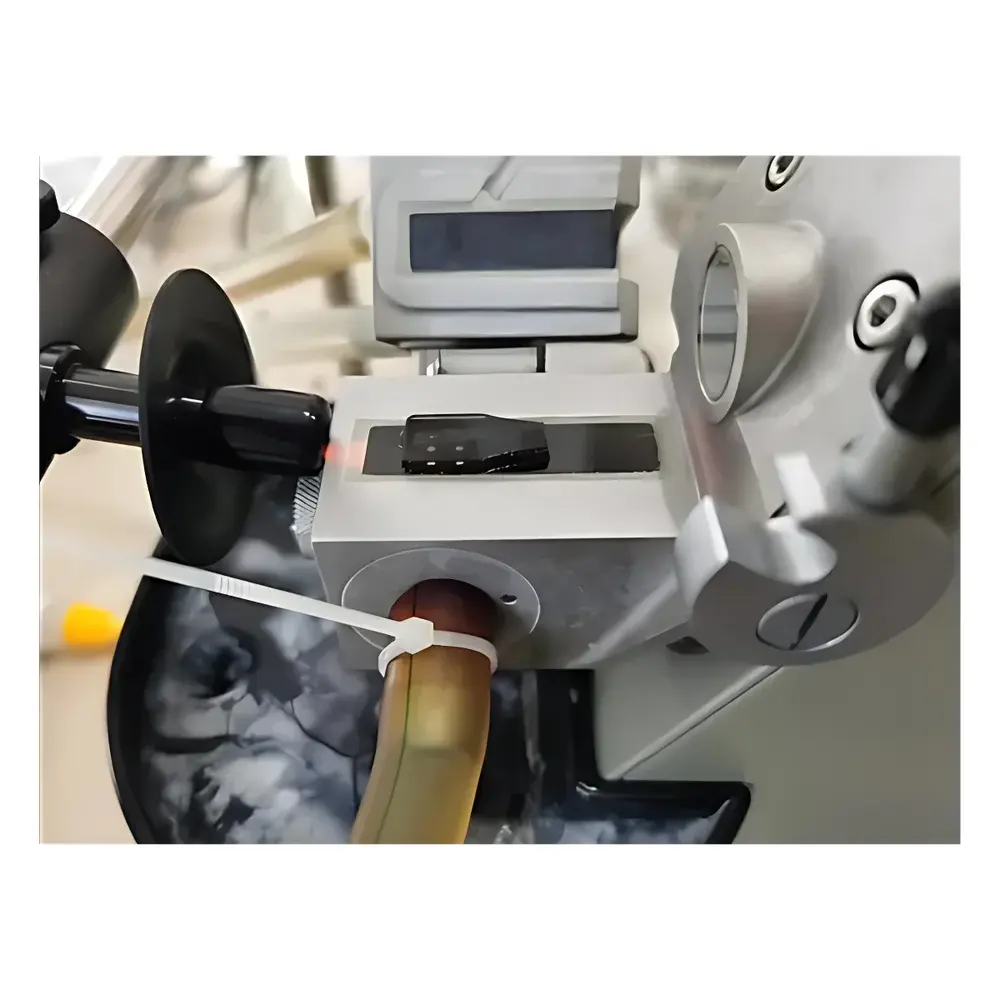
The DR-M2 accommodates solid samples—including ophthalmic lenses, polymer films, optical adhesives, and liquid crystal cells—via its adjustable sample stage and high-contact-area measuring prism. Solid samples require flat, polished surfaces ≥10 mm × 10 mm; liquids are measured using standard capillary or drop application protocols. All measurements comply with international standards for refractometric testing: ASTM D1218 (petroleum products), ISO 10477 (plastics), JIS K 0061 (general optical materials), and USP (pharmaceutical excipients). The instrument supports GLP/GMP documentation workflows through optional DP-63(C) digital printer (Cat. No. 3136) and external data logging interfaces, enabling audit-ready records aligned with FDA 21 CFR Part 11 requirements for electronic signatures and data integrity.
Software & Data Management
While the DR-M2 operates as a standalone optical instrument without embedded PC software, its digital output interface (RS-232 or optional USB-to-serial adapter) enables direct integration with laboratory information management systems (LIMS) and custom QA/QC databases. Raw nD and Abbe values, along with timestamp, wavelength setting, and temperature reading, are transmitted as ASCII-formatted strings for automated parsing. When paired with ATAGO’s optional 60-C5 recirculating chiller (Cat. No. 1923), temperature metadata is synchronized to ensure full traceability. Calibration certificates include NIST-traceable reference data for each filter wavelength, supporting ISO/IEC 17025 accreditation audits.
Applications
- Optical lens manufacturing: Precise nD verification of CR-39, polycarbonate, high-index polythiourethane, and Trivex substrates across multiple wavelengths to validate dispersion profiles
- Liquid crystal R&D: Characterization of birefringence and wavelength-dependent anisotropy in LC mixtures used in displays and tunable optics
- Advanced material development: Refractive index mapping of thin-film coatings, OLED encapsulation layers, and photoresists under controlled thermal conditions
- Quality assurance in photonics: Incoming inspection of optical-grade resins, IR-transmitting glasses, and semiconductor-grade silicon wafers
- Academic research: Teaching and investigation of Cauchy dispersion equations, Sellmeier modeling, and chromatic aberration compensation in optical design
FAQ
What wavelength ranges are factory-calibrated and certified?
The DR-M2 includes four standard interference filters (450 nm, 589 nm, 680 nm, and 1100 nm), each supplied with individual calibration certificates traceable to NMIJ/AIST standards.
Can the instrument measure samples below 5 °C or above 50 °C?
No—the internal temperature control system is rated for 5–50 °C only. For sub-ambient measurements, external thermostatic stages must be used with manual temperature correlation.
Is the Abbe number calculated internally or derived manually?
The DR-M2 computes Abbe number (vD) automatically using the formula vD = (nD − 1)/(nF − nC), requiring sequential measurements at three wavelengths (typically 486.1 nm, 589.3 nm, and 656.3 nm); users input selected wavelengths to trigger calculation.
Does the DR-M2 support automatic prism cleaning or self-diagnostic routines?
It does not feature automated cleaning, but includes optical diagnostics via halogen lamp intensity monitoring and prism surface inspection mode for contamination detection.
How is traceability maintained across different wavelengths?
Each interference filter undergoes independent certification using NIST SRM 1040a (borosilicate glass) and SRM 1041 (fused silica), with uncertainty budgets reported per ISO/IEC 17025 Annex A.3.





