
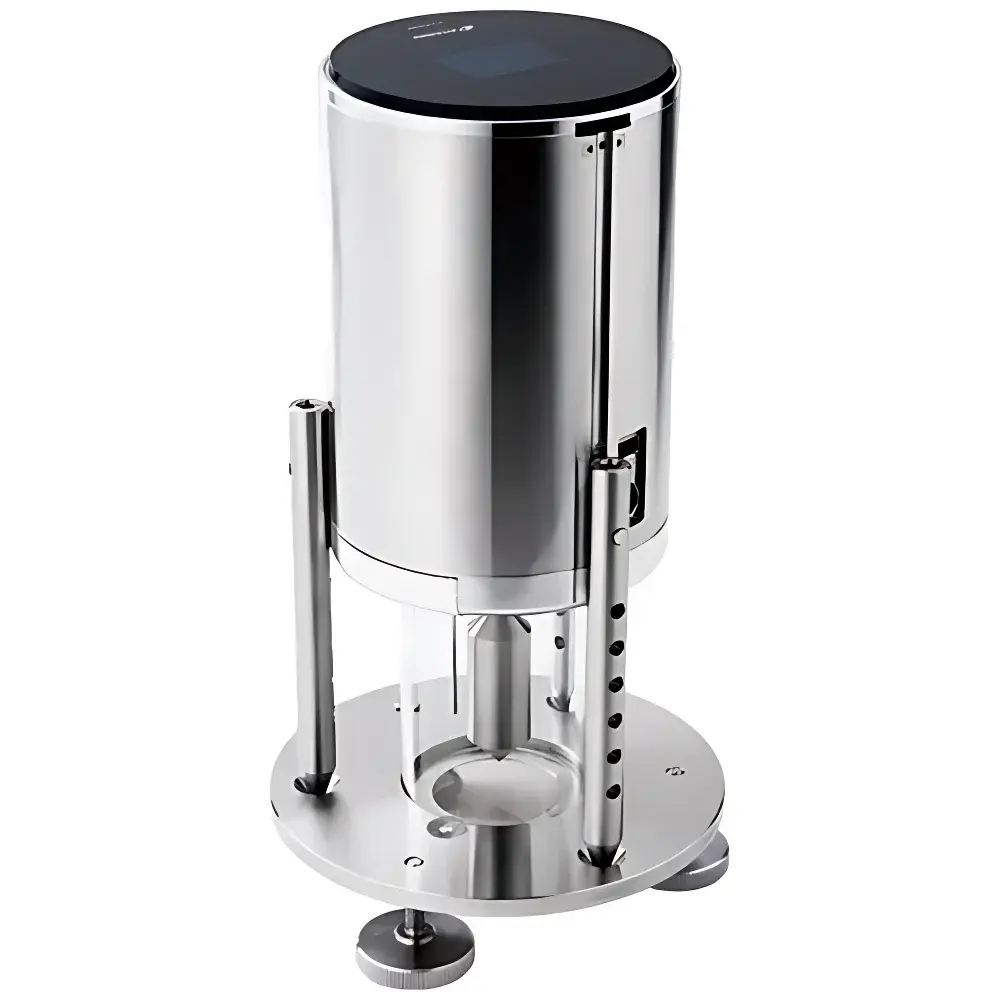
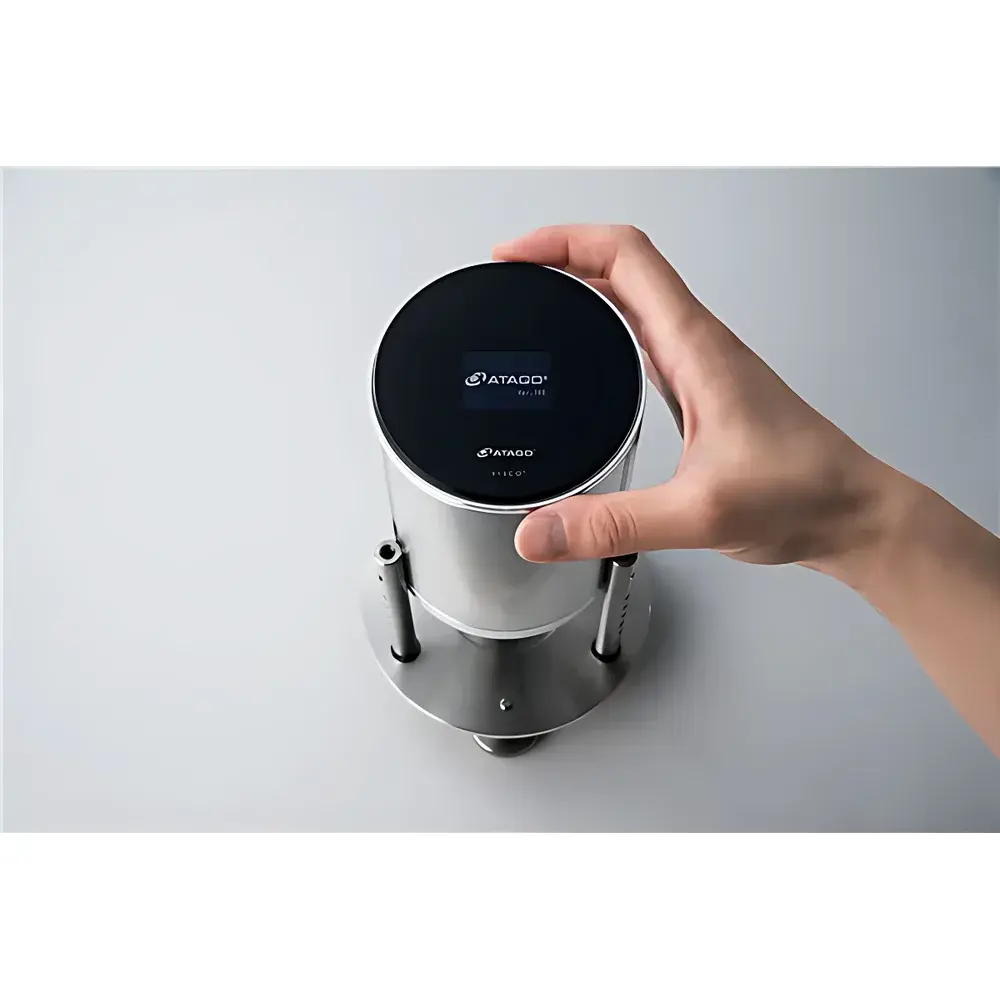
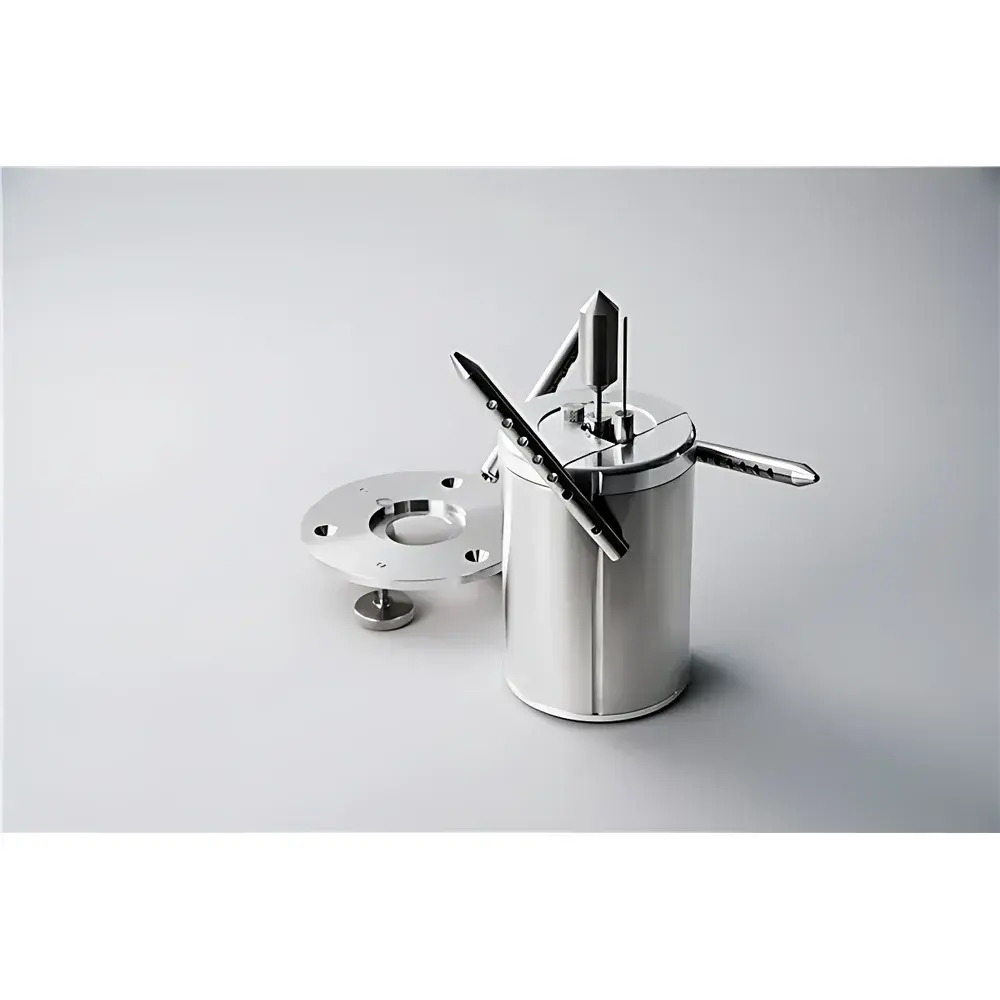
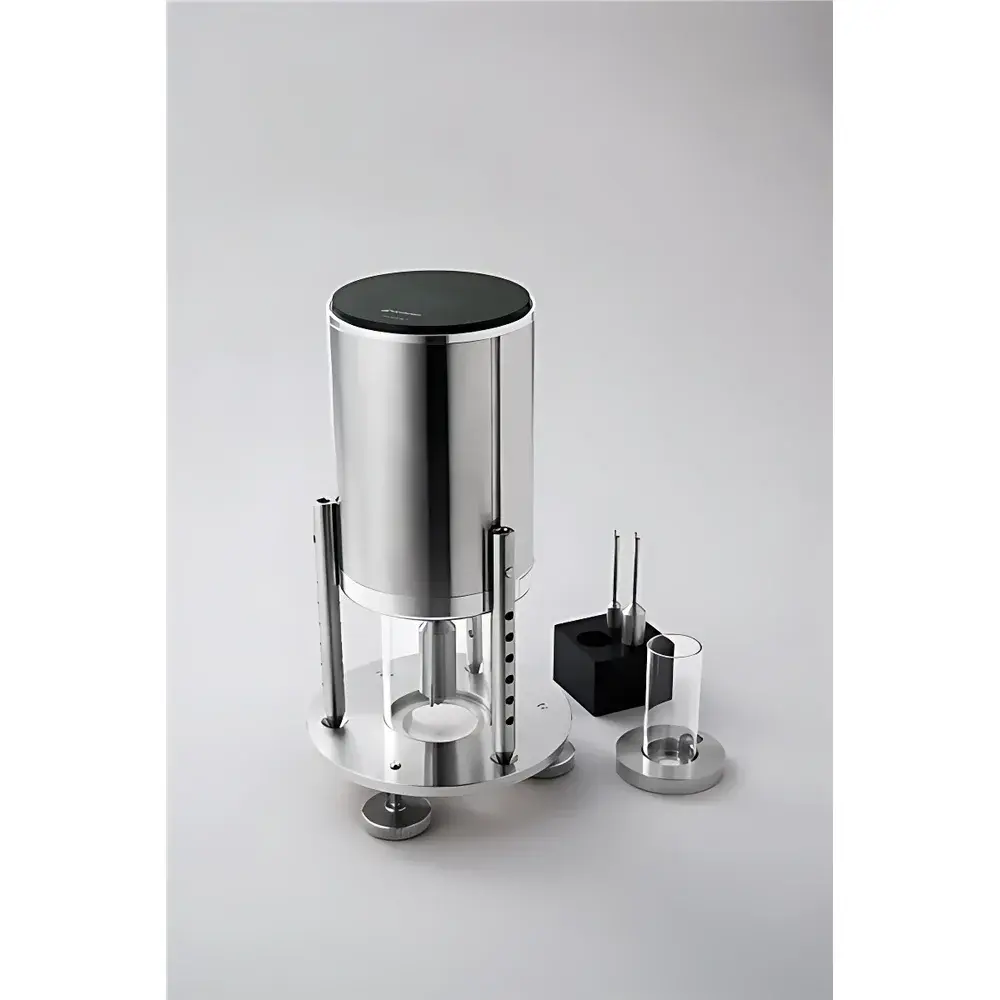
ATAGO VISCO Portable Rotational Viscometer
| Brand | ATAGO |
|---|---|
| Origin | Japan |
| Instrument Type | Portable Rotational Viscometer |
| Viscosity Range | 1–350,000,000 mPa·s |
| Temperature Range | 0.0–100.0 °C |
| Torque Range | 0.0–100.0% |
| Speed Range | 0.5–250 rpm (20 steps) |
| Resolution | 0.01–1 mPa·s (dependent on range) |
| Accuracy | ±1% of full scale (viscosity), ±0.2 °C (temperature) |
| Power | 4×AA alkaline batteries or AC adapter (100–240 VAC) |
| Sample Volume | as low as 15 mL |
| Interface | USB for PC data export |
| Dimensions (H×W×D) | 20×12×12 cm |
| Weight | 1.2 kg (main unit only) |
Overview
The ATAGO VISCO Portable Rotational Viscometer is an engineered solution for precise, field-deployable viscosity measurement based on the principle of Couette flow rheometry. It operates by rotating a precisely calibrated spindle (rotor) immersed in a fluid sample at a defined angular velocity; the resulting torque—proportional to the fluid’s resistance to shear—is measured and converted into dynamic viscosity (mPa·s) using established calibration constants. Designed for both Newtonian and non-Newtonian fluids, the VISCO delivers absolute viscosity for homogeneous liquids and apparent viscosity under controlled shear conditions—critical for quality control, formulation development, and process validation across regulated and research environments.
Key Features
- True portability: Compact footprint (20×12×12 cm), lightweight main unit (1.2 kg), and dual-power operation—four AA alkaline batteries or universal AC adapter (100–240 VAC)—enabling reliable measurements in labs, production floors, warehouses, or remote field sites without access to stable mains power.
- Minimal sample requirement: Optimized geometry allows accurate readings with as little as 15 mL of sample—essential for high-value, limited-availability materials such as pharmaceutical intermediates, specialty polymers, or clinical biofluids.
- Flexible sample containment: Compatible with standard laboratory beakers and disposable paper cups—eliminating cross-contamination risk and reducing cleaning time between measurements, thereby enhancing throughput and supporting GLP-compliant workflows.
- Intuitive single-button interface: Menu navigation and measurement initiation are fully accessible via a dedicated front-panel button; LCD display simultaneously shows viscosity (mPa·s or cP), temperature (°C/°F), and torque (%), with real-time feedback on spindle loading status.
- Modular spindle configuration: Supports interchangeable A1, A2, and A3 spindles covering overlapping ranges from 50 to 2,000,000 mPa·s; optional Ultra-Low Viscosity Adapter (ULA) extends capability down to 1 mPa·s with enhanced stability for thin solvents, aqueous solutions, and low-concentration surfactant systems.
- Digital traceability: Integrated USB interface enables direct export of time-stamped viscosity, temperature, torque, and rotational speed data to Windows-based PCs—facilitating integration into LIMS, electronic lab notebooks (ELN), and audit-ready documentation per FDA 21 CFR Part 11 requirements when paired with compliant software.
Sample Compatibility & Compliance
The VISCO accommodates a broad spectrum of liquid and semi-liquid matrices—including suspensions, emulsions, gels, and pseudoplastic/polymeric solutions—across food, pharma, cosmetics, petrochemical, coatings, and industrial lubricant sectors. Its temperature-controlled measurement window (10.0–40.0 °C sample range; ambient operating range 10–40 °C) ensures reproducibility under typical QC conditions. While not equipped with active Peltier temperature regulation, its thermal mass and low-drift sensor design support stable readings within ±0.2 °C accuracy. The instrument conforms to ISO 2555 (determination of apparent viscosity using rotational viscometers) and ASTM D2196 (standard test methods for rheological properties of non-Newtonian materials). Its mechanical construction—stainless steel housing, base, and fasteners—meets IP20 ingress protection and supports routine decontamination protocols required in GMP manufacturing suites.
Software & Data Management
Data acquisition occurs in real time during measurement and is stored internally with timestamp, spindle ID, speed setting, and environmental temperature. Via USB connection, raw datasets export as CSV files compatible with Microsoft Excel, MATLAB, JMP, and industry-standard statistical process control (SPC) platforms. No proprietary software installation is required for basic transfer; however, third-party automation scripts (e.g., Python pySerial) can be deployed for scheduled unattended logging. Audit trails—including operator ID, calibration date, and parameter changes—are maintained manually via lab notebook entries; for full 21 CFR Part 11 compliance, integration with validated ELN or LIMS systems is recommended.
Applications
- Food & Beverage: Monitoring consistency of syrups, honey, yogurt, ketchup, chocolate mass, and dairy concentrates; verifying shelf-life stability of emulsified dressings and plant-based milks.
- Pharmaceuticals: Characterizing viscosity of oral suspensions, topical gels, ophthalmic solutions, and API-containing polymer dispersions; supporting USP & Ph. Eur. monograph compliance for viscosity-dependent release profiles.
- Personal Care & Cosmetics: Quantifying shear-thinning behavior of shampoos, conditioners, toothpastes, and facial creams; correlating viscosity with sensory attributes and pump dispensing performance.
- Chemicals & Polymers: Assessing molecular weight trends in resin solutions, evaluating thickener efficacy in water-based adhesives, and screening rheology modifiers in latex formulations.
- Energy & Lubricants: Screening base oil blends, monitoring oxidation-induced viscosity drift in used engine oils, and validating pour-point depressants in fuel formulations.
- Academic & Regulatory Labs: Teaching fundamental rheological concepts (Newtonian vs. non-Newtonian response, yield stress estimation), performing inter-laboratory method transfers, and generating reference data for ISO/IEC 17025 accreditation.
FAQ
What spindle configurations are included with the standard VISCO unit?
The base VISCO system ships with one standard spindle (typically A1); A2 and A3 spindles, as well as the Ultra-Low Viscosity Adapter (ULA), are available as optional accessories.
Can the VISCO perform temperature-controlled measurements?
It measures sample temperature with ±0.2 °C accuracy but does not include active heating or cooling; external water baths or Peltier stages must be used for isothermal testing beyond ambient conditions.
Is calibration traceable to national standards?
Yes—ATAGO provides NIST-traceable calibration certificates for viscosity (using certified silicone oil standards) and temperature (with reference thermistors), valid for 12 months under normal use.
How frequently should the instrument be recalibrated?
Annual recalibration is recommended; more frequent verification (e.g., daily or per-shift) using certified reference fluids is advised for critical GMP applications.
Does the VISCO support automatic spindle identification?
No—it relies on manual selection in the menu; users must input the correct spindle code (A1/A2/A3/ULA) to ensure proper viscosity calculation.



