
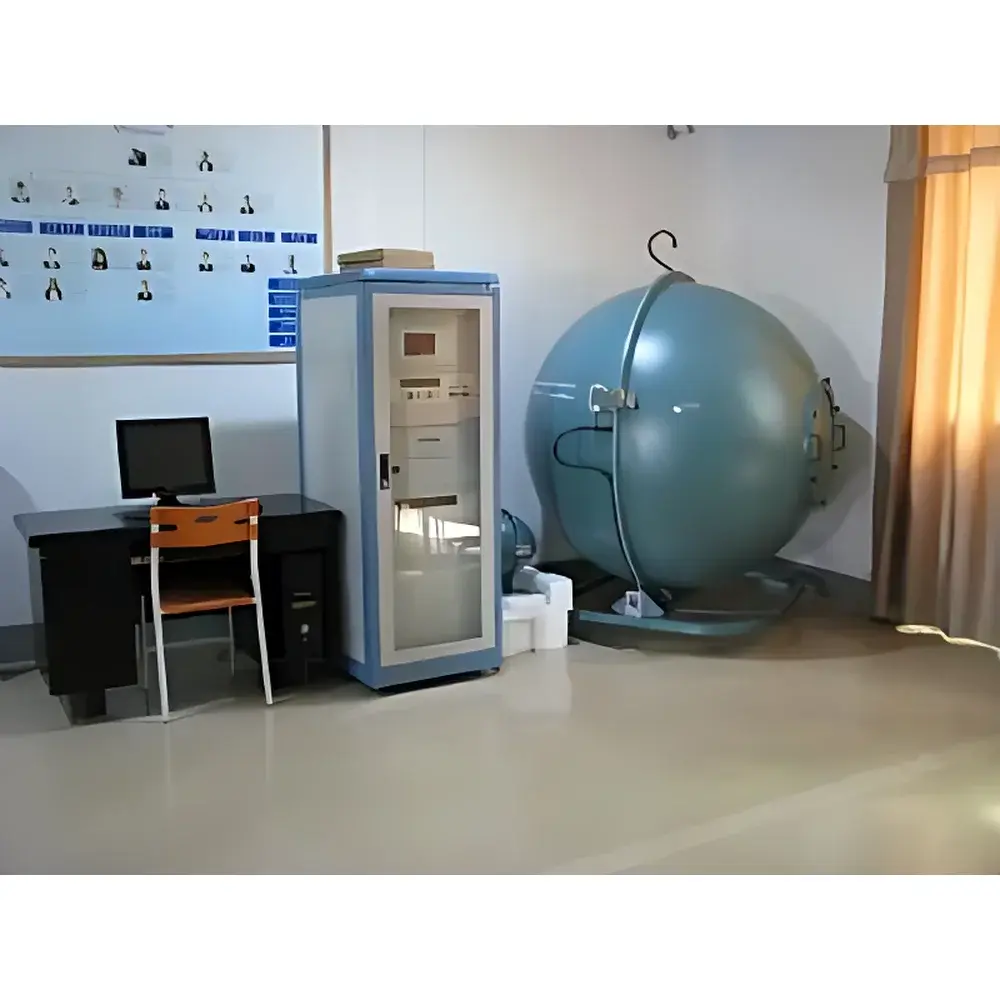
SPL USS1200V-LL Low-Luminance Uniform Source System
| Brand | SPL |
|---|---|
| Origin | USA |
| Manufacturer Type | Authorized Distributor |
| Import Status | Imported |
| Model | USS1200V-LL |
| Pricing | Upon Request |
| Calibration | NIST-Traceable Certificate Included |
| Output Control | Continuous 0–100% Intensity Adjustment |
| Software Interface | Automated Control of Shutter, Attenuator Position, and Filter Wheel Selection |
| Spectral Flexibility | Compatible with User-Installed Bandpass, Neutral Density, and Custom Calibration Filters |
Overview
The SPL USS1200V-LL Low-Luminance Uniform Source System is an engineered optical calibration platform designed to generate spatially uniform, spectrally stable, and precisely controllable low-intensity light fields. Based on a stabilized broadband tungsten-halogen or LED-based illumination engine (configurable per application), the system employs a high-efficiency integrating sphere coupled with precision aperture and baffling geometry to achieve radiometric uniformity better than ±1.5% across its output port—verified per ISO 9050 and CIE S 014/E:2006 protocols. Its operational range spans from 1 × 10⁻⁵ cd/m² to 1 × 10⁻¹ cd/m² (typical), enabling faithful simulation of natural low-light conditions such as starlight (≈1 × 10⁻⁶ cd/m²), moonlight (≈2 × 10⁻³ cd/m²), and bioluminescent emission profiles. Unlike high-dynamic-range sources, the USS1200V-LL prioritizes photometric stability (<0.2% RMS fluctuation over 8 hours) and spectral repeatability at sub-millilux irradiance levels—critical for validating the linearity, dark current response, and photon-counting fidelity of scientific CMOS, EMCCD, and sCMOS imaging systems.
Key Features
- Integrating sphere architecture with >98% Lambertian reflectance coating (BaSO₄ or Spectralon®), ensuring spatial uniformity compliant with ASTM E308-22 Annex A4 for uniform source validation
- Motorized 6-position filter wheel supporting OD 0.1–4.0 neutral density filters, narrowband interference filters (FWHM ≤ 10 nm), and user-supplied calibration-grade optics
- Integrated electronic shutter with <5 ms actuation time and TTL/USB 2.0 trigger support for synchronized exposure control
- Variable attenuator with 0.1% resolution step size, enabling continuous luminance adjustment from baseline noise floor to maximum calibrated output
- Onboard temperature-stabilized photodiode monitor with real-time feedback loop, referenced to factory-calibrated NIST-traceable transfer standards
- Front-panel OLED interface and remote operation via SPL LightControl™ software (Windows 10/11, 64-bit), supporting scripting (Python API), audit trail logging, and export of .csv/.xml metadata
Sample Compatibility & Compliance
The USS1200V-LL accommodates standard 25 mm, 50 mm, and 100 mm diameter imaging sensors and lens mounts (C-mount, F-mount, M42). Its output port is optimized for collimated or near-collimated beam delivery into microscope ports, fiber-coupled spectrometers, or full-frame camera calibration fixtures. All radiometric calibrations are performed in accordance with ISO/IEC 17025:2017 requirements by an A2LA-accredited laboratory, with uncertainty budgets reported per GUM (JCGM 100:2008). The included NIST-traceable certificate documents spectral irradiance (W·m⁻²·nm⁻¹), luminance (cd·m⁻²), and uniformity measurements at five discrete wavelengths (450, 530, 630, 780, and 850 nm), each traceable to NIST SRM 2241 (tungsten lamp) or SRM 2035 (LED reference). System design supports GLP-compliant environments through configurable user access levels, electronic signature enforcement, and 21 CFR Part 11–ready audit logs.
Software & Data Management
SPL LightControl™ v3.2 provides deterministic control of all hardware subsystems—including shutter open/close timing, ND filter selection, attenuator positioning, and intensity ramp profiles—with millisecond-level synchronization accuracy. The software enforces parameter interlocks (e.g., prevents simultaneous use of OD 4.0 filter and max-intensity setting) and auto-saves measurement sessions with embedded EXIF-like metadata: timestamp, operator ID, environmental temperature/humidity, calibration expiration date, and serial-number-referenced instrument configuration. Export formats include IEEE 1584-compliant .mat files for MATLAB integration, CSV tables with SI-unit headers, and PDF reports embedding spectral plots and uniformity heatmaps. Raw photodiode voltage traces and corrected radiometric values are stored separately to support reprocessing under updated calibration coefficients.
Applications
- Quantitative validation of low-light detection limits and signal-to-noise ratio (SNR) performance in fluorescence lifetime imaging (FLIM), super-resolution microscopy (STORM/PALM), and single-molecule tracking systems
- Calibration of photomultiplier tube (PMT) arrays and avalanche photodiode (APD) detectors used in flow cytometry and luminescence plate readers
- Verification of dark current compensation algorithms and hot pixel mapping routines in clinical pathology imaging platforms
- Development and verification of ISO 15739-based noise analysis pipelines for medical endoscopes and surgical navigation cameras
- Testing of automatic exposure control (AEC) logic in autonomous vehicle night-vision modules under controlled mesopic luminance conditions
FAQ
Is the NIST-traceable calibration certificate supplied with every unit?
Yes—each USS1200V-LL ships with a unique, instrument-specific certificate documenting spectral irradiance, luminance, and uniformity measurements at five wavelengths, all traceable to NIST Standard Reference Materials.
Can the system be integrated into automated production test benches?
Yes—the USB 2.0 interface supports SCPI command sets and Python SDK; digital I/O lines enable hardware-triggered sequencing with external PLCs or motion controllers.
What maintenance is required to sustain calibration validity?
Annual recalibration is recommended; SPL offers return-to-factory service with turnaround ≤10 business days and optional on-site verification per ISO/IEC 17025 scope.
Does the system support custom spectral output profiles?
While the base engine is broadband, users may load proprietary filter sets—including dichroic stacks or tunable liquid crystal filters—via the open-filter-wheel bay; spectral shaping is limited only by optical density and thermal load constraints.
How is thermal drift managed during extended low-light measurements?
The integrating sphere housing incorporates dual-stage Peltier stabilization and airflow monitoring; internal temperature is logged continuously and compensated in real time via the photodiode feedback loop.




