
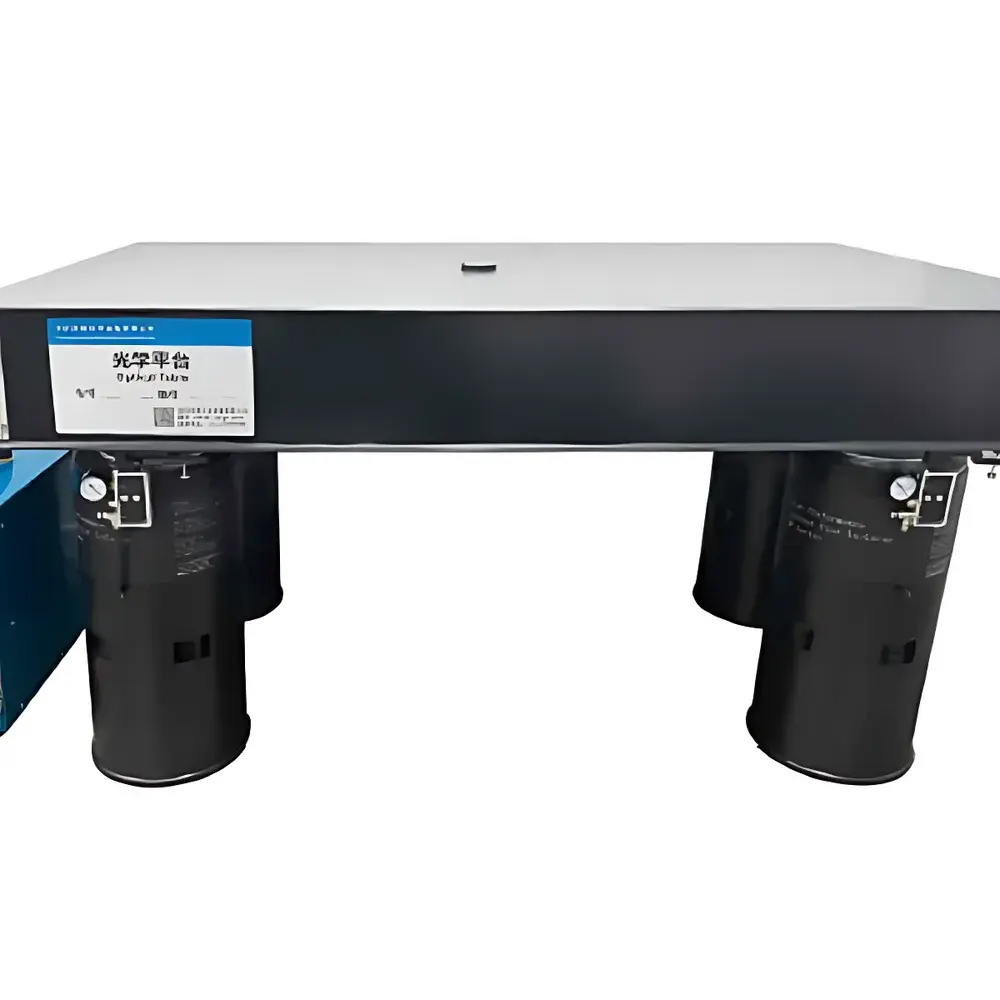
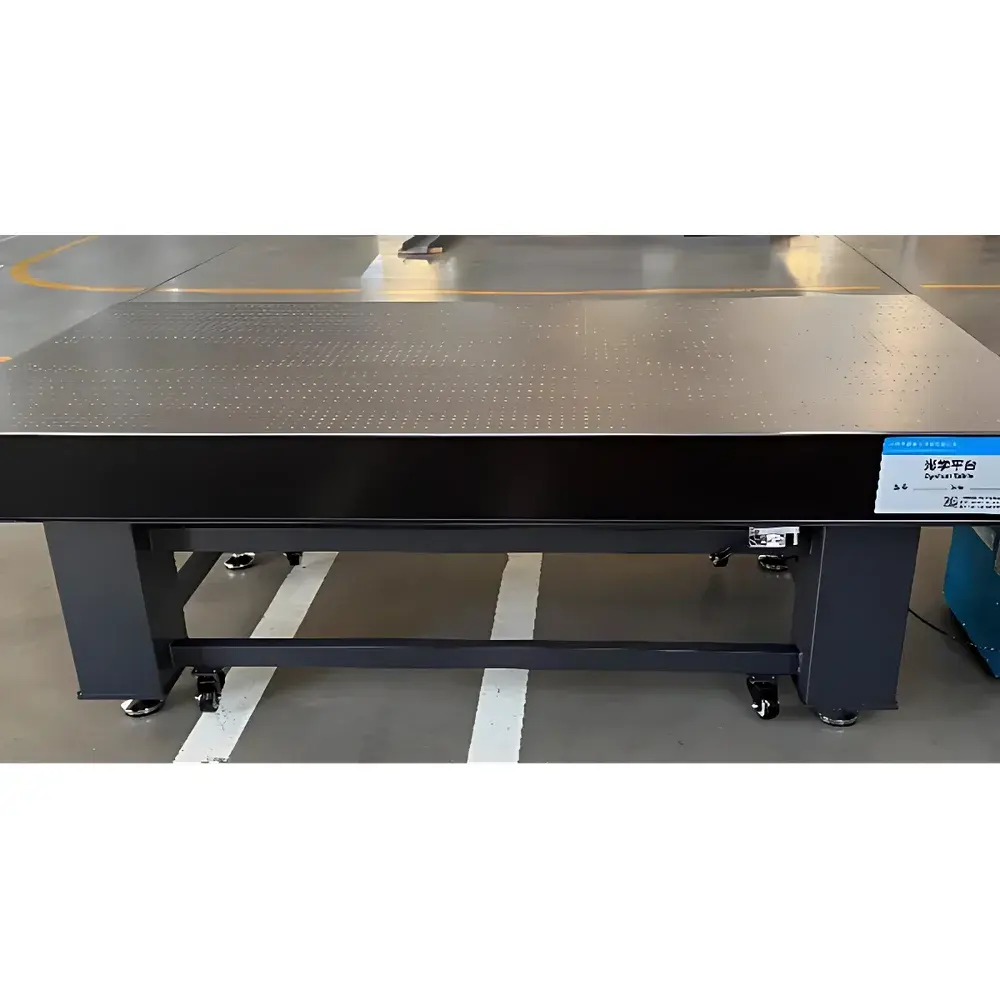
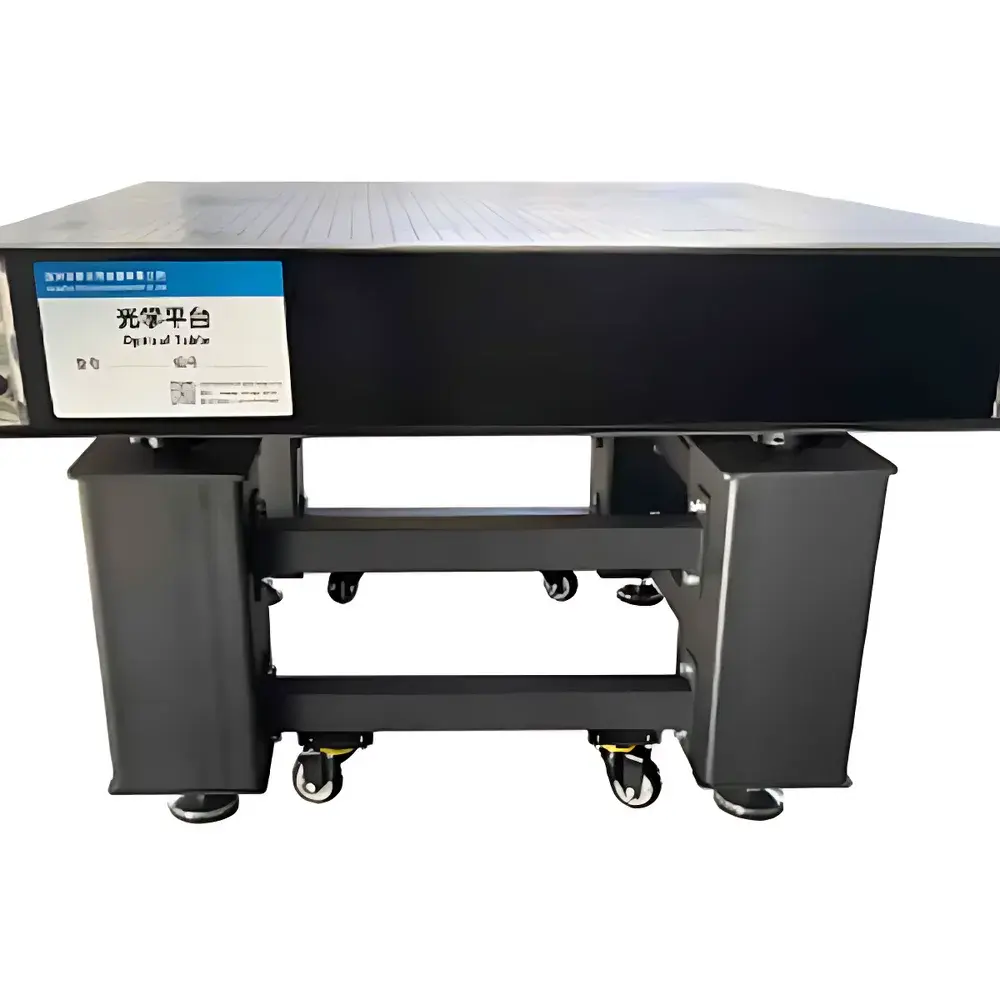
SPL Photonics SPL-R/A/B Series Honeycomb Optical Tables with Active Air-Spring Vibration Isolation
| Brand | SPL Photonics |
|---|---|
| Model Series | SPL-R (Passive Damped), SPL-A (Active Air-Spring), SPL-B (Passive Damped, Compact) |
| Table Top Material | 304 Stainless Steel (ICr17 Equivalent) |
| Core Structure | Adhesively Bonded Aluminum/Stainless Steel Honeycomb Core (250 kg/m³ Density) |
| Mounting Pattern | M6 Tapped Holes on 25 mm Grid |
| Table Height | 800 mm (Adjustable ±25 mm) |
| Vertical/Horizontal Natural Frequency | <1.5–2.5 Hz (SPL-A), <5–9 Hz (SPL-R & SPL-B) |
| Repeatability | ±0.05 mm |
| Damping Compliance | GB/T 20029–2005 |
| Air Supply | Silent Compressor (20 L/min, 0.7 MPa, 50 dB(A)) |
Overview
The SPL Photonics SPL-R/A/B Series Optical Tables are engineered for high-stability laboratory environments requiring stringent vibration isolation and mechanical rigidity. These platforms utilize a monolithic honeycomb core architecture—comprising top and bottom 304 stainless steel (ICr17-grade) faceplates, precision-adhered aluminum or stainless steel hexagonal core cells, and integrated isolation cups—to achieve an exceptional stiffness-to-mass ratio. Unlike welded-core alternatives, the SPL series employs advanced adhesive bonding technology, eliminating residual thermal stress and ensuring long-term dimensional stability under thermal cycling and mechanical loading. The SPL-A variant integrates semi-diaphragm air-spring isolators with dual-stage pneumatic chambers and automatic leveling control, delivering sub-2 Hz vertical and horizontal natural frequencies across full operational load ranges. This performance aligns with ISO 10816-1 Class A requirements for sensitive optical interferometry, laser cavity alignment, and quantum optics experiments where sub-micron positional drift must be suppressed. The SPL-R and SPL-B models employ passive damping via GB/T 20029–2005–certified viscoelastic isolation pads, optimized for cost-sensitive yet high-fidelity applications in metrology labs and production QC environments.
Key Features
- Monolithic honeycomb core constructed from corrosion-resistant aluminum or stainless steel sheets, bonded with aerospace-grade structural adhesive—no weld-induced distortion or fatigue points
- Top and bottom faceplates machined from ICr17-equivalent high-permeability stainless steel (non-magnetic, non-rusting, cleanroom-compatible surface finish)
- Integrated isolation cups beneath each M6 threaded hole (25 mm pitch grid) prevent particulate ingress, fluid penetration, and foreign object debris (FOD) entrapment—enabling GMP-compliant cleaning protocols
- SPL-A models feature auto-balancing air supply system with fast-response solenoid valves; typical leveling time <3 seconds per leg after load change
- Four- or six-point support configurations with dual-axis height and leveling adjustment (±25 mm total travel); all legs include locking collars for permanent setup retention
- Modular design supports custom table dimensions and thicknesses (standard top thickness: 200 mm); optional seismic anchoring kits available per ASCE 7–22 guidelines
Sample Compatibility & Compliance
These optical tables accommodate standard and custom optical mounts—including kinematic mirror mounts, translation stages, rotation stages, and fiber launch systems—without compromising modal integrity. The 25 mm grid spacing ensures compatibility with Thorlabs, Newport, and Standa mounting hardware. All SPL-A tables meet ISO 14644–1 Class 5 cleanroom particulate limits when operated with HEPA-filtered compressed air. Passive variants (SPL-R/SPL-B) comply with GB/T 20029–2005 for industrial vibration isolation equipment. The air compressor subsystem satisfies IEC 60034–1 efficiency standards and operates at ≤50 dB(A) at 1 m—critical for low-noise acoustic environments such as gravitational wave detector calibration labs or auditory neuroscience imaging suites. Platform flatness is maintained within ±10 µm over 1 m² per ISO 10791–7, verified via laser tracker metrology prior to shipment.
Software & Data Management
While the SPL-R and SPL-B models operate without embedded electronics, the SPL-A series includes an integrated digital pressure monitoring module with RS-485 interface (Modbus RTU protocol). This enables integration into LabVIEW, Python-based DAQ systems, or centralized facility SCADA platforms for real-time leg pressure logging, fault detection (e.g., leak diagnostics), and predictive maintenance scheduling. All units ship with calibration certificates traceable to NIM (National Institute of Metrology, China) and include GLP-compliant audit trails for pressure setpoint changes and leveling events. Firmware updates are performed via secure USB-C interface with SHA-256 signature verification—supporting FDA 21 CFR Part 11 compliance for regulated pharmaceutical and medical device R&D facilities.
Applications
- Laser interferometry and gravitational wave prototype testing requiring <1 nm RMS displacement noise floor
- Quantum optics setups involving trapped-ion or cold-atom manipulation where mechanical coupling induces decoherence
- High-resolution microscopy (STED, PALM, SIM) requiring thermal and vibrational stability over multi-hour acquisitions
- Aerospace component inspection using digital holographic interferometry or shearography
- In-line optical metrology stations for semiconductor lithography tool qualification (SEMI S2/S8 compliant mounting)
- Medical device development labs performing ISO 13485–aligned optical coherence tomography (OCT) system validation
FAQ
What is the difference between SPL-A and SPL-R models?
SPL-A uses active air-spring isolation with automatic leveling and sub-2 Hz natural frequencies; SPL-R relies on passive damping pads with 5–9 Hz isolation bandwidth—suitable for less sensitive applications.
Can the table be customized for non-standard dimensions or mounting patterns?
Yes. SPL Photonics offers OEM configuration services including metric/imperial hybrid grids, vacuum-compatible faceplates, and integrated cable management channels.
Is the air compressor included with SPL-A systems?
Yes—all SPL-A tables ship with a CE-certified silent compressor (20 L/min, 0.7 MPa, 50 dB(A)), pre-connected and pressure-tested.
How is long-term stability ensured in varying lab temperatures?
The adhesive-bonded honeycomb core exhibits CTE matching between faceplates and core materials (≤1.2 × 10⁻⁶ /°C differential), minimizing thermal bowing per ISO 230–3 Annex B recommendations.
Do these platforms support ISO/IEC 17025 accreditation requirements?
Yes—calibration reports include uncertainty budgets per GUM (JCGM 100:2008), and mechanical test records are archived for ≥10 years in accordance with ILAC-P10:2023.






