
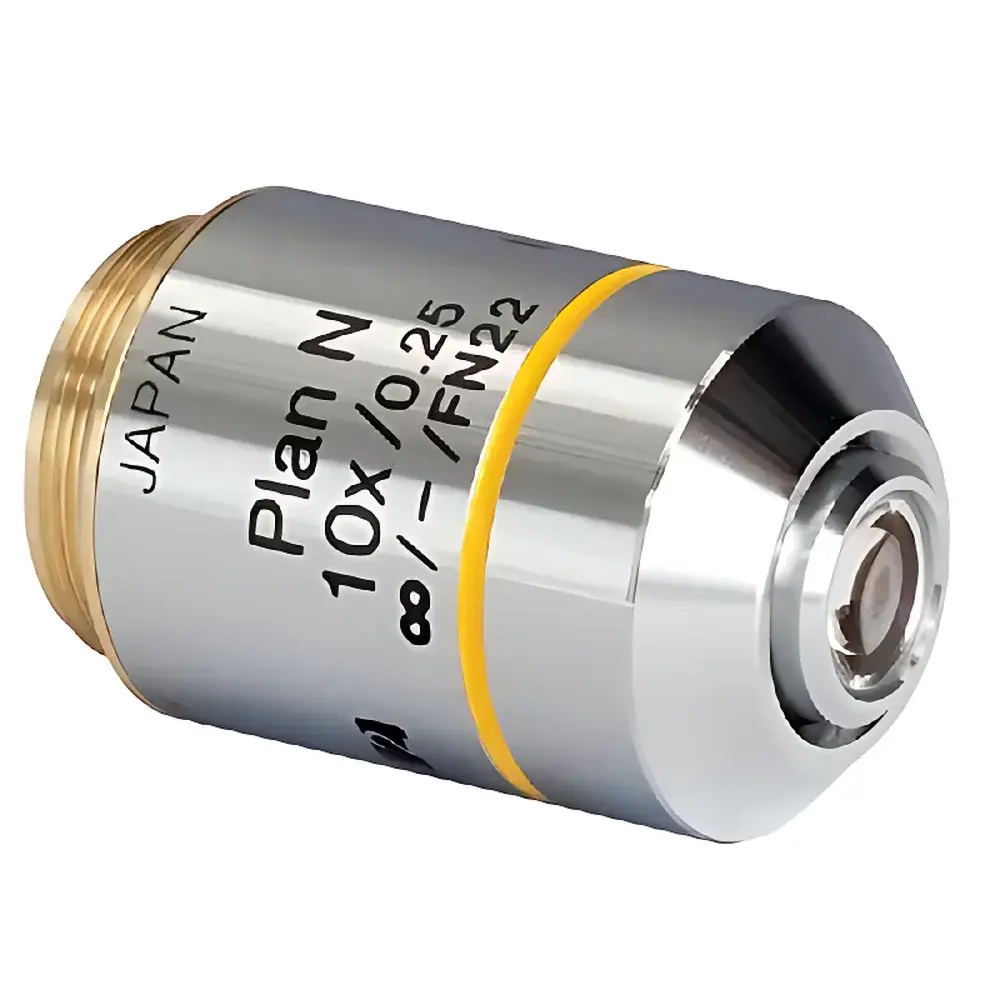
Thorlabs OS Optical Systems Platform
| Brand | Thorlabs |
|---|---|
| Origin | USA |
| Distribution Model | Authorized Distributor |
| Import Status | Imported |
| Model | OS |
| Pricing | Contact for Quote |
Overview
The Thorlabs OS Optical Systems Platform is a modular, application-agnostic infrastructure designed to support precision optical experimentation and system integration across research, industrial metrology, and OEM instrumentation. Unlike monolithic instruments, the OS platform comprises interoperable subcomponents—interferometers, isolators, collimators, beam expanders, adaptive optics modules, scanning galvanometers, electro-optic modulators, and reference gas cells—engineered to comply with fundamental principles of physical optics, including wavefront propagation, polarization control, spectral filtering, and coherent detection. Each component adheres to standardized mechanical interfaces (e.g., SM1, SM2, cage system threading), kinematic mounting protocols, and wavelength-specific optical design criteria (UV–NIR: 350–2100 nm). The platform enables rigorous experimental reproducibility by ensuring diffraction-limited performance, calibrated wavefront fidelity, and traceable alignment stability—critical for applications demanding compliance with ISO/IEC 17025 calibration frameworks or GLP-aligned optical characterization workflows.
Key Features
- Modular architecture supporting rapid reconfiguration between interferometric, imaging, laser manipulation, and spectroscopic configurations
- Dual-band Fabry–Pérot scanning interferometers (SA200/SA210 series) with <100 MHz free spectral range (FSR) resolution and PZT-driven cavity tuning for continuous-wave laser linewidth analysis
- Shearing interferometers (SI-series) with calibrated wedge angles (10–117 arcsec), UV-fused silica optics, and magnetic plate retention for quantitative beam collimation assessment and aberration diagnostics
- High-power galvanometric scanning systems (GVS series) featuring closed-loop mirror positioning, ±12.5° to ±20° mechanical scan range, 15 µrad repeatability, and bandwidths up to 1 kHz for raster or vector laser beam steering
- Variable-ratio beam expanders (Galilean design) with broadband AR coatings (UV–NIR), damage thresholds >5 J/cm² (10 ns, 10 Hz), and input/output apertures up to Ø25.4 mm for diffraction-limited expansion or reduction
- Soleil–Babinet compensators with quartz birefringent wedges, digital micrometer actuation (1″ travel), and uniform retardance across full aperture for high-resolution ellipsometry and polarization state calibration
- Fiber-coupled and free-space optical isolators rated for 350–2100 nm operation, offering >35 dB isolation (polarization-dependent) and >25 dB (polarization-independent), compliant with IEC 61290-3-1 optical safety standards
Sample Compatibility & Compliance
The OS platform accommodates diverse sample geometries and optical media through standardized mechanical and optical interfaces. Beam diameters from Ø1 mm to Ø50 mm are supported by scalable shear interferometers and collimation assemblies. Free-space isolators accept collimated beams up to Ø10 mm; fiber-coupled variants integrate with SMF-28, PM1550, and LMA-25 fibers using FC/APC, FC/PC, or SMA terminations. All components meet RoHS Directive 2011/65/EU and CE marking requirements for electromagnetic compatibility (EN 61326-1) and low-voltage safety (EN 61010-1). Critical subsystems—including SA201 FP controllers and TC200 temperature controllers—support audit-ready data logging with timestamped metadata, aligning with FDA 21 CFR Part 11 electronic record integrity guidelines when used in regulated analytical environments.
Software & Data Management
While the OS platform operates primarily as hardware infrastructure, Thorlabs provides native integration pathways via LabVIEW™ drivers (NI-VISA compatible), Python APIs (thorlabs_kinesis), and MATLAB® toolboxes for automated control of GVS galvanometers, SA201 interferometer scanners, and TC200 temperature controllers. Raw intensity data from FP interferometer photodiodes or shear interferometer CCDs can be acquired at up to 250 kS/s using standard DAQ hardware (e.g., National Instruments USB-6363). All firmware updates and calibration certificates are distributed through Thorlabs’ secure customer portal, with version-controlled documentation archives supporting ISO 9001:2015 quality management system audits. For traceable spectral calibration, reference gas cells (e.g., acetylene, water vapor) provide NIST-traceable absorption features at defined wavelengths (e.g., 1530.37 nm, 1542.47 nm), enabling wavelength axis validation per ASTM E1421-22.
Applications
- Laser cavity diagnostics: FSR measurement, mode-hop detection, and longitudinal mode analysis using SA200/SA210 scanning FP interferometers
- Adaptive optics correction: Wavefront sensing with Shack–Hartmann sensors (1.3 MPixel, 450 Hz frame rate) coupled to MEMS deformable mirrors for aberration compensation in multiphoton microscopy
- Optical coherence tomography (OCT): Far-field corrected scan lenses (e.g., LSM03-BB) paired with GVS012 dual-axis galvanometers for high-speed B-scan acquisition
- Polarimetric metrology: Soleil–Babinet compensators used in conjunction with rotating analyzer ellipsometers for thin-film thickness and refractive index determination (per ISO 15027)
- Fiber laser stabilization: Reference gas cells integrated into feedback loops for diode laser frequency locking via saturated absorption spectroscopy
- Beam quality validation: Shear interferometry combined with M² measurement setups to quantify beam parameter product deviation from diffraction limits (ISO 11146-1)
FAQ
What beam diameters are supported by the SI-series shear interferometers?
SI035 through SI254 models accommodate beams from Ø1 mm to Ø38 mm; SI500 supports Ø78 mm beams. For sub-millimeter beams, the SIVS magnifying viewing screen accessory increases fringe visibility.
Can the GVS galvanometer systems operate under vacuum or elevated temperature conditions?
Standard GVS units are rated for ambient operation (15–35°C, non-condensing). Vacuum-compatible versions (e.g., GVS001-VAC) require custom motor housing sealing and are available upon engineering review.
Do Thorlabs’ broadband AR coatings on beam expanders meet laser-induced damage threshold (LIDT) specifications for ultrafast pulses?
LIDT data for femtosecond pulses (e.g., 100 fs, 1 kHz) is provided per ISO 21254-2 test methodology in individual product datasheets; CW and nanosecond-pulse ratings are published for all expanders.
Is software included for real-time fringe analysis in shear interferometry?
Thorlabs supplies MATLAB-based fringe analysis scripts (open-source) for quantitative wavefront slope extraction; third-party packages like QWAVE or OpenFringe support direct camera integration.
How is traceability maintained for reference gas cell absorption lines?
Each gas cell includes a certificate of conformance listing fill pressure, path length, and NIST-traceable line center uncertainties (k=2) derived from high-resolution FTIR validation against SRM 2519a.




