
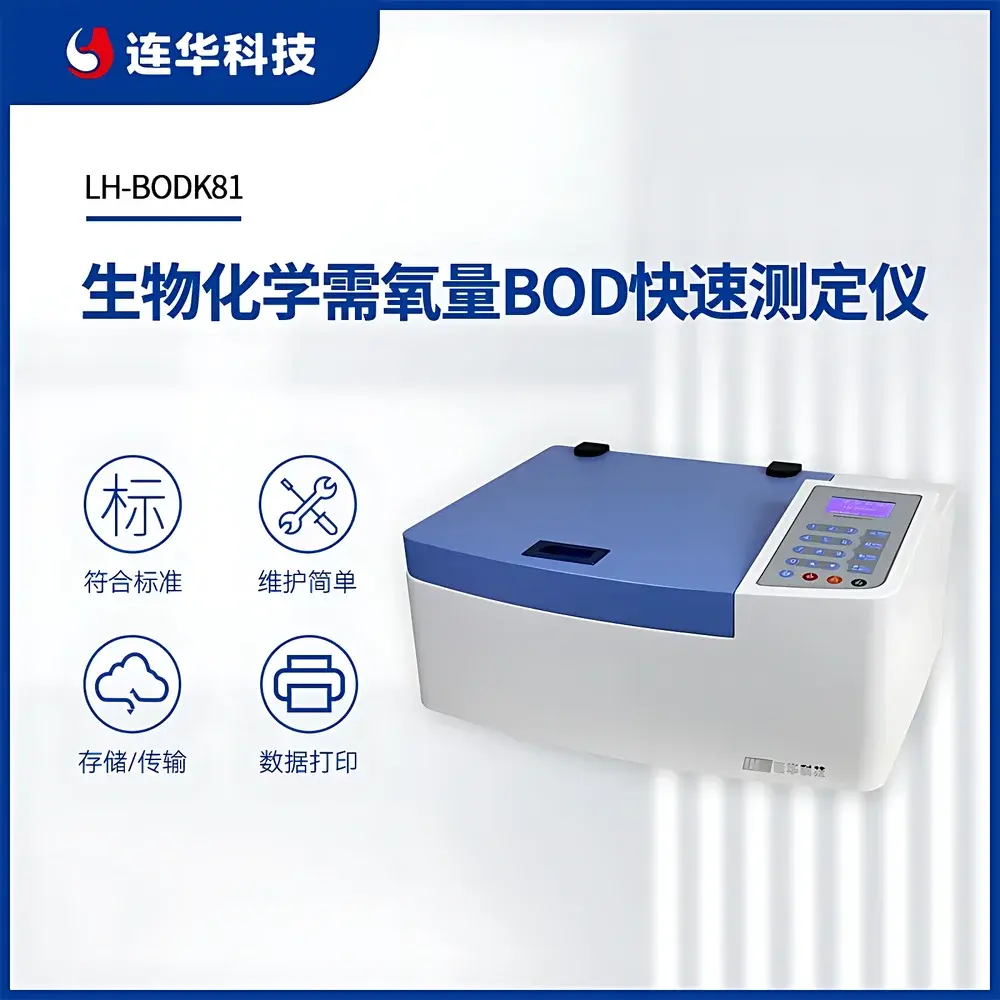
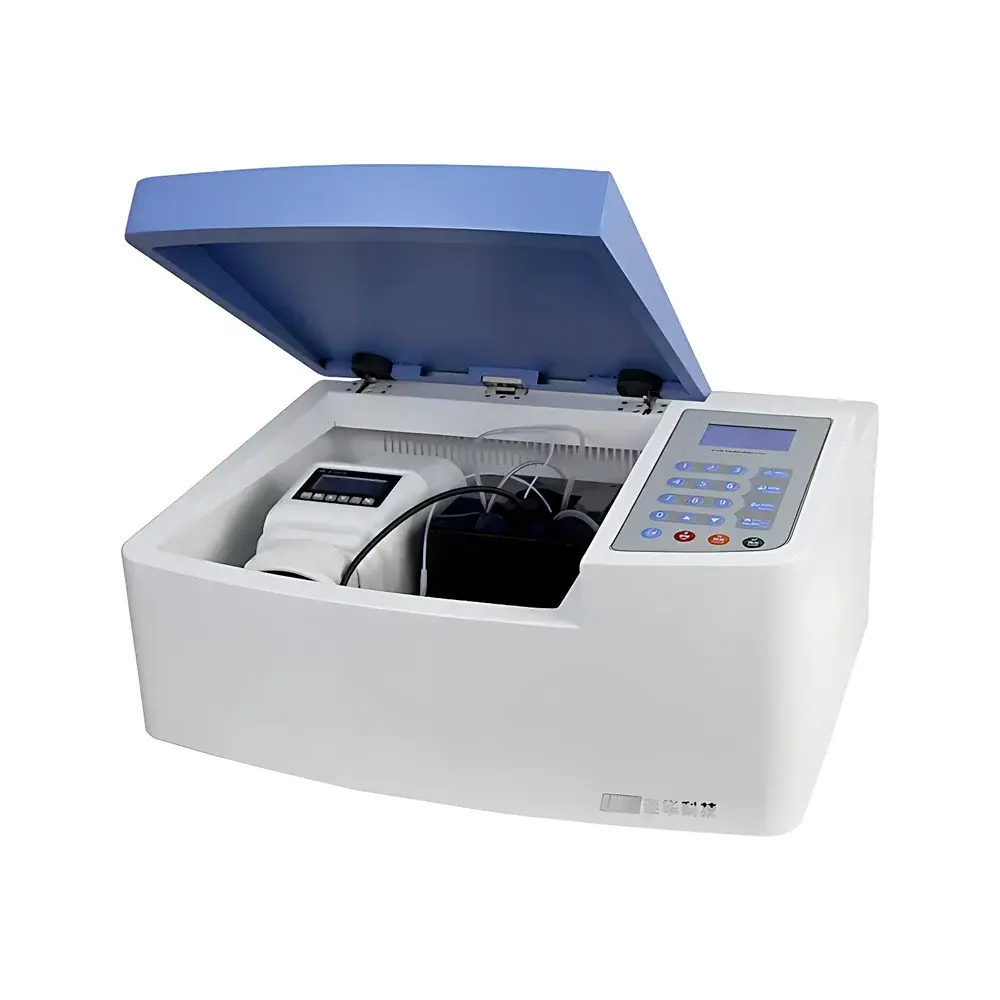
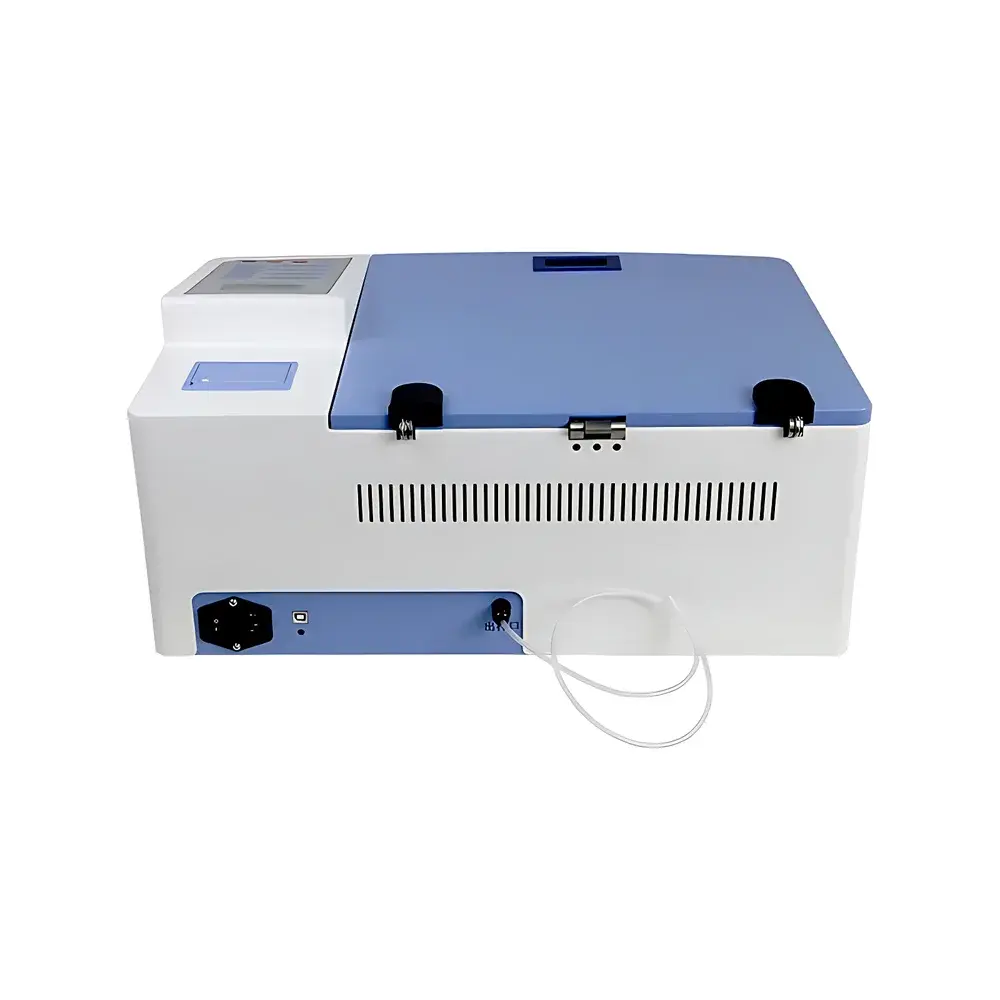
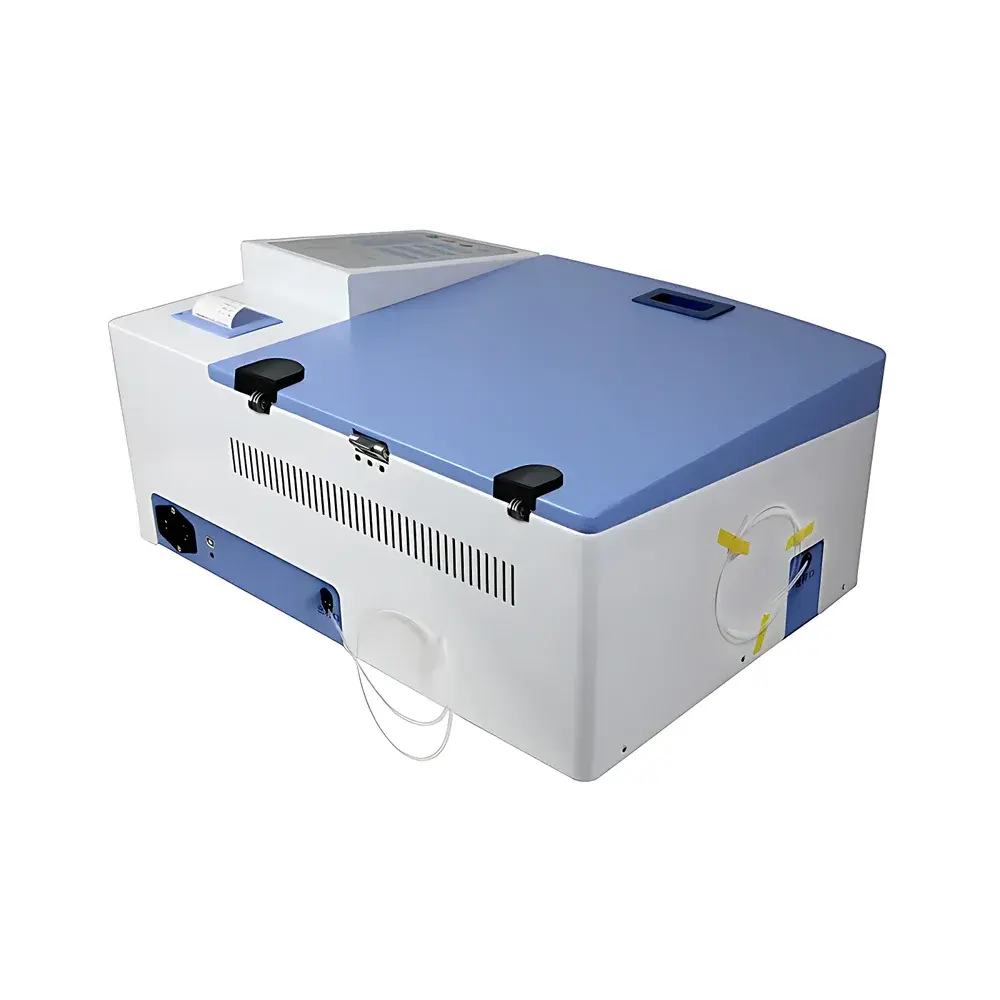
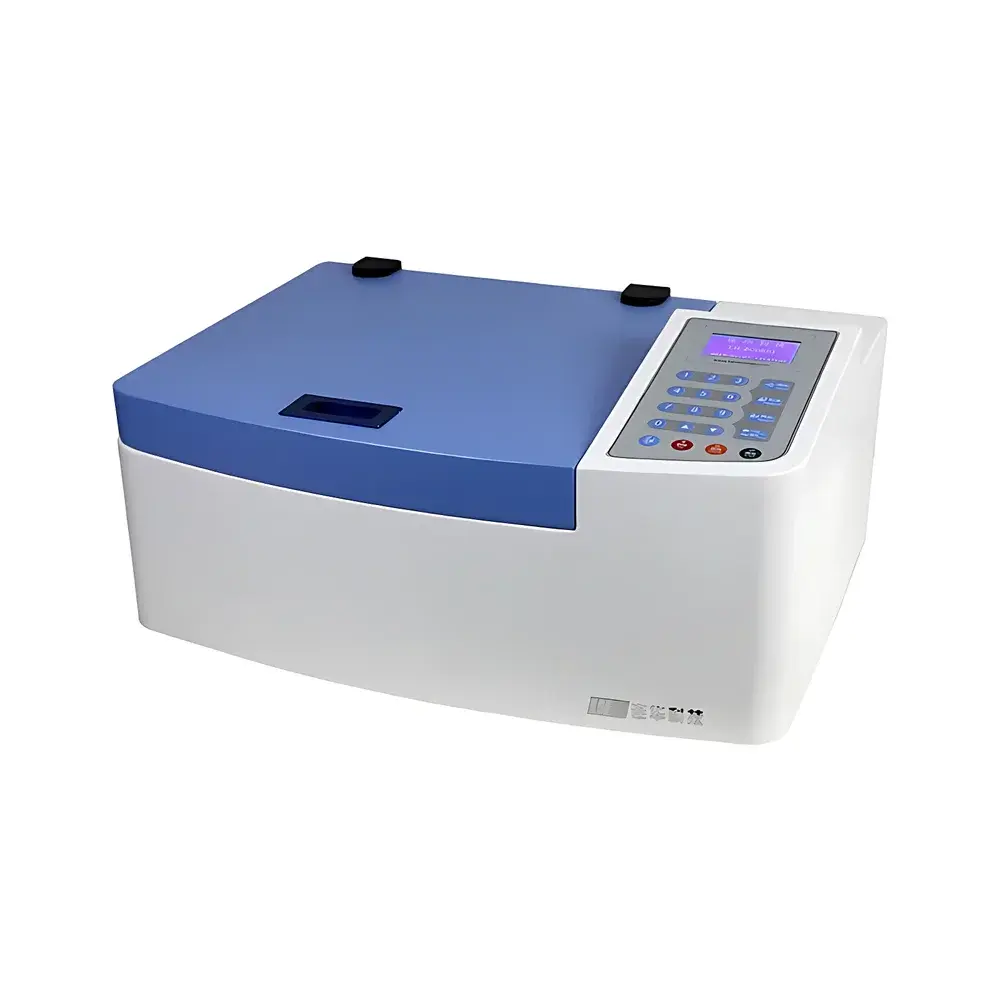
Lianhua Technology LH-BODK81 Microbial Electrode-Based BOD Analyzer
| Brand | Lianhua Technology |
|---|---|
| Origin | Beijing, China |
| Manufacturer Type | Direct Manufacturer |
| Product Origin | Domestic (China) |
| Model | LH-BODK81 |
| Instrument Type | Laboratory BOD Analyzer |
| Measurement Principle | Microbial Electrode Method |
| BOD Range | 2–50 mg/L (samples >50 mg/L require dilution) |
| Single-Sample Analysis Time | 8 minutes |
Overview
The Lianhua Technology LH-BODK81 is a laboratory-grade biochemical oxygen demand (BOD) analyzer engineered for rapid, reliable, and reagent-free quantification of biodegradable organic load in water and wastewater. Unlike the standard 5-day dilution method (BOD5) defined in ISO 5815-1:2019 and ASTM D5210, the LH-BODK81 employs a microbial electrode transduction principle—where immobilized, metabolically active microorganisms consume dissolved oxygen proportional to the biodegradable substrate concentration. This oxygen consumption is detected in real time by a polarographic three-electrode system integrated into a flow-through cell, generating a current signal linearly correlated with BOD concentration. The instrument delivers results in just 8 minutes per sample, making it suitable for high-throughput environmental labs, wastewater treatment plant QA/QC, and regulatory compliance screening where speed and operational simplicity are critical without compromising analytical traceability.
Key Features
- Microbial electrode sensing architecture: Uses a solid-state, membrane-immobilized bacterial consortium (e.g., Pseudomonas fluorescens-based biofilm) with stable enzymatic activity over ≥6 months under proper storage; no liquid cultures or daily reactivation required.
- Continuous constant-flow micro-sampling: Delivers precise 1.2–1.5 mL sample volumes per assay via peristaltic pump-driven flow control—eliminating manual pipetting variability and reducing sample consumption by >70% versus conventional BOD5 methods.
- Integrated thermostatic control: Proprietary PIO (Proportional-Integral-Optimized) temperature regulator maintains 20.0 ± 0.3 °C across the sensor chamber and fluidic path—meeting ISO 5815-1’s strict thermal stability requirement for BOD measurement validity.
- Reagent-free operation: No addition of nutrients, nitrification inhibitors (e.g., allylthiourea), or seeding suspensions—minimizing analyst exposure risk and eliminating secondary discharge of chemical residuals into lab drains.
- Modular mechanical design: Sensor cartridge, flow cell, and electronics board are field-replaceable as discrete units—reducing mean time to repair (MTTR) and supporting long-term serviceability beyond 10 years.
- Polarographic three-electrode configuration: Working, counter, and reference electrodes are co-located within a single monolithic flow cell—ensuring signal reproducibility (RSD < 3.2% at 20 mg/L BOD, n = 12) and immunity to background conductivity shifts.
Sample Compatibility & Compliance
The LH-BODK81 accepts raw or filtered (≤10 µm) surface water, domestic wastewater, industrial effluents, and treated discharge samples without filtration, centrifugation, pH adjustment, or nutrient supplementation. It demonstrates robust performance in matrices containing up to 1,200 mg/L total suspended solids (TSS) and chloride concentrations ≤5,000 mg/L—validated per EN 1899-1:2022 interference testing protocols. While not certified for regulatory reporting under US EPA Method 405.1, the analyzer meets the technical equivalence criteria outlined in ISO/IEC 17025:2017 for in-house method validation and is routinely deployed for trend monitoring, process control, and pre-screening prior to formal BOD5 submission. Data integrity complies with GLP principles through built-in audit trail logging (user ID, timestamp, calibration history, sample ID) and optional password-protected administrator access.
Software & Data Management
The embedded firmware supports USB 2.0 and RS-232 connectivity for direct data export to LIMS or Excel-compatible CSV files. Onboard memory stores ≥2,000 test records with full metadata (date/time, operator ID, temperature log, raw current response curve). Optional PC software provides automated calibration curve generation (two-point or multi-point), outlier detection using Grubbs’ test, and batch report generation compliant with ISO/IEC 17025 documentation requirements. Audit trails are immutable and time-stamped to support FDA 21 CFR Part 11 readiness when paired with electronic signature modules.
Applications
- Routine BOD screening in municipal wastewater treatment plants (influent, activated sludge, final effluent)
- Industrial pretreatment verification for food processing, pharmaceutical, and pulp & paper facilities
- Environmental monitoring programs tracking seasonal organic loading in rivers and lakes
- Academic research on biodegradability kinetics and microbial community respiration profiling
- Emergency spill response where rapid assessment of organic contamination is mission-critical
FAQ
What is the shelf life and activation protocol for the microbial sensor cartridge?
Each cartridge remains viable for 12 months when stored refrigerated (4–8 °C) unopened. Activation requires only 30 minutes of humidified incubation at 20 °C—no media preparation or viability testing needed.
Can the LH-BODK81 measure samples with high nitrate or heavy metal content?
Yes—the immobilized biofilm exhibits tolerance to nitrate ≤100 mg/L NO3− and Cu2+/Zn2+ ≤0.5 mg/L. For higher interferent levels, matrix-matched calibration or dilution is recommended.
Is third-party calibration verification supported?
Yes—NIST-traceable glucose-glutamic acid (GGA) standard solutions (e.g., 198 mg/L BOD) can be run as system suitability checks; instrument response must fall within ±5% of certified value.
Does the analyzer comply with ISO 5815-1 for routine use?
It does not replace BOD5 for statutory reporting but satisfies ISO 5815-1 Annex A as an “accelerated alternative method” when validated per Clause 8.2 for specific sample types.
What maintenance intervals are recommended?
Sensor cartridge replacement every 6 months (or after 500 assays), flow path cleaning weekly with 0.1% sodium hypochlorite, and annual verification of PIO temperature accuracy using NIST-calibrated probe.







