
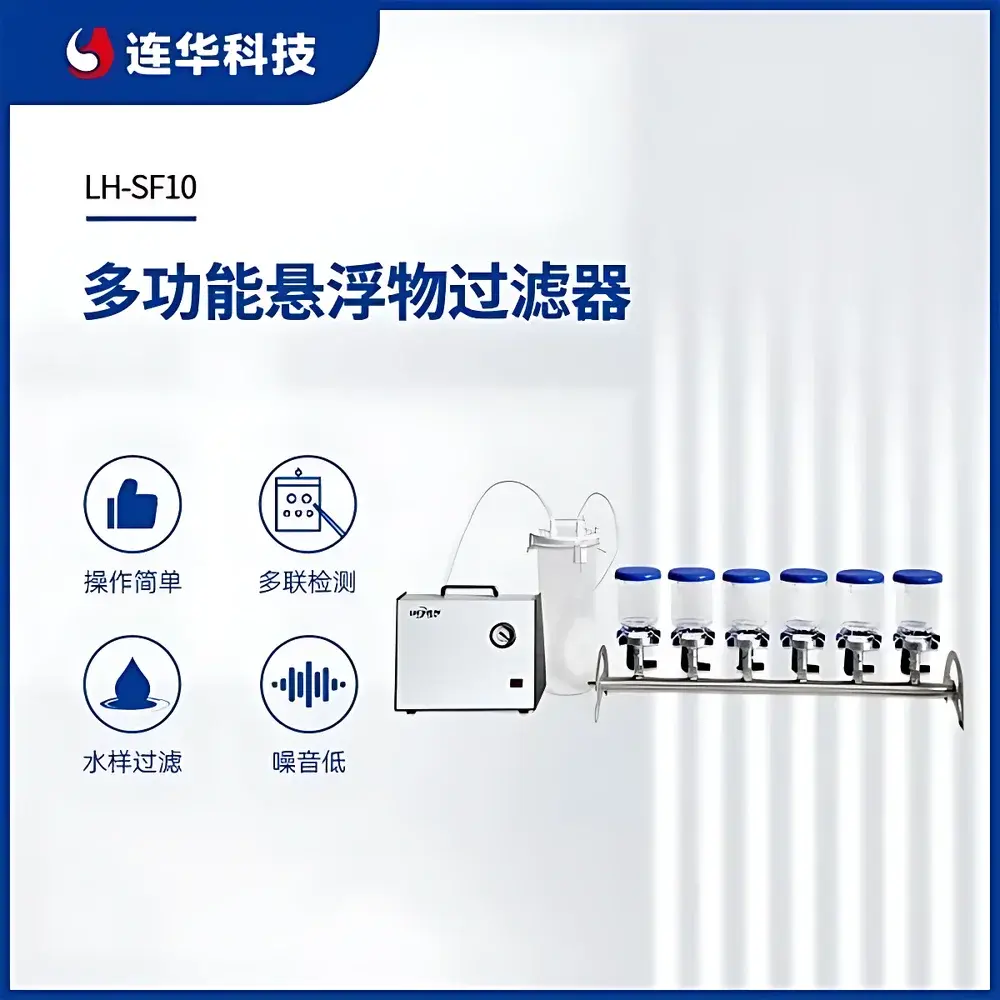
Lohand LH-SF10 Multi-Sample Suspended Solids Filtration System
| Brand | Lohand |
|---|---|
| Origin | Beijing, China |
| Manufacturer Type | Direct Manufacturer |
| Regional Classification | Domestic (China) |
| Model | LH-SF10 |
| Instrument Type | Laboratory Benchtop Filtration System |
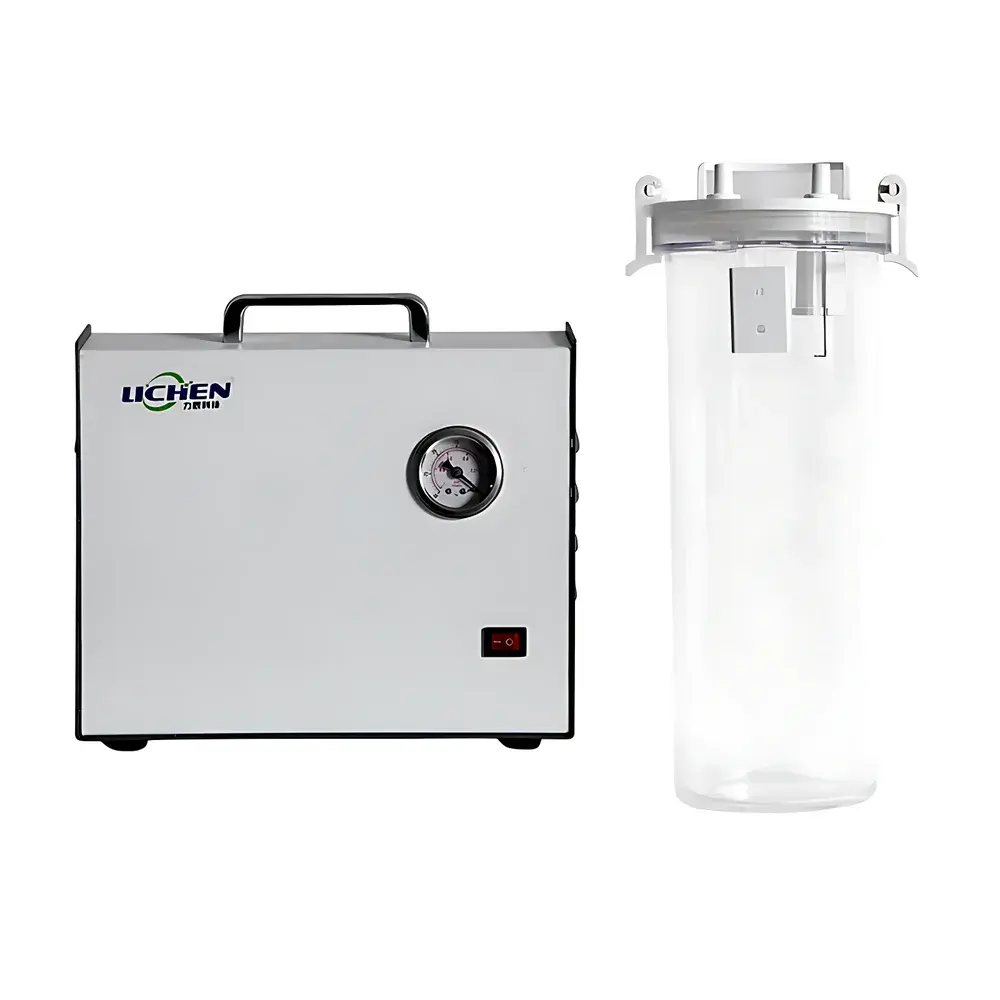
| Vacuum Pump Type | Oil-Free Electromagnetic Piston Pump |
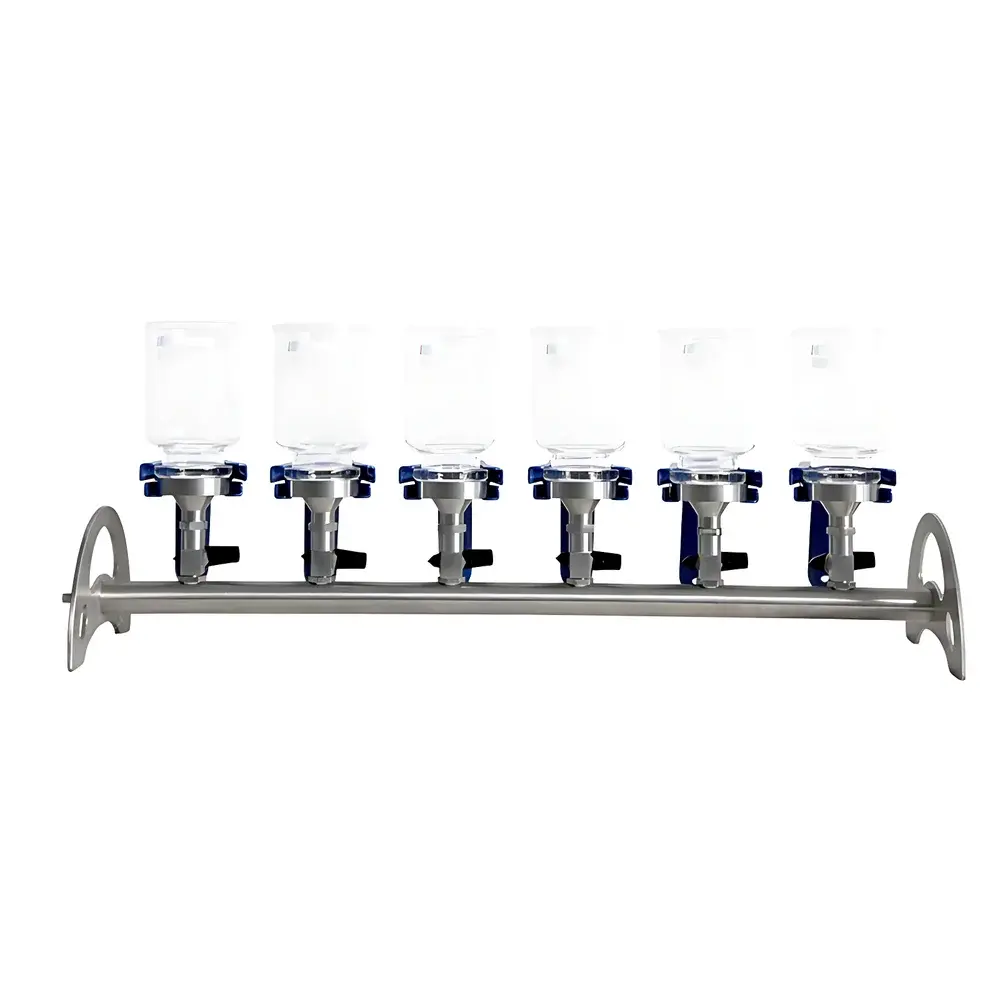
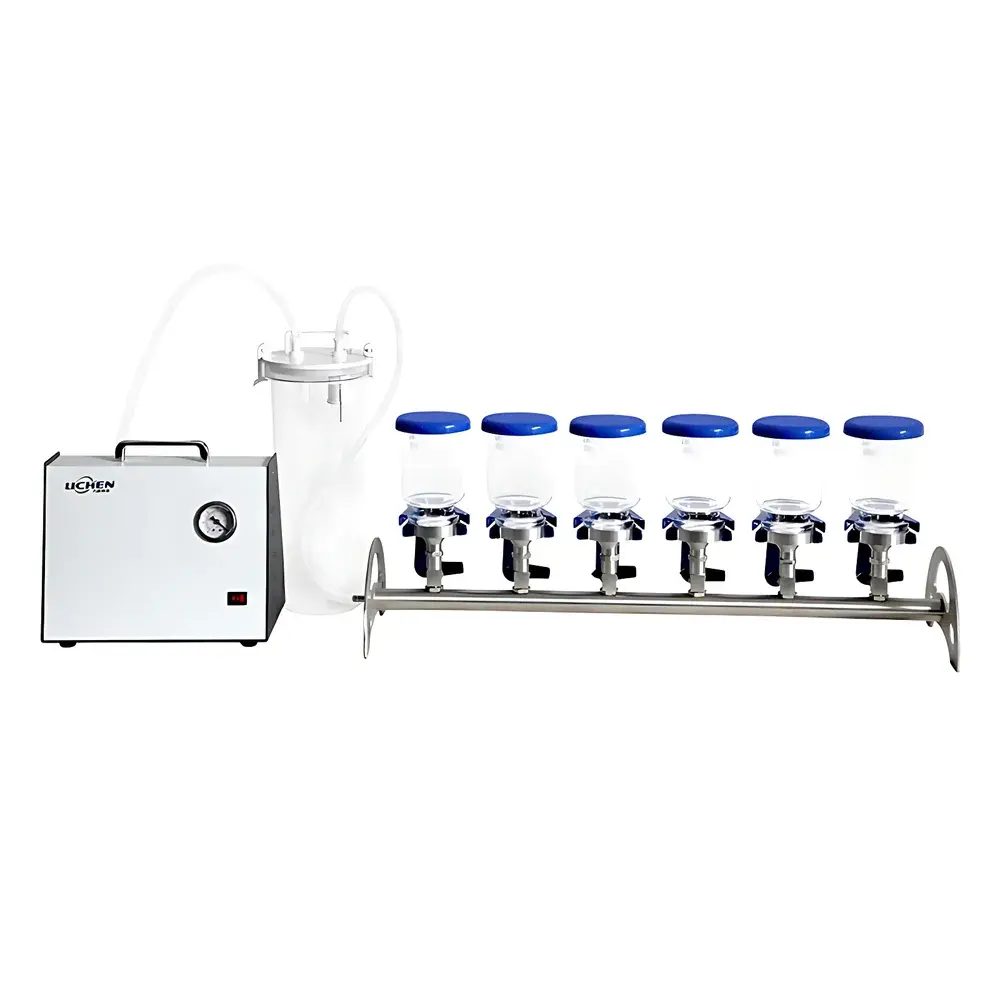
| Max. Simultaneous Samples | 6 |
| Filtration Capacity per Cup | 300 mL |
| Filter Membrane Diameter Options | 47 mm or 50 mm |
| Operating Noise Level | < 50 dB(A) |
| Construction Material | 304 Stainless Steel |
| Chemical Resistance | Acid- and Alkali-Resistant Design |
| Lubrication | Fully Oil-Free Operation |
| Continuous Duty Rating | 24/7 Stable Operation |
Overview
The Lohand LH-SF10 Multi-Sample Suspended Solids Filtration System is a laboratory-grade, vacuum-assisted solid-liquid separation platform engineered for precise, high-throughput determination of total suspended solids (TSS) in aqueous environmental samples. Designed in accordance with standard gravimetric methods—including EPA Method 160.2, ISO 11923:1997, and ASTM D5907—the system enables quantitative recovery of particulate matter retained on standardized membrane filters. Its core architecture integrates a high-efficiency electromagnetic piston vacuum pump with a modular, six-position stainless steel filtration manifold, allowing parallel processing of up to six independent water samples without cross-contamination. Unlike single-sample vacuum filtration setups, the LH-SF10 eliminates sequential bottlenecks while maintaining strict adherence to method-defined flow rates, pressure differentials, and drying protocols required for regulatory TSS reporting.
Key Features
- Modular 6-channel stainless steel filtration manifold constructed entirely from ASTM A240 304 stainless steel—resistant to corrosion from acidic, alkaline, and saline matrices commonly encountered in wastewater, surface water, and industrial effluent analysis.
- Independent on/off control valves for each filtration position—enabling selective operation of individual channels or simultaneous multi-sample processing without flow redistribution or pressure imbalance.
- Integrated overflow protection circuitry and liquid-level sensing in the waste collection reservoir—preventing accidental backflow of filtrate into the vacuum pump head, thereby extending pump service life and ensuring operational safety.
- Oil-free electromagnetic piston pump with aluminum alloy housing and passive thermal dissipation—delivering stable vacuum output (>85 kPa) with low power draw (<0.8 A at 220 V AC), enabling unattended 24-hour continuous operation under GLP-compliant laboratory conditions.
- Acoustically optimized enclosure and vibration-dampened mounting—achieving sound pressure levels below 50 dB(A) at 1 m distance, suitable for shared analytical laboratories where ambient noise control is critical.
- Universal filter support accommodating both 47 mm and 50 mm diameter microporous membranes (e.g., GF/C, PVDF, PTFE, or mixed cellulose ester)—ensuring compatibility with method-specified pore sizes (typically 0.45 µm or 1.5 µm) and certified reference materials.
Sample Compatibility & Compliance
The LH-SF10 supports filtration of diverse aqueous matrices, including raw sewage, treated effluent, river and lake water, stormwater runoff, cooling tower water, and industrial process streams. Its chemically inert wetted path and absence of elastomeric seals or lubricants eliminate leaching risks that could compromise gravimetric accuracy. The system conforms to the mechanical and procedural requirements of major regulatory frameworks: it facilitates full traceability when used within QA/QC workflows aligned with ISO/IEC 17025, supports audit-ready documentation under FDA 21 CFR Part 11 when paired with compliant LIMS or electronic lab notebooks, and meets the physical robustness criteria specified in USP for non-volatile residue testing. All components are CE-marked and RoHS-compliant.
Software & Data Management
As a hardware-only gravimetric filtration platform, the LH-SF10 does not incorporate embedded firmware or proprietary software. Instead, it is designed for seamless integration into existing laboratory data ecosystems: sample identification, filtration start/stop timestamps, operator ID, and final dry-weight entries are recorded manually or via external digital logbooks compliant with ALCOA+ principles (Attributable, Legible, Contemporaneous, Original, Accurate, Complete, Consistent, Enduring, Available). Optional barcode-scannable sample tube labels and pre-formatted Excel-based TSS calculation templates (validated per ISO 5725) are available through Lohand’s technical support portal to assist in generating auditable reports.
Applications
- Routine TSS quantification in municipal wastewater treatment plant influent, effluent, and sludge dewatering streams.
- Environmental monitoring programs tracking sediment load in watershed management and NPDES permit compliance.
- Industrial pretreatment verification for electroplating, food processing, and pharmaceutical manufacturing facilities discharging to POTWs.
- Research applications requiring reproducible particulate mass recovery in limnological, marine, and hydrological studies.
- Method validation and interlaboratory comparison exercises where consistent vacuum delivery and filtration geometry are essential for inter-operator precision.
FAQ
What membrane types and pore sizes are compatible with the LH-SF10?
The system accepts standard 47 mm and 50 mm diameter disc membranes, including glass fiber (GF/C), polyvinylidene fluoride (PVDF), polytetrafluoroethylene (PTFE), and mixed cellulose ester (MCE), in pore sizes ranging from 0.22 µm to 8.0 µm—subject to method-specific selection per EPA, ISO, or ASTM guidelines.
Can the LH-SF10 be used for turbidity or particle count measurements?
No. The LH-SF10 is strictly a gravimetric filtration device for total suspended solids (TSS) analysis. It does not perform optical turbidity (NTU) or laser diffraction particle sizing; those require dedicated nephelometers or particle analyzers.
Is calibration required before use?
The system requires no routine calibration, as it operates on fixed mechanical principles. However, users must verify vacuum stability using a calibrated pressure gauge prior to each analytical batch, per ISO 17025 clause 6.4.3.
How is maintenance performed on the oil-free pump?
The electromagnetic piston pump is sealed and maintenance-free for ≥10,000 hours of operation. Routine inspection includes checking for debris in the waste bottle, verifying valve actuation integrity, and cleaning stainless steel surfaces with ethanol or dilute nitric acid solution.
Does the LH-SF10 meet GLP or GMP requirements?
Yes—when operated within documented SOPs, with defined preventive maintenance schedules, operator training records, and raw data retention protocols, the LH-SF10 satisfies core equipment qualification elements (IQ/OQ) for GLP and GMP-regulated environments.
Related Products







