
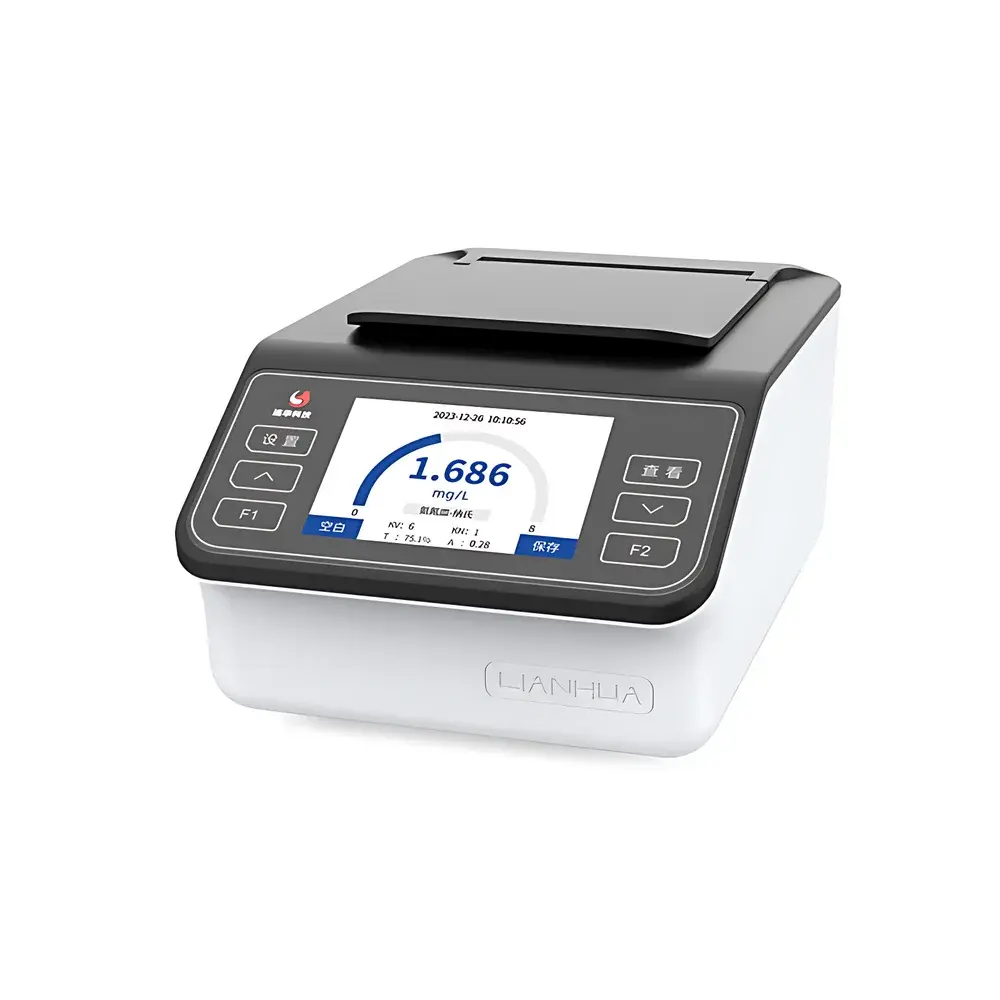
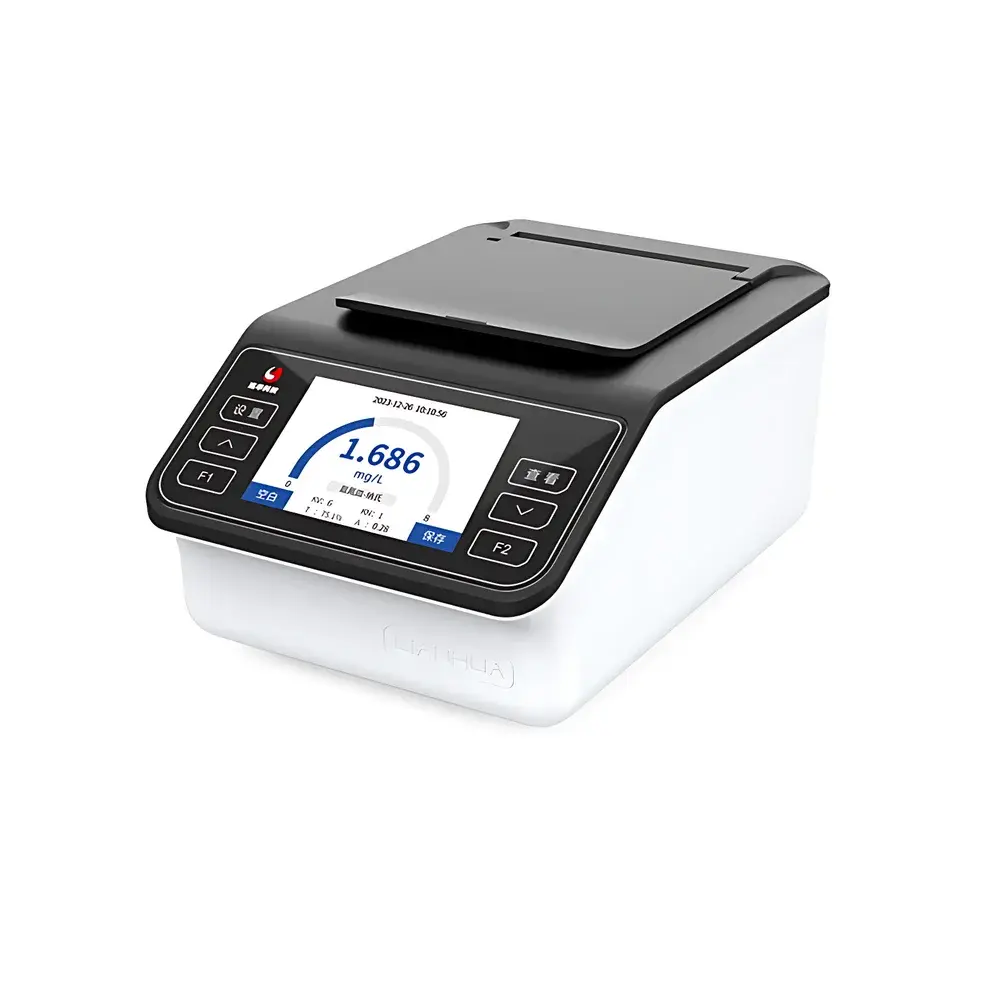
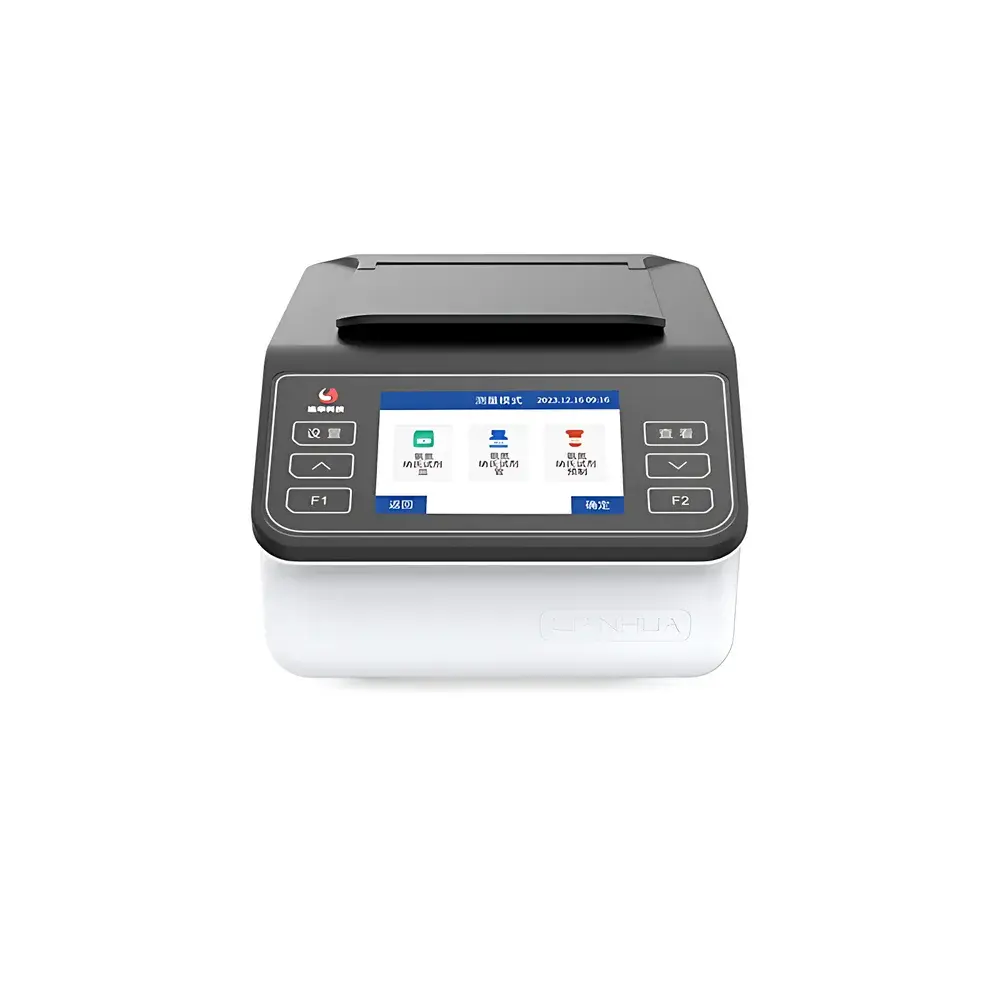
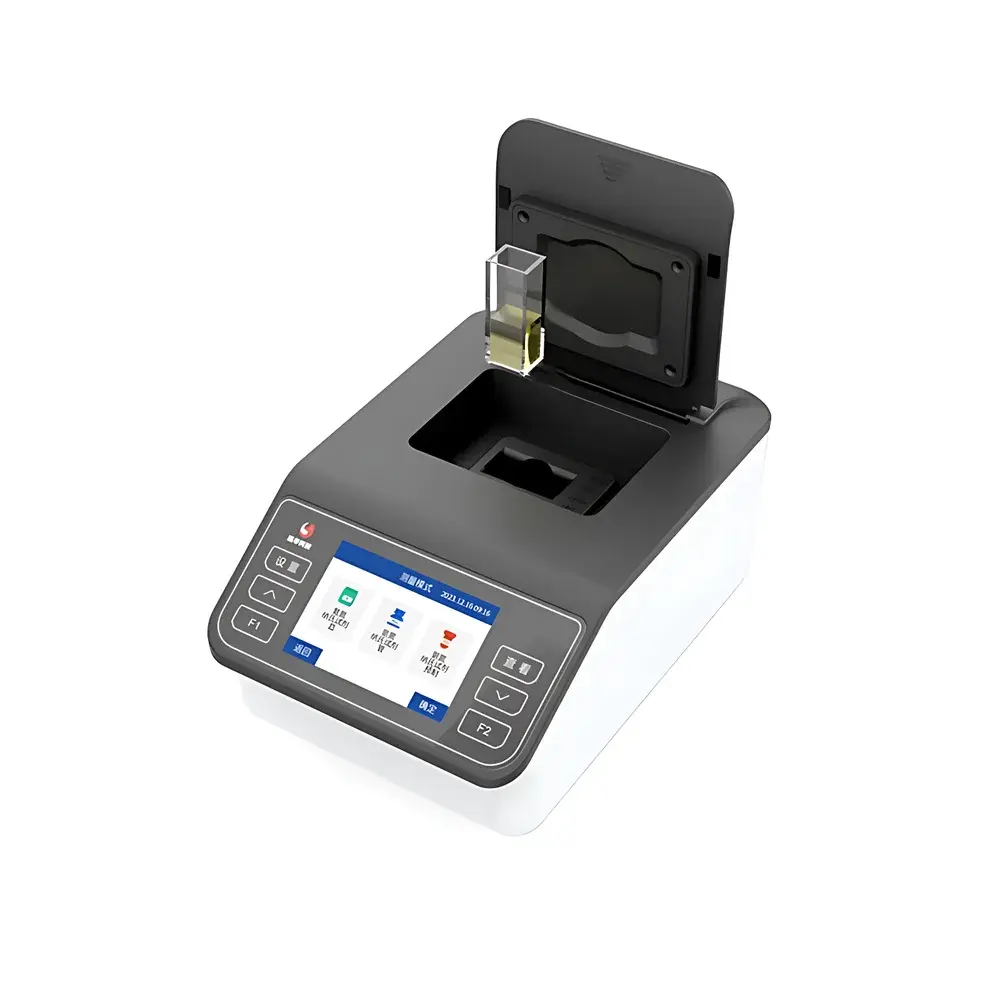
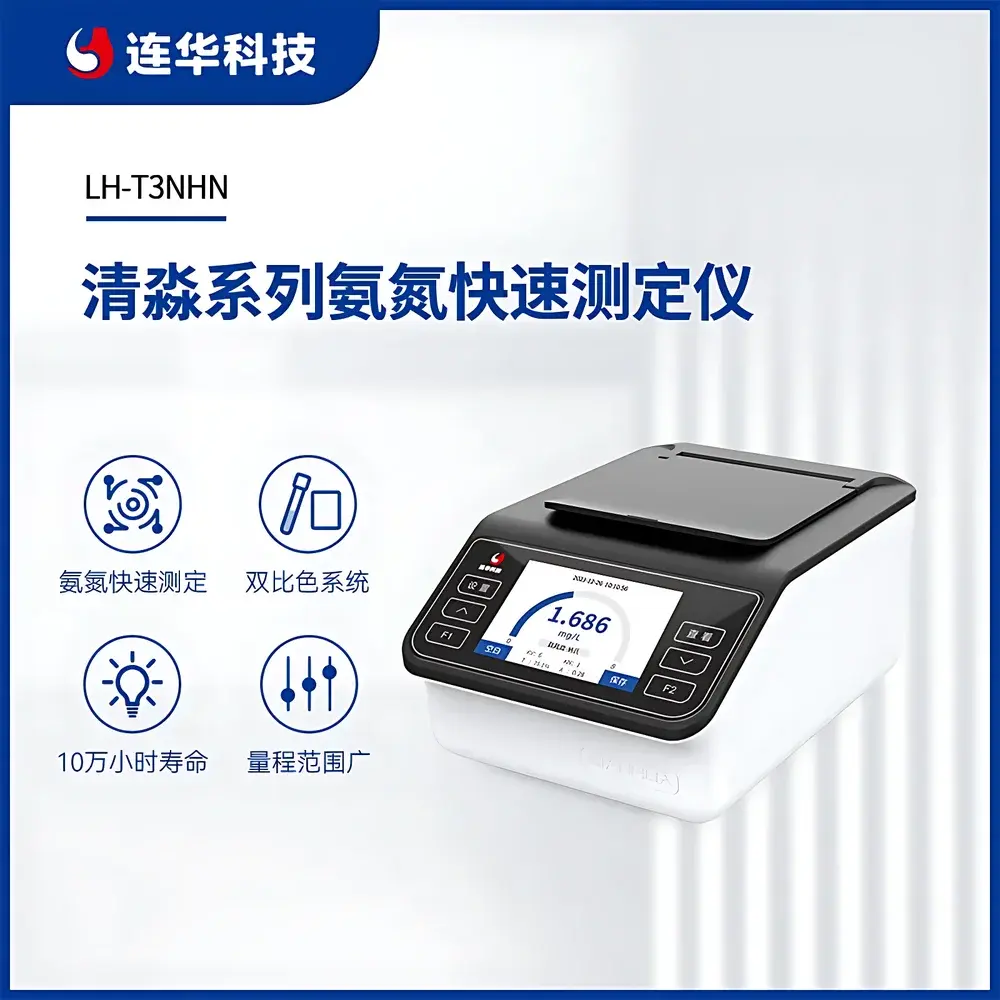
Lohand ClearWater Series Ammonia Nitrogen Rapid Analyzer LH-T3NHN
| Brand | Lohand |
|---|---|
| Origin | Beijing, China |
| Manufacturer Type | Direct Manufacturer |
| Product Origin | Domestic (China) |
| Model | LH-T3NHN |
| Instrument Type | Laboratory Benchtop Analyzer |
| Measurement Principle | Colorimetric Method (Nesslerization or Salicylate, per HJ 535–2009) |
| Measurement Range | 0–160 mg/L NH₃–N (multi-range segmented calibration) |
| Accuracy | ≤ ±8% of reading (at mid-range, per HJ 535–2009 validation protocol) |
| Display | 3.5-inch high-resolution color TFT LCD with analog-style UI |
| Light Source | Long-life cold LED source with narrow-band interference optical filtering (rated lifetime ≥100,000 hours) |
| Data Storage | Internal non-volatile memory for up to 5,000 measurement records (timestamp + numeric result) |
| Sample Vessels | Compatible with both 16-mm round glass cuvettes and 10-mm square quartz or optical-grade plastic cuvettes |
| Calibration Options | 15 pre-programmed calibration curves |
| Compliance | Designed and validated in accordance with HJ 535–2009 “Determination of Ammonia Nitrogen in Water—Nessler Reagent Spectrophotometric Method” |
Overview
The Lohand ClearWater Series Ammonia Nitrogen Rapid Analyzer LH-T3NHN is a dedicated benchtop photometric analyzer engineered for precise, repeatable quantification of ammonia nitrogen (NH3–N) in environmental water samples. It operates on the standardized colorimetric principle defined in China’s national standard HJ 535–2009, which specifies either the Nessler reagent method (for low-to-moderate concentrations) or the salicylate-hypochlorite method (for higher sensitivity and reduced interferences), depending on reagent configuration and range selection. The instrument integrates a stable cold LED light source with narrow-band optical interference filters to ensure spectral specificity at the absorption maxima of the colored complexes formed during sample reaction—typically 420 nm (Nessler) or 655 nm (salicylate). Its segmented measurement range (0–160 mg/L NH3–N) enables direct analysis of raw wastewater, surface water, drinking water pretreatment effluents, and aquaculture discharge without mandatory dilution, thereby reducing procedural error and analyst workload.
Key Features
- Segmented multi-range capability (0–1.0, 1.0–10, 10–50, and 50–160 mg/L NH3–N) with automatic range switching and optimized optical path compensation
- Dual sample vessel compatibility: supports both 16-mm round glass cuvettes (standard for field-ready kits) and 10-mm square cuvettes (aligned with ISO/IEC 17025-compliant lab workflows)
- 15 built-in calibration curves—including four primary HJ 535–2009 reference curves and eleven extended-use curves for matrix-matched calibration in wastewater, seawater, or digested sludge extracts
- Analog-style graphical user interface on a 3.5-inch color TFT display, enabling intuitive parameter navigation, real-time absorbance monitoring, and immediate pass/fail visual feedback against preset limits
- Cold LED optical architecture with <1.5 nm bandwidth filters and thermal drift compensation, delivering long-term photometric stability (≤0.002 Abs/h drift over 8 h at 420 nm)
- Onboard data management system storing 5,000 full records with ISO 8601 timestamps, operator ID fields (optional), and QC flagging (e.g., “diluted”, “retest”, “outlier”)
Sample Compatibility & Compliance
The LH-T3NHN is validated for use with clarified, filtered, or centrifuged aqueous matrices including municipal wastewater influent/effluent, river and lake water, groundwater, industrial process water, and biological treatment unit samples. Interference mitigation protocols are embedded per HJ 535–2009: turbidity compensation via dual-wavelength correction (700 nm reference), residual chlorine quenching with sodium thiosulfate, and heavy metal masking using EDTA when required. While not certified to ISO/IEC 17025 as a standalone system, the analyzer meets the instrumental performance criteria outlined in ISO 15681-1:2022 (Water quality — Determination of orthophosphate and ammonia nitrogen — Part 1: Automated spectrophotometric methods) for laboratory-based manual operation. It supports GLP-aligned documentation through exportable CSV logs and optional USB data dump functionality.
Software & Data Management
Data generated by the LH-T3NHN are stored internally in a tamper-resistant flash memory partition with write-cycle redundancy. Each record includes date/time stamp (RTC-backed), measured concentration (mg/L NH3–N), selected curve ID, cuvette type used, and operator-defined notes. Export is supported via USB 2.0 interface to standard FAT32-formatted drives; no proprietary software is required—output files conform to ASTM D5117-20 Annex A1 structure for traceability. Audit trail features include automatic logging of calibration events, zero-point verification, and firmware update history. For regulated environments, optional firmware modules provide 21 CFR Part 11–compliant electronic signatures and role-based access control (admin/operator modes).
Applications
- Regulatory compliance monitoring for municipal wastewater treatment plants (WWTPs) under China’s GB 18918–2002 discharge standards
- Source water quality assessment in reservoirs and intake channels prior to potable water treatment
- Process control in activated sludge, MBR, and denitrification-nitrification bioreactors
- Environmental impact assessments (EIA) for industrial effluent discharge permits
- Academic and research laboratories conducting nitrogen cycle studies in aquatic ecosystems
- Third-party testing labs performing accredited water analysis per CNAS-CL01:2018 requirements
FAQ
Does the LH-T3NHN comply with international standards such as ISO or ASTM?
Yes—the optical design, calibration traceability, and measurement uncertainty profile align with ISO 15681-1:2022 for manual spectrophotometric ammonia nitrogen determination. While HJ 535–2009 is its primary validation basis, cross-referencing studies confirm equivalence to ASTM D1426–15 (Standard Test Methods for Nitrogen in Water) for the Nessler method.
Can the instrument be used for saline or brackish water samples?
Yes, provided appropriate curve selection (e.g., salicylate-based curve #7 or #12) and matrix-matched calibration with artificial seawater blanks. Users must apply chloride interference correction per HJ 535–2009 Section 7.4.
Is external PC software required for data reporting?
No—CSV export via USB is fully self-contained. Optional Lohand LabLink desktop software (Windows/macOS) provides automated report generation, trend charting, and LIMS integration via HL7 or ASTM E1384 interfaces.
What maintenance is required beyond routine cleaning?
Annual optical alignment verification and LED intensity calibration using NIST-traceable neutral density filters are recommended. No lamp replacement is needed within the first 10 years of operation due to the 100,000-hour LED lifetime specification.
How does the analyzer handle high-turbidity samples?
It applies dual-wavelength photometry (measurement wavelength + 700 nm reference) to correct for scattering effects. For turbidity >100 NTU, centrifugation or 0.45-µm filtration is advised prior to analysis per HJ 535–2009 Section 6.2.







