
Ushio 650-1500 150 W Ozone-Free Xenon Lamp for Hitachi Fluorescence Spectrophotometers
| Brand | Ushio |
|---|---|
| Origin | Japan |
| Lamp Type | Xenon Arc Lamp |
| Power Rating | 150 W |
| Compatible Models | Hitachi F-4500, F-2700, F-4600, F-7000 |
| OEM Part Number | 650-1500 |
| Illumination Configuration | Internal (In-Sample Chamber) Mounting |
| Import Category | Imported Instrument Component |
| Distributor Type | Authorized General Distributor |
Overview
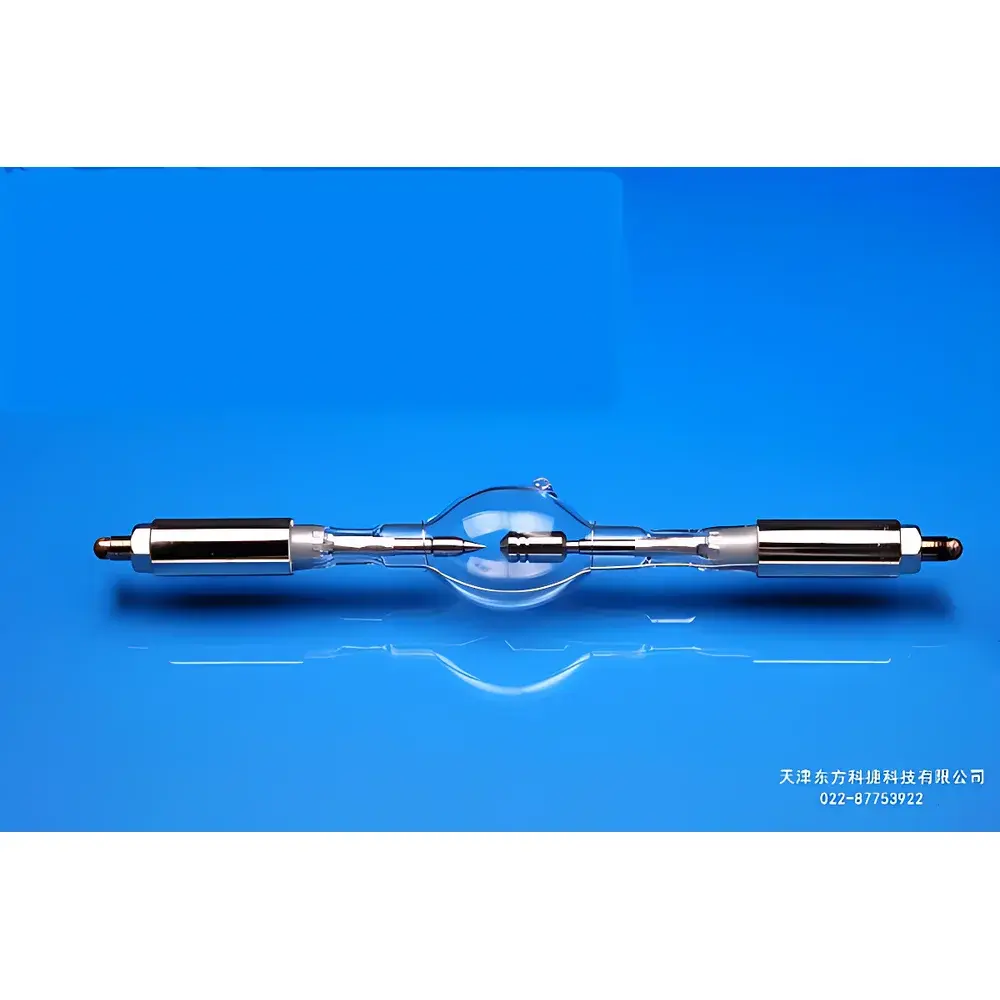
The Ushio 650-1500 is a high-stability, ozone-free 150 W short-arc xenon lamp engineered specifically as a replacement light source for Hitachi high-performance fluorescence spectrophotometers—including the F-2700, F-4500, F-4600, and F-7000 series. Designed to replicate the spectral output, radiometric stability, and thermal management characteristics of the original Hitachi OEM lamp, this lamp operates on the principle of high-pressure DC arc discharge in xenon gas, delivering continuous broadband emission from ~190 nm to >1000 nm with peak intensity in the near-UV and visible regions (250–600 nm). Its ozone-free construction eliminates the need for external ventilation or ozone scrubbing systems, ensuring safe integration into enclosed optical benches and compliance with laboratory indoor air quality protocols. The lamp’s precisely aligned cathode-anode geometry and fused silica envelope maintain consistent beam collimation and long-term photometric reproducibility—critical for quantitative fluorescence intensity calibration and excitation-emission matrix (EEM) mapping.
Key Features
- Ozone-free xenon plasma operation: No ozone generation below 200 nm due to doped fused silica envelope, eliminating requirement for exhaust ducting or catalytic converters
- DC-powered short-arc design: Optimized electrode spacing and thermal mass ensure stable arc positioning and reduced flicker (<0.5% RMS intensity noise over 30 min)
- Hitachi OEM-equivalent mechanical interface: Identical base pinout (PG12-2), envelope dimensions, and focal point alignment for drop-in replacement without optical realignment
- Pre-aligned and pre-aged: Each lamp undergoes 2-hour factory burn-in and spectral validation against NIST-traceable reference standards
- Robust thermal architecture: Integrated heat-dissipating ceramic base and low-thermal-expansion quartz envelope minimize thermal drift during extended acquisition cycles
Sample Compatibility & Compliance
This lamp is validated for use exclusively with Hitachi fluorescence spectrophotometers requiring internal illumination configuration (i.e., excitation light path routed directly through the sample compartment). It supports all standard solid, liquid, and powder sample formats compatible with Hitachi cuvette holders, microvolume adapters, and solid-sample stages. From a regulatory standpoint, the lamp conforms to IEC 62471 (Photobiological Safety of Lamps) Risk Group 1 (Exempt), and its electrical interface complies with IEC 61000-6-3 (EMC Emission Standard) for laboratory instrumentation. When used within validated instrument methods (e.g., USP for fluorescence assay qualification or ASTM E275 for spectrophotometer verification), the lamp contributes to GLP-compliant data integrity by maintaining excitation source stability across instrument IQ/OQ/PQ protocols.
Software & Data Management
While the lamp itself is a passive hardware component, its performance directly impacts software-dependent measurements in Hitachi FL Solutions and F-7000 Control Software. Stable irradiance output ensures linear detector response across dynamic range settings (e.g., PMT voltage sweeps from 400–900 V), enabling reliable application of internal standard correction algorithms and multi-point gain calibration routines. The lamp’s consistent warm-up profile (reaching photometric equilibrium within 15 ± 2 min) supports automated instrument startup sequences and scheduled calibration workflows. Audit trails generated by Hitachi instrument software—including lamp operating hours, ignition count, and error logs—are fully retained and exportable in CSV/ASCII format for 21 CFR Part 11-compliant electronic records when paired with validated system configurations.
Applications
The Ushio 650-1500 lamp is routinely deployed in applications demanding high signal-to-noise ratio and excitation wavelength flexibility: quantitative protein tryptophan/tyrosine analysis; lanthanide-based time-resolved fluorescence immunoassays (TRFIA); quantum yield determination using integrating sphere accessories; environmental PAH screening in water extracts; and pharmaceutical impurity profiling via synchronous scanning. Its broad UV–Vis output enables dual-wavelength ratiometric measurements (e.g., NADH/NADPH redox status) and supports accessory-based techniques such as polarization-resolved fluorescence and lifetime-capable TCSPC modules when synchronized with Hitachi’s optional pulsed xenon driver units.
FAQ
What is the expected operational lifetime under standard usage conditions?
Rated average life is 1,000 hours at nominal 150 W DC power, defined as time until luminous flux drops to 80% of initial value under continuous operation at 25 °C ambient and recommended current regulation.
Is lamp alignment required after installation?
No—mechanical and optical interfaces are identical to Hitachi OEM specification; full spectral and intensity calibration is retained if instrument baseline and dark-current protocols are re-executed per user manual Section 5.2.
Can this lamp be used in non-Hitachi instruments?
Not recommended—electrical pinout, thermal envelope clearance, and focal length are optimized exclusively for Hitachi F-series optical benches; mismatched integration may cause overheating, arc instability, or detector saturation.
Does the lamp include a protective shipping container and handling gloves?
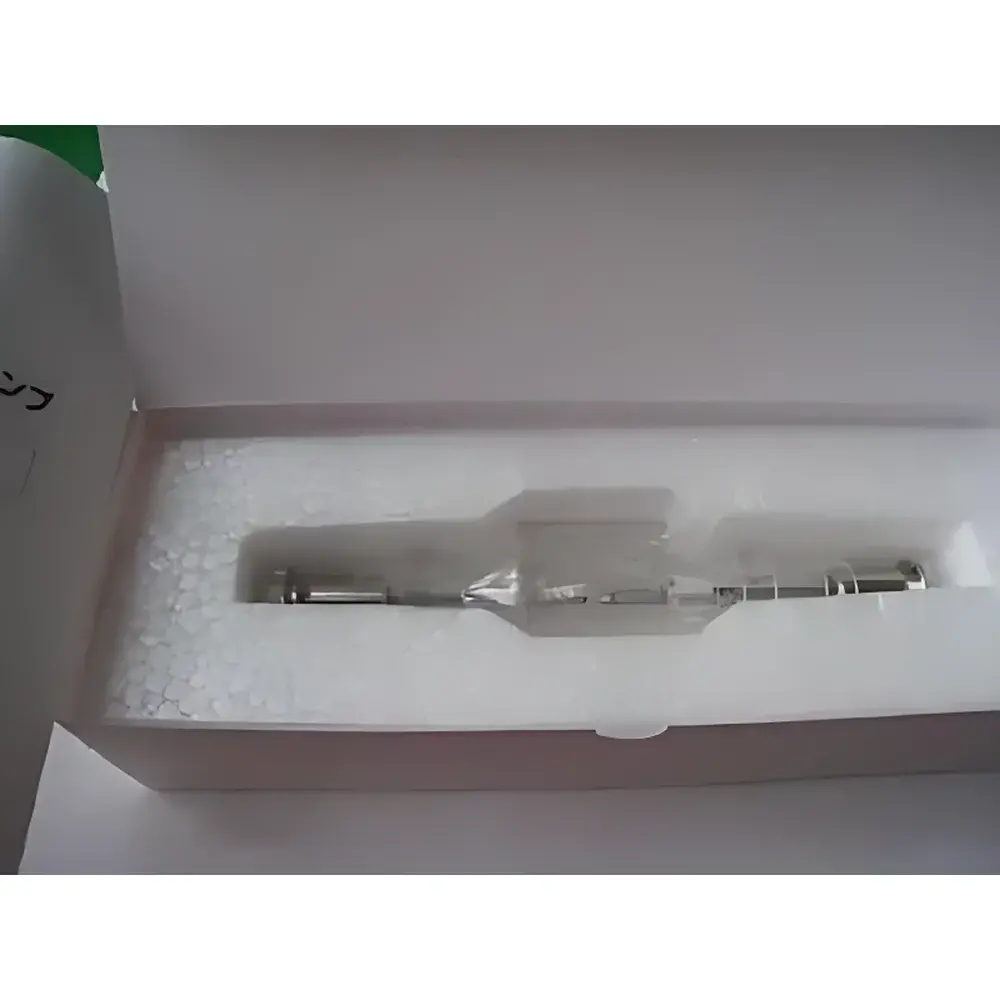
Yes—each unit ships in an anti-static, foam-lined rigid case with powder-free nitrile gloves and a UV-blocking handling sleeve to prevent skin oil contamination of the quartz envelope.
How is traceability maintained for quality assurance purposes?
Each lamp carries a unique serial number laser-etched on the base, linked to factory spectral irradiance reports (350–750 nm, 1 nm resolution) and burn-in validation logs archived for 10 years per ISO 9001:2015 Clause 8.5.2.




