
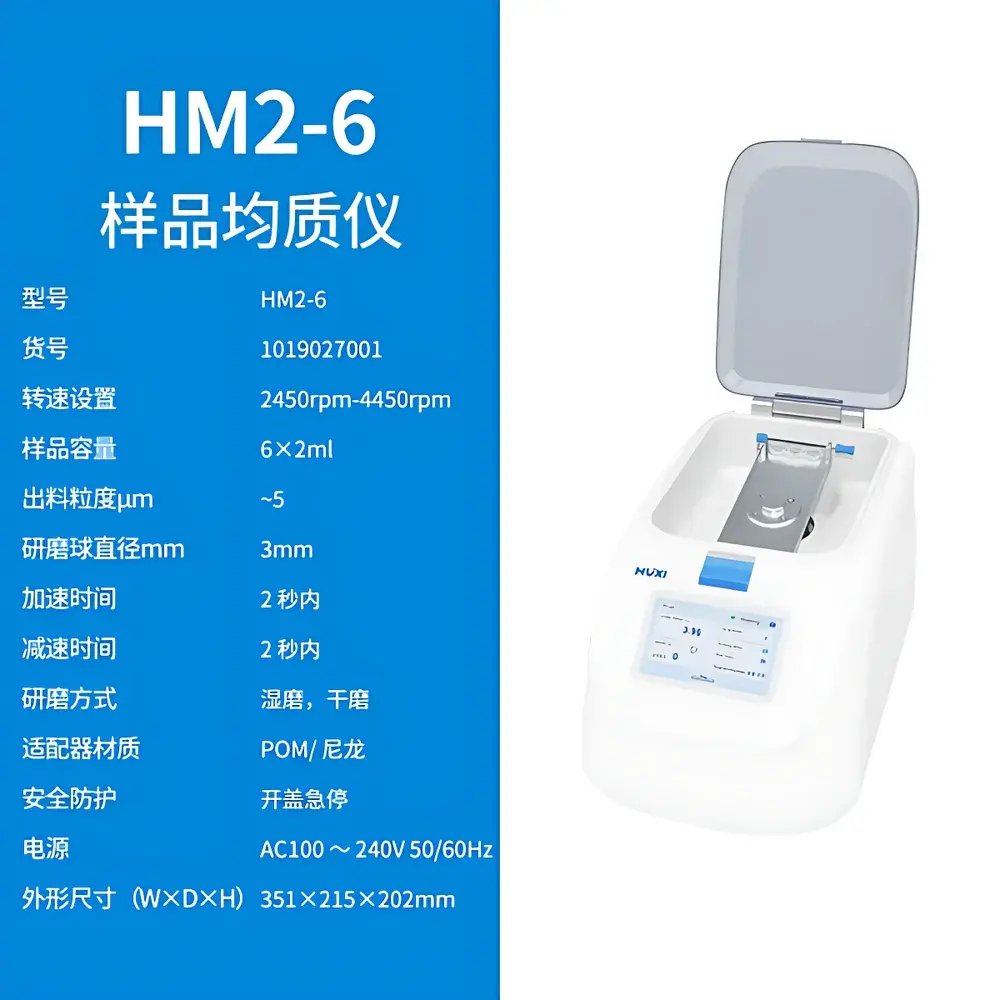
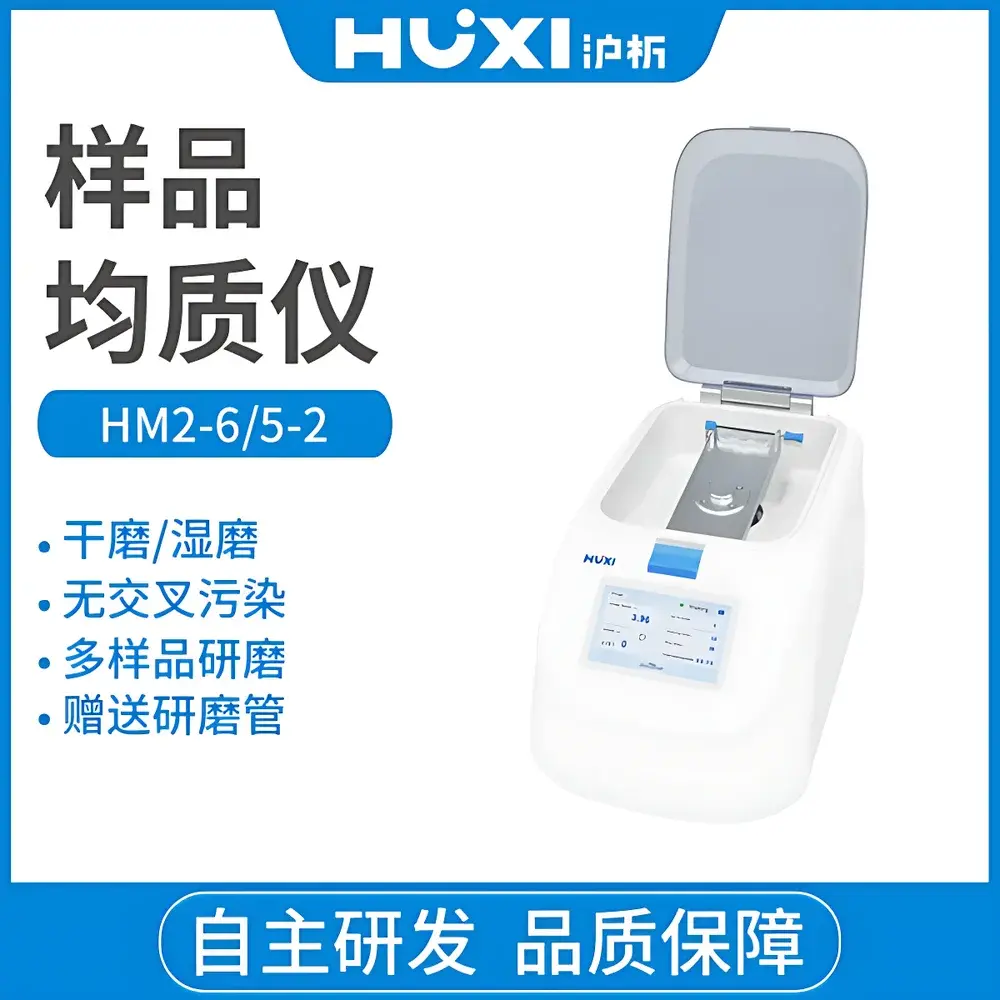
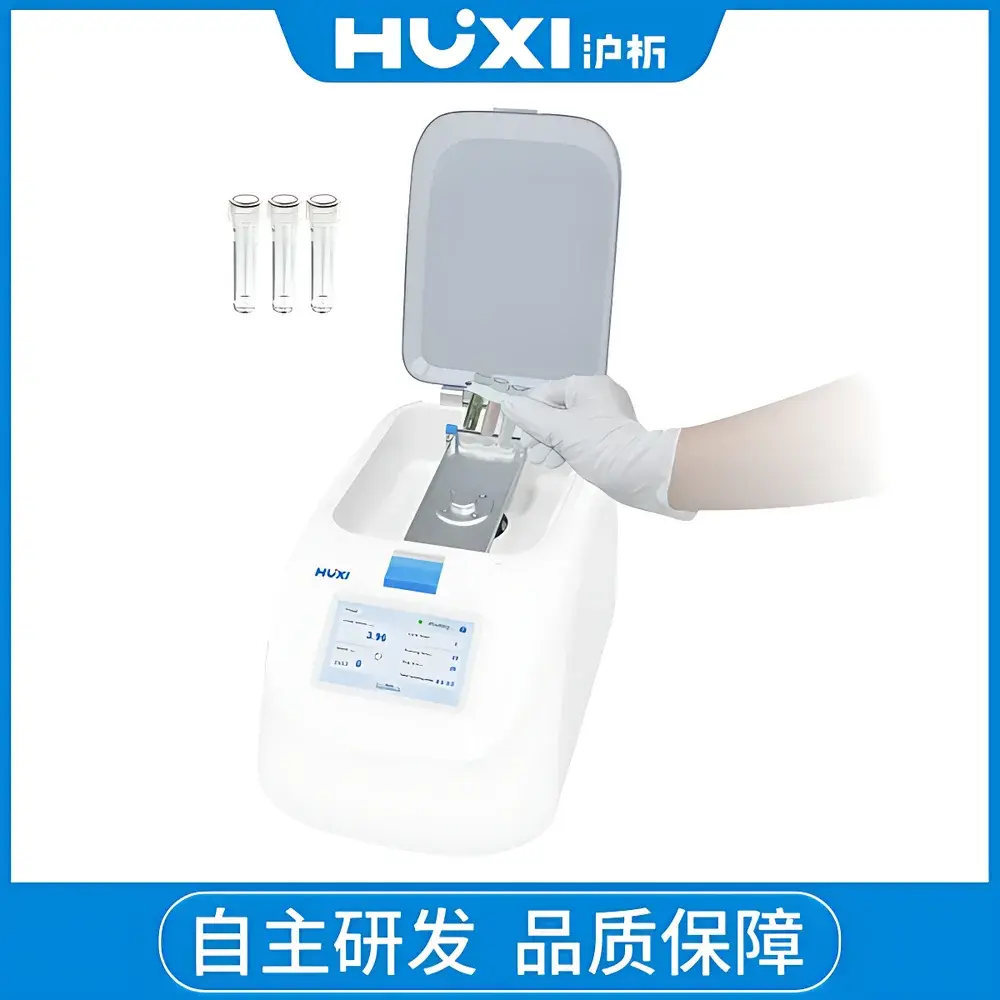
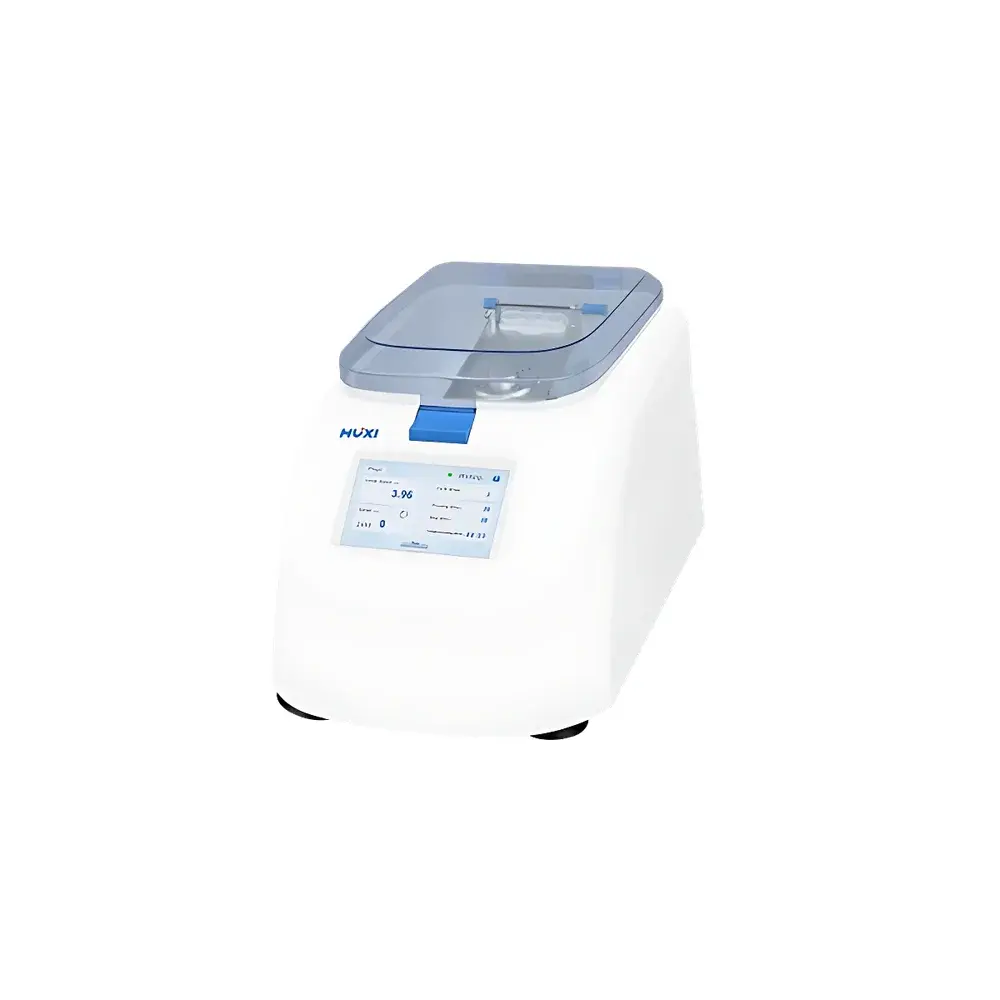
HUXI HM2-6 Dual-Position High-Speed Tissue Grinder
| Brand | HUXI |
|---|---|
| Origin | Shanghai, China |
| Manufacturer Type | Original Equipment Manufacturer (OEM) |
| Country of Origin | China |
| Model | HM2-6 |
| Pricing | Available Upon Request |
| Speed Range | 2450–4450 rpm |
| Sample Capacity | 6 × 2 mL tubes |
| Feed Size | Determined by adapter specifications |
| Final Particle Size | ~5 µm |
| Grinding Media Diameter | 0.1–5 mm |
| Acceleration Time | ≤2 s |
| Deceleration Time | ≤2 s |
| Grinding Modes | Wet & Dry |
| Adapter Material | POM or Nylon |
| Safety Features | Lid-Interlocked Emergency Stop |
| Power Supply | AC 100–240 V, 50/60 Hz |
| Dimensions (W×D×H) | 351 × 215 × 202 mm |
Overview
The HUXI HM2-6 Dual-Position High-Speed Tissue Grinder is an engineered solution for rapid, reproducible mechanical homogenization and cell disruption in pre-analytical sample preparation. Based on high-frequency planetary ball milling principles—where centrifugal, Coriolis, and impact forces synergistically fracture biological matrices—the instrument delivers consistent micron-scale particle reduction without thermal degradation. Its compact footprint and dual-tube configuration support parallel processing while maintaining strict operational control over kinetic energy input. Designed for laboratories requiring reliable, repeatable tissue lysis across diverse sample types—including fibrous muscle, frozen plant tissues, microbial pellets, and mineralized bone—the HM2-6 operates within a precisely regulated rotational envelope (2450–4450 rpm), enabling method transferability and protocol standardization under GLP-compliant workflows.
Key Features
- Dual-position operation allows simultaneous processing of two independent 2 mL tube sets, improving throughput without compromising inter-sample consistency.
- Brushless DC motor with enhanced torque delivery ensures stable speed maintenance under variable load conditions, supported by imported precision bearings for extended service life and minimal vibration.
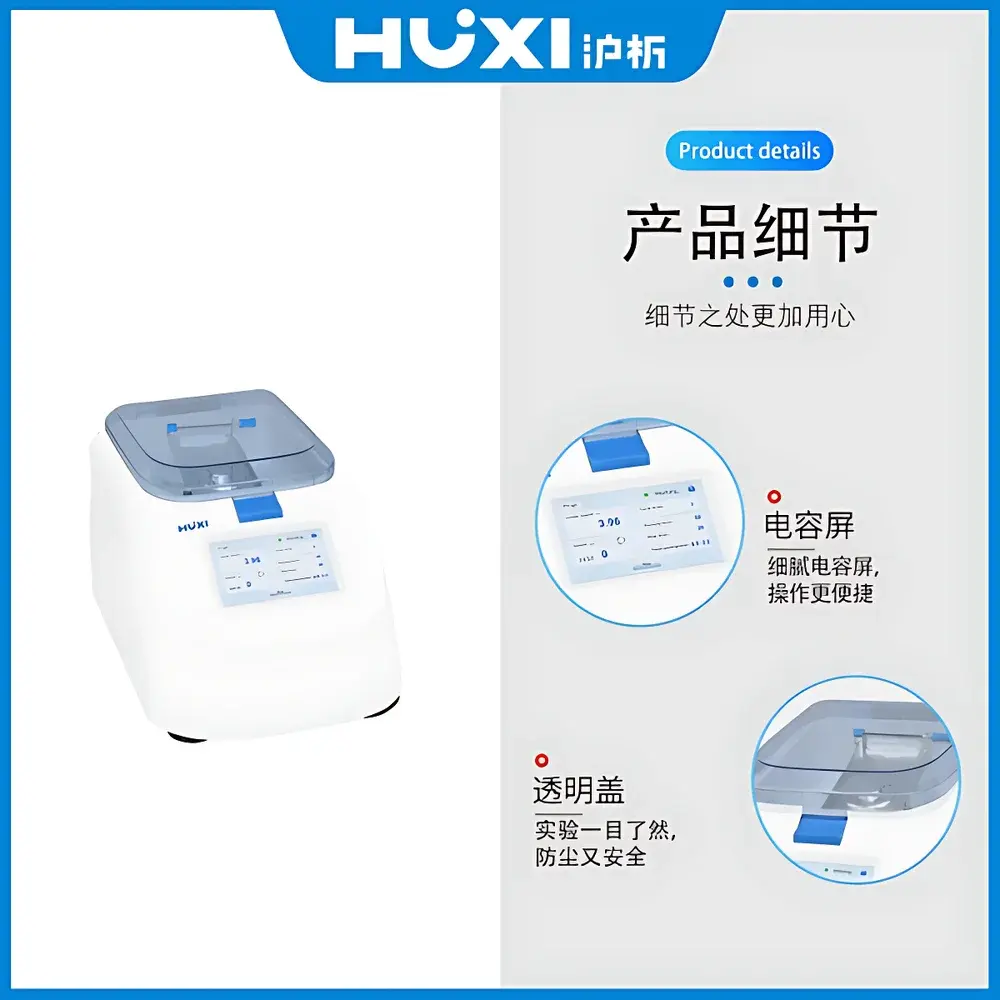
- Intuitive 5-inch capacitive touchscreen interface enables real-time parameter adjustment, program recall, and visual status feedback—including speed, time, direction, and safety lock status.
- Programmable memory stores up to 10 user-defined protocols with adjustable ramp-up/down profiles, dwell times, and directional reversal sequences for optimized lysis efficiency.
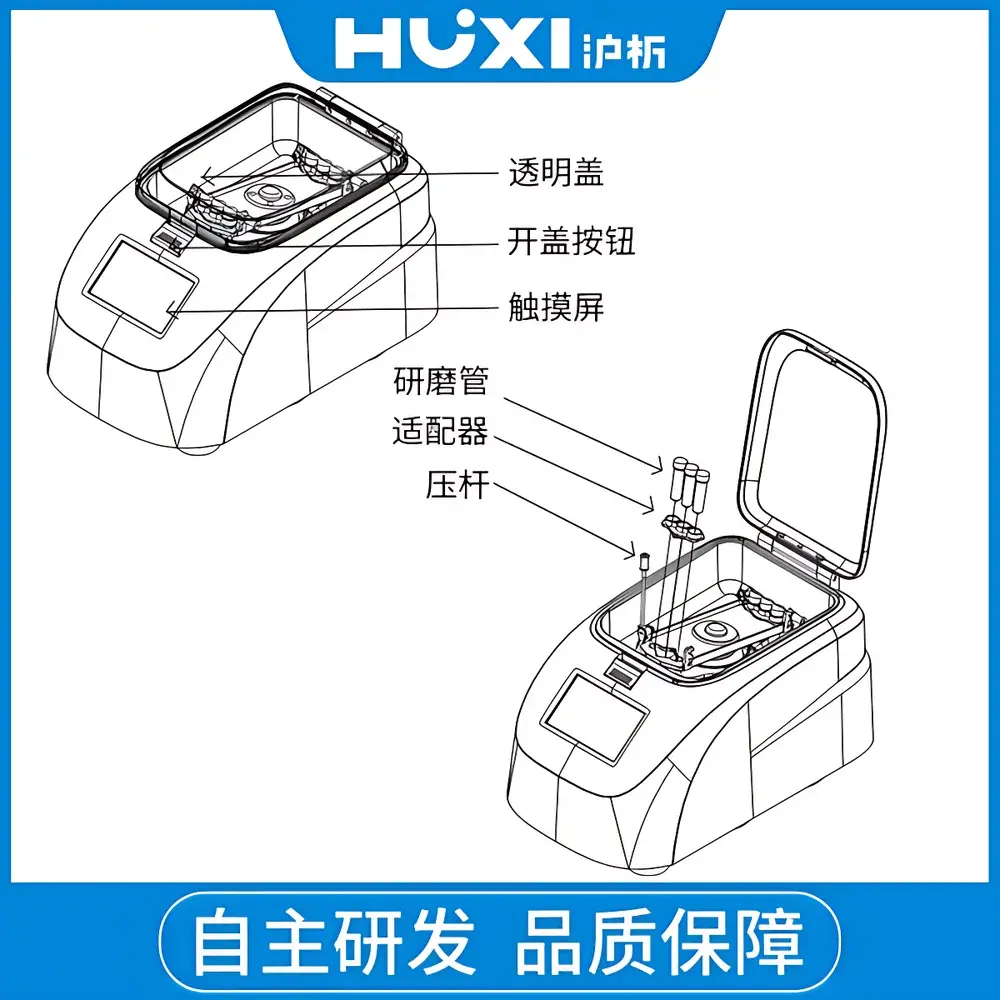
- Transparent polycarbonate lid with integrated microswitch provides immediate motor cutoff upon opening—meeting IEC 61000-6-2 electromagnetic compatibility and EN 61000-6-4 emission standards for laboratory environments.
- Optimized acceleration/deceleration kinetics (≤2 s each) minimize mechanical stress on sensitive biomolecules and reduce total cycle time per run.
Sample Compatibility & Compliance
The HM2-6 accommodates a broad spectrum of biological and inorganic samples through interchangeable adapters compatible with standard 2 mL microcentrifuge tubes (e.g., Eppendorf Safe-Lock™, Axygen PCR-02-C). Validated applications include mammalian tissue lysis (liver, spleen, brain), plant leaf homogenization, bacterial cell wall disruption (E. coli, Bacillus spp.), yeast extraction, and powdered pharmaceutical excipient blending. All grinding media—including stainless steel, zirconia, tungsten carbide, and ceramic beads—are selected per ISO 8502-3 guidelines for trace metal contamination control. The system complies with CE marking requirements (2014/30/EU EMC Directive and 2014/35/EU LVD Directive) and supports audit-ready documentation for ISO/IEC 17025-accredited testing labs.
Software & Data Management
While the HM2-6 operates as a standalone benchtop unit, its embedded firmware logs timestamped operational metadata—including start/stop time, actual speed profile, lid-open events, and error codes—for internal diagnostics and quality assurance review. Optional RS-232 or USB-to-serial interface enables integration with LIMS platforms or custom Python-based data acquisition scripts for automated reporting. All stored programs retain version-stamped creation dates and user identifiers, supporting 21 CFR Part 11-aligned electronic record integrity when paired with institutional digital signature policies.
Applications
- Routine RNA/DNA extraction from fibrous or lipid-rich tissues where conventional vortexing yields incomplete lysis.
- Preparation of homogeneous suspensions for elemental analysis (ICP-MS/OES) of mineralized biological samples.
- High-yield protein solubilization prior to SDS-PAGE or LC-MS/MS workflows.
- Particle size reduction of pharmaceutical active ingredients for dissolution rate studies per USP <724>.
- Homogenization of environmental soil or sediment cores for metagenomic DNA library construction.
FAQ
What types of grinding media are compatible with the HM2-6?
Stainless steel, zirconium oxide, tungsten carbide, and agate beads ranging from 0.1 mm to 5 mm diameter may be used, provided they conform to tube volume constraints and material compatibility requirements.
Can the HM2-6 be validated for GMP environments?
Yes—its deterministic speed control, programmable repeatability, and event-logged operation support IQ/OQ/PQ documentation; users must implement site-specific calibration and preventive maintenance schedules per ASTM E2500.
Is dry grinding recommended for heat-sensitive proteins?
Dry grinding is not advised for thermolabile targets; wet grinding with chilled lysis buffers or cryogenic cooling accessories is strongly recommended to maintain biomolecular integrity.
How often should the POM adapter be replaced?
Under typical usage (≤8 hrs/day, 5 days/week), POM adapters demonstrate ≥12 months of functional integrity; visual inspection for microcracking or deformation is advised before each use.
Does the HM2-6 meet noise emission limits for open-lab settings?
At maximum speed with loaded tubes, sound pressure level is ≤62 dB(A) at 1 m distance—within ISO 15710 occupational exposure thresholds for continuous operation.



