
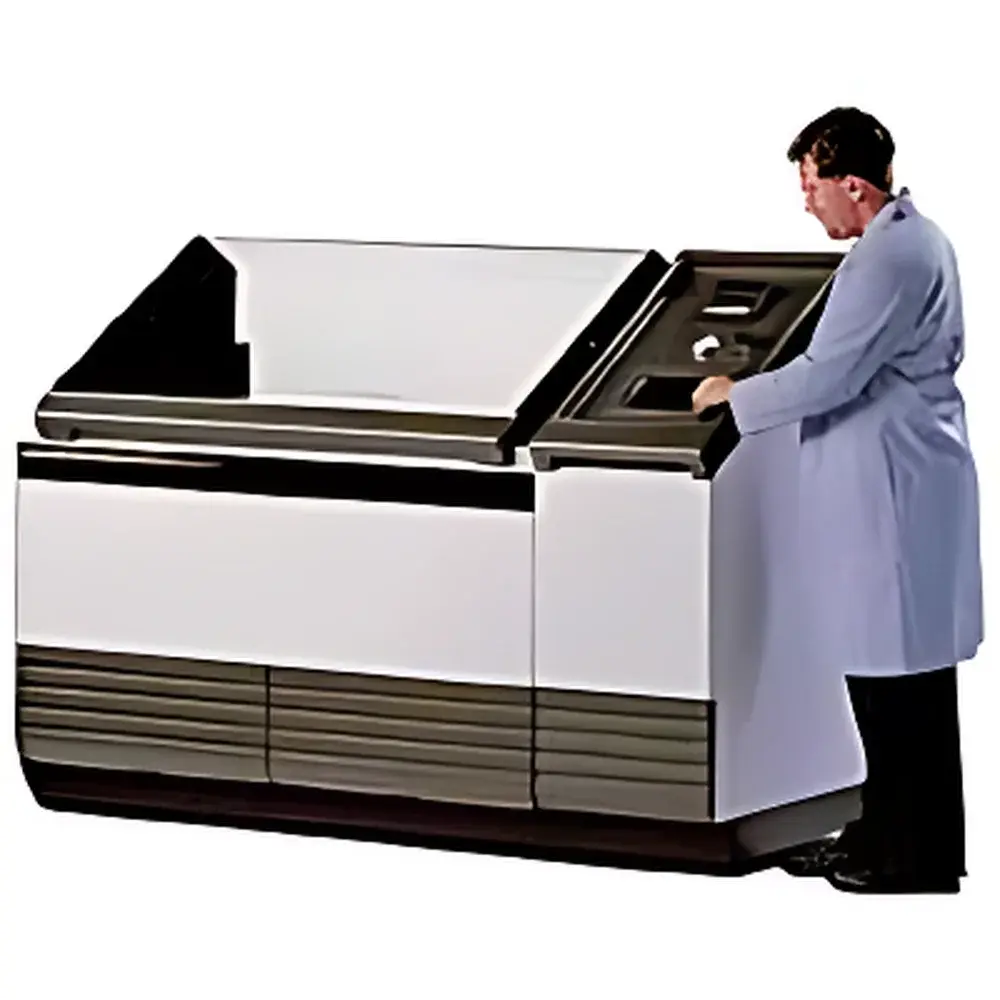
Atlas BCX Basic Cyclic Corrosion Test Chamber
| Brand | ATLAS |
|---|---|
| Origin | USA |
| Model | BCX |
| Temperature Range | Exposure Zone up to 55 °C (131 °F), High-Temp Option up to 71 °C (160 °F) |
| Chamber Construction | Fiberglass-Reinforced Polymer (FRP) with Gel-Coated Exposure Zone |
| Solution Reservoir Capacity | 35 US gal (132 L) |
| Spray System | Full-Fog Dispersion Tower or Full-Fog Dispersion II System |
| Humidification | Heated Air-Pressurized Fog Tower with Automatic Fill |
| Heating | Titanium Rod Heaters in Exposure Zone |
| Drainage | Front & Rear Wet-Bottom Drain Assemblies |
| Optional Features | Pneumatic Lid Assist (BCX9000/BCX11000), Transparent Polypropylene Lid (BCX9000), Ridge-Style Condensate-Resistant Lid Design |
Overview
The Atlas BCX Basic Cyclic Corrosion Test Chamber is an engineered environmental test system designed to replicate complex, multi-phase corrosive environments encountered in real-world service conditions. Unlike conventional salt spray chambers operating under static ASTM B117 conditions, the BCX platform supports programmable cyclic testing protocols—including salt fog, drying, humidity, and condensation phases—enabling accelerated evaluation of coating integrity, substrate corrosion resistance, and material degradation kinetics. Its core architecture adheres to internationally recognized corrosion testing frameworks such as ISO 14993, ASTM G85 Annex A5 (Prohesion), and SAE J2334, making it suitable for validation against automotive OEM specifications (e.g., GMW14872, Ford CETP 00.00-L-467), aerospace standards (e.g., Boeing D6-17487), and marine corrosion requirements (e.g., MIL-STD-810H Method 509.6). The chamber’s exposure zone is constructed from corrosion-resistant fiberglass-reinforced polymer (FRP) with a gel-coated interior surface, ensuring long-term chemical inertness against aggressive chloride-based solutions and acidic/alkaline test media.
Key Features
- Fiberglass-reinforced polymer (FRP) chamber body with chemically resistant gel-coated exposure zone for sustained durability under aggressive salt fog and acidified sulfate exposures
- 35-gallon (132 L) solution reservoir equipped with dual magnetic gasket sealing on transparent lid (standard on BCX2000–BCX4000; polypropylene lid on BCX9000)
- Ridge-style hinged lid design minimizes condensate drip onto test specimens during humidity and condensation phases
- Titanium rod heating elements integrated directly into the exposure zone ensure uniform thermal distribution and eliminate localized hot spots
- Heated, air-pressurized fog tower with automatic water-fill system maintains consistent relative humidity (RH) profiles and eliminates manual refilling during extended cycles
- Full-Fog Dispersion Tower or Full-Fog Dispersion II spray system enables precise, adjustable salt deposition rates across the entire exposure area
- Front- and rear-mounted wet-bottom drainage assemblies facilitate rapid solution removal and prevent pooling-induced edge effects
- Pneumatic lid assist mechanism (standard on BCX9000 and BCX11000 models) ensures safe, repeatable access during high-frequency test interventions
Sample Compatibility & Compliance
The BCX series accommodates a broad range of specimen geometries—from flat panels and fasteners to assembled subassemblies—across five standard configurations (BCX2000 to BCX11000), with internal exposure zones ranging from 0.59 m³ to 3.22 m³. All models support standardized test racks and customizable fixture mounting options compatible with ISO 4622, ASTM D609, and ISO 1514 sample orientation guidelines. The system meets structural and operational requirements for GLP-compliant laboratories and supports audit-ready documentation when paired with validated control software. It is compatible with regulatory workflows requiring traceability per FDA 21 CFR Part 11 (when used with compliant software), and its thermal and spray performance is verifiable per ASTM E744 and ISO/IEC 17025 calibration protocols.
Software & Data Management
While the BCX Basic configuration operates via intuitive front-panel controls with pre-programmed cycle templates, optional integration with Atlas’ C-MAP™ software enables full-cycle scripting, real-time parameter logging (temperature, RH, spray duration), and automated report generation in PDF or CSV format. C-MAP™ supports user-defined alarm thresholds, electronic signature capture, and secure data export with time-stamped audit trails—critical for quality assurance teams operating under IATF 16949 or AS9100 frameworks. All firmware updates are delivered through ATLAS’ secure customer portal, ensuring ongoing alignment with evolving industry test method revisions.
Applications
The BCX chamber serves critical roles across multiple industrial sectors: automotive Tier 1 suppliers use it for validating e-coat and Zn-Ni plating performance per GMW14872; aerospace manufacturers employ it for evaluating primer adhesion and fastener corrosion resistance under cyclic humidity-salt-dry sequences per Boeing D6-17487; marine equipment developers rely on its reproducible condensation control to assess stainless steel passivation and aluminum alloy pitting behavior; and R&D labs utilize its modular scalability to screen novel anti-corrosion coatings, conduct comparative lifetime modeling, and support failure analysis root-cause investigations.
FAQ
What standards does the BCX chamber support?
It is configured to execute tests aligned with ASTM G85 Annex A1–A5, ISO 14993, SAE J2334, and OEM-specific protocols including Ford CETP 00.00-L-467 and VW PV1210.
Is temperature uniformity validated per ASTM E744?
Yes—each BCX unit undergoes factory temperature mapping per ASTM E744 Section 7.3, with certification reports available upon request.
Can the BCX be integrated into a laboratory LIMS or MES environment?
When equipped with C-MAP™ and optional Ethernet/IP interface, the BCX supports OPC UA data exchange and structured API endpoints for seamless LIMS/MES integration.
What maintenance intervals are recommended for the fog tower and heaters?
Titanium heaters require no scheduled replacement; fog tower nozzles should be inspected quarterly and cleaned with deionized water to prevent crystallization-induced clogging.
Does the BCX meet CE or UKCA marking requirements?
All BCX models shipped to EEA and UK markets carry CE/UKCA marking, supported by full EU Declaration of Conformity referencing EN 61000-6-2 (EMC) and EN 61000-6-4 (Emission) directives.



