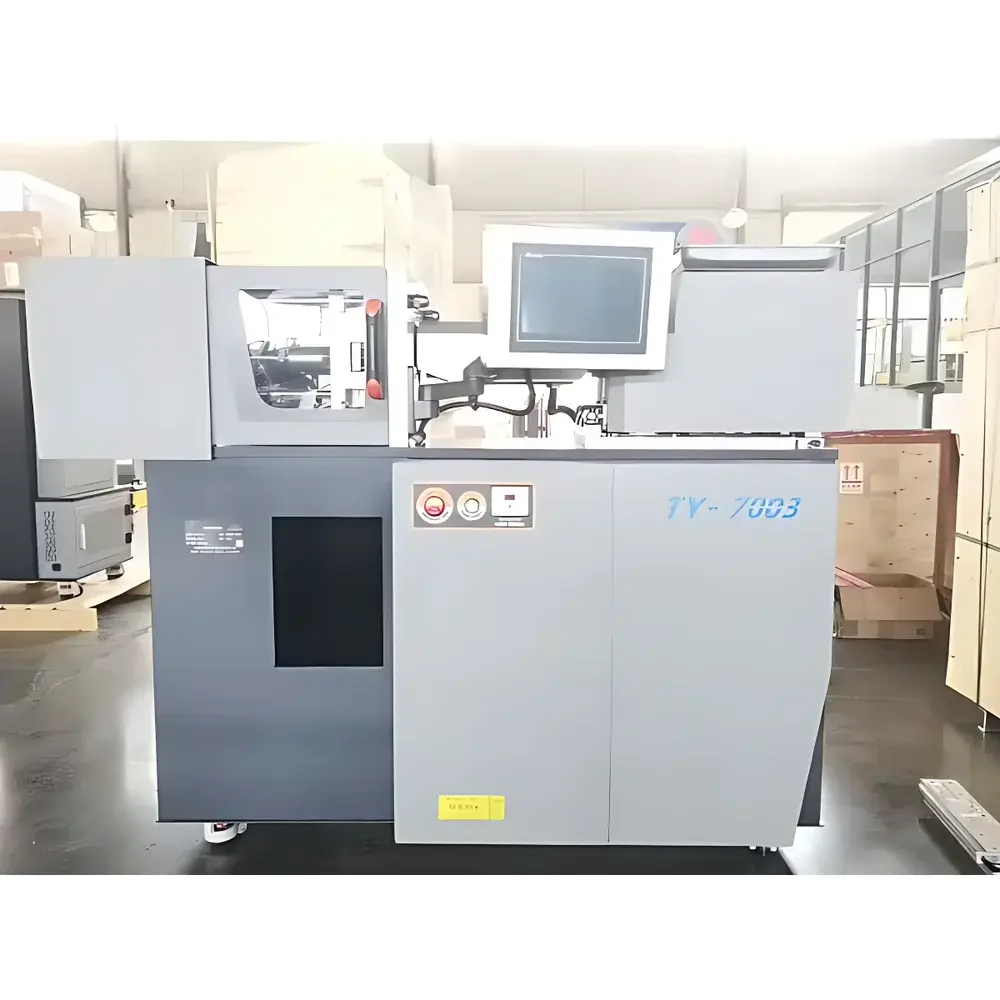
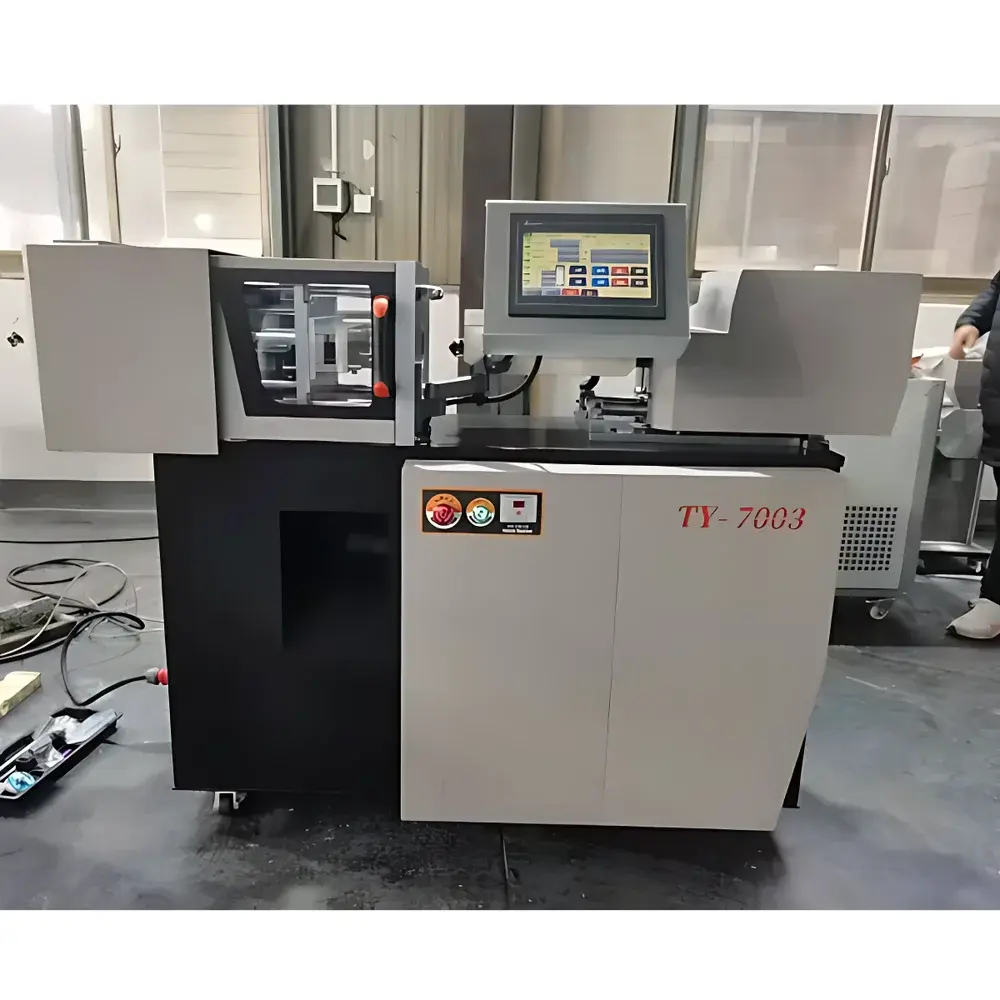
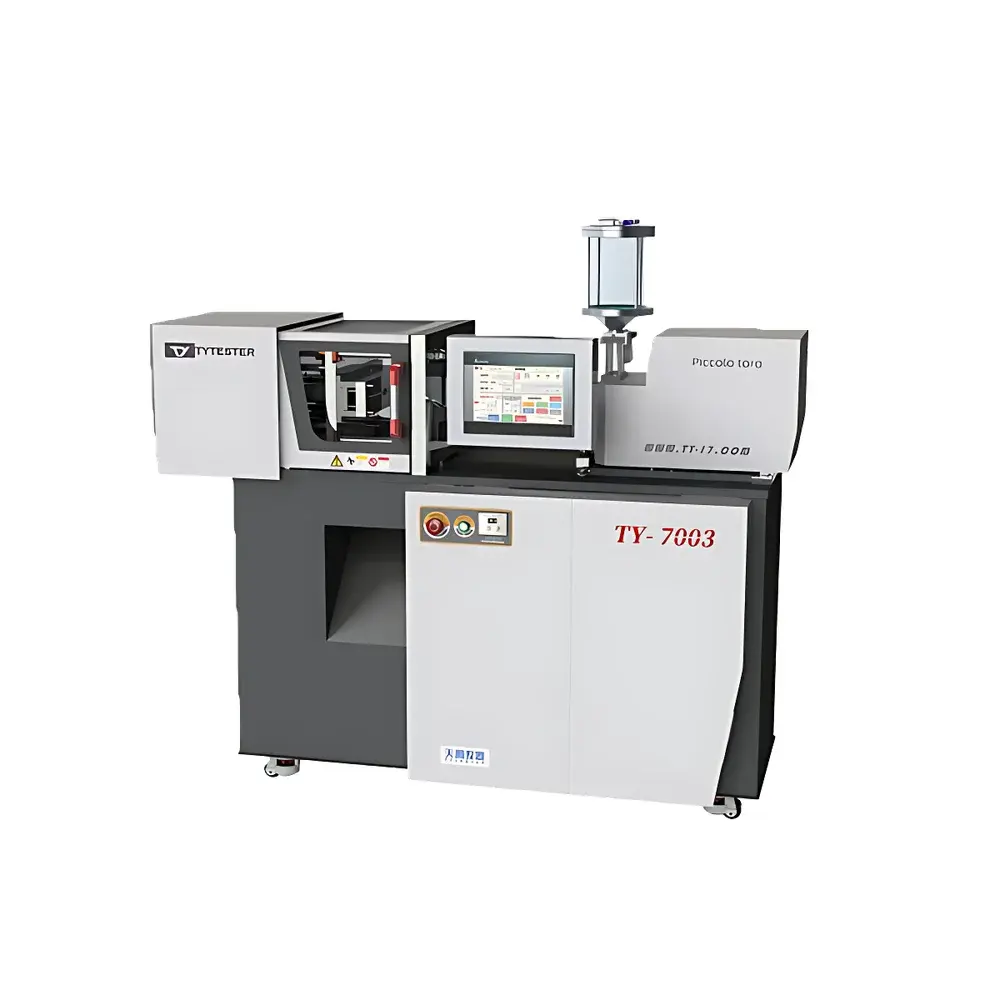
TianYuan TY-7003H Precision Micro Hydraulic Injection Molding Machine
| Brand | TianYuan |
|---|---|
| Origin | Jiangsu, China |
| Manufacturer Type | Direct Manufacturer |
| Country of Origin | China |
| Model | TY-7003H |
| Screw Diameter | 20 mm |
| L/D Ratio | 20:1 |
| Clamping Force | 150 kN |
| Maximum Shot Volume | 31 cm³ |
| Injection Rate | 0.05–5.3 cm³/s (adjustable) |
| Machine Dimensions | 1766 × 600 × 1226 mm |
| Temperature Control Accuracy | ±0.5 °C |
| Barrel Zone Temp Range | Ambient to 360 °C (3-zone) |
| Mold Heating Option | Ambient to 150 °C |
| Power Supply | 3-phase 5-wire AC 380 V ±10%, 50/60 Hz, 5.5 kW |
| Weight | 680 kg (net) |
Overview
The TianYuan TY-7003H Precision Micro Hydraulic Injection Molding Machine is an engineering-grade laboratory-scale injection system designed for controlled thermoplastic processing under research and development conditions. Unlike production-line hydraulic machines, the TY-7003H integrates a single-screw plasticization unit with precise hydraulic actuation, enabling reproducible melt homogenization, metered dosing, and high-fidelity mold filling—critical for material formulation validation, small-batch prototyping, and academic polymer processing studies. Its core architecture follows classical screw-based injection principles: solid feedstock is conveyed, compressed, melted, and homogenized within a heated barrel via rotational shear and conductive heating; molten polymer is then hydraulically injected into precision molds at controlled pressure, velocity, and position profiles. The machine operates within defined thermal, mechanical, and temporal boundaries compliant with ASTM D3641 (Standard Test Method for Melt Flow Rates of Thermoplastics) and ISO 1133-1, supporting method development aligned with GLP-compliant lab workflows.
Key Features
- Compact hydraulic drive system engineered for stable clamping force (0–150 kN) and repeatable injection pressure (0–137 MPa), minimizing cycle-to-cycle variation in part density and dimensional stability.
- Three-zone independently controlled barrel heating (ambient to 360 °C) with ±0.5 °C steady-state accuracy—essential for processing engineering resins (e.g., PA66, PEEK precursors) and biodegradable polymers (PLA, PHA) requiring narrow thermal windows.
- PLC-based HMI with color touchscreen interface supports multi-stage injection profiling: up to three distinct velocity/pressure/position segments per shot, programmable via time, position, or pressure triggers.
- Dual-safety architecture: mechanical interlock on safety door + electronic emergency stop circuit meeting IEC 61508 SIL2 requirements; prevents mold access during active clamping or injection phases.
- Single-screw plasticization (20 mm Ø, 20:1 L/D ratio) ensures superior melt uniformity over plunger-type systems—reducing thermal degradation risk and improving dispersion of fillers or additives in R&D compounding trials.
- Modular mold mounting platform (300 × 226 mm tie-bar spacing, max mold size 360 × 90 × 72 mm) accommodates ASTM D638 Type I tensile bars, ISO 527 specimens, and custom micro-geometries without retooling.
Sample Compatibility & Compliance
The TY-7003H processes standard thermoplastic granules and pellets—including PP, HDPE, ABS, TPU, PA6/66, and PLA—with validated performance across melt flow index (MFI) ranges from 0.5 to 30 g/10 min (ASTM D1238). It supports solvent-free, low-volatility formulations and is compatible with masterbatch dilution studies. All electrical components comply with CE marking directives (2014/30/EU EMC, 2014/35/EU LVD); hydraulic system design conforms to ISO 4413 for fluid power systems. For regulated environments, audit trails (via optional data logging module) support 21 CFR Part 11 readiness when paired with validated software—enabling traceable parameter records for QC/QA documentation in GMP-aligned polymer labs.
Software & Data Management
The embedded PLC firmware logs real-time process variables—including barrel zone temperatures, injection pressure curves, screw position vs. time, and clamp tonnage—into timestamped CSV files exportable via USB. Optional Ethernet connectivity enables integration with LabVIEW or MATLAB for closed-loop control experiments. All setpoints and recipe configurations are password-protected and version-stamped. System diagnostics include heater fault detection, oil temperature monitoring, and torque limit alerts—preventing unplanned downtime during extended test campaigns. Raw data exports are structured for direct import into statistical process control (SPC) platforms compliant with ISO 9001:2015 Annex A.3.
Applications
- R&D of novel polymer blends and nanocomposites requiring sub-gram sample quantities for rheological, mechanical, or thermal characterization.
- Validation of injection molding parameters prior to scale-up on industrial machines—reducing trial-and-error on production lines.
- Academic instruction in polymer processing engineering, including hands-on training in melt viscosity estimation, gate freeze-off timing, and weld line formation analysis.
- Regulatory sample preparation for ISO 10993 biocompatibility testing (e.g., molded cytotoxicity specimens) under controlled thermal history.
- Micro-molding feasibility studies for medical device components (e.g., drug delivery reservoirs, microfluidic housings) where cavity fidelity and material integrity are critical.
FAQ
What materials are incompatible with the TY-7003H?
Highly abrasive filled compounds (e.g., >30 wt% glass fiber or metal powder), reactive monomers (e.g., uncured epoxy resins), and thermosets requiring crosslinking under pressure are not supported. Processing such materials risks irreversible screw wear or hydraulic contamination.
Is water cooling required for continuous operation?
Water cooling is optional but recommended for extended runs (>4 hrs) or high-melt-temperature resins (e.g., PPS, PEEK derivatives) to maintain hydraulic oil temperature below 60 °C and ensure long-term pump reliability.
Can the machine be integrated into an automated lab environment?
Yes—the RS-485 serial port and optional Ethernet interface support Modbus RTU/TCP communication for synchronization with robotic sample handlers, environmental chambers, or central LIMS databases.
What maintenance intervals are specified for hydraulic components?
Hydraulic oil (ISO VG 46 anti-wear type) must be replaced every 2,000 operating hours or annually, whichever occurs first; filter elements require inspection every 500 hours. Full service documentation adheres to ISO 15663 guidelines for equipment lifecycle management.
Does the system support ASTM/ISO-compliant specimen molding out-of-the-box?
Yes—the standard mold configuration produces ASTM D638 Type I tensile bars (10 × 150 × 4 mm) and ISO 527-2 Type 1A specimens. Custom mold inserts can be fabricated to ISO 178, ISO 180, or UL 94 geometries using the provided mounting specifications.