
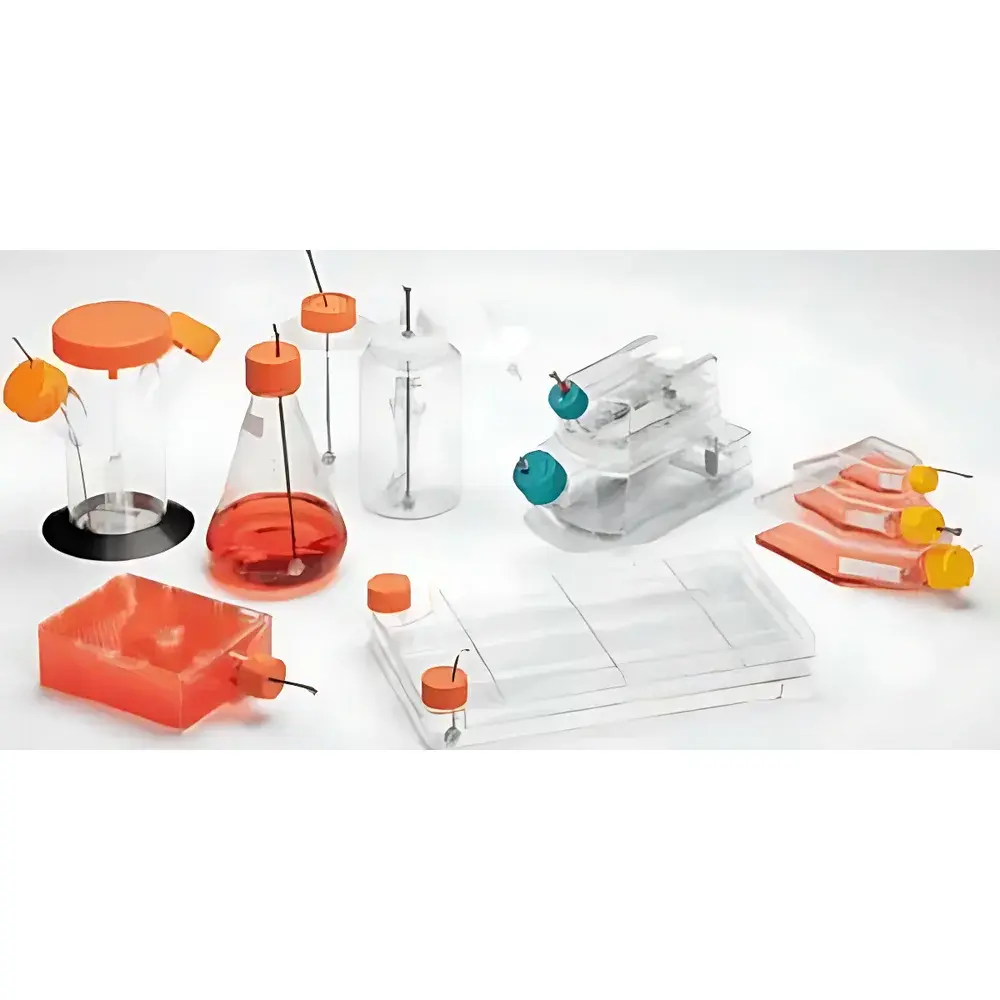
CITSensBio Glucose and Lactate Analyzer – In-Situ, Online Monitoring System
| Origin | Switzerland |
|---|---|
| Manufacturer Type | Authorized Distributor |
| Origin Category | Imported |
| Model | CITSensBio |
| Price Range | USD 6,800 – 13,600 (FOB) |
| Temperature Operating Range | 4–40 °C |
| Reaction Volume Compatibility | 50 mL – 10 L |
| Number of Bioreactor Vessels Supported | Single-vessel real-time monitoring (modular expansion to multi-vessel via ZOMOFI® gateway) |
| Construction Material | Medical-grade PEEK housing, platinum-iridium sensing elements, sterilizable silicone O-rings |
| Sterilization Method | Gamma irradiation (25–35 kGy), validated for ISO 11137 compliance |
Overview
The CITSensBio Glucose and Lactate Analyzer is a purpose-engineered, in-situ electrochemical monitoring system designed for continuous, non-invasive quantification of glucose and lactate concentrations in mammalian, insect, or microbial cell culture processes. Unlike conventional off-line HPLC or enzymatic assay methods—each requiring manual sampling, dilution, centrifugation, and calibration—the CITSensBio platform integrates miniaturized amperometric biosensors directly into standard culture vessel lids. These sensors operate on the principle of enzyme-coupled oxidation: glucose oxidase and lactate oxidase immobilized on Pt/Ir working electrodes catalyze substrate-specific reactions, generating measurable current proportional to analyte concentration (nA range). The system delivers true real-time kinetics—sampling at user-defined intervals from 10 seconds to 60 minutes—with no disruption to sterility, pH, dissolved oxygen, or shear environment. Developed at ETH Zürich and commercialized by C-CIT AG (Wädenswil, Switzerland), it meets the functional requirements of process analytical technology (PAT) frameworks defined in ICH Q5, Q8, and FDA Guidance for Industry on PAT.
Key Features
- True in-situ measurement: Sensors mounted directly on standard culture bottle caps (e.g., Corning, Eppendorf, Sartorius formats); no tubing, flow cells, or external loops required
- Gamma-sterilized, ready-to-use sensor modules: Pre-calibrated, individually packaged, and validated for ISO 11137–compliant terminal sterilization (25–35 kGy)
- Wireless data transmission: CITSensBio Beamer transmitter enables secure, low-latency telemetry via 2.4 GHz ISM band; supports up to 10 m line-of-sight range in laboratory environments
- ZOMOFI® gateway integration: RS232 or Ethernet (TCP/IP) output enables direct connection to SCADA, MES, or LIMS platforms; supports Modbus RTU/TCP protocols
- Temperature-compensated signal processing: Onboard thermistor (±0.2 °C accuracy) corrects for kinetic drift across 4–40 °C operating range
- Low maintenance architecture: Sensor lifetime ≥ 14 days under continuous operation in fed-batch CHO cultures; no reagent consumption or liquid waste generation
Sample Compatibility & Compliance
The CITSensBio system is compatible with single-use and stainless-steel bioreactors ranging from 50 mL shake flasks to 10 L stirred-tank reactors. It supports common vessel geometries (cylindrical, conical, baffled) and standard port configurations (e.g., 1/4″ NPT, DIN 13, ISO-KF). All wetted materials comply with USP Class VI and EU Pharmacopoeia 3.1.9 for plastic components. Sensor electronics conform to IEC 61000-6-3 (EMC emission) and IEC 61000-6-2 (immunity) standards. Data integrity adheres to ALCOA+ principles: audit trails, electronic signatures, and configurable user roles are enforced through optional ZOMOFI® software modules compliant with FDA 21 CFR Part 11 and EU Annex 11 requirements.
Software & Data Management
Data acquisition and visualization are managed via the ZOMOFI® Control Suite—a Windows-based application supporting real-time graphing, alarm thresholds (high/low, rate-of-change), and automated export to CSV, Excel, or SQL databases. The suite includes built-in calibration wizards for two-point (zero/span) and multi-point validation per ASTM D6920-20. Raw sensor currents, temperature-corrected concentrations, and diagnostic flags (e.g., electrode fouling index, signal noise ratio) are logged with microsecond timestamps. For GMP environments, optional 21 CFR Part 11 add-ons provide role-based access control, electronic signature workflows, and immutable audit logs traceable to operator ID, timestamp, and action type.
Applications
- Biopharmaceutical upstream process development: Real-time tracking of glycolytic flux during monoclonal antibody production in CHO cells
- Stem cell expansion optimization: Correlation of lactate accumulation with metabolic shift from oxidative phosphorylation to aerobic glycolysis
- Microbial fermentation control: Feedback-triggered feeding strategies in E. coli or Pichia pastoris cultures based on glucose depletion kinetics
- Academic bioreactor studies: Long-term stability assessment of metabolic parameters under hypoxic or hyperosmotic stress conditions
- Regulatory filing support: Generation of continuous, high-resolution process data for comparability studies and tech transfer documentation
FAQ
Can CITSensBio measure both glucose and lactate simultaneously in the same culture?
Yes—dual-sensor cap configurations provide concurrent, time-synchronized readings without cross-interference due to enzyme specificity and spatial separation of sensing layers.
Is recalibration required between batches?
A full two-point calibration is recommended before each new culture run; however, zero-point verification suffices for short-term reuse within the same bioreactor campaign.
Does the system support integration with existing bioreactor control systems?
Yes—via ZOMOFI® gateway’s Modbus TCP interface, enabling bidirectional communication with leading controllers (e.g., Sartorius BIOSTAT®, Applikon Easy500, Eppendorf BioFlo).
What is the minimum detectable concentration for lactate?
The limit of detection is 0.1 mmol/L (9 mg/dL) in standard DMEM/F12 media, with a linear dynamic range of 0.1–20 mmol/L (9–180 mg/dL).
How is sensor drift compensated during extended runs?
Drift correction employs a combination of onboard temperature compensation, periodic auto-zero cycles (user-configurable), and post-acquisition baseline normalization using ZOMOFI®’s advanced signal processing algorithms.




