
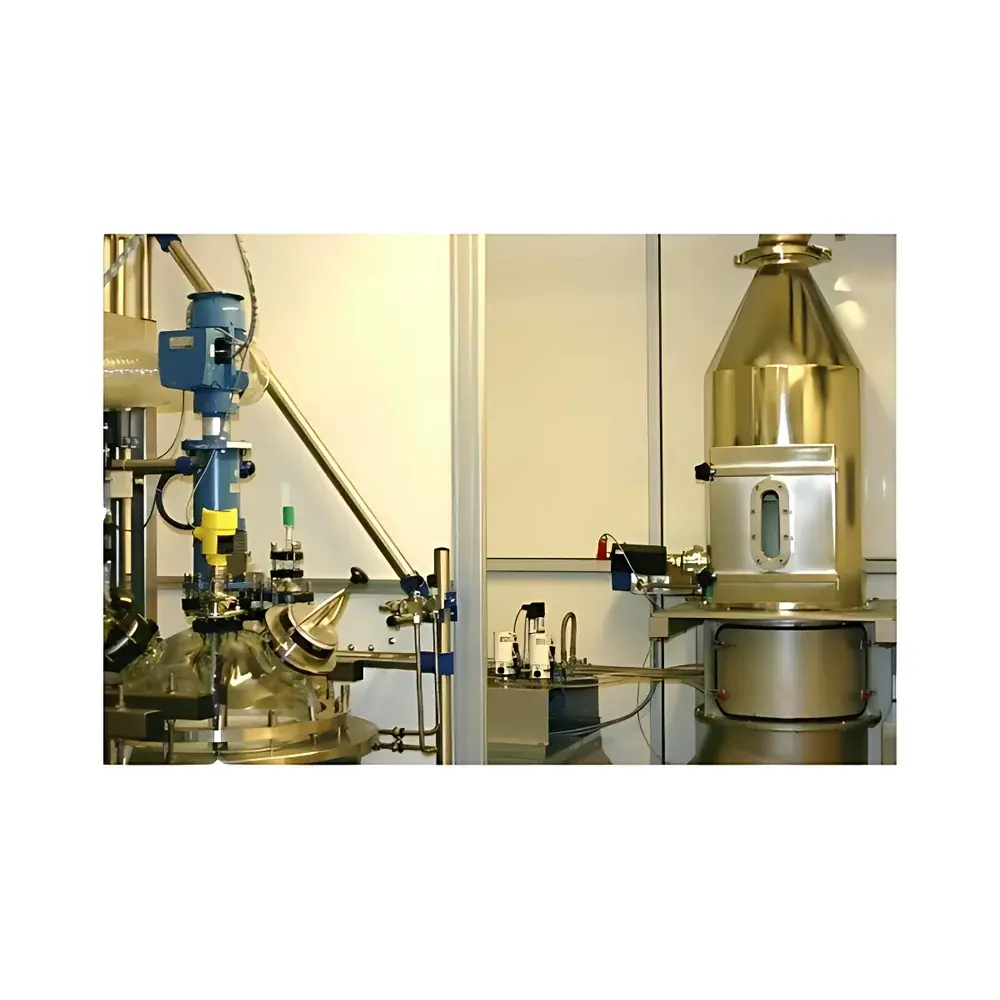
ParteQ NPS-20 Desktop Flame Spray Pyrolysis (FSP) Nanoparticle Synthesis System
| Origin | Germany |
|---|---|
| Manufacturer Type | Authorized Distributor |
| Origin Category | Imported |
| Model | NPS-20 |
| Pricing | Available Upon Request |
Overview
The ParteQ NPS-20 is a benchtop-scale Flame Spray Pyrolysis (FSP) nanoparticle synthesis system engineered for precise, reproducible, and scalable production of metal and metal oxide nanomaterials. FSP is a gas-phase, continuous-flow process in which liquid metal-organic precursors are atomized into fine droplets, combusted in a flame (typically using oxygen and fuel gases such as hydrogen or propane), and rapidly converted into crystalline nanoparticles via thermolysis and oxidation. This method enables tight control over particle size (typically 5–100 nm), crystallinity, phase purity, and composition—critical parameters for catalysis, battery materials, conductive inks, and biomedical applications. Unlike sol-gel or precipitation routes, FSP avoids surfactants, solvents, or post-synthesis calcination, yielding high-purity, agglomerate-free, and surface-clean nanoparticles directly from the reactor. The NPS-20 serves as both a research platform for formulation development and a technology-transfer bridge to pilot- and industrial-scale FSP systems (S-, M-, and L-Series), ensuring seamless scalability from milligram batches to multi-kilogram continuous output.
Key Features
- Benchtop footprint (≤0.8 m²) with integrated flame spray pyrolysis reactor, precursor delivery module (peristaltic or syringe pump), thermal management, and primary nanoparticle collection via bag filter or cyclone
- Modular design supporting rapid reconfiguration for different precursor chemistries (e.g., Fe, Cu, Ti, Al, Si, Zn, Sn, and their oxides, nitrides, or phosphides)
- Real-time flame monitoring via optical pyrometry and adjustable combustion stoichiometry (O₂/fuel ratio) to tune particle crystallinity and oxidation state
- Integrated safety architecture: dual-stage inlet/outlet HEPA filtration (EN 1822 H13), explosion-proof enclosure, automated flame shutdown on pressure or temperature deviation, and gas leak detection
- Compliant with DIN EN ISO 14001 environmental management and DIN EN 61000-6-4 electromagnetic compatibility standards
- Designed for GLP-compliant operation: audit-trail-capable data logging (timestamped T, P, flow rates, flame intensity), user-access level controls, and electronic signature support
Sample Compatibility & Compliance
The NPS-20 accommodates a broad spectrum of volatile or low-viscosity metal-organic precursors—including metal acetylacetonates, alkoxides, carboxylates, and nitrates—dissolved in alcohols, ketones, or hydrocarbons. It supports synthesis of single-component nanoparticles (e.g., TiO₂ anatase/rutile, SiO₂, Fe₃O₄) as well as binary (e.g., NiFe₂O₄, CoMn₂O₄) and ternary (e.g., LiCoO₂, NMC811) compositions. All wetted components are constructed from 316L stainless steel or fused silica to prevent contamination and ensure chemical resistance. The system meets CE marking requirements and conforms to EU Machinery Directive 2006/42/EC and ATEX 2014/34/EU for equipment used in potentially explosive atmospheres (Zone 1/21). Documentation includes full risk assessment, EC Declaration of Conformity, and traceable calibration certificates for all critical sensors.
Software & Data Management
The NPS-20 operates under ParteQ’s proprietary FSP Control Suite v3.2—a Windows-based application with real-time visualization of 12+ process variables (precursor flow rate, O₂/H₂ mass flows, reactor temperature, flame luminosity, filter differential pressure, etc.). Data is stored in encrypted SQLite databases compliant with FDA 21 CFR Part 11 requirements, including electronic signatures, audit trails, and role-based access control (operator, engineer, administrator). Export options include CSV, PDF reports, and direct integration with LIMS via OPC UA. Batch records include metadata on precursor lot numbers, environmental conditions (lab T/RH), and final product yield—enabling full traceability from synthesis to characterization.
Applications
- Catalyst development: high-surface-area Pt/CeO₂, Pd/Al₂O₃, and perovskite-type oxides for automotive exhaust or PEM fuel cells
- Energy storage: phase-pure LiFePO₄, Ni-rich NMC, and SnO₂ anodes with controlled primary particle size distribution
- Functional coatings: UV-blocking ZnO, IR-reflective ITO, and antimicrobial Ag/TiO₂ nanocomposites
- Advanced ceramics: sintering-active Y₂O₃-stabilized ZrO₂ and α-Al₂O₃ powders with narrow PSD (D₅₀ < 30 nm, span < 1.5)
- Regulatory preclinical material supply: GMP-aligned synthesis of iron oxide MRI contrast agents (USP )
FAQ
What precursor types are compatible with the NPS-20?
Metal-organic compounds with vapor pressures >0.1 mbar at 25°C and thermal stability up to ~300°C—such as metal acetylacetonates, alkoxides, and nitrates dissolved in ethanol, methanol, or xylene.
Can the NPS-20 produce doped or core-shell nanoparticles?
Yes—via co-injection of multiple precursor streams or sequential injection with intermediate quenching; core-shell structures require precise residence time control and staged flame zones (available as optional upgrade).
Is operator training and installation support included?
Yes—ParteQ provides on-site commissioning, SOP development, and two-day hands-on training covering safe startup/shutdown, routine maintenance, and troubleshooting.
How does the NPS-20 scale to production?
Process parameters (flame geometry, residence time, quench rate) established on the NPS-20 directly inform S-Series (50 g/h), M-Series (0.5–2 kg/h), and L-Series (1–5+ kg/h) systems—ensuring identical crystal structure, surface chemistry, and dispersion behavior across scales.
Does the system comply with ISO/IEC 17025 for accredited testing labs?
While the NPS-20 itself is not a measurement instrument, its documented process repeatability (RSD < 3% for D₅₀ and specific surface area across 10 consecutive batches) supports ISO/IEC 17025 method validation when paired with certified characterization tools (e.g., BET, XRD, TEM).




