
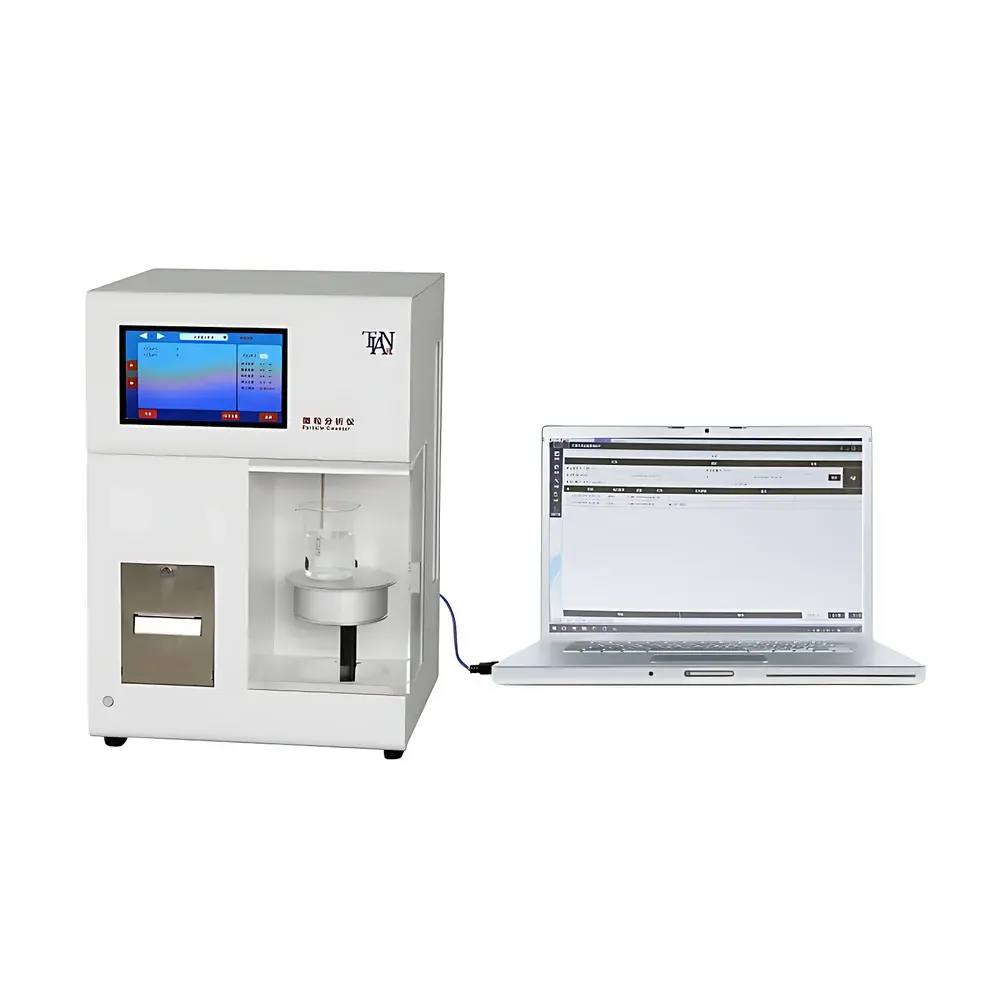
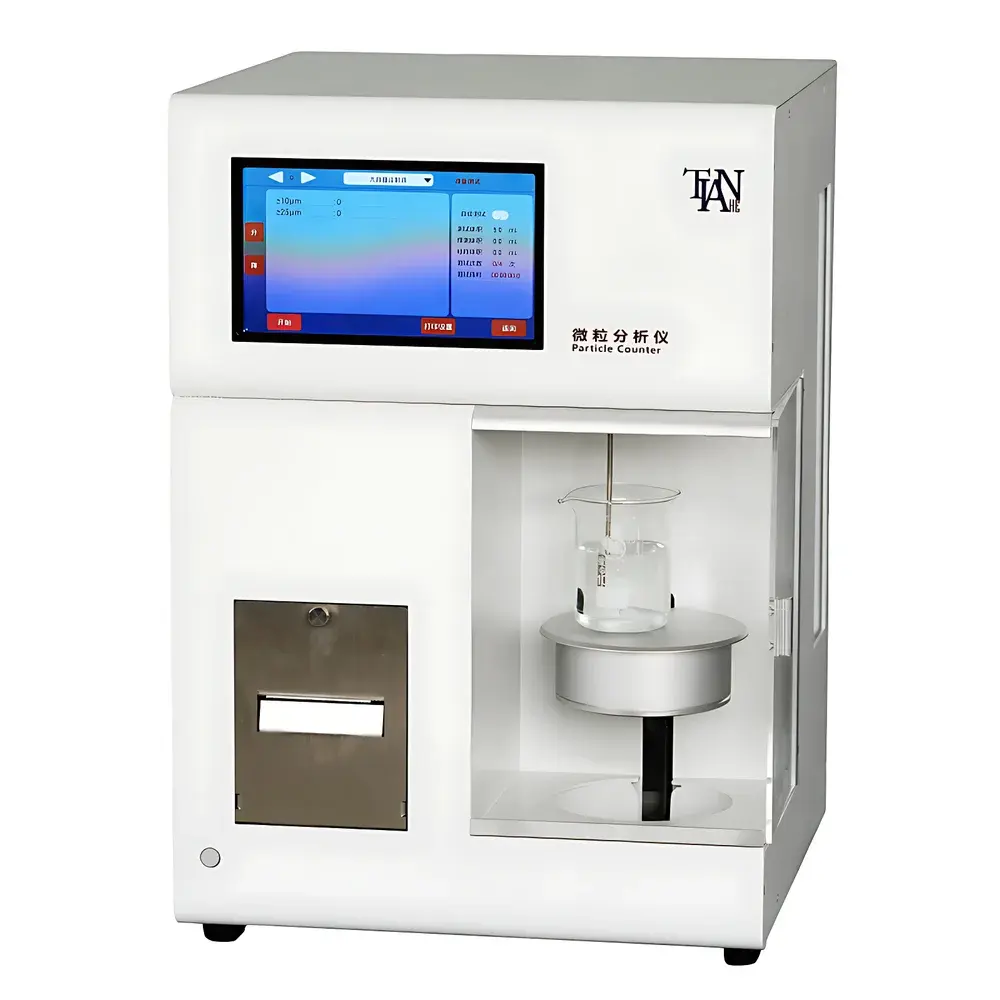
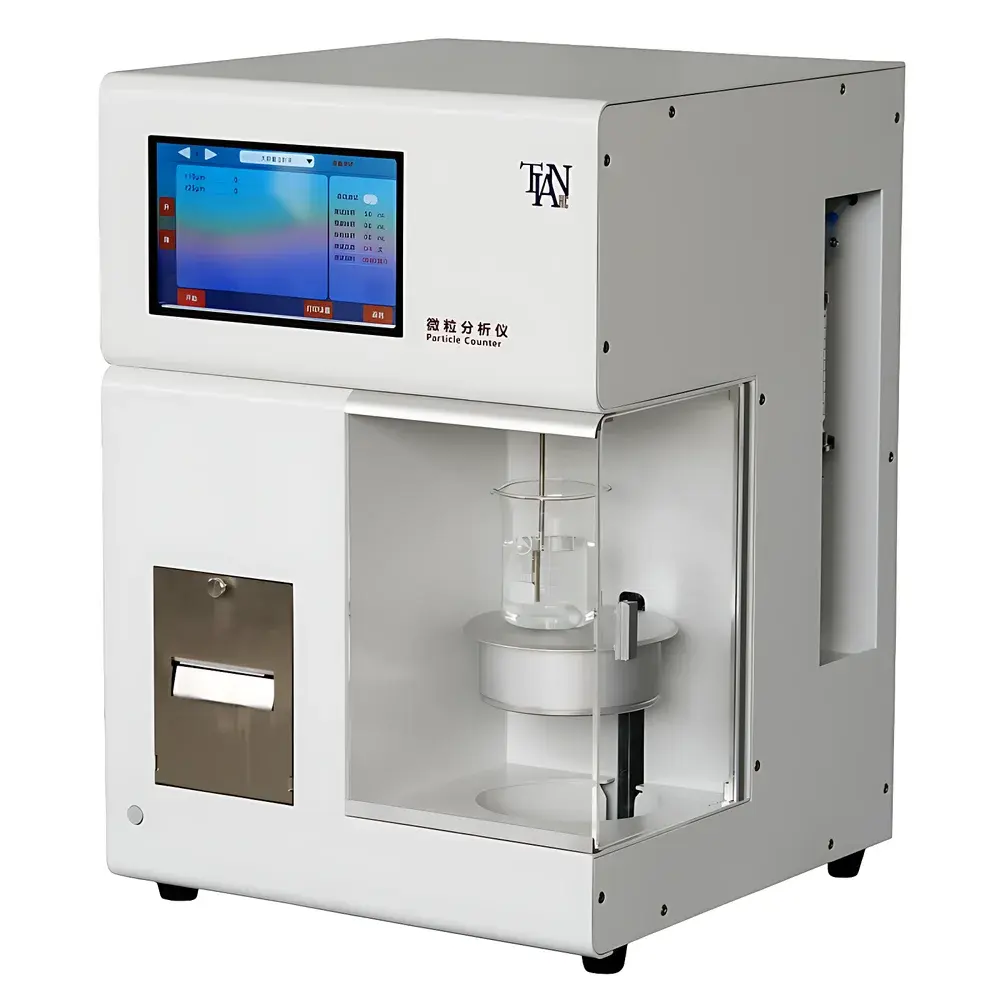
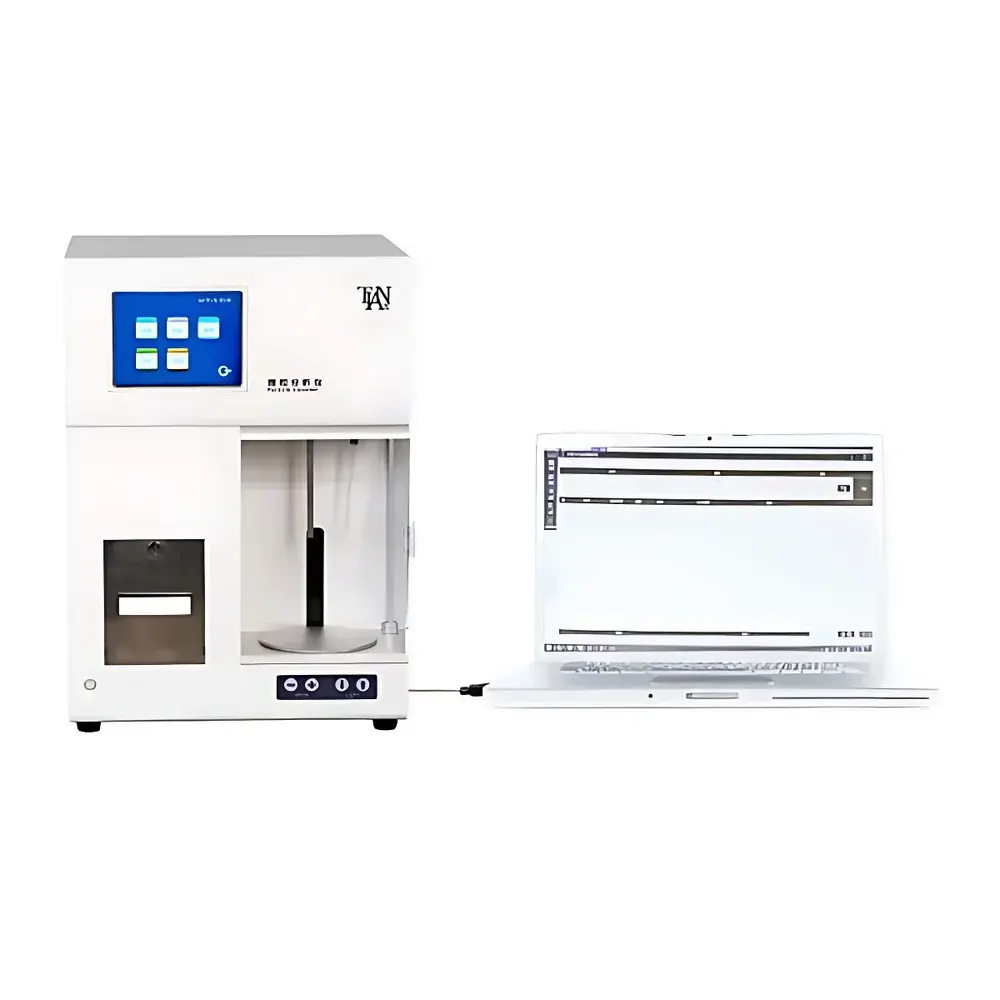
Tianhe GWF-DS1 Insoluble Particle Analyzer
| Brand | Tianhe |
|---|---|
| Origin | Tianjin, China |
| Manufacturer Type | Authorized Distributor |
| Regional Classification | Domestic (China) |
| Model | GWF-DS1 |
| Instrument Type | Optical Particle Counter |
| Laser Light Source | High-Stability Diode Laser with Energy Compensation Circuit |
| Sample Compatibility | Colorless & Colored Clear Liquids, Organic Solvents, Oil-Based & Weakly Acidic/Alkaline Solutions |
| Fluidic Path Materials | Imported 316L Stainless Steel & PTFE |
| Sampling Volume Range | 0.2–1000 mL (±0.1 mL resolution) |
| Volume Accuracy | < ±0.5% |
| Flow Rate | 5–80 mL/min |
| Particle Size Channels | 64 Fixed + User-Defined (up to thousands of bins) |
| Size Range | 1–500 µm |
| Minimum Resolution | 0.1 µm |
| Counting Accuracy | ±5% of Reference Value |
| Channel Resolution | >95% |
| RSD | <1.5% (for standard particles ≥1000 particles/mL) |
| Maximum Detectable Concentration | 18,000 particles/mL |
| Stirring Speed | 0–1000 rpm |
| Operating Temperature | 10–40 °C |
| Power Supply | 100–240 VAC, 50/60 Hz, <80 W |
| Data Output | Thermal Printer, RS232, USB Storage |
| Software Compliance | 21 CFR Part 11 Audit Trail, Multi-Level User Access Control, GLP/GMP-Ready Electronic Record Management |
| Operating System | Android-based Embedded UI |
| Database | Local SQL Database with Statistical Analysis Engine |
| Environmental Protection | Sealed Dust-Proof Viewing Door |
| Calibration | Fully Automated Onboard Calibration with NIST-Traceable Standard Particles per USP <788>, USP <789>, ChP 2025, ISO 21510, and GB 8368–2018 |
Overview
The Tianhe GWF-DS1 Insoluble Particle Analyzer is a regulatory-compliant optical particle counter engineered for quantitative detection and size-resolved enumeration of extraneous particulate matter in parenteral pharmaceuticals, ophthalmic solutions, injectables, infusion sets, and medical packaging materials. It operates on the principle of light obscuration (also known as single-particle optical sensing), where particles suspended in a liquid medium pass through a precisely defined laser beam; each particle generates a pulse proportional to its cross-sectional area. The system digitizes these pulses across 64 factory-calibrated channels (extendable via software-defined binning), enabling high-fidelity differentiation between submicron debris and coarse contaminants within the 1–500 µm range. Designed to meet the most stringent pharmacopeial requirements—including Chinese Pharmacopoeia (ChP) 2025, United States Pharmacopeia (USP) and , ISO 21510:2018, and GB 8368–2018 for infusion devices—the GWF-DS1 delivers traceable, repeatable, and auditable particle count data essential for quality control laboratories operating under GMP, GLP, or FDA-regulated environments.
Key Features
- Optical architecture featuring a stabilized diode laser source with real-time energy compensation, ensuring consistent signal integrity across colorless, amber, and deeply tinted transparent liquids.
- Chemically inert fluidic path constructed from imported 316L stainless steel and PTFE—validated for direct analysis of organic solvents (e.g., ethanol, acetone), silicone oils, glycerin-based formulations, and weakly acidic/alkaline media without corrosion or leaching artifacts.
- Motorized vertical sample stage with programmable height adjustment, accommodating irregularly shaped containers including glass vials, plastic syringes, IV bags, and pre-filled cartridges without manual repositioning.
- Embedded Android-based interface with responsive touchscreen UI, intuitive workflow navigation, and context-sensitive help—eliminating dependency on external PCs for routine operation.
- Onboard automated calibration routine compliant with USP , ChP 2025 Annex VI, and ISO 21510; supports verification using NIST-traceable polystyrene latex (PSL) standards across multiple size points (e.g., 10, 25, 50 µm).
- Integrated audit trail module recording all user actions, method changes, calibration events, and raw count data with immutable timestamps—fully aligned with 21 CFR Part 11 requirements for electronic records and signatures.
Sample Compatibility & Compliance
The GWF-DS1 accommodates a broad spectrum of pharmaceutical and biotechnological samples: aqueous injectables (saline, dextrose), lipid emulsions, protein therapeutics, monoclonal antibody formulations, ophthalmic drops, and final-fill container closure systems. Its 316L/PTFE wetted components resist degradation from common excipients (e.g., polysorbate 80, benzyl alcohol) and cleaning agents used in aseptic processing lines. Regulatory alignment includes full support for test protocols specified in USP (light obscuration method), USP (membrane microscopy alternative), ChP 2025 General Chapter 0903, and GB 8368–2018 Clause 6.3 for particulate contamination in intravenous infusion sets. All firmware and software modules undergo periodic validation per ICH Q2(R2) guidelines for analytical procedure verification.
Software & Data Management
The embedded software suite provides local SQL database storage with configurable retention policies, batch-level metadata tagging (lot number, operator ID, instrument ID), and statistical analysis tools—including mean particle count per volume, cumulative distribution plots, and pass/fail flagging against pharmacopeial limits. Data export is supported via USB mass storage (CSV, PDF reports) or RS232 serial link to LIMS or enterprise QA systems. Role-based access control enforces three-tier permissions (Operator, Supervisor, Administrator), restricting critical functions such as method editing, calibration override, or audit log deletion. Electronic signatures are implemented via password + time-stamped confirmation for all report generation and result approval steps.
Applications
- Final product release testing of sterile injectables and lyophilized powders reconstituted in WFI.
- Compatibility assessment of drug product with primary packaging (e.g., rubber stoppers, glass vials, polymer tubing).
- In-process monitoring of filtration efficiency during downstream purification and fill-finish operations.
- Stability-indicating analysis tracking particle generation over accelerated and long-term storage conditions.
- Investigation of root causes in out-of-specification (OOS) particulate results—including environmental intrusion, component shedding, or formulation instability.
- Supplier qualification of medical device components (e.g., IV sets, connectors, filters) per ISO 8536-4 and AAMI ST72.
FAQ
Does the GWF-DS1 comply with 21 CFR Part 11 for electronic records and signatures?
Yes. It implements full audit trail logging, user authentication, electronic signature capture, and data immutability controls required by FDA 21 CFR Part 11 and EU Annex 11.
Can the instrument analyze samples containing organic solvents like ethanol or isopropanol?
Yes. The 316L stainless steel and PTFE fluidic pathway is chemically resistant to common pharmaceutical solvents and has been validated for repeated exposure without performance drift.
What is the smallest detectable particle size, and how is resolution verified?
The system achieves 0.1 µm sizing resolution at the lower end of its 1–500 µm range. Channel resolution (>95%) is verified annually using NIST-traceable PSL standards and documented per IQ/OQ protocols.
Is remote data retrieval or network integration supported?
While the GWF-DS1 operates as a standalone unit with local Android OS, raw data and reports can be exported via USB or RS232 to networked computers or LIMS. Ethernet or Wi-Fi connectivity is not natively integrated but may be enabled via optional industrial gateway adapters.
How frequently must calibration be performed?
Per USP , daily system suitability testing is recommended prior to use. Full calibration using certified reference particles is required after maintenance, software updates, or at intervals defined in the laboratory’s SOP—typically every 3–6 months, supported by documented calibration certificates.



