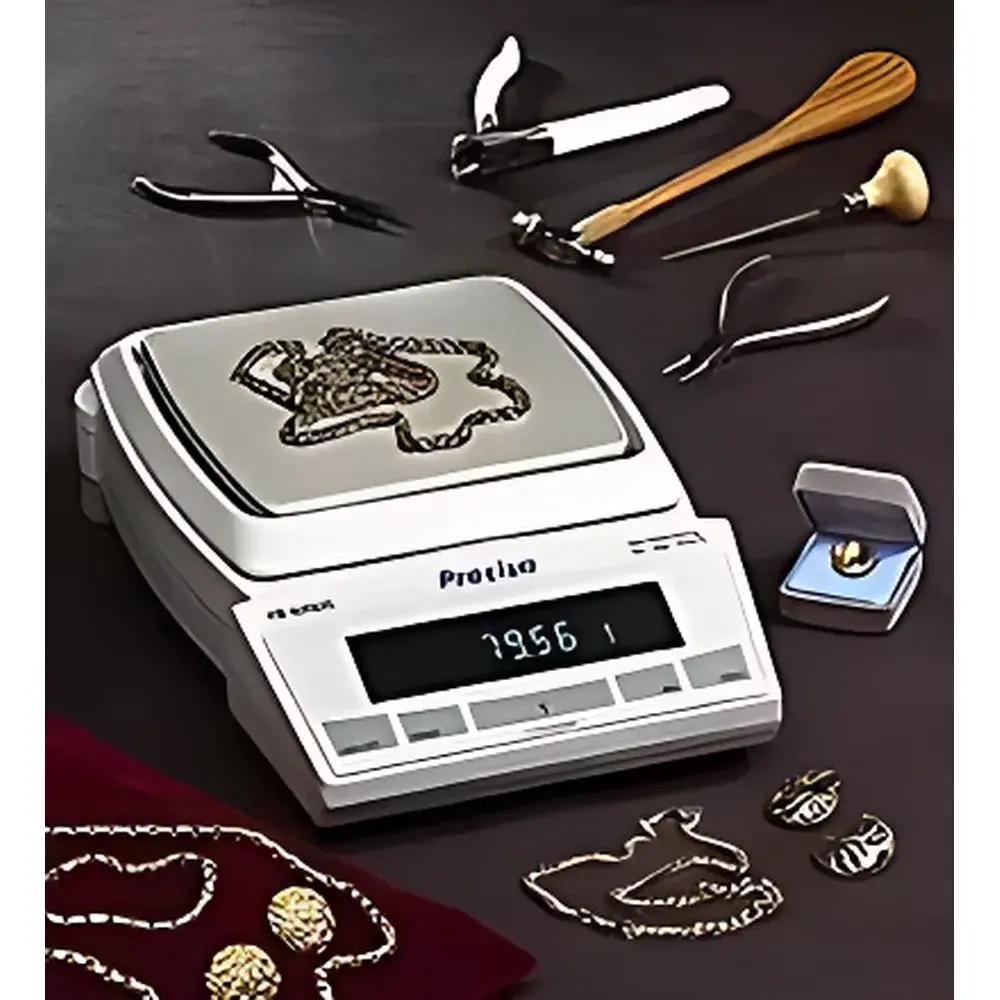
Precisa XS3250C-SCS Economic Internal Calibration Electronic Balance
| Brand | Precisa |
|---|---|
| Origin | Switzerland |
| Model | XS3250C-SCS |
| Weighing Range | 3250 g |
| Readability | 10 mg |
| Taring Range | 3250 g |
| Reproducibility | ≤10 mg |
| Linearity | ±15 mg |
| Response Time | 2–3 s |
| Stability Adjustment | 3-step adjustable |
| Operating Temperature | 0–40 °C |
| Sensitivity Drift (10–30 °C) | ±2 ppm/°C |
| Supply Voltage | 115/230 V AC |
| Voltage Tolerance | +15% / −20% |
| Frequency | 50–60 Hz |
| Power Consumption | 6 VA |
| Display | Fluorescent (optional) |
| Dimensions (L×W×H) | 210 × 340 × 89 mm |
| Pan Size | 170 × 170 mm (chromium-nickel steel) |
| Net Weight | 4.5 kg |
Overview
The Precisa XS3250C-SCS is a precision-engineered economic internal calibration electronic balance designed for routine mass measurement tasks in quality control laboratories, educational institutions, and light industrial environments. Built upon a robust electromagnetic force compensation (EMFC) transduction principle, the balance delivers high reproducibility and long-term stability without reliance on mechanical levers or optical encoders. Its integrated internal calibration system—activated via front-panel command—eliminates the need for external calibration weights during daily verification, reducing operator dependency and minimizing traceability risks associated with manual weight handling. The device operates within a wide ambient temperature range (0–40 °C), making it suitable for non-climate-controlled lab spaces while maintaining compliance with fundamental metrological requirements defined in OIML R76 and ISO/IEC 17025–accredited workflows.
Key Features
- Internal self-calibration mechanism with user-initiated verification—no external weights required for routine checks;
- Three-step adjustable stability setting to optimize response time versus readability trade-offs for varying sample dynamics (e.g., hygroscopic or volatile materials);
- Fluorescent display module offering high contrast, wide viewing angle, and consistent legibility under low-light or oblique illumination conditions;
- Automatic power-on after mains restoration and programmable auto-off function (configurable idle timeout) to extend component lifetime and reduce standby energy consumption;
- Chromium-nickel steel weighing pan (170 × 170 mm) providing corrosion resistance and mechanical durability for repeated loading cycles;
- Compliant electromagnetic compatibility per EN 61326-1 and safety certification per EN 61010-1, supporting safe deployment in shared laboratory infrastructure.
Sample Compatibility & Compliance
The XS3250C-SCS accommodates a broad spectrum of solid and granular samples up to 3.25 kg, including powders, reagents, packaged components, and small assemblies. Its 10 mg readability and ≤10 mg reproducibility meet minimum performance thresholds for general-purpose analytical weighing per USP Chapter 41 when operated under controlled environmental conditions. While not classified as a Class I or II analytical balance per OIML R111, its linearity error (±15 mg) and sensitivity drift specification (±2 ppm/°C over 10–30 °C) ensure suitability for applications where GLP documentation and periodic verification—not continuous real-time uncertainty monitoring—are the primary regulatory expectations. The balance supports basic traceability through internal calibration logs accessible via service mode, though full audit trail functionality (e.g., FDA 21 CFR Part 11–compliant electronic records) requires integration with external LIMS or dedicated data acquisition software.
Software & Data Management
The XS3250C-SCS features an RS-232 interface standard for direct connection to PCs, printers, or laboratory information systems. ASCII-based output protocol enables seamless integration with spreadsheet tools, custom scripts, or legacy QC databases without proprietary drivers. Data transmission includes timestamped weight values, tare status, unit selection, and calibration event flags. While the instrument does not include onboard data storage or touchscreen GUI, its communication architecture supports automated data capture in regulated environments when paired with validated third-party middleware. Firmware updates are performed exclusively via authorized service centers to preserve metrological integrity and maintain conformity with manufacturer’s type approval documentation.
Applications
- Routine raw material receipt inspection in pharmaceutical and chemical manufacturing;
- Formulation batch preparation and intermediate weight checks in pilot-scale production;
- Student laboratory exercises in chemistry, food science, and materials engineering curricula;
- Inventory management and packaging verification in warehouse quality assurance settings;
- Pre-weighing of samples prior to thermal analysis (TGA/DSC), elemental analysis (ICP-OES), or particle size determination.
FAQ
Does the XS3250C-SCS support external calibration with certified weights?
Yes—the balance accepts manual calibration using external Class M2 or better reference weights, though internal calibration is recommended for daily operational verification.
Is the fluorescent display standard or optional?
The fluorescent display is standard on the XS3250C-SCS model; no configuration or upgrade is required.
What is the warranty coverage and service support structure?
Precisa provides a 24-month limited warranty covering defects in materials and workmanship, with technical support and repair services available through authorized distributors in EMEA, APAC, and Americas regions.
Can the balance operate continuously without auto-shutdown?
Yes—auto-off can be disabled via menu setting, allowing uninterrupted operation during extended measurement sessions.
Is the device compliant with ISO/IEC 17025 requirements for accredited testing labs?
It meets foundational metrological criteria for use in accredited laboratories when deployed with documented procedures for calibration, environmental monitoring, and uncertainty estimation—but does not replace the need for external verification at defined intervals per ILAC-G8 or EURACHEM guidelines.