
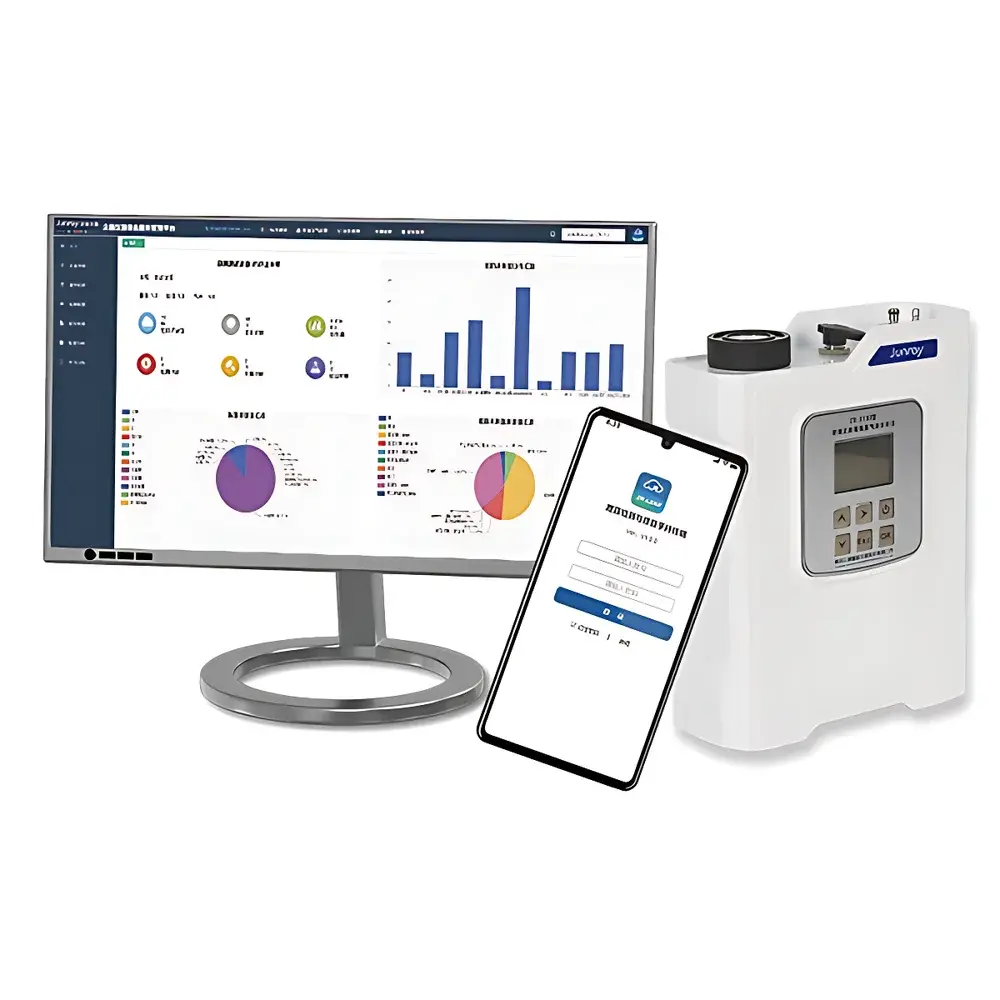
LDAR Leak Detection and Repair Integrated Management Platform
| Brand | Junray |
|---|---|
| Origin | Shandong, China |
| Manufacturer Type | Original Equipment Manufacturer (OEM) |
| Product Category | Domestic |
| Model | LDAR Management Platform |
| Pricing | Available Upon Request |
| Detection Principle | Software-Based Workflow Orchestration with Integration to Field Instruments (e.g., FID, PID, OGI) |
| Instrument Type | Cloud-Hosted SaaS Platform for Online Data Aggregation & Compliance Reporting |
| Typical Configuration | Web Portal + Mobile Application + API Integrations |
| Sampling Method | Instrument-Agnostic Data Ingestion (Manual Entry, Bluetooth/Wi-Fi Upload, CSV/API Import) |
| Detection Scope | Comprehensive LDAR Program Lifecycle Management (Leak Identification, Tagging, Scheduling, Repair Tracking, EPA/China MEP Compliance Reporting) |
| Resolution | Configurable by User-Defined Tag Hierarchy and Measurement Unit Mapping |
| Accuracy | Dependent on Connected Field Instrument Calibration & Data Entry Integrity |
| Response Time | Real-Time Dashboard Updates (Sub-Second UI Refresh |
Overview
The LDAR Leak Detection and Repair Integrated Management Platform is a purpose-built, cloud-native software solution engineered to orchestrate the full lifecycle of regulatory-compliant LDAR programs. Unlike standalone gas analyzers or handheld detectors, this platform does not perform physical chemical analysis; rather, it serves as the central data governance and workflow automation hub that integrates with field instruments—including flame ionization detectors (FID), photoionization detectors (PID), optical gas imaging (OGI) cameras, and fixed sensor networks—enabling standardized data capture, audit-ready traceability, and automated regulatory reporting. Designed in alignment with U.S. EPA Method 21, China’s HJ 1230–2021, and ISO 55001 asset management principles, the platform supports continuous improvement of fugitive emission control through structured task routing, time-stamped repair verification, and dynamic KPI dashboards. Its architecture separates data ingestion logic from analytical processing, ensuring scalability across multi-site industrial facilities—refineries, chemical plants, pharmaceutical manufacturing units, and petrochemical terminals—while maintaining strict role-based access control and immutable audit logs.
Key Features
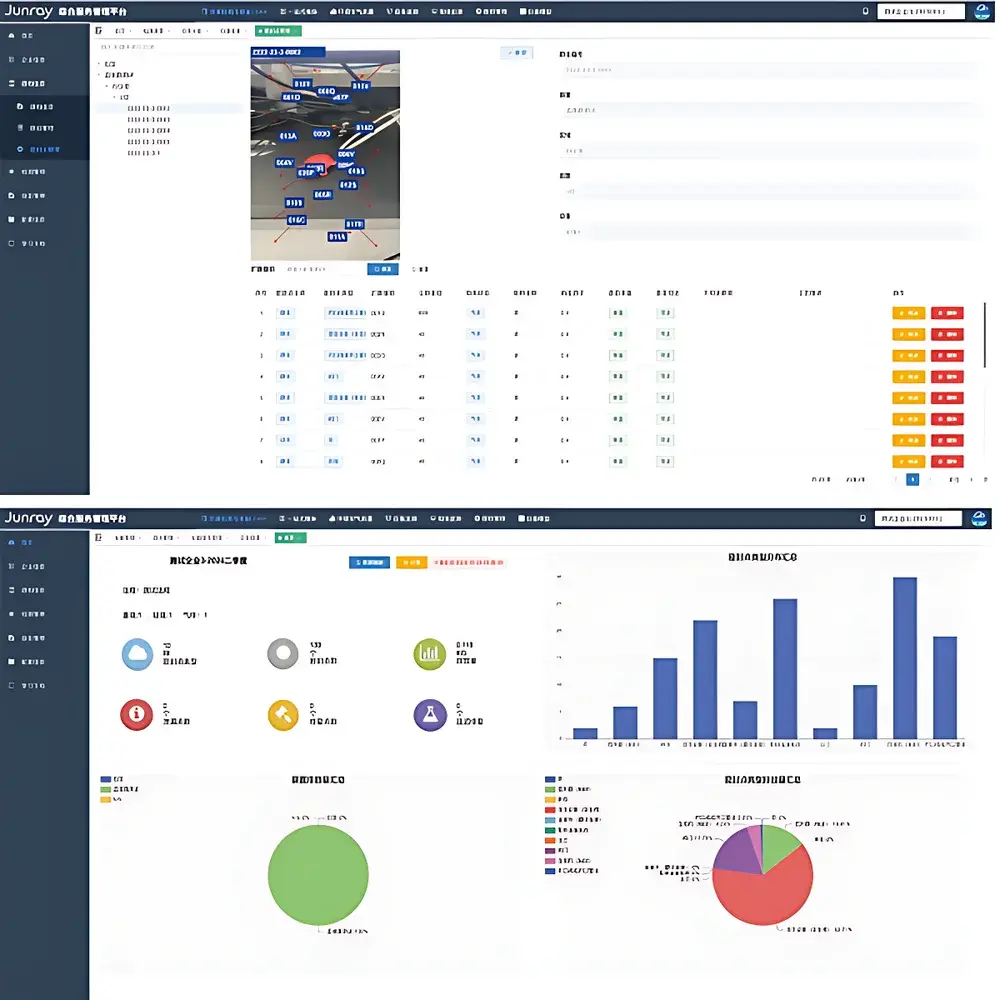
- Web-based dashboard with real-time visualization of leak status, repair backlog, and compliance deadlines across facilities, units, and equipment tags.
- Fully responsive mobile application (iOS/Android) supporting offline tag scanning via QR/RFID, photo documentation with geotagging and timestamping, and automatic synchronization upon network reconnection.
- Configurable tagging ontology: users define hierarchical structures for装置 (units), 区域 (areas), 楼层 (floors), 设备 (equipment), and components (valves, flanges, connectors, pumps) compliant with EPA Subpart VV and China’s “LDAR Information System Technical Specification.”
- Instrument calibration and QC tracking module: links field devices (e.g., Thermo Fisher TVA2020, Ion Science TigerLT) to individual inspection records, enforcing pre- and post-calibration validation before data submission.
- Automated report generation: produces EPA Form 7520-1, China MEP LDAR Summary Reports, quarterly compliance summaries, and custom executive dashboards in PDF/Excel formats—with embedded digital signatures and version-controlled revision history.
- Role-based enterprise account management: administrators assign granular permissions (e.g., “Inspector,” “Repair Technician,” “Compliance Officer,” “Auditor”) with configurable approval workflows for leak verification and repair closure.
Sample Compatibility & Compliance
The platform accepts structured measurement data from any calibrated VOC detection instrument meeting ASTM D6420 or HJ 1012–2018 performance criteria. It supports manual entry, Bluetooth/Wi-Fi transmission from portable analyzers, bulk upload via CSV templates, and RESTful API integration with SCADA systems and CMMS platforms (e.g., IBM Maximo, SAP PM). All data transactions adhere to GLP-aligned audit trail requirements: every edit, deletion, or status change is logged with user ID, timestamp, IP address, and prior/post values. The system conforms to China’s GB/T 22239–2019 (Cybersecurity Baseline) and supports optional 21 CFR Part 11-compliant electronic signatures when deployed in FDA-regulated pharmaceutical environments.
Software & Data Management
Built on a containerized microservices architecture (Docker/Kubernetes), the platform ensures high availability (99.9% SLA) and encrypted data-at-rest (AES-256) and in-transit (TLS 1.3). Data residency options include public cloud (AWS China Ningxia), private cloud, or on-premises deployment. Version-controlled configuration management enables rapid adaptation to evolving regulatory frameworks—such as updates to EPA’s LDAR Modernization Rule or China’s 14th Five-Year Plan emission targets. All reports and raw datasets are exportable in machine-readable JSON or XML for third-party analytics engines or government portal submissions (e.g., U.S. EPA CDX, China’s National Emission Trading System portal).
Applications
- Refinery and petrochemical facilities managing >10,000 LDAR components under Title 40 CFR Part 60/63 compliance mandates.
- Pharmaceutical manufacturers implementing ICH Q5C stability-indicating environmental monitoring programs aligned with EU GMP Annex 1.
- Third-party LDAR service providers delivering auditable, scalable inspection services across regional client portfolios.
- Municipal and provincial environmental protection bureaus conducting cross-enterprise LDAR program oversight and enforcement analytics.
- Corporate EHS departments consolidating global LDAR data for CDP reporting, TCFD disclosures, and Scope 1 emissions inventory reconciliation.
FAQ
Does the platform perform actual VOC concentration measurements?
No. It is a software platform designed for data aggregation, workflow management, and regulatory reporting—not direct gas analysis.
Can it integrate with existing CMMS or ERP systems?
Yes, via documented REST APIs and prebuilt connectors for SAP, Oracle EBS, and IBM Maximo.
Is on-premises deployment supported?
Yes, including air-gapped environments with FIPS 140-2 validated cryptographic modules.
How frequently is the mobile app updated?
Over-the-air updates occur automatically per configured policy; critical patches are pushed within 72 hours of vulnerability disclosure.
What regulatory standards does the reporting engine support?
U.S. EPA Method 21/21A, 40 CFR Part 60/63/65, China HJ 1230–2021, HJ 1012–2018, and EU IED Annex IV reporting templates.
Related Products







