
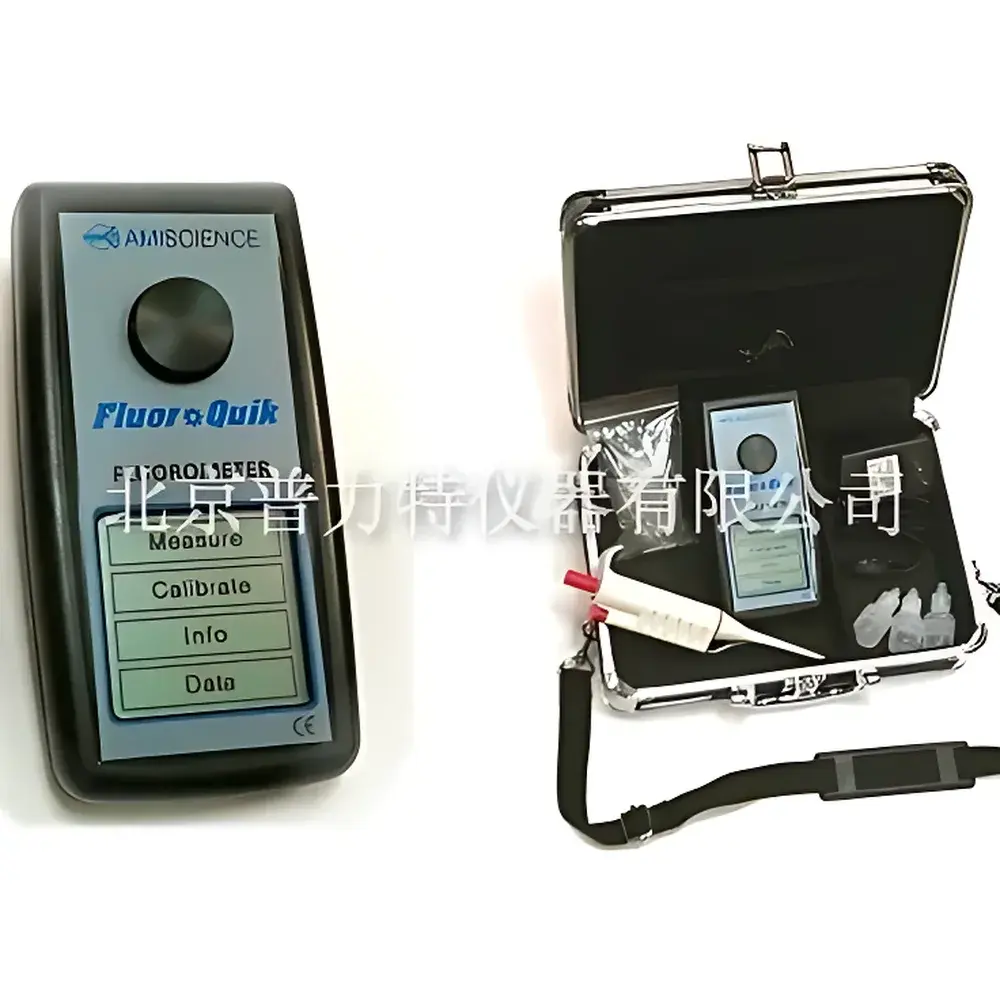
Purity FluoroQuik Portable Chlorophyll a and Phycocyanin/Phycoerythrin Fluorometer
| Brand | Purity |
|---|---|
| Model | FluoroQuik |
| Origin | Beijing, China |
| Instrument Type | Fixed-Wavelength Dual-Channel In Vivo and Extracted Chlorophyll Fluorometer |
| Measurement Targets | Chlorophyll a (in vivo), Chlorophyll a (acetone-extracted, non-acidified), Phycocyanin (freshwater cyanobacteria), Phycoerythrin (marine cyanobacteria) |
| Optical Configuration | Single- or Dual-Channel |
| Detection Range | 0–10,000 µg/L (Chl a, PC, PE) |
| Sensitivity | 0.25 µg/L (Chl a), 100 cells/mL (cyanobacteria) |
| Resolution | 0.01 µg/L |
| Sample Volume | 500 µL |
| Sample Compatibility | Aqueous and organic solvent extracts (e.g., acetone, methanol) |
| Measurement Environment | Light-tight dark chamber |
| Dynamic Range | >6 decades |
| Output Units | µg/L, cells/mL, and relative fluorescence units (RFU) |
| RFU Modes | High-sensitivity and low-sensitivity dual-gain detection |
| Calibration | Two-point calibration |
| Compliance | EPA Method 445.0 |
| GB 17378.7–2007 (China National Standard for Marine Monitoring – Part 7 | Determination of Chlorophyll a by Fluorometric Spectrophotometry) |
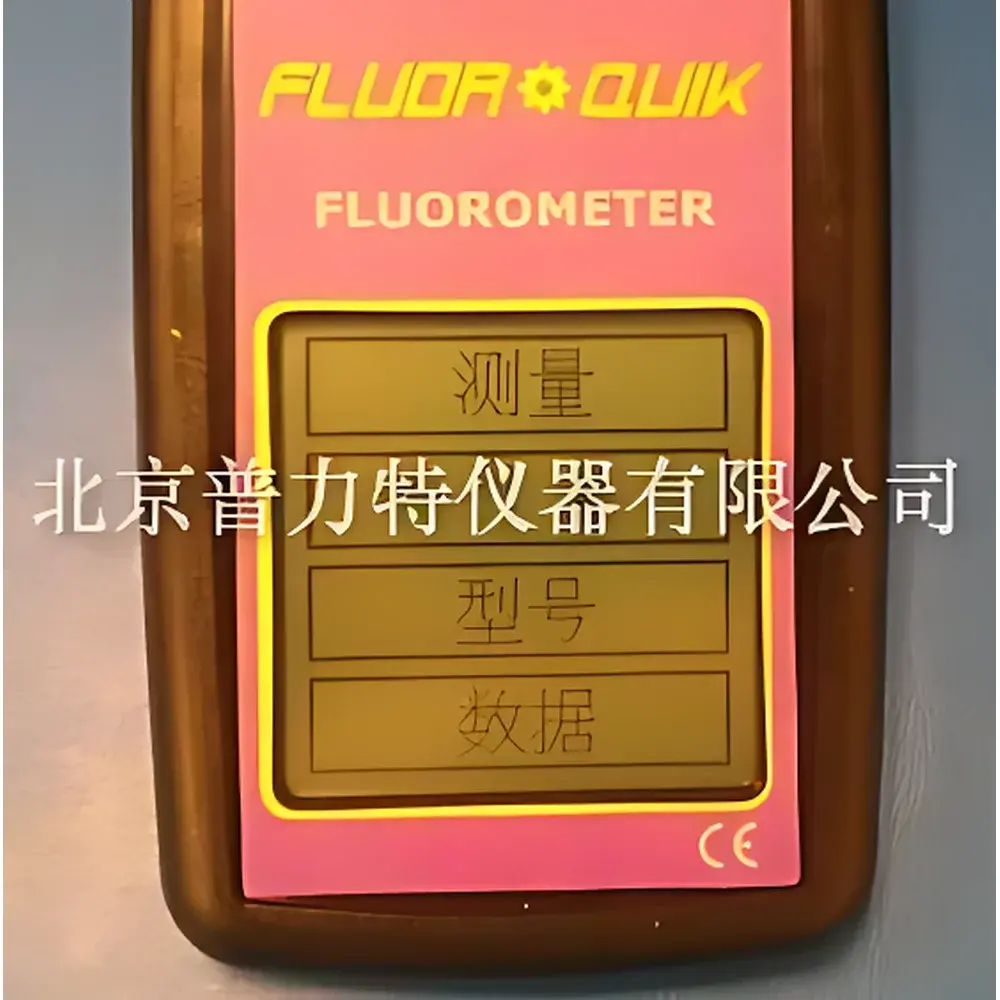
| Display | 3.5″ capacitive LCD touchscreen with bilingual (Chinese/English) firmware |
| Power Supply | 4 × AA batteries or 5 V DC adapter |
| Data Storage | 3 × 80 measurement records |
| Interface | USB 2.0 for data export and firmware update |
| Dimensions (L×W×H) | 185 × 90 × 35 mm |
| Weight | <350 g |
Overview
The Purity FluoroQuik Portable Chlorophyll a and Phycocyanin/Phycoerythrin Fluorometer is an engineered field-deployable fluorometric analyzer designed for quantitative assessment of phytoplankton biomass in aquatic environments. It operates on the principle of in vivo and extracted chlorophyll a fluorescence excitation at fixed wavelengths (typically 435–470 nm for excitation and 670–685 nm for emission), coupled with selective detection of phycobiliprotein fluorescence—phycocyanin (PC) at ~650 nm (for freshwater cyanobacteria) and phycoerythrin (PE) at ~575 nm (for marine Synechococcus and Trichodesmium). Unlike broad-spectrum spectrophotometers, the FluoroQuik employs optimized optical filters and temperature-stabilized LEDs to deliver high signal-to-noise ratio measurements under variable ambient conditions. Its dual-channel configuration enables simultaneous quantification of either (i) live (in vivo) and acetone-extracted chlorophyll a, or (ii) chlorophyll a and phycocyanin/phycoerythrin—eliminating sequential instrument reconfiguration and reducing analytical uncertainty from sample degradation between assays. The instrument conforms to EPA Method 445.0 for chlorophyll a determination and aligns with GB 17378.7–2007 for marine ecological monitoring, supporting regulatory-grade data collection in both GLP-compliant laboratories and uncontrolled field settings.
Key Features
- Dual-channel optical architecture supports concurrent measurement of chlorophyll a (in vivo and extracted) or chlorophyll a + phycocyanin/phycoerythrin—reducing analysis time by up to 50% compared to single-channel alternatives.
- Light-tight sample chamber ensures immunity to ambient photonic interference, enabling reliable operation under direct sunlight or low-light field conditions without external shielding.
- Capacitive 3.5″ touchscreen interface with embedded bilingual firmware (English/Chinese) and intuitive “touch-test” workflow—no physical buttons required for routine operation.
- Micro-volume compatibility: optimized for standard 500 µL microcentrifuge tubes, minimizing reagent consumption and enabling high-throughput screening of large sample sets.
- Two-gain RFU detection mode automatically switches between high-sensitivity (sub-µg/L) and extended-range (up to 10,000 µg/L) fluorescence quantification—preserving linearity across six orders of magnitude.
- Integrated data management: stores up to 240 discrete measurements (3 banks × 80 points), each timestamped and tagged with user-defined sample IDs and calibration metadata.
- Field-rugged design: IP54-rated enclosure, shock-absorbing elastomer casing, and battery-backed real-time clock ensure operational continuity during multi-day surveys.
Sample Compatibility & Compliance
The FluoroQuik accepts both aqueous environmental samples (filtered or unfiltered water, lysed suspensions) and organic solvent extracts—including acetone (90% v/v), methanol, and N,N-dimethylformamide—without optical path recalibration. Its standardized excitation/emission bandpass filters comply with spectral definitions in EPA 445.0 (chlorophyll a), ISO 10260:2021 (phycocyanin quantification), and the Chinese national standard GB 17378.7–2007. All factory calibrations are traceable to NIST-traceable chlorophyll a reference materials (Sigma-Aldrich C6144) and certified cyanobacterial cell standards (NIST SRM 2976). The device supports audit-ready documentation: each measurement record includes instrument serial number, firmware version, calibration date, operator ID, and raw RFU values—enabling full traceability per FDA 21 CFR Part 11 requirements when used in regulated environmental monitoring programs.
Software & Data Management
Data export occurs via USB 2.0 interface to Windows/macOS systems using vendor-provided FluoroLink Desktop Suite (v3.2+), which generates CSV- and Excel-compatible reports compliant with ISO/IEC 17025 data integrity guidelines. The software enables batch calibration curve generation, outlier detection via Grubbs’ test, and automatic unit conversion (RFU → µg/L or cells/mL) using user-loaded slope-intercept parameters. Firmware updates preserve all stored calibration profiles and historical datasets. No cloud dependency or subscription model is required—data remains fully under user control at all times.
Applications
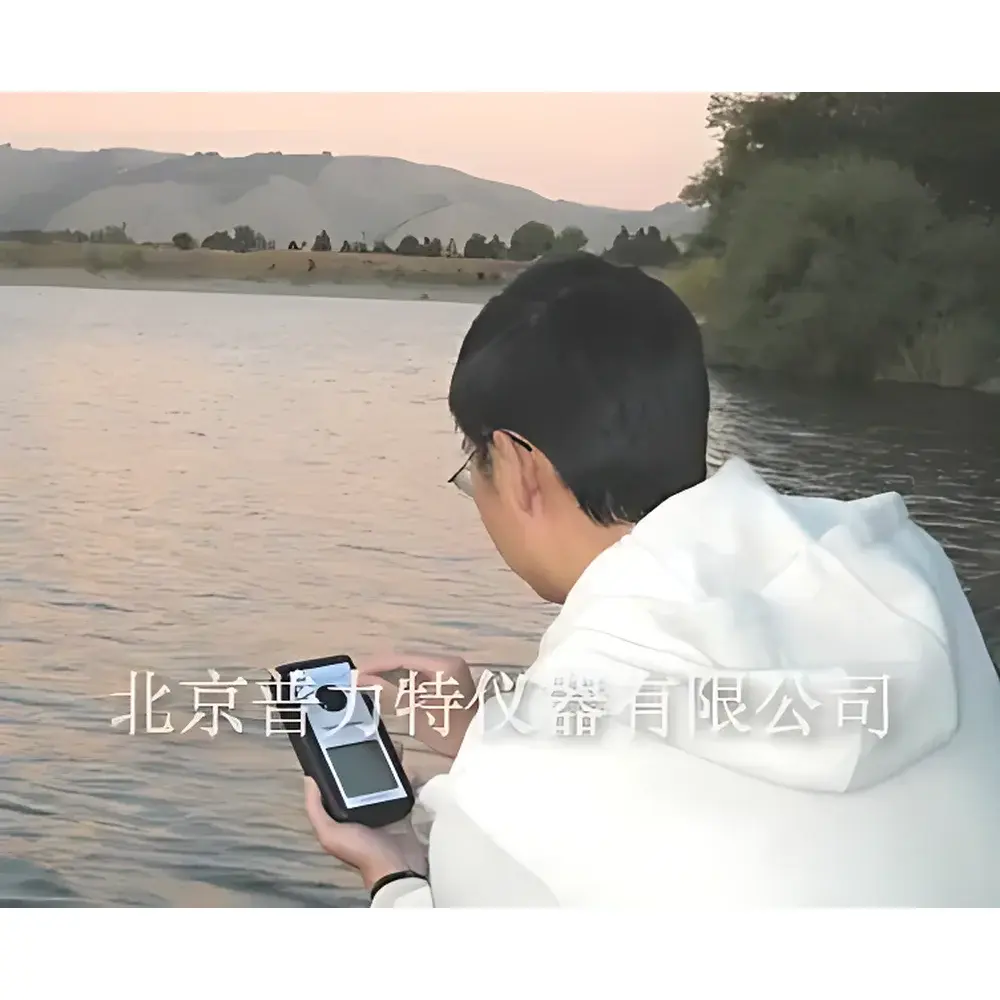
- Algal bloom early warning: rapid in-field quantification of cyanobacterial density and chlorophyll a in reservoirs, drinking water intakes, and aquaculture ponds.
- Oligotrophication monitoring: longitudinal tracking of phytoplankton biomass trends in lakes and coastal zones per UNESCO IOC guidelines.
- Remote sensing ground-truthing: validation of satellite-derived chlorophyll a algorithms (e.g., OC3M, GSM) with in situ point measurements.
- Ecotoxicology studies: assessment of photosynthetic inhibition following exposure to herbicides, heavy metals, or nanoplastics.
- Marine biogeochemistry: differentiation of picocyanobacterial contributions (Synechococcus vs. Prochlorococcus) via phycoerythrin/chlorophyll a ratio analysis.
FAQ
Does the FluoroQuik require daily recalibration?
No—two-point calibration is recommended before each sampling campaign or after instrument transport; stability testing shows <±2% drift over 72 hours under constant temperature (20–25°C).
Can it measure chlorophyll b or pheophytin?
No—the optical configuration is specifically optimized for chlorophyll a, phycocyanin, and phycoerythrin per EPA 445.0 and GB 17378.7–2007; cross-reactivity with chlorophyll b or degradation products is negligible.
Is acidification required for extracted chlorophyll analysis?
Not for this method: the FluoroQuik’s non-acidified acetone extraction protocol aligns with EPA 445.0 Section 7.2.1 and avoids HCl-induced pheophytin formation that compromises accuracy.
What is the minimum detectable cell density for Microcystis aeruginosa?
100 cells/mL (based on cultured strain CCAC 0238, verified by flow cytometry and epifluorescence microscopy).
Does the instrument support GLP audit trails?
Yes—each exported dataset includes digital signatures, timestamps, calibration logs, and operator credentials, satisfying ALCOA+ principles for regulated environmental reporting.







