
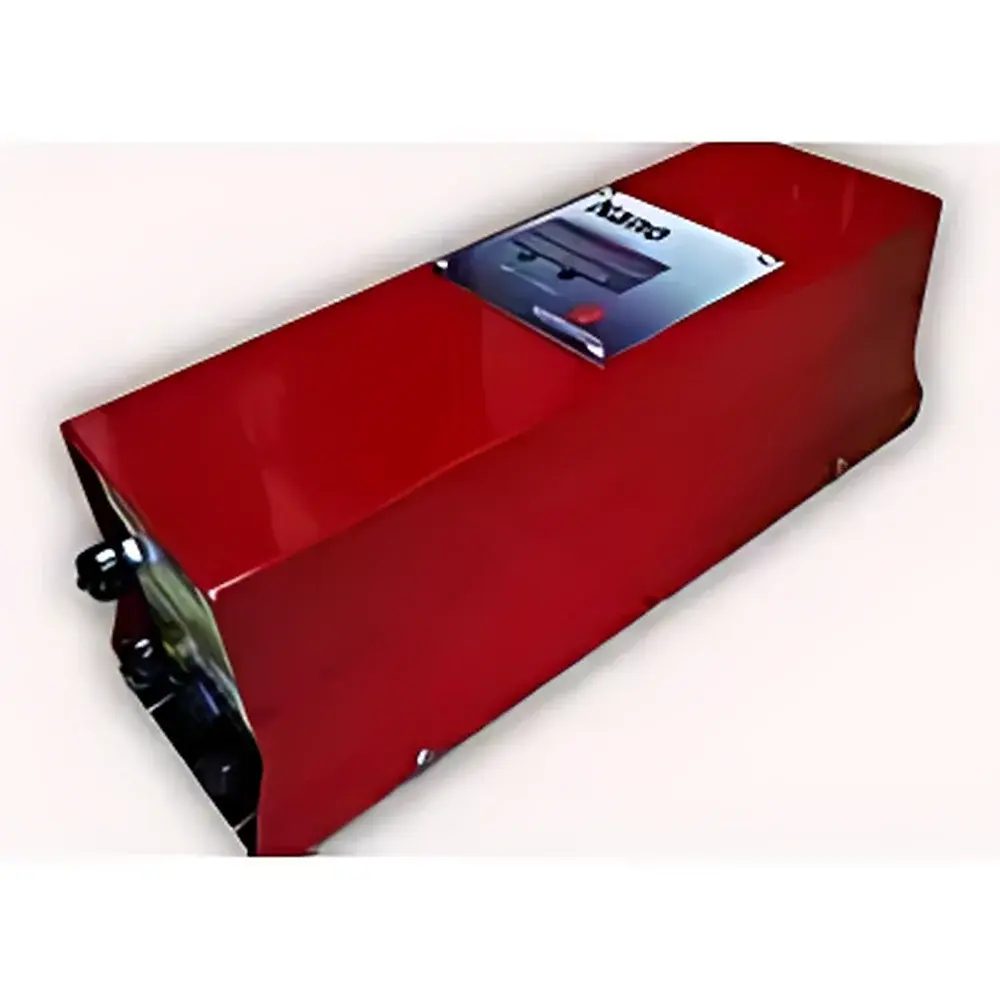
Absolute Ozone NANO Series Ozone Generator
| Brand | Absolute Ozone |
|---|---|
| Origin | Canada |
| Model | NANO |
| Ozone Output | 15 g/h (up to 20 g/h) |
| O₃ Concentration | 5–10% by weight |
| Oxygen Flow Rate | 0.1–4 SLPM |
| Operating Pressure | 20 psig |
| Power Input | 120 V ±10% / 220 V ±10%, 50/60 Hz, single-phase |
| Power Consumption | 150–200 W |
| O₂ Inlet & O₃ Outlet | 1/4″ fittings |
| Construction | Brushed stainless steel/aluminum housing |
| Pressure Test | 120 psig leak-tested |
| Dimensions | 5″ × 5″ × 14″ (W × D × H) |
| Weight | 5.8 kg |
| Compliance | CSA-certified (optional) |
Overview
The Absolute Ozone NANO Series Ozone Generator is a compact, high-efficiency laboratory-grade ozone source engineered for precise, repeatable O₃ delivery in controlled research and quality assurance environments. Unlike conventional corona discharge ozone generators—whose typical aqueous dissolution efficiency rarely exceeds 30%—the NANO series achieves up to 70% total ozone dissolution efficiency under optimized contact conditions. This performance gain stems from proprietary electrode geometry, optimized dielectric barrier design, and tightly regulated oxygen feed dynamics, enabling stable ozone generation at concentrations of 5–10% by weight (w/w) using only 4 SLPM of medical- or instrument-grade oxygen. Its low-flow, high-concentration architecture minimizes oxygen consumption while maximizing mass transfer potential—making it especially suitable for applications requiring consistent, trace-level ozone dosing without excess carrier gas dilution.
Key Features
- High dissolution efficiency: Up to 70% ozone transfer into liquid phase under standard bubbling or venturi contact configurations—reducing O₂ demand and operational cost versus conventional units.
- Compact footprint: 5″ × 5″ × 14″ chassis with 5.8 kg mass enables integration into fume hoods, glove boxes, or modular lab benches without spatial compromise.
- Dual-voltage compatibility: Supports both 120 V (5.0 A) and 220 V (3.5 A), 50/60 Hz single-phase inputs—ensuring global deployment readiness without external transformers.
- Robust construction: Housing fabricated from brushed stainless steel and aluminum; all ozone-wetted components—including gas pathways—employ PTFE, 304 stainless steel, or oxygen-compatible copper.
- Factory-validated integrity: Each unit undergoes 120 psig hydrostatic leak testing prior to shipment, verifying structural integrity under elevated pressure transients.
- Remote operation capability: Integrated digital I/O interface supports external TTL or 0–10 V control signals for start/stop, output modulation, and status feedback—facilitating integration into automated lab workflows.
Sample Compatibility & Compliance
The NANO generator is designed for use with purified oxygen (≥99.5% O₂, dew point ≤ –40°C) and is compatible with deionized water, buffered saline, phosphate solutions, and common organic solvents used in oxidation kinetics studies. It complies with CSA C22.2 No. 61010-1 (Safety Requirements for Electrical Equipment for Measurement, Control, and Laboratory Use) when equipped with optional CSA certification. While not intrinsically rated for Class I Div 1 hazardous locations, its sealed construction and absence of ignition sources make it appropriate for well-ventilated laboratory settings per NFPA 99 and ANSI Z9.5 ventilation guidelines. The device meets general requirements for GLP-compliant ozone delivery systems when paired with calibrated flow meters, dissolved ozone probes (e.g., amperometric sensors), and audit-trail-capable data loggers.
Software & Data Management
The NANO operates as a standalone hardware module but interfaces seamlessly with third-party SCADA, LabVIEW, or Python-based control platforms via analog voltage input (0–10 V) and discrete digital outputs (TTL). Though no proprietary software is bundled, its analog control loop enables closed-loop concentration regulation when coupled with real-time ozone monitors (e.g., UV absorbance at 254 nm). For regulatory environments requiring electronic record integrity, users may implement 21 CFR Part 11-compliant data acquisition systems that capture timestamped setpoints, power draw, runtime, and external sensor inputs—supporting full traceability during method validation or process qualification.
Applications
- Advanced oxidation process (AOP) development for contaminant degradation kinetics in environmental chemistry labs.
- Disinfection efficacy testing against bacterial spores (e.g., Bacillus atrophaeus) and viral surrogates under ISO 15751 or ASTM E2315 protocols.
- Ozone-mediated surface functionalization of polymeric biomaterials in tissue engineering R&D.
- Calibration of dissolved ozone sensors and validation of on-line ozone analyzers in pharmaceutical water systems (PW/WFI).
- Controlled ozonolysis reactions in synthetic organic chemistry where stoichiometric precision and thermal stability are critical.
FAQ
What oxygen purity is required for optimal NANO performance?
Medical- or instrument-grade oxygen (≥99.5% O₂, hydrocarbon-free, dew point ≤ –40°C) is recommended. Nitrogen or ambient air feed is not supported and will significantly reduce ozone yield and accelerate electrode degradation.
Can the NANO be operated continuously?
Yes—the unit is rated for continuous duty at nominal output (15 g/h) provided ambient temperature remains below 35°C and airflow around the chassis is unobstructed.
Is ozone concentration adjustable in real time?
Output concentration is modulated indirectly via oxygen flow rate (0.1–4 SLPM) and discharge power level; fine-tuning requires external flow control and calibrated downstream monitoring.
Does the NANO include an ozone destruct unit?
No—exhaust ozone must be treated externally using catalytic or thermal destruct modules compliant with OSHA PEL (0.1 ppm TWA) and local air discharge regulations.
What maintenance intervals are recommended?
Electrode inspection every 6 months; O₂ filter replacement every 3 months under continuous operation; annual verification of leak integrity and output calibration using iodometric titration or UV spectrophotometry.



