
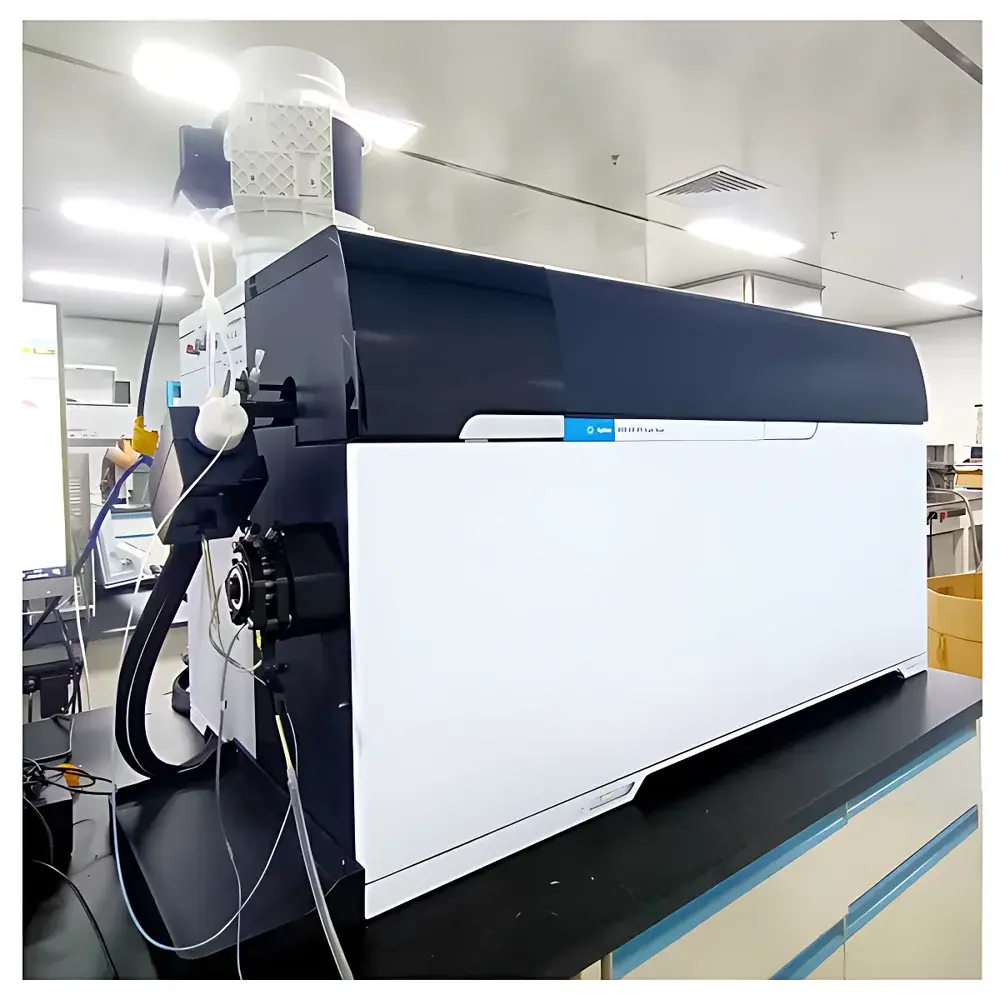
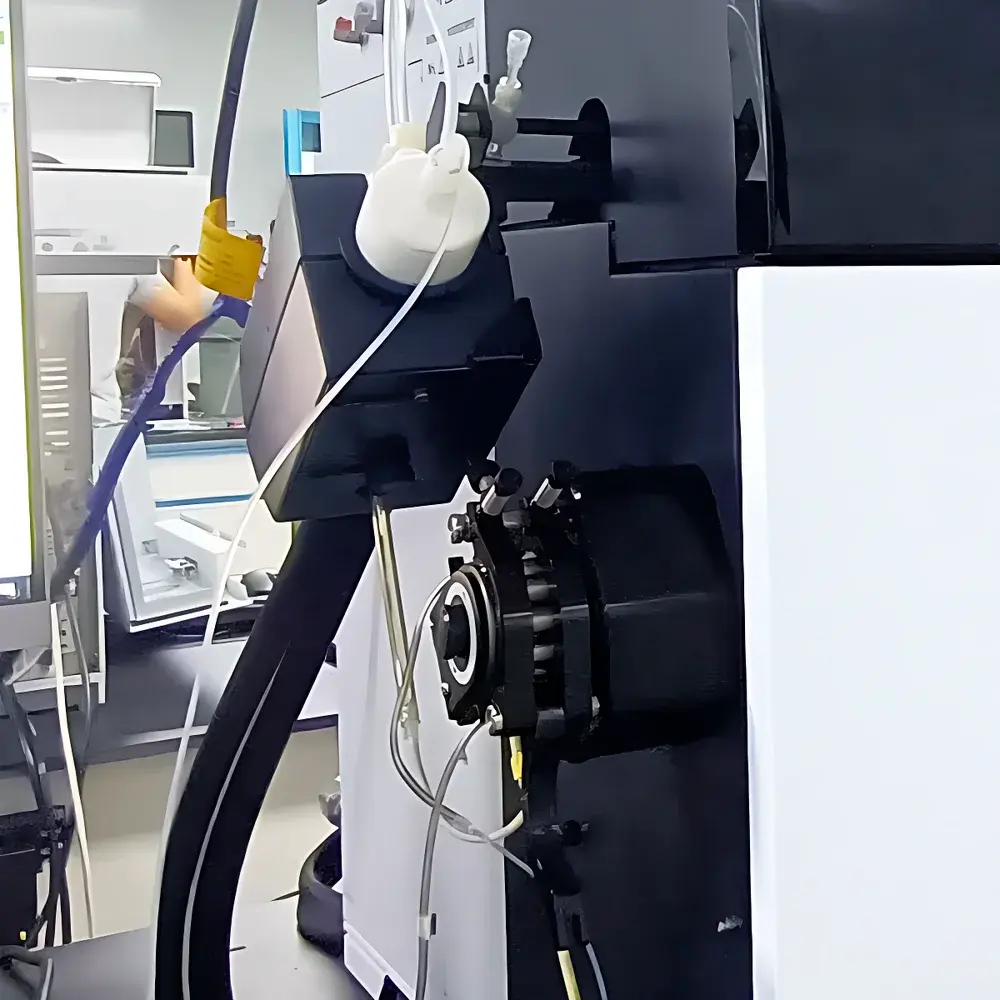
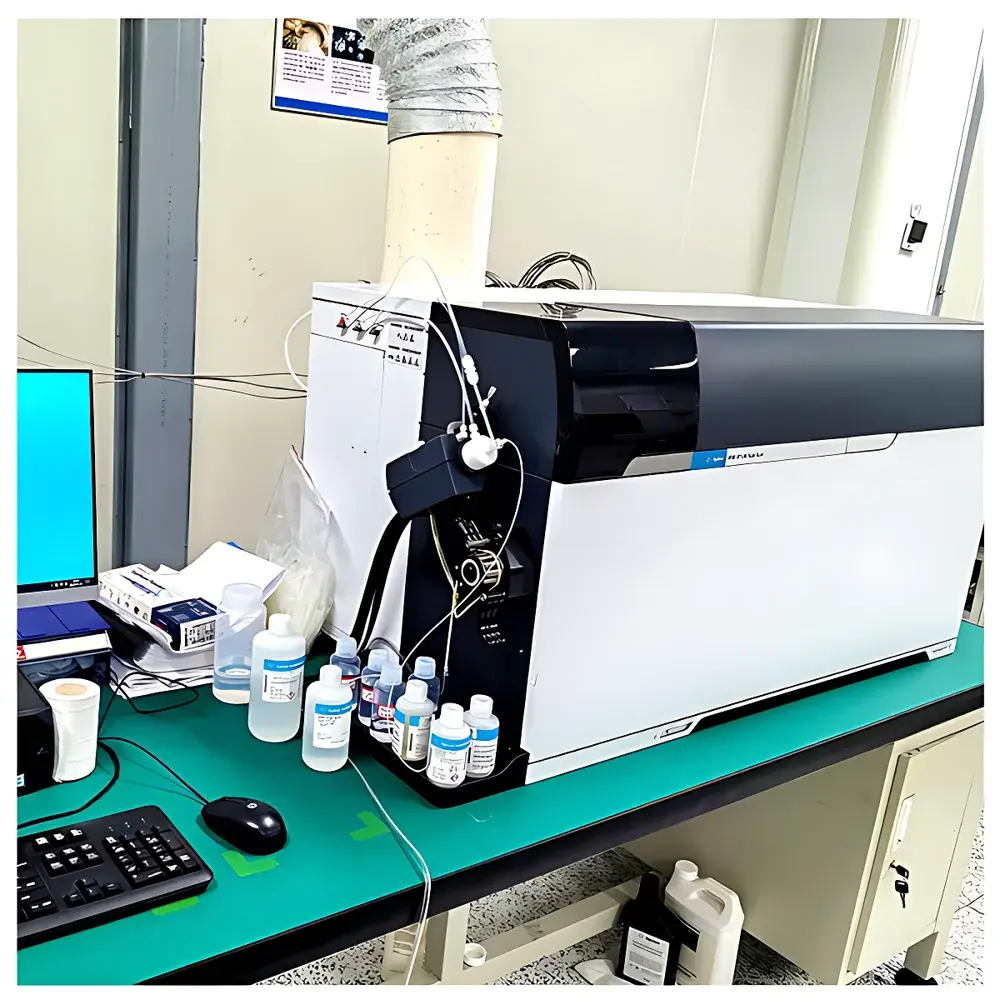
Agilent 8900 ICP-MS/MS Triple Quadrupole Inductively Coupled Plasma Mass Spectrometer
| Brand | Agilent Technologies |
|---|---|
| Origin | USA |
| Instrument Type | Triple Quadrupole ICP-MS |
| Mass Range (amu) | 2–260 |
| Unit Mass Resolution (FWHM at 10% peak height) | 1 amu |
| Detection Limit (ng·L⁻¹) | <1 |
| Sensitivity (Mcps per mg·L⁻¹) | ≥10 |
| Short-Term Stability (RSD, 10 min) | ≤2% |
| Long-Term Stability (RSD, 2 h) | ≤2% |
| Collision/Reaction Cell Gas Control | 4-channel independent mass flow control |
| Matrix Tolerance (TDS) | up to 25% with UHMI capability |
| Plasma Oxide Ratio (CeO⁺/Ce⁺) | <2% |
Overview
The Agilent 8900 ICP-MS/MS is a triple quadrupole inductively coupled plasma mass spectrometer engineered for uncompromising elemental analysis in ultra-trace and high-matrix applications. Unlike conventional single-quadrupole ICP-MS systems, the 8900 integrates two mass-resolving quadrupole filters—Q1 upstream and Q2 downstream of a pressurized collision/reaction cell (CRC)—enabling true MS/MS operation. This architecture permits selective transmission of precursor ions through Q1, controlled gas-phase reactions within the CRC (using H₂, O₂, NH₃, He, or mixed gases), and subsequent detection of product ions by Q2. The system operates at unit mass resolution (1 amu) while maintaining high ion transmission efficiency under ultra-high vacuum conditions (<1×10⁻⁷ mbar in both quadrupole regions). Its design addresses fundamental limitations of high-resolution magnetic sector or single-quadrupole instruments—particularly for analytes plagued by isobaric overlaps (e.g., 31P+ vs. 14N16O1H+, 32S+ vs. 16O2+) and polyatomic interferences (e.g., 40Ar16O+ on 56Fe+). The instrument delivers sub-pg·g⁻¹ detection capability in complex matrices, supporting compliance-critical workflows in semiconductor materials certification, nuclear fuel cycle monitoring, clinical trace metal research, and geochemical isotopic ratio studies.
Key Features
- Triple quadrupole architecture with independently tuned Q1 and Q2 for precise precursor/product ion selection
- Four-channel mass flow controller enabling rapid, reproducible switching between reaction gases (H₂, O₂, NH₃, He) and gas mixtures
- He-mode collision cell optimized for kinetic energy discrimination (KED), suppressing common argon-based polyatomics without chemical reaction
- Ultra-High Matrix Introduction (UHMI) system compatible with samples containing up to 25% total dissolved solids (TDS), minimizing dilution-induced contamination risk
- Low oxide formation plasma source (CeO⁺/Ce⁺ < 2%) ensuring robust performance with saline, organic, or acidic digestates
- Preset method library for routine elements (Si, P, S, Cl, K, Ca, Fe, As, Se, Br, I, U), reducing method development time by >70%
- Full MS/MS scan modes: precursor ion scan, product ion scan, neutral loss scan, and selected reaction monitoring (SRM)
- Integrated RF generator with real-time impedance matching for stable plasma ignition across variable sample loads
Sample Compatibility & Compliance
The Agilent 8900 accommodates liquid samples introduced via standard nebulizers (e.g., MicroMist, PFA-ST), laser ablation systems (with optional interface), and hydride generation modules. It supports direct analysis of high-salt brines, HF-digested geological matrices, organic solvents (up to 20% methanol), and nanoparticle suspensions. From a regulatory standpoint, the platform is designed to support GLP/GMP-aligned workflows: audit trails, electronic signatures, and user-access controls are fully implemented in MassHunter Software v11.3+. Data integrity complies with FDA 21 CFR Part 11 requirements, including secure archiving, version-controlled method storage, and immutable raw data retention. Method validation protocols align with ISO/IEC 17025:2017 and ASTM D5673-21 for trace element quantification in high-purity chemicals.
Software & Data Management
Control and data acquisition are managed through Agilent MassHunter Workstation Software (v11.3+), which provides a validated, modular environment for instrument control, quantitative analysis, and spectral interpretation. The software includes embedded reaction chemistry guidance tools that recommend optimal Q1/Q2 mass pairs and reaction gas conditions based on user-defined analyte lists and matrix composition. All acquisitions support full metadata tagging—including instrument parameters, calibration history, QC results, and environmental sensor logs (temperature, humidity, argon pressure). Raw data files (.d format) are stored in a hierarchical, timestamped directory structure compliant with LIMS integration standards (ASTM E1578-20). Batch processing enables automated calibration curve fitting (linear, quadratic, weighted), internal standard drift correction, and isotope ratio calculation with propagated uncertainty estimation.
Applications
- Ultra-trace impurity profiling in semiconductor-grade acids (HF, HNO₃, H₂SO₄) per SEMI C37 and SEMI F57 standards
- Isotopic analysis of actinides (U, Pu, Am) in spent nuclear fuel reprocessing streams
- Quantification of low-Z elements (F, Na, Mg, Al, Si, P, S, Cl) in biological fluids and pharmaceutical excipients
- Direct determination of sulfur species in petrochemical feedstocks without derivatization
- Single-particle ICP-MS (spICP-MS) for nanoparticle size distribution and dissolution kinetics in environmental waters
- High-precision isotopic ratio measurements (e.g., 87Sr/86Sr) in geochronology with external precision < 50 ppm (2SE)
FAQ
How does ICP-MS/MS differ from high-resolution ICP-MS in resolving isobaric interferences?
ICP-MS/MS resolves interferences through selective gas-phase reactions in the CRC, whereas high-resolution ICP-MS relies solely on mass separation. For example, 40Ar35Cl+ on 75As+ cannot be separated by mass resolution alone due to identical nominal mass; ICP-MS/MS uses O₂ to convert As⁺ to AsO⁺ (m/z 91) while Cl-containing interferences remain unreactive or form different products.
Can the 8900 analyze non-metal elements such as sulfur and phosphorus in seawater?
Yes—the 8900 achieves sub-ng·L⁻¹ detection limits for S and P in 3.5% NaCl matrix using O₂ reaction mode and UHMI introduction, meeting ISO 17294-2:2016 requirements for marine environmental monitoring.
Is method transfer possible from single-quadrupole ICP-MS platforms?
MassHunter’s Method Migration Assistant automates conversion of existing single-quad methods to MS/MS configurations, preserving calibration curves and QC criteria while optimizing Q1/Q2 settings and reaction gas flows.
What maintenance intervals are recommended for routine operation?
Daily: torch inspection, skimmer cone cleaning; Weekly: sampler cone cleaning, CRC gas line leak check; Quarterly: ion lens alignment, vacuum pump oil change; Annually: detector replacement and RF amplifier calibration—per Agilent Service Plan 8900-SV-1A.
Does the system support isotopic ratio measurements with certified reference materials?
Yes—certified reference materials (e.g., NIST SRM 3100 series, IRMM-3702) are preloaded in MassHunter’s CRM database, enabling automatic bracketing correction and uncertainty propagation per ISO/IEC Guide 98-3.




