
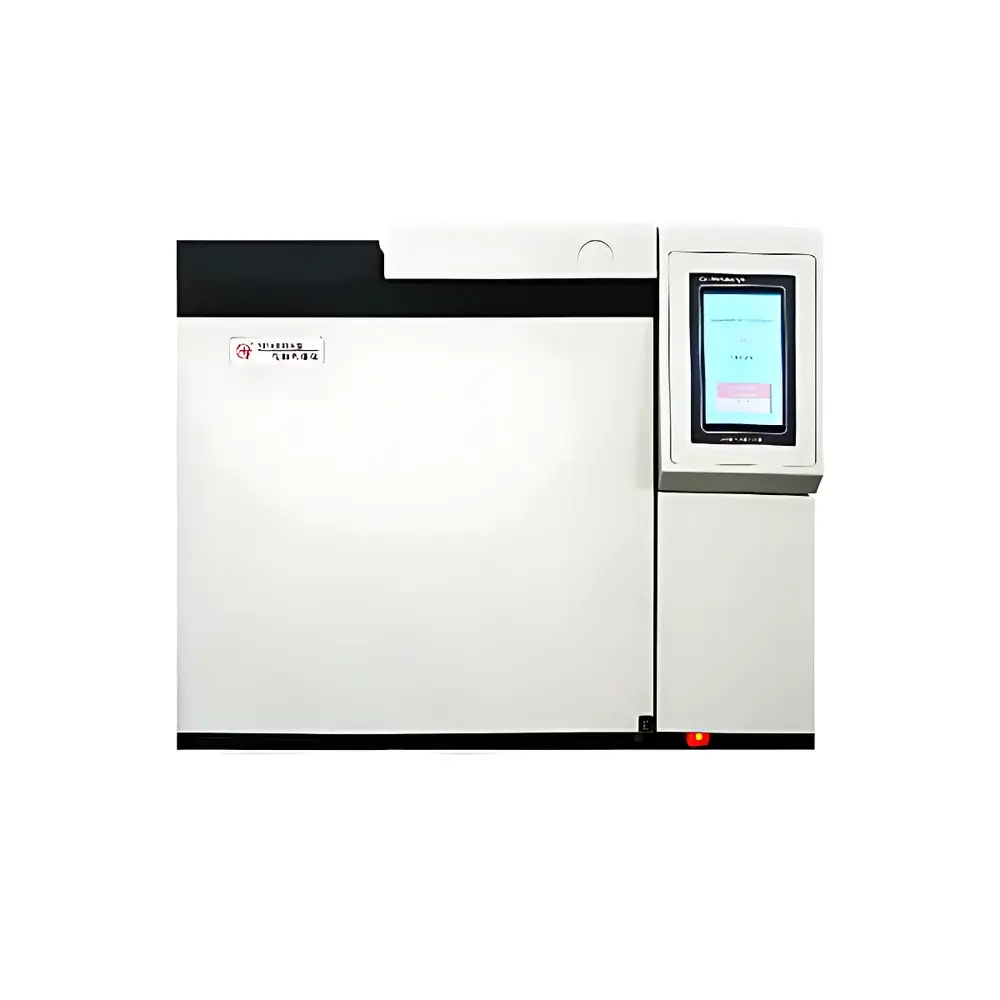
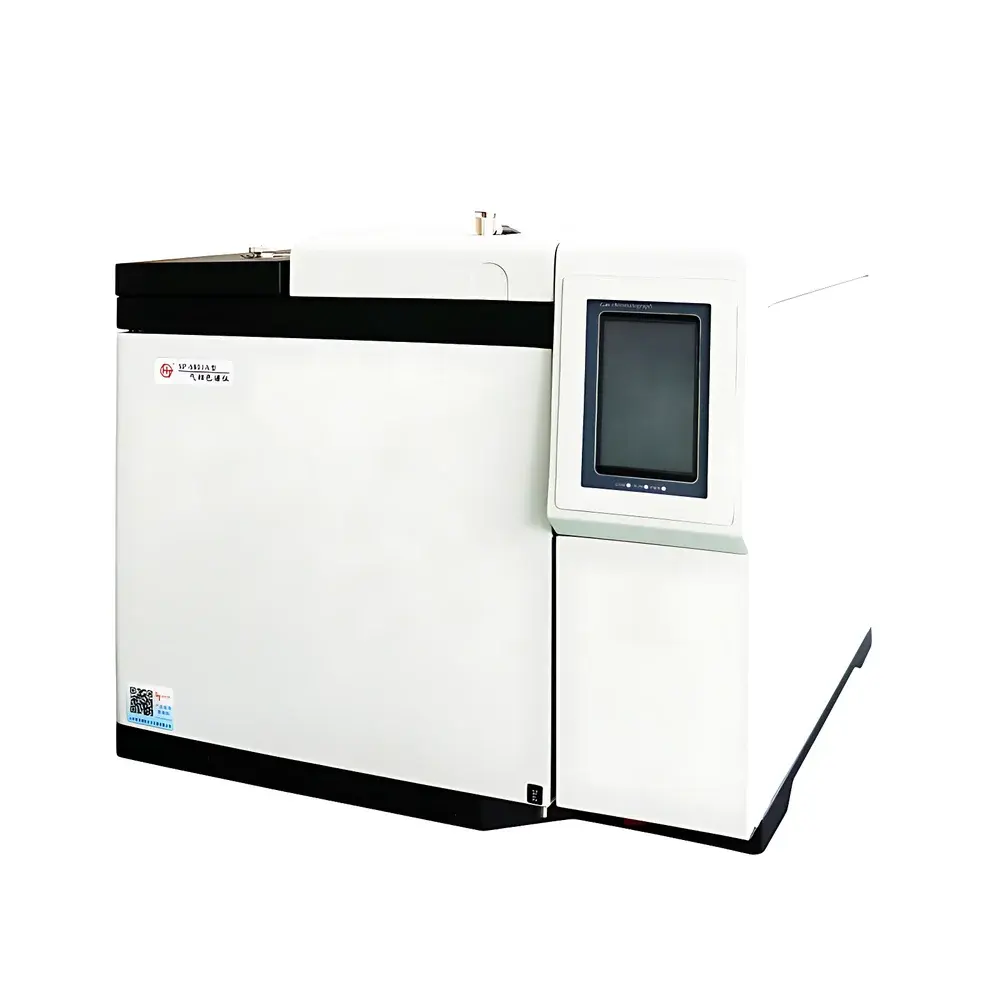
Lunan Ruihong SP-6801A Laboratory Gas Chromatograph
| Brand | Lunan Ruihong |
|---|---|
| Origin | Shandong, China |
| Model | SP-6801A |
| Instrument Type | Benchtop Laboratory Gas Chromatograph |
| Temperature Control Range | Ambient +3°C to 399°C |
| Temperature Stability | ±0.1°C |
| Temperature Accuracy | ±3% of setpoint |
| Oven Cooling Rate | ~8 minutes from 250°C to 50°C |
| FID Detection Limit | ≤5×10⁻¹¹ g/s (n-hexadecane in iso-octane) |
| FID Linear Range | ≥10⁶ |
| TCD Sensitivity | ≥2000 mV·mL/mg (benzene/toluene) |
| TCD Linear Range | ≥10⁴ |
| ECD Detection Limit | ≤5×10⁻¹³ g/mL (γ-HCH in iso-octane) |
Overview
The Lunan Ruihong SP-6801A is a benchtop laboratory gas chromatograph engineered for routine qualitative and quantitative analysis of volatile and semi-volatile organic compounds. Based on the fundamental principle of differential partitioning between a mobile gas phase (carrier gas, typically helium, hydrogen, or nitrogen) and a stationary liquid or polymer phase coated inside a fused-silica capillary or packed column, the SP-6801A achieves compound separation through controlled thermal modulation. Its modular detector architecture supports interchangeable configurations—FID, TCD, or ECD—enabling method flexibility across diverse analytical requirements. Designed for reliability in high-throughput environments, the instrument features a thermally insulated oven with precise PID-controlled heating, an intelligent rear door mechanism for accelerated cooling, and a 9-step programmable temperature ramp profile. The system operates within a certified ambient +3°C to 399°C column temperature range, with thermal stability maintained at ±0.1°C under steady-state conditions and accuracy traceable to NIST-traceable reference standards.
Key Features
- Compact, space-efficient benchtop design optimized for standard laboratory workspaces and fume hood integration.
- Color touchscreen interface with intuitive icon-driven navigation—no keyboard or external PC required for basic method setup and run control.
- Intelligent rear oven door system enabling rapid thermal equilibration; achieves cooling from 250°C to 50°C in approximately 8 minutes, reducing cycle time between analyses.
- Column oven capable of 9-stage temperature programming with independent ramp rate control (0.1–40°C/min), hold time definition (0.1–999.9 min), and post-run cooldown sequencing.
- Dual-channel analog output (FID/TCD/ECD selectable) compatible with legacy integrators and modern data systems via standard 0–1 V or 0–5 V signals.
- Robust mechanical architecture with vibration-dampened detector mounts and sealed electronics compartment for long-term operational consistency in non-climate-controlled labs.
Sample Compatibility & Compliance
The SP-6801A accommodates standard 0.1–0.53 mm ID capillary columns (up to 60 m) and packed columns (2–4 mm ID, up to 4 m), supporting common stationary phases including DB-5, HP-1, Wax, PLOT, and porous polymer materials. It is routinely deployed for ASTM D3606 (benzene/toluene in gasoline), EPA Method 8021B (halogenated hydrocarbons), USP (residual solvents), and GB/T 5009.20 (pesticide residues in food). While not pre-certified for 21 CFR Part 11 compliance, its analog signal architecture and audit-ready manual logbook functionality support GLP/GMP-aligned workflows when paired with validated third-party acquisition software. All detector modules meet IEC 61000-4 electromagnetic compatibility standards for laboratory environments.
Software & Data Management
The SP-6801A operates in standalone mode via its embedded firmware but interfaces seamlessly with industry-standard chromatography data systems (CDS) including Chromeleon™, OpenLAB CDS, and Empower™ via RS-232 or optional USB-to-serial adapter. Raw analog outputs are digitized at 10 Hz sampling rate, ensuring sufficient resolution for narrow peaks (≥3 data points per 1-second peak width). Method files—including column parameters, temperature programs, detector settings, and integration events—are stored internally and exportable as CSV or ASCII text. Audit trail capability is implemented at the operator level through timestamped method save/load logs, though electronic signature and full 21 CFR Part 11 compliance require integration with validated external CDS platforms.
Applications
- Petrochemical QA/QC: Hydrocarbon group-type analysis (PIONA), benzene content in reformulated gasoline, and sulfur compound profiling using FID or pulsed discharge helium ionization (PDHID) adaptation.
- Environmental monitoring: Quantification of chlorinated pesticides (e.g., DDT, HCH isomers), PCB congeners, and volatile organic compounds (VOCs) in soil/water extracts per EPA SW-846 methods.
- Food safety: Residue testing of organophosphorus and organochlorine pesticides in fruits, vegetables, and cereals; ethanol and methanol detection in alcoholic beverages.
- Pharmaceutical manufacturing: Residual solvent verification in active pharmaceutical ingredients (APIs) per ICH Q3C guidelines using headspace-GC/FID configuration.
- Academic research: Teaching chromatographic theory, retention index calibration, and detector response factor studies in undergraduate and graduate analytical chemistry laboratories.
FAQ
What detector configurations are supported out-of-the-box?
The SP-6801A ships with one detector installed—FID, TCD, or ECD—and includes mounting hardware and electrical interfaces for field-swappable installation of any of the three. Detector change requires recalibration and baseline verification.
Is the column oven compatible with cryogenic cooling or sub-ambient operation?
No. The oven is designed for heating only, with minimum operating temperature at ambient +3°C. Sub-ambient separation requires external cryo-cooling accessories not supplied by the manufacturer.
Can the instrument be integrated into a LIMS environment?
Yes—via ASCII/CSV export of result reports or through OEM-level API integration with validated CDS platforms that support LIMS connectivity (e.g., Thermo Fisher SampleManager, LabWare LIMS).
What maintenance intervals are recommended for optimal performance?
FID jet cleaning every 200–300 injections; TCD filament inspection every 6 months; carrier gas line filter replacement quarterly; and column trimming/cutting every 50–100 runs depending on sample matrix cleanliness.
Does the SP-6801A support split/splitless injection and cold-on-column techniques?
It supports standard split/splitless injection via optional programmable pressure/volume (PPV) inlet modules. Cold-on-column injection is not natively supported but can be enabled with third-party inlet retrofits compatible with 1/16″ stainless steel tubing interfaces.
Related Products




