Profile Sense PS LDV FP50 Shift Linear Laser Doppler Velocimeter
| Brand | PIV View |
|---|---|
| Origin | Germany |
| Manufacturer Type | Authorized Distributor |
| Origin Category | Imported |
| Model | PS LDV FP50 Shift |
| Pricing | Available Upon Request |
Overview
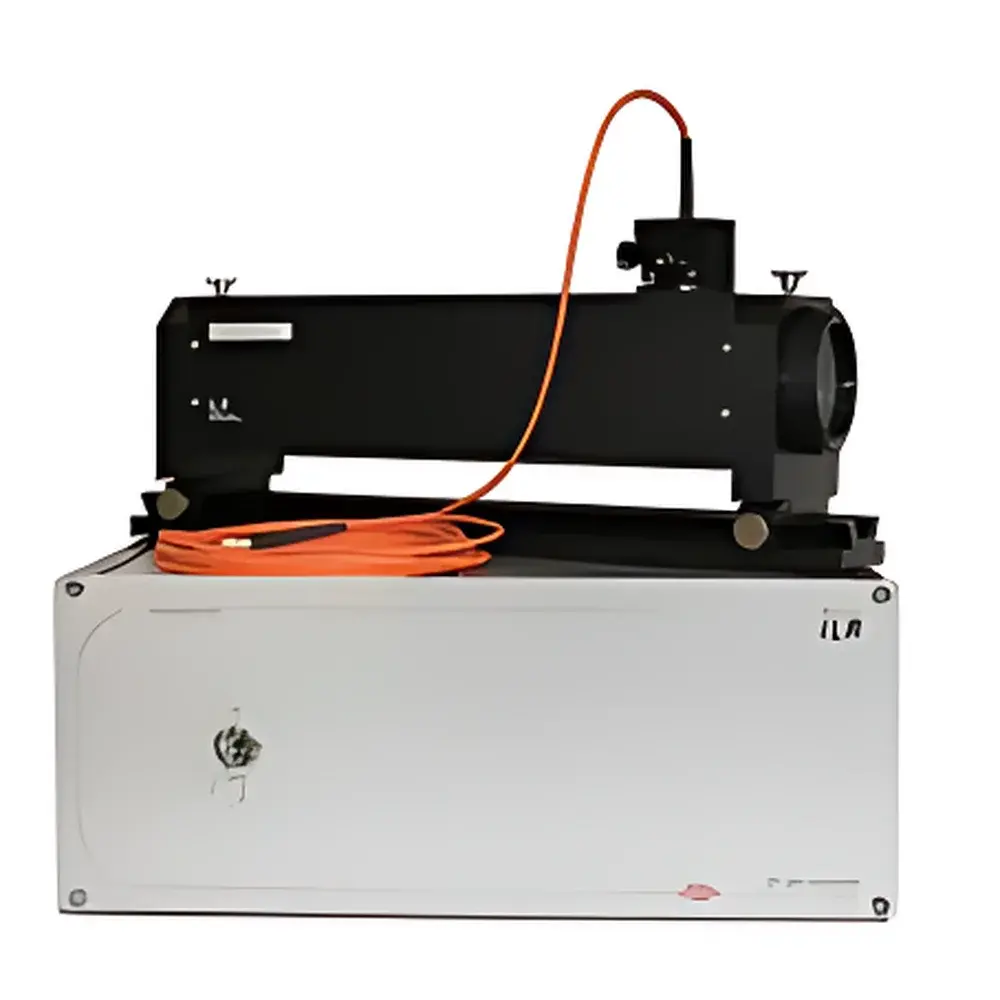
The Profile Sense PS LDV FP50 Shift Linear Laser Doppler Velocimeter is a high-resolution, single-axis laser Doppler velocimetry system engineered for non-intrusive, point-wise velocity and spatial position measurement within fluid flows. Unlike conventional LDV systems that require mechanical scanning to reconstruct velocity profiles, the PS LDV FP50 Shift employs a dual-pair (four-beam), co-aligned optical configuration—comprising one divergent and one convergent beam pair—to generate a fully overlapped measurement volume with sub-micron spatial definition. The system operates on the fundamental principle of heterodyne interferometry: when tracer particles traverse the interference fringes formed by intersecting laser beams, they scatter light modulated by both Doppler frequency shift (proportional to instantaneous velocity) and phase shift (encoding axial position relative to the fringe center). By simultaneously demodulating amplitude and phase of the photodetected signal, the instrument delivers synchronized, time-resolved velocity and axial coordinate data for each detected particle—enabling true line-wise velocity field mapping without physical translation of the probe volume.
Key Features
- Sub-micrometer spatial resolution: Achieves ≤1 µm axial localization accuracy, corresponding to ~1% of the measurement volume length—enabling boundary-layer, shear-layer, and near-wall flow characterization.
- Single-shot linear profiling: Captures full velocity distribution along a 1D line (measurement volume axis) in real time; eliminates need for mechanical scanning or multiple acquisition positions.
- Dual-parameter acquisition: Simultaneously outputs particle velocity (m/s) and axial position (µm) per scattering event—supporting coupled velocity–temperature inference via calibrated thermophoretic or Rayleigh scattering augmentation (when integrated with compatible thermal seeding).
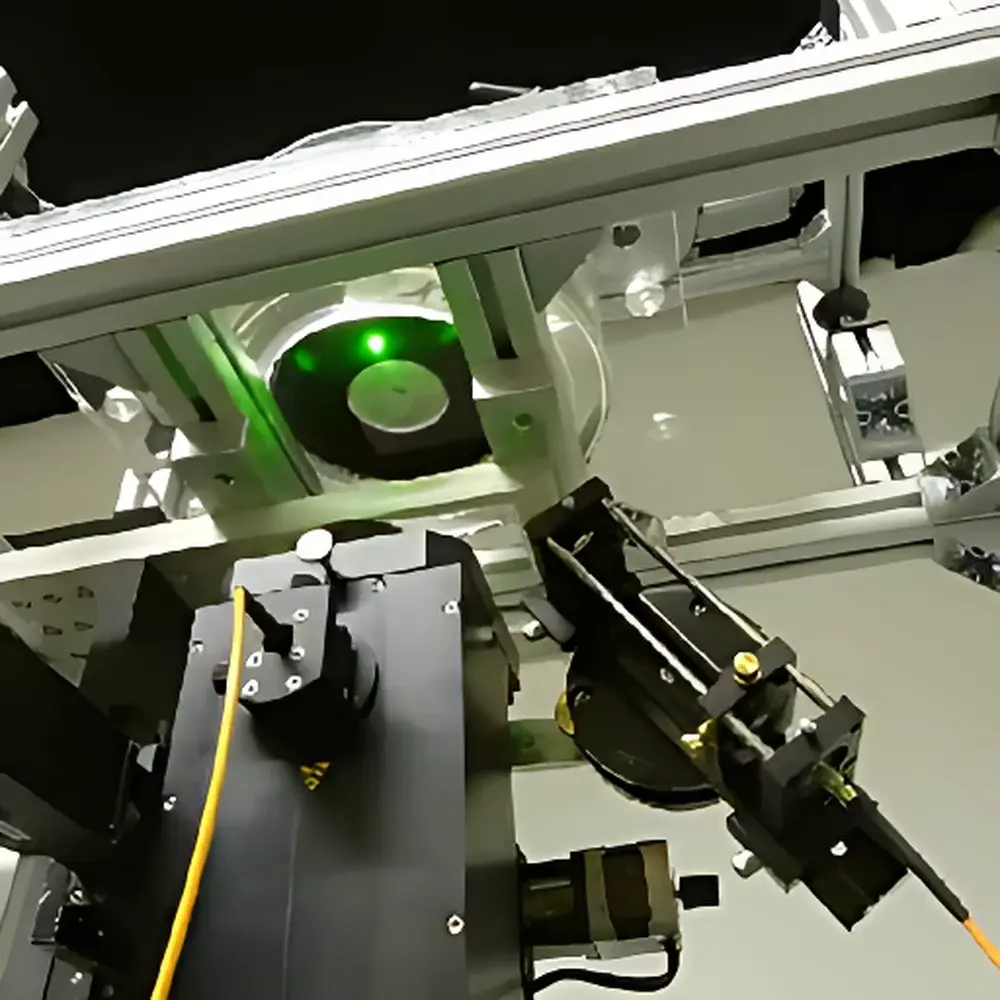
- Four-beam co-aligned architecture: Two orthogonally polarized, counter-propagating beam pairs (divergent + convergent) produce a stationary, diffraction-limited measurement volume visible as a single beam to the naked eye—minimizing optical misalignment drift and enhancing long-term stability.
- Wide dynamic velocity range: Configurable for laminar to supersonic flow regimes (0–>340 m/s typical, dependent on laser wavelength, beam geometry, and particle response time).
- Uncertainty performance: Velocity measurements exhibit ≤0.1% relative standard uncertainty under ISO/IEC 17025-compliant calibration conditions, traceable to NIST-certified reference standards.
Sample Compatibility & Compliance
The PS LDV FP50 Shift is compatible with standard aerosol and liquid-phase tracer particles (e.g., DEHS, SiO₂, TiO₂, or hollow glass spheres, 0.5–5 µm diameter) dispersed in air, nitrogen, combustion gases, water, or organic solvents. Its optical design supports operation in pressurized vessels (up to 10 bar), high-temperature environments (with optional quartz viewport cooling), and transient flow facilities (e.g., shock tubes, rapid compression machines). The system conforms to IEC 61000-6-3 (EMC emission limits), IEC 60825-1 (laser safety Class 2M), and supports integration into GLP/GMP-regulated laboratories through optional audit-trail-enabled firmware and 21 CFR Part 11-compliant software modules.
Software & Data Management
Acquisition and analysis are managed via PIV View’s proprietary LDV Control Suite v4.2+, which provides real-time signal conditioning, adaptive thresholding, burst-mode triggering, and phase-unwrapping algorithms optimized for high-density particle events. Raw interferometric signals are stored in HDF5 format with embedded metadata (timestamp, laser power, trigger source, calibration coefficients). Post-processing tools include ensemble averaging, probability density function (PDF) generation, turbulence intensity calculation (u′/U), and export to MATLAB, Python (via h5py), or ASCII for third-party CFD validation. All software modules undergo annual verification per ISO/IEC 17025 Clause 5.9 and support electronic signature workflows aligned with FDA 21 CFR Part 11 Annex 11 requirements.
Applications
- Aerodynamic development: Boundary-layer transition detection, wake profiling behind airfoils or turbine blades, and jet mixing characterization.
- Combustion diagnostics: Velocity–temperature coupling in premixed and diffusion flames; validation of LES and RANS simulations.
- Microfluidics & MEMS: Quantification of electro-osmotic flow, pressure-driven slip flow, and viscoelastic fluid migration in microchannels.
- Calibration traceability: Primary standard for calibrating hot-wire anemometers, Pitot-static probes, and ultrasonic flow meters per ASTM D2512 and ISO 20765-2.
- Industrial process monitoring: Real-time velocity feedback control in spray drying, pneumatic conveying, and chemical vapor deposition reactors.
FAQ
How does PS LDV differ from conventional two-beam LDV in terms of spatial resolution?
Conventional LDV determines only velocity magnitude at a fixed measurement volume location. PS LDV uses phase-encoded fringe modulation to resolve axial particle position within the same volume—achieving ≤1 µm localization versus typical LDV’s ~10–50 µm effective resolution.
Can PS LDV operate in opaque or highly scattering media?
No—it requires optical access and low Mie-scattering background; suitable for transparent or semi-transparent flows (e.g., seeded air/water jets), but not for dense sprays or soot-laden flames without spectral filtering.
Is temperature measurement inherent or requires additional hardware?
Temperature inference is indirect and requires complementary calibration (e.g., using thermophoretic particle response or simultaneous Rayleigh scattering); no integrated thermometer is included.
What laser wavelengths are supported?
Standard configuration uses 532 nm DPSS lasers; optional 405 nm or 640 nm modules available for improved scattering efficiency with submicron particles or reduced photobleaching in biological analogs.
Does the system support synchronization with external triggers such as spark plugs or valve actuators?
Yes—TTL-compatible trigger input (0–5 V, <10 ns jitter) enables precise phase-locked acquisition in cyclic processes (e.g., IC engines, pulsatile flows).