
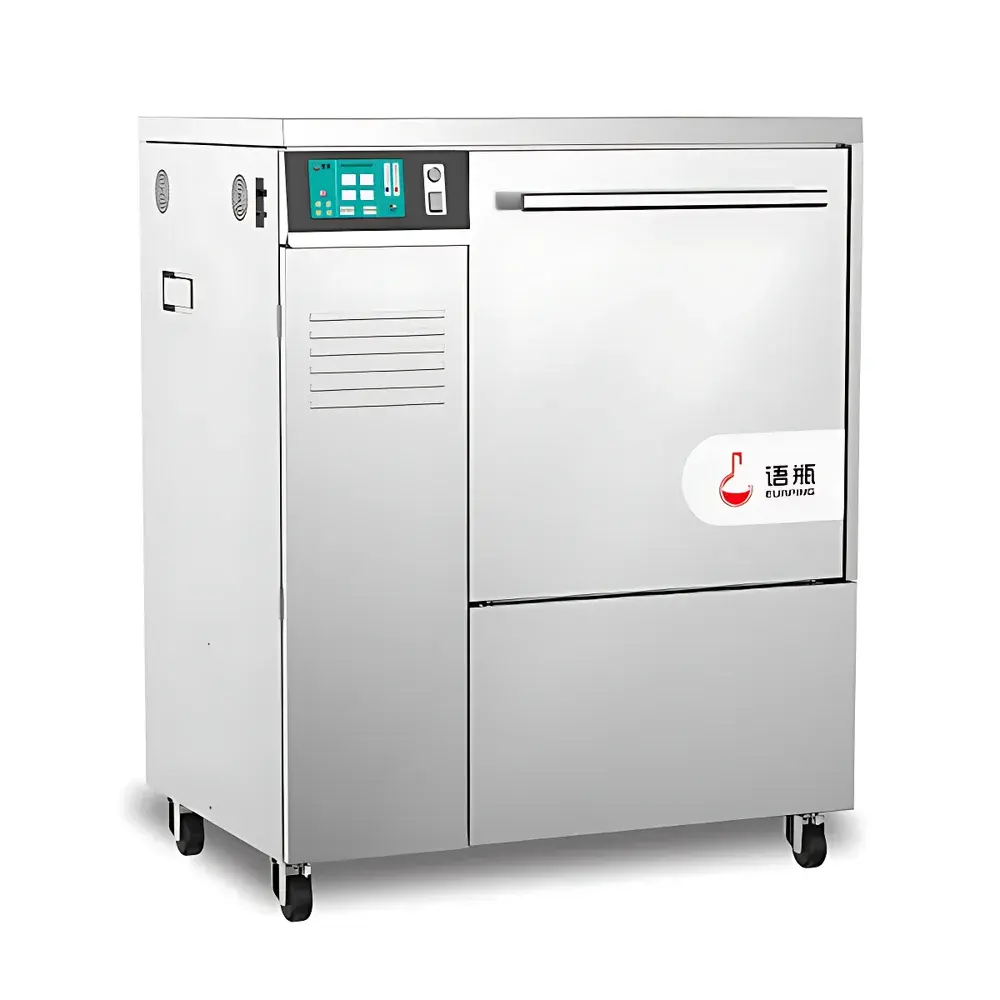
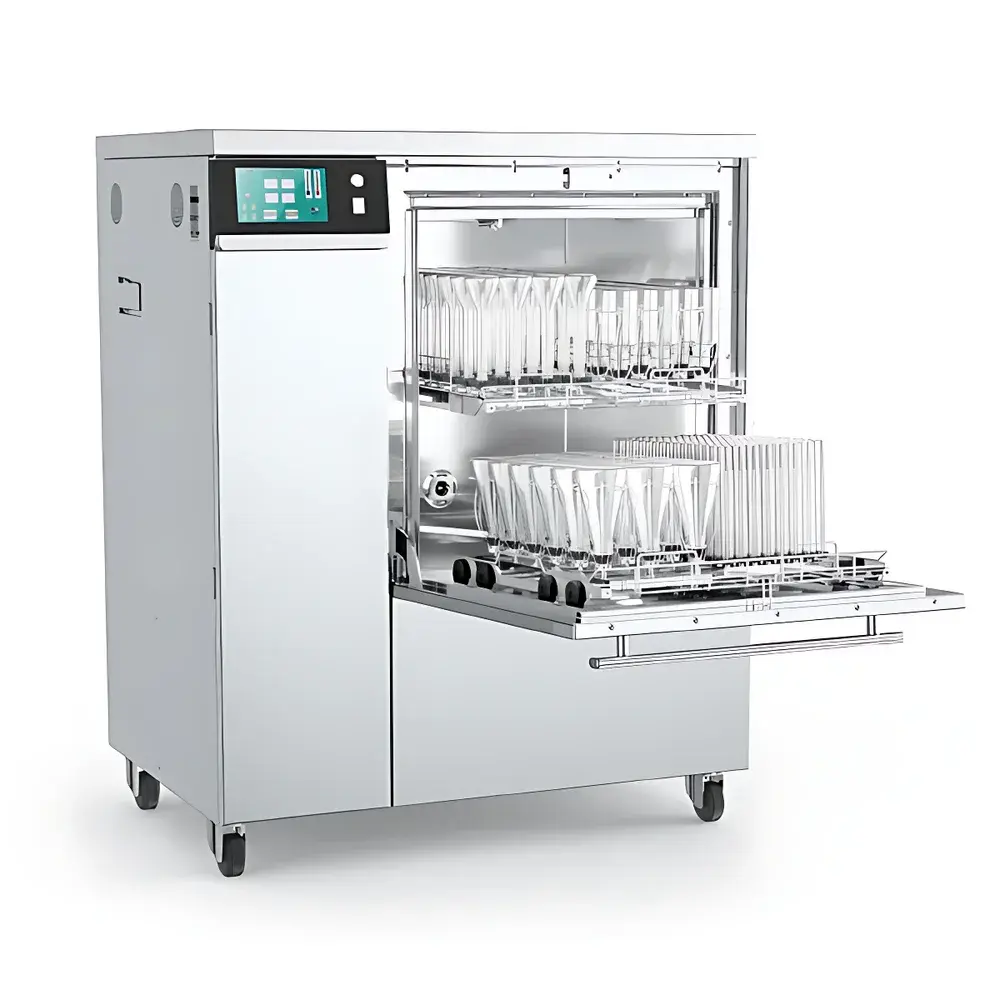
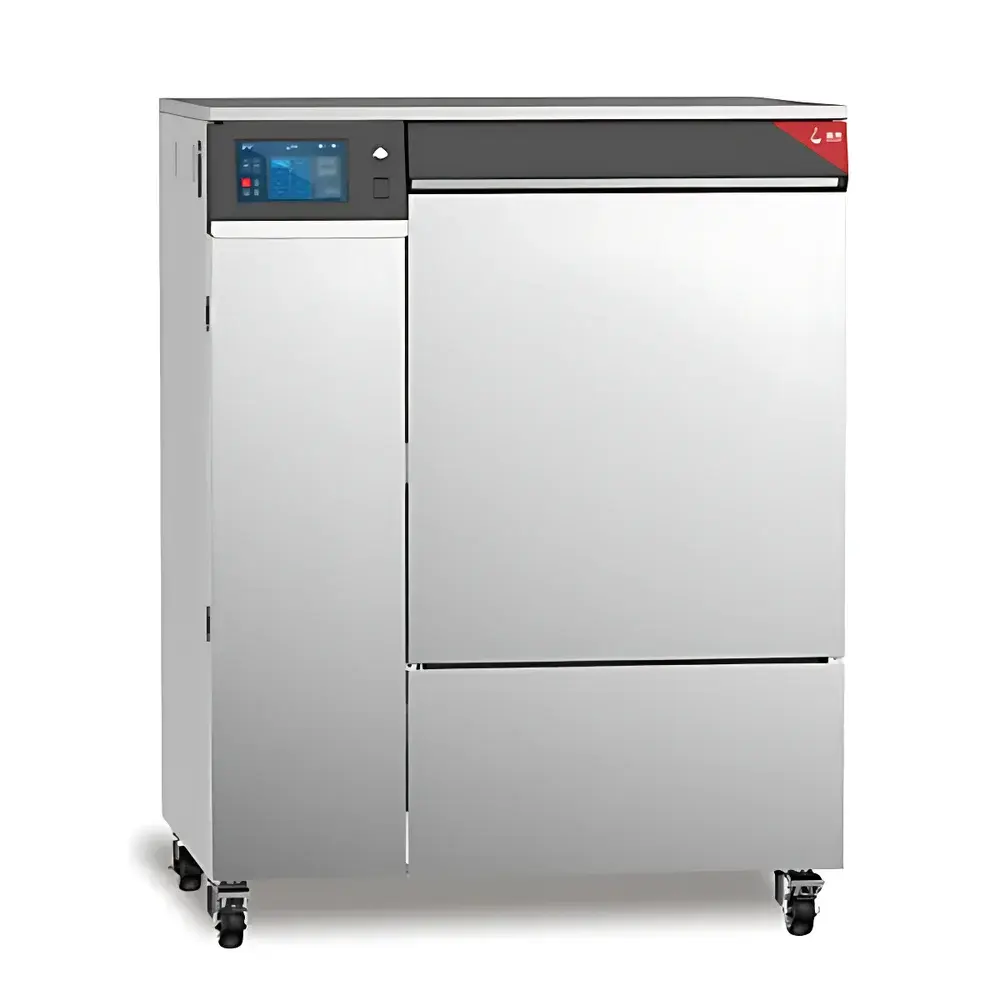
EURPING Q720D Laboratory Bottle Washer
| Brand | EURPING |
|---|---|
| Origin | Tianjin, China |
| Manufacturer Type | Direct Manufacturer |
| Product Origin | Domestic (China) |
| Model | Q720D |
| Chamber Volume | 223 L |
| Heating Power | 5 kW |
| Maximum Cleaning Temperature | 95 °C |
| Compatible Detergents | Acidic and Alkaline Cleaning Agents |
| External Dimensions (L×W×H) | 1015 × 779 × 1266 mm |
Overview
The EURPING Q720D Laboratory Bottle Washer is an engineered, fully automated cleaning, disinfection, and drying system designed for high-throughput, traceable processing of critical glassware and plastic labware in regulated research, quality control, and clinical laboratory environments. Based on a closed-loop, recirculating spray-jet cleaning principle, the Q720D delivers reproducible cleaning performance through precisely controlled temperature, detergent concentration, mechanical impact (via adjustable flow-rate nozzles), and dwell time—key parameters aligned with ISO 15883-1 (washer-disinfectors for medical devices) and ASTM E2585-21 (standard guide for validation of cleaning processes for reusable laboratory equipment). Its seamless stainless-steel architecture, dual-layer basket capacity, and integrated data logging capability support GLP/GMP-compliant workflows where auditability, process consistency, and residue-free results are non-negotiable.
Key Features
- 223 L monolithic cleaning chamber fabricated from electropolished 316L stainless steel—fully welded-free, pressure-tested, and optimized for uniform spray coverage and minimal dead zones.
- Dual independent washing zones enabling simultaneous processing of two 250 mL volumetric flasks per rack, maximizing throughput without cross-contamination risk.
- Intelligent variable-frequency circulation pump (0–600 L/min range) with real-time pressure sensing and rotating arm speed monitoring for adaptive hydraulic control across all wash phases.
- Microprocessor-based control system with 30 pre-validated standard programs (e.g., for volumetric flasks, pipettes, culture tubes, Erlenmeyer flasks) and 120 user-configurable protocols—each storing full execution metadata including temperature ramp profiles, detergent dosing events, and cycle duration.
- FL-EXCH modular basket system with rear-mounted water supply and automatic rack recognition—ensuring correct fluid delivery path and preventing misloading-induced process deviations.
- HEPA-filtered compressed-air drying system combined with EU-W condensation recovery technology, reducing energy consumption by up to 35% versus conventional hot-air dryers while achieving ≤10 µg residual moisture per 100 cm² surface area.
- Comprehensive safety architecture: EULA motorized door interlock with electronic safety lock, dual overtemperature cutoffs (water heating and drying air), power-loss memory retention, and low-detergent alert with visual/audible notification.
Sample Compatibility & Compliance
The Q720D accommodates a broad spectrum of laboratory containers—including Class A volumetric flasks (10–2000 mL), graduated cylinders, conical flasks (Erlenmeyer), test tubes, centrifuge tubes, wide-mouth bottles, narrow-neck reagent bottles, and borosilicate glass or autoclavable polymerware. All cleaning cycles are validated against ISO 15883-4 Annex B for microbiological reduction (≥log₄ reduction of Bacillus atrophaeus spores) and EN ISO 15883-1 Annex C for soil removal efficiency (measured via ATP bioluminescence and protein assay). The system supports 21 CFR Part 11-compliant electronic records when paired with optional EURPING TraceLink™ software, enabling secure user authentication, audit trails, and electronic signatures for FDA-regulated laboratories.
Software & Data Management
The embedded controller logs timestamped operational data for every component—including pump status, heater duty cycle, detergent injection timing, chamber temperature curves, pressure transducer outputs, and door open/close events. Data exports in CSV or PDF format via USB port; optional Ethernet/Wi-Fi connectivity enables remote monitoring and integration into LIMS or MES platforms. All stored records include digital signatures, immutable timestamps, and version-controlled protocol definitions—meeting ALCOA+ principles (Attributable, Legible, Contemporaneous, Original, Accurate, Complete, Consistent, Enduring, Available).
Applications
- Preparation of trace-metal-free glassware for ICP-MS, AAS, and IC analysis.
- Routine cleaning of volumetric ware prior to calibration or standard solution preparation (per USP & CLSI guidelines).
- Decontamination of biohazard-exposed vessels in biosafety level 2 (BSL-2) labs.
- Removal of organic residues (e.g., lipids, proteins, polymers) from HPLC vials and sample prep containers.
- Validation-ready cleaning for pharmaceutical QC labs operating under Annex 1 and ICH Q5C requirements.
FAQ
What types of detergents are compatible with the Q720D?
Acidic and alkaline enzymatic or chelating detergents certified for laboratory washer use—no chlorine-based or phosphated formulations.
Does the Q720D meet international validation standards?
Yes—it is designed to support IQ/OQ/PQ protocols aligned with ISO 15883, ASTM E2585, and EU GMP Annex 15.
Can the system be integrated into a centralized lab automation network?
Via optional Modbus TCP or OPC UA interface modules for bidirectional communication with building management or LIMS systems.
Is HEPA filtration mandatory for the drying stage?
Standard configuration includes HEPA-class (H13) filtration; optional ULPA (U15) upgrade available for cleanroom-grade drying environments.
How is cleaning efficacy verified post-cycle?
Through built-in conductivity monitoring (resistivity ≥10 MΩ·cm), ATP swab testing, and optional add-on UV-Vis residue detection module (200–800 nm spectral scan).



