
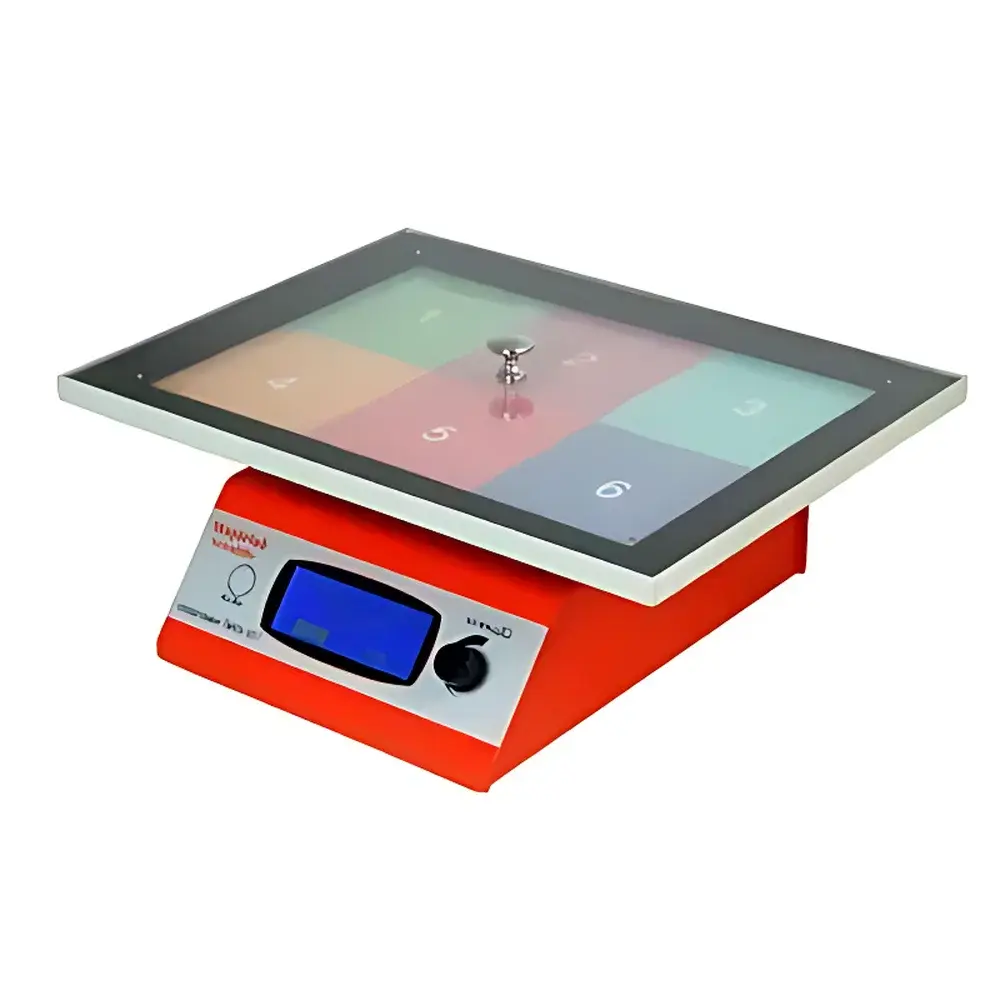
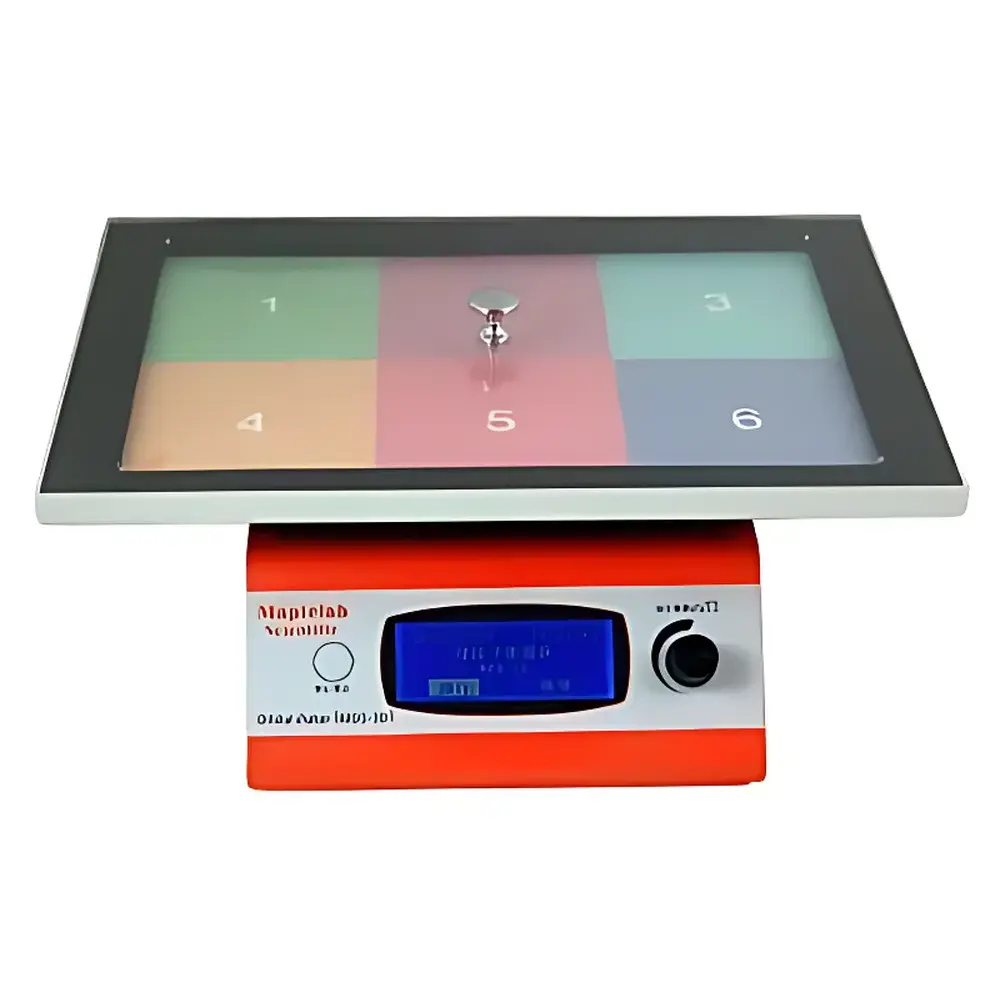
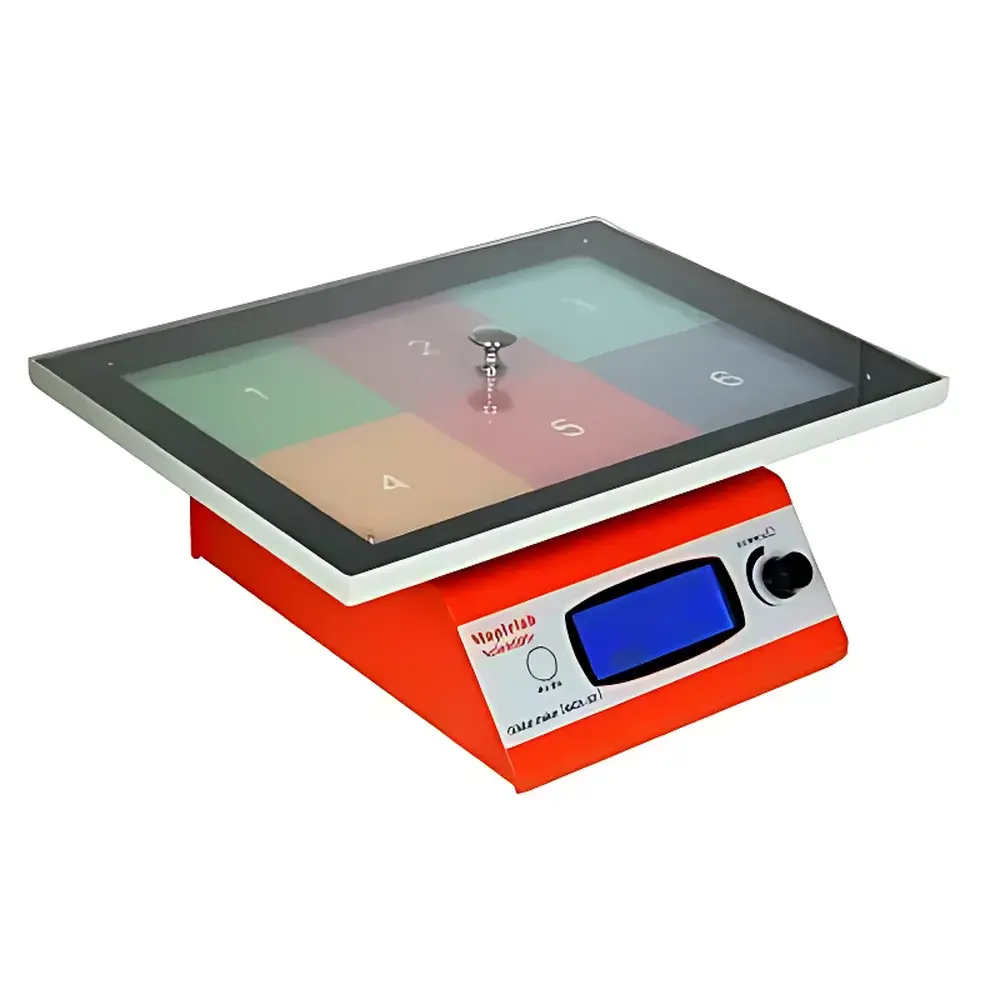
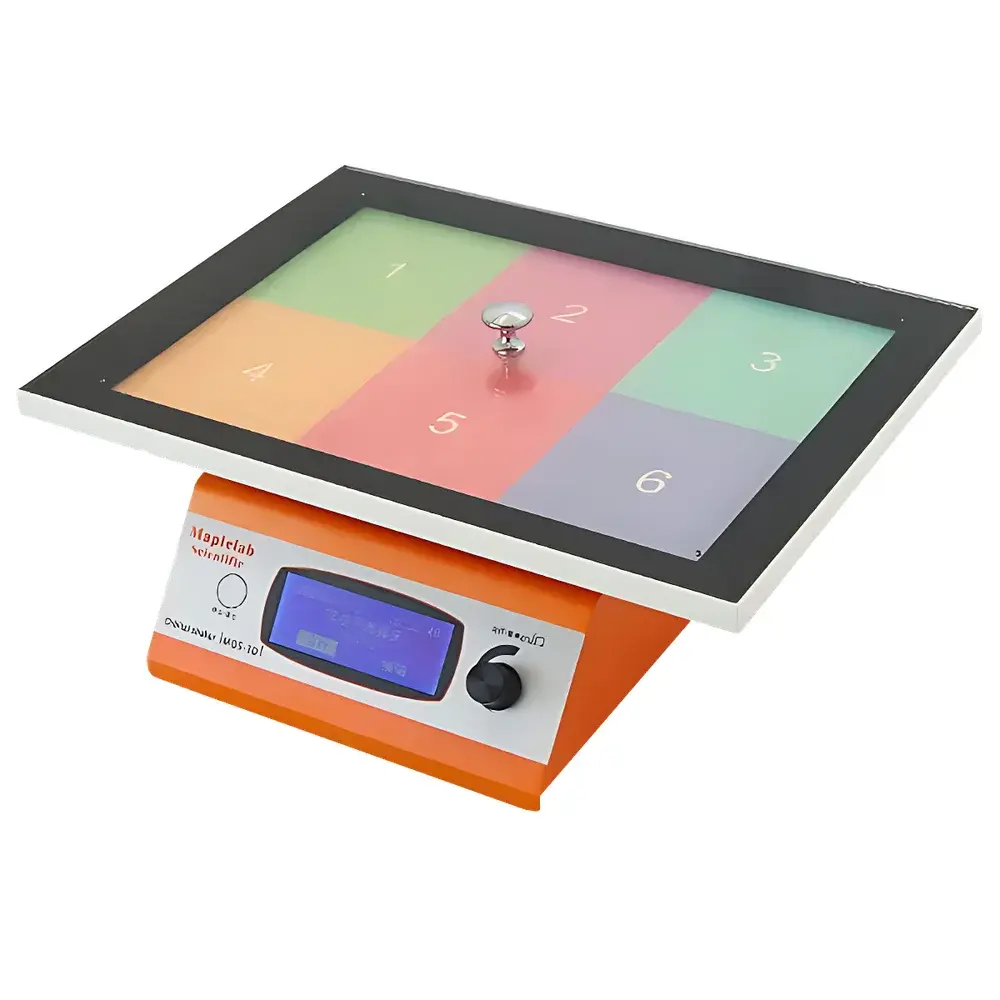
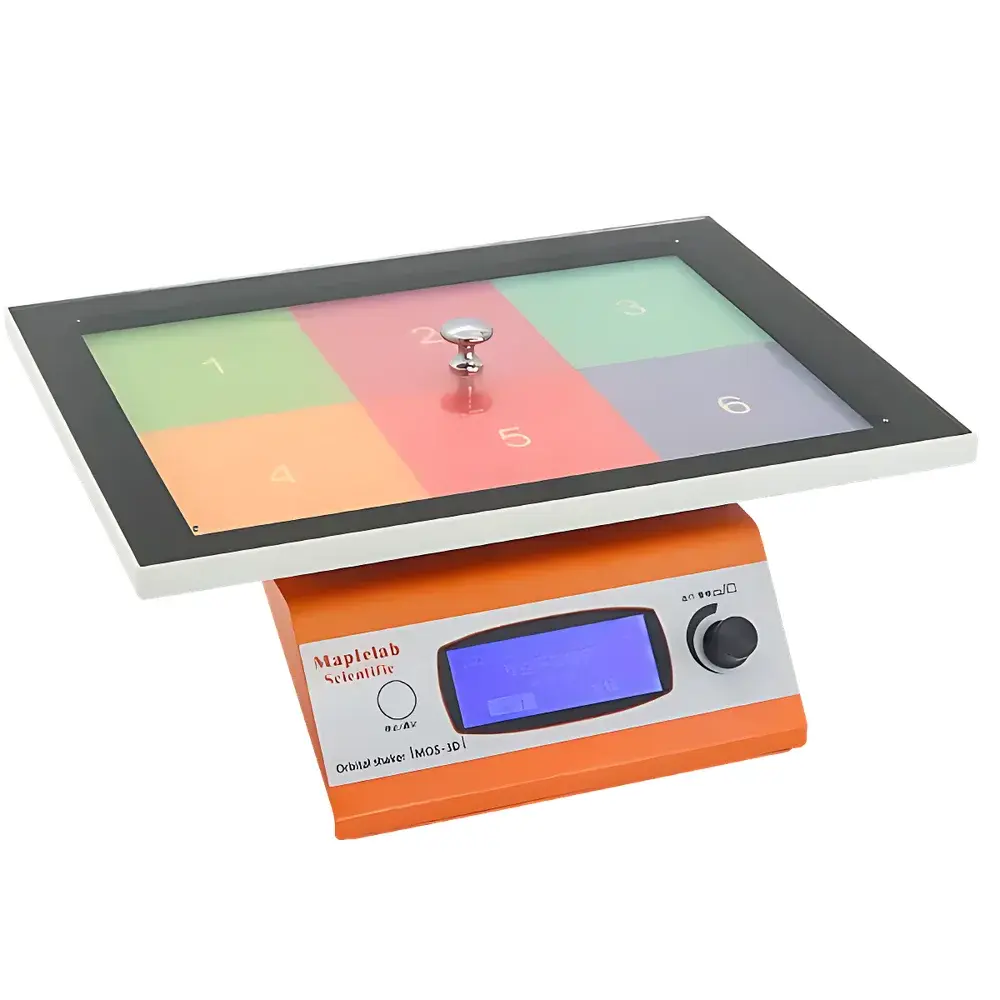
Maplelab MOS-3D Programmable Orbital Shaker for Syphilis Serology Assays
| Brand | Maplelab |
|---|---|
| Model | MOS-3D |
| Instrument Type | Temperature-Controlled Orbital Shaker |
| Timing Range | 1–99 min 59 sec (programmable per stage) |
| Orbit Diameter | 22 mm |
| Temperature Range | Ambient +4°C to 40°C |
| Platform Dimensions | 220 × 220 mm |
| Max Load Capacity | 1 kg |
| Speed Range | 100 rpm (fixed-speed orbital motion) |
| Programmable Stages | Up to 10 stages per protocol |
| Stored Protocols | 10 |
| Display | Real-time countdown, stage index, set/actual speed, stage duration & remaining time |
| Pause Function | Audible alert + manual resume |
| Auto-Restart on Power Recovery | Yes |
| Overload Protection | Automatic shutdown with audible alarm |
| Operating Humidity | ≤80% RH |
| CO₂-Compatible | Yes |
| Power Supply | 230 V, 50 Hz, 50 W |
| Net Weight | 3 kg |
| External Dimensions (W×L×H) | 240 × 300 × 160 mm |
Overview
The Maplelab MOS-3D is a dedicated programmable orbital shaker engineered for precision incubation and mixing in clinical diagnostic workflows—particularly syphilis serology assays using rapid test cards, ELISA-based platforms, and other immunoassay formats requiring controlled, timed agitation. Unlike generic benchtop shakers, the MOS-3D implements a deterministic orbital motion (22 mm diameter) at a fixed 100 rpm, optimized to ensure uniform reagent dispersion across lateral flow membranes or microplate wells without splashing or foaming. Its thermal regulation—from ambient +4°C to 40°C—enables temperature-sensitive antigen-antibody binding kinetics to proceed under defined conditions, supporting CLIA-waived and moderate-complexity testing environments. The device operates under a deterministic finite-state control architecture: each protocol comprises up to 10 sequential mixing stages, with independent timing (1–99 min 59 sec), real-time stage tracking, and user-interruptible pause functionality—critical for multi-step manual additions (e.g., conjugate, wash buffer, or substrate) in point-of-care or reference lab settings.
Key Features
- Programmable multi-stage operation: Store up to 10 complete protocols; each supports 10 discrete mixing phases with independent duration, pause activation, and real-time parameter override.
- Digital countdown interface: Simultaneously displays total remaining assay time, active stage number, set vs. actual rotational speed (100 rpm nominal), stage-specific elapsed/remaining time, and pause status.
- Intelligent pause-resume logic: Upon activation, motor halts and emits an audible tone; pressing any key resumes the next stage—eliminating timing drift during manual reagent addition.
- Fail-safe operational safeguards: Automatic shutdown with acoustic alert upon mechanical overload (>1 kg load) or thermal excursion beyond 40°C.
- Power resilience: Restarts automatically from the current stage after AC power interruption—ensuring protocol continuity without manual reinitialization.
- CO₂-compatible enclosure design: Sealed electronics and corrosion-resistant platform allow safe deployment inside CO₂ incubators (5% CO₂, 37°C) for cell-based serological validation workflows.
Sample Compatibility & Compliance
The MOS-3D accommodates standard syphilis rapid test cards (e.g., SD Bioline TP, Determine TP, OnSite TP), microtiter plates (96-well, flat-bottom), and conical reaction tubes (up to 15 mL). Its 220 × 220 mm non-slip platform ensures stable positioning of assay strips during orbital agitation. The device complies with IEC 61010-1:2010 for laboratory electrical safety and meets EN 61326-1:2013 for electromagnetic compatibility in clinical environments. While not FDA-cleared as an IVD device itself, it supports workflows aligned with CLSI EP23-A and ISO 15197:2013 requirements for analytical quality in serological testing. Its fixed-speed, low-inertia drive system delivers high reproducibility (CV < 2.1% across 100 repeated 5-min cycles), essential for inter-operator consistency in QA/QC documentation.
Software & Data Management
The MOS-3D operates via embedded firmware with no external PC dependency. All protocol parameters—including stage count, duration, pause flags, and override history—are retained in non-volatile memory. Though it lacks USB or Ethernet connectivity, its real-time display logs provide auditable timestamps for GLP-compliant recordkeeping: users manually transcribe stage transitions, pause events, and completion alerts into lab notebooks or LIMS. The instrument supports 21 CFR Part 11–aligned procedural controls when used within documented SOPs—e.g., dual-operator verification of protocol selection prior to initiation, and written justification for mid-run parameter edits.
Applications
- Syphilis rapid diagnostic test (RDT) card processing: Uniform mixing of serum/sample and conjugate on nitrocellulose membranes to maximize signal-to-noise ratio.
- Two-step ELISA incubations: Controlled agitation during primary antibody binding (Stage 1) followed by buffer wash pauses (Stage 2) and secondary antibody incubation (Stage 3).
- Antigen-coated bead resuspension: Gentle orbital motion prevents bead aggregation in treponemal particle agglutination assays.
- QC sample homogenization: Reproducible mixing of control sera prior to pipetting into assay strips.
- Temperature-dependent seroconversion studies: Maintaining +37°C while agitating samples over extended durations (e.g., 60 min) to model in vivo binding kinetics.
FAQ
Is the MOS-3D suitable for use inside a CO₂ incubator?
Yes—the unit’s sealed housing, low-power consumption (50 W), and ambient +4°C to 40°C operating range permit direct placement in standard 5% CO₂ incubators without condensation or electrical hazard.
Can I modify a running protocol without restarting?
Yes—during active operation, users may adjust the current stage’s duration or disable/enable pause mode; changes are saved to the protocol memory and persist for subsequent runs.
What happens if power fails mid-assay?
The device retains the current stage index and timer state in non-volatile memory; upon power restoration, it resumes precisely where interrupted—no data loss or manual recalibration required.
Does the shaker support variable speed control?
No—it operates exclusively at 100 rpm orbital motion, a value empirically validated for optimal lateral flow capillary transport and minimal assay interference in syphilis RDTs.
How is overload protection triggered?
Mechanical strain exceeding 1 kg activates torque-sensing circuitry, halting motor rotation and emitting a 1 kHz tone for ≥3 seconds—preventing belt slippage or platform deformation.
Related Products




